Plot Explained Spoilers guaranteed!
Plot Explained

Browse by genre

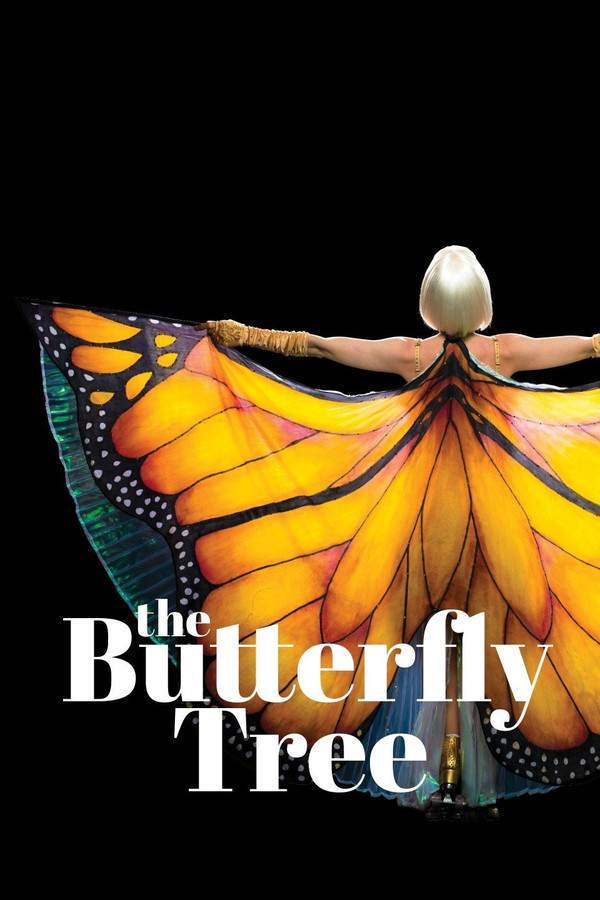
The Butterfly (2003) movie poster

Plot Summary

The Butterfly (2003) Plot Summary Explained

Release, runtime and language
2003 · 85 min · English
JustWatch #24,511 4
Directed by
Philippe Muyl
Budget
$13M

A charismatic burlesque performer, Evelyn, unexpectedly connects with Al, a single father, and his teenage son, Fin. As the three navigate their evolving relationships, hidden truths about Fin’s mother’s death emerge. The story explores themes of love, loss, and the possibility of redemption as they grapple with the past and forge new connections.

On this page (6)
  1. 1 Where to watch
  2. 2 What happens: full plot
  3. 3 Plot questions answered
  4. 4 Movie threads
  5. 5 Movies like The Butterfly
  6. 6 Every angle

Where to watch

Where to Watch The Butterfly (2003)

Where can you watch The Butterfly? Stream, rent or buy it in the US, including on OVID and Kanopy: current JustWatch availability with up-to-date prices.

Streaming availability powered by JustWatch

Full plot summary · contains spoilers

What Happens in The Butterfly: Full Plot Summary

The whole story of The Butterfly (2003) explained, from the opening scene to the final frame: every key event, every twist and what it all adds up to. Read it as a quick recap before the sequel, to check a scene you missed, or to finally understand what really happened.

As Evan Treborn navigates his tumultuous formative years, he's accompanied by his friends, Lenny Kagan and Kayleigh Miller, along with her brother, Tommy. Together, they endure a succession of psychological traumas that deeply impact Evan's mental state. Their childhood experiences range from being coerced into pornography by George Miller, Kayleigh's father, to narrowly escaping a violent confrontation with his institutionalized father, Jason Treborn, who meets his end at the hands of prison guards. The group also faces the tragic consequences of a reckless dynamite experiment, leading to the accidental deaths of a mother and her infant daughter, as well as the heart-wrenching moment when Tommy causes the painful death of Evan's beloved dog, Crockett. To cope with these harrowing events, Evan begins documenting his life in journals, hoping to make sense of his past.

Years later, during his college experience, Evan makes a startling discovery. While entertaining a visitor in his dorm, he realizes that by revisiting his past journals, he can time travel to reshape moments from his earlier life. However, these journeys come with severe side effects, resulting in ominous blackouts that haunt him.

Following the tragic suicide of Kayleigh, Evan desperately attempts to alter history by warning George to never hurt her again. This alteration leads him into a new reality—one where he and Kayleigh are involved and attending college together. Yet, this happiness is bittersweet; George channels his frustrations onto Tommy, whose fragile mental state deteriorates, setting the stage for a volatile confrontation that ultimately lands Evan in prison.

While incarcerated, Evan's mother brings him a journal, reigniting his time-travel explorations. In an attempt to change tragic outcomes, he manages to save Crockett but indirectly places Lenny in a distressing position, leading to a violent end for Tommy at Lenny's own hands.

Evan awakens to yet another altered reality, where Lenny is now confined to a mental institution, Kayleigh struggles with addiction, and the results of their past actions echo painfully. Refusing to give up, Evan journeys back once more to prevent the dynamite tragedy, only to find himself caught in the chaos of the explosion—this time, with Tommy sacrificing himself to save the mother and daughter.

In a shocking turn, Evan discovers that Lenny and Kayleigh have found a semblance of happiness, while Tommy's newfound spirituality guides him through life. However, Evan's path is marred by a grim reality—his mother's health deteriorates due to a smoking habit linked to her anguish over Evan's injuries.

Yearning to make amends, Evan risks everything by traveling back to their childhood, striving to create a safer future for his friends. Tragically, when Kayleigh attempts to intervene during a pivotal moment, the resulting explosion claims her life.

Awaking in a mental institution, Evan grapples with the devastating ramifications of his time travel; his very memories are slipping away, leaving him adrift in sorrow. A doctor reveals a chilling truth: Evan's father shared his abilities but fell victim to madness after losing the means to manipulate time.

With determination, Evan initiates one final journey through an old home movie, planning to disrupt Kayleigh's life just enough to steer her and Tommy away from their troubled past. In this new timeline, Evan's absence permits them to build joyful, fulfilling lives, shielding them from the darkness of their shared history.

Evan awakens in his college dorm, greeted by none other than Lenny. When he innocently inquires about Kayleigh, Lenny's puzzlement—“Who's Kayleigh?”—reveals that their fates are now forever altered. Eager to avoid detrimental changes, Evan destroys his journals, vowing to refrain from meddling with their timeline once more.

Eight years later, Evan leaves an office building in New York City, and, in a fortuitous moment, locks eyes with Kayleigh as they pass each other on the street. Though they momentarily connect, they continue on separate paths, blissfully unaware of the enduring bond that ties their lives together. This poignant narrative culminates in a director's cut, offering an alternate conclusion that underscores themes of friendship and redemption amidst the complexities of time travel.

As Evan lies in a psychiatric facility, acutely aware of losing his time-traveling abilities, he embarks on a bold quest for change by revisiting a family video capturing his mother's moments before his birth. The culmination of his determination leads him back to the moment of his conception, where he takes an unexpected route to break a generational curse—by suffocating himself with his own umbilical cord. This dramatic effort echoes a palm reader's foreboding warning that Evan, indeed, has “no lifeline” and “does not belong in this world.”

The fallout from Evan's drastic actions alters everything—now, young Kayleigh chooses to live with her mother instead of her father, significantly transforming their life's journey. A heartwarming montage reveals a brighter future for their childhood friends, each blossoming in an atmosphere rich with love and free from the shadows of past tragedies.
Last updated: November 22, 2024 at 16:31

Was this helpful?

Plot questions answered

The Butterfly Plot Explained: Your Questions Answered

The questions people ask most about The Butterfly (2003): what happens in the confusing scenes, why the characters do what they do, the twists, hidden details and what the ending means. Each answer contains spoilers.

Q1

How does Evan Treborn discover his ability to time travel?

Evan discovers his time-travel ability during college while in his dorm room. By reading entries from his childhood journals, he can transport himself back to specific moments in his past. Each journey is triggered by focusing on a journal entry, allowing him to physically appear at that earlier point in time. However, these journeys cause severe blackouts and have unintended consequences in the present.

Foreshadowing: Earlier in the film, Evan copes with his traumatic childhood by writing detailed journals, which later become the key to accessing his time-travel ability.

  • time travel
  • journals
  • college
  • ability discovery
  • blackouts
Q2

Why does changing the past only create more tragedy?

The time travel mechanism in the film operates on a principle of cause and effect, altering one event triggers a chain reaction of unintended consequences. When Evan tries to prevent one tragedy, he inadvertently creates different circumstances that lead to other devastating outcomes. For example, saving Kayleigh from her father's abuse causes George's anger to redirect toward Tommy, leading to different harm. The film illustrates that fixing traumatic events is impossible because the underlying issues remain.

Foreshadowing: The opening scenes establish the severity of the childhood traumas, setting up the impossibility of erasing them without creating new problems.

  • time travel consequences
  • changing past
  • alternate realities
  • chain reaction
  • tragedy
Q3

What leads to Kayleigh's suicide in the original timeline?

In the original timeline, Kayleigh Miller commits suicide as a result of prolonged sexual abuse inflicted by her father, George Miller, during their childhood. The trauma proves unbearable, and she takes her own life. This tragedy is the catalyst for Evan's first major attempt to use time travel to alter history, as he cannot accept losing her.

Foreshadowing: The childhood scenes show George coercing both Kayleigh and Evan into pornography, establishing the abuse that directly leads to Kayleigh's mental breakdown.

  • kayleigh
  • suicide
  • george miller
  • abuse
  • death
Q4

Why does Tommy die in different timelines?

Tommy's death occurs in multiple timelines but through different circumstances. In one timeline, Lenny kills Tommy during a confrontation after Evan accidentally puts Lenny in a position where he must face him. In another timeline, Tommy dies while trying to save a mother and child from the dynamite explosion. In the final timeline, Tommy survives but is severely traumatized. His deaths highlight how the group remains interconnected through tragedy regardless of Evan's interventions.

Foreshadowing: Tommy is established as mentally fragile from the start, particularly after causing Crockett's death, making him vulnerable to breaking under pressure.

  • tommy miller
  • death
  • alternate timelines
  • lenny
  • dynamite
Q5

What happened to Evan's father Jason Treborn?

Jason Treborn, Evan's father, possessed the same time-travel ability but lost it after being institutionalized in a mental hospital. The doctors performed a lobotomy or similar procedure that removed his ability. Unable to cope with the loss of his power and plagued by madness, Jason was killed by prison guards during a violent confrontation. The doctor reveals to Evan that his father shared the same ability and succumbed to the same fate Evan now faces, madness from time travel.

Foreshadowing: Early in the film, Evan experiences violent confrontations with his institutionalized father, showing the family's history of mental instability.

  • jason treborn
  • father
  • institutionalized
  • madness
  • lobotomy
  • time travel ability
Q6

Why does Evan's mother develop health problems?

Evan's mother begins smoking heavily as a result of the psychological trauma caused by watching her son suffer injuries and mental deterioration from his time travel experiments. Her smoking leads to declining health in later timelines. This creates a cruel irony, Evan's attempts to save his friends indirectly harm his mother, another person he desperately wants to protect.

Foreshadowing: Evan's mother is shown supporting him throughout his childhood traumas, establishing her as someone deeply affected by his suffering.

  • evans mother
  • health
  • smoking
  • decline
  • consequences
Q7

What happens in the final timeline where Evan erases himself?

In the final timeline, Evan travels back to before his conception and suffocates himself with his own umbilical cord, effectively preventing himself from being born. This breaks the generational curse of time travel that affected his father. In this new reality, Kayleigh chooses to live with her mother instead of her abusive father, Tommy becomes a spiritual and happy person, Lenny avoids violence, and Evan's friends grow up in a loving, trauma-free environment. Evan never exists to complicate their lives, but they flourish without him.

Foreshadowing: A palm reader earlier tells Evan he has 'no lifeline' and 'does not belong in this world,' foreshadowing his self-sacrificial ending.

  • final timeline
  • conception
  • self-sacrifice
  • umbilical cord
  • erasing himself
  • happier ending
Q8

How does the director's cut ending differ from the theatrical release?

The theatrical ending shows adult Evan and Kayleigh passing each other on a New York street, briefly connecting but continuing on separate paths, they're strangers who share a mysterious pull toward each other. The director's cut offers a different conclusion where Evan remains aware of his time-travel ability in the mental institution and makes one final attempt to change things, leading to the darker self-erasure ending where he prevents his own birth to save his friends.

Foreshadowing: The theatrical ending's melancholy tone suggests unfinished business, while the director's cut provides closure through sacrifice.

  • directors cut
  • theatrical ending
  • alternate ending
  • new york scene
Q9

Why does Evan destroy his journals at the end of the theatrical version?

After discovering that altering the timeline has permanently changed his relationship with Kayleigh (she doesn't know who he is), Evan chooses to destroy his journals. He realizes that his attempts to help have only caused more suffering, and the safest course is to never interfere with the timeline again. By destroying the journals, he removes his ability to time travel, accepting that some things cannot be fixed.

Foreshadowing: Evan's journals have been both his greatest tool and his biggest burden throughout the film, making their destruction a pivotal moment.

  • destroy journals
  • time travel ability
  • acceptance
  • moving on
Q10

What happens to Lenny Kagan in the alternate timelines?

Lenny Kagan's fate varies significantly across timelines. In one altered reality, he becomes a violent person who kills Tommy during a confrontation that Evan inadvertently causes. In another timeline, Lenny ends up institutionalized in a mental hospital. His trajectories demonstrate how even minor changes to the group's history affect Lenny's mental stability and propensity for violence.

Foreshadowing: Lenny is shown as emotionally vulnerable throughout the film, particularly affected by the traumatic events of their childhood.

  • lenny kagan
  • mental institution
  • violence
  • fate
  • alternate timeline
Q11

What causes the dynamite accident that kills a mother and infant?

As children, Evan and his friends conduct a reckless experiment with dynamite near railroad tracks. The explosion goes wrong, resulting in the deaths of a mother and her infant daughter who happen to be nearby. This tragic accident becomes one of the core traumas Evan desperately tries to prevent through time travel, though his attempts either fail to stop it or create different tragedies.

Foreshadowing: The early establishment of the children's dangerous experiments foreshadows the devastating consequences of their reckless behavior.

  • dynamite
  • accident
  • mother
  • infant death
  • childhood trauma
Q12

Why does Evan lose his time-travel ability?

Each time Evan travels through time, the ability takes a physical and mental toll. In the theatrical ending, he experiences blackouts and memory loss. By the director's cut ending, his ability has completely faded, leaving him trapped in a mental institution with no way to change his circumstances. This mirrors his father's fate, eventually, the ability destroys itself or is taken away, leading to madness.

Foreshadowing: Evan's blackouts increase in frequency and severity as he continues time traveling, showing the cumulative damage.

  • losing ability
  • blackouts
  • memory loss
  • madness
  • time travel cost

Movie threads

More Movies Like The Butterfly, by Mood & Story

Curated lists built around what makes The Butterfly tick: the same mood, the same kind of story or the same emotional payoff. Each list explains why these movies belong together.

Movies about rewriting the past like The Butterfly

Characters driven by trauma attempt to violently alter history, with devastating consequences. If you liked the desperate time-travel narrative of The Butterfly, explore these movies where characters grapple with trauma by attempting to change history. These similar stories feature high-stakes consequences, complex timelines, and a dark, emotionally heavy tone.

  • traumatic
  • desperate
  • haunting
  • psychological
  • existential
  • unintended consequences
  • Tone: dark, melancholic, existential
  • Pacing: fast, chaotic, relentless
Why these movies?

The story pattern: The narrative typically involves a non-linear or branching structure, where the protagonist's attempts to fix a single traumatic event spiral out of control. The journey is less about a simple solution and more about an existential struggle with fate, often culminating in a bittersweet or bleak sacrifice.

Why they belong together: These movies are grouped by their shared core premise: using a supernatural or sci-fi conceit (like time travel) to confront severe psychological trauma. They share a dark tone, high emotional intensity, and a complex plot structure that examines the unintended consequences of altering the past.

Psychological horror movies about trauma like The Butterfly

Stories where repressed childhood trauma violently resurfaces, blurring reality and memory. For viewers who appreciated the psychological horror and exploration of childhood trauma in The Butterfly, this list features similar movies focused on the desperate, haunting effects of a buried past. These films share a dark tone, high sadness, and disturbing themes.

  • anxious
  • traumatic
  • haunting
  • melancholic
  • desperate
  • psychological
  • Tone: dark, anxious, haunting
  • Pacing: variable, often with frantic bursts
Why these movies?

The story pattern: The story unfolds as a character's present reality is shattered by the resurfacing of repressed memories, often from childhood. The line between past and present, memory and hallucination, becomes blurred, creating a deeply anxious and existential experience where confronting the truth is both terrifying and necessary.

Why they belong together: These films are connected by their central focus on trauma as the source of horror, rather than external monsters. They create a similar vibe through a combination of melancholic mood, high emotional weight, dark tone, and themes of mental fragmentation and desperate coping mechanisms.

If you liked this

Movies Like The Butterfly

Similar movies to The Butterfly: the same genre, themes or kind of story. Each one comes with its own plot summary, timeline and ending explained.

Browse all movie summaries

Every angle

The Butterfly (2003) Explained: Plot, Timeline & Characters

Everything about The Butterfly in one place: what happens in the plot summary, the timeline in chronological order, the characters and meaning and a spoiler-free summary. What's After the Movie adds the cast, box office and post-credit scenes.

Coming soon on iOS and Android

The Plot Explained Movie Summary App

Plot summaries, endings explained and timelines on your phone. Catch up on any movie in minutes, save your favorites and never miss a twist again.

Be the first to know when we launch. Your email stays private, always.

Learn more about the app