Plot Explained Spoilers guaranteed!
Plot Explained

Browse by genre

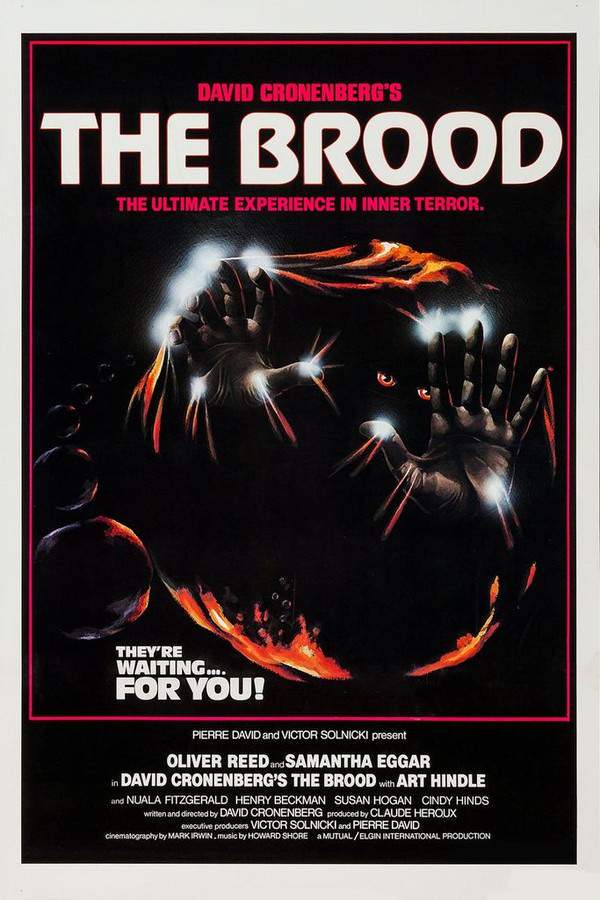
The Brood (1979) movie poster

Plot Summary

The Brood (1979) Plot Summary Explained

Release, runtime and language
1979 · 92 min · English
JustWatch #3,142 3
Directed by
David Cronenberg
Starring
Henry Beckman, Oliver Reed, Art Hindle, Samantha Eggar, Cindy Hinds, Gary McKeehan

A brilliant but unconventional doctor pioneers a radical psychotherapy to help a pregnant patient struggling with intense emotional distress. His experimental methods involve a unique cloning process, but when grotesque creatures begin appearing, he realizes his treatment has unleashed a terrifying and uncontrollable force. As the doctor investigates, he must confront the horrifying consequences of his ambition and protect his family from the monstrous brood he inadvertently created.

On this page (6)
  1. 1 Where to watch
  2. 2 What happens: full plot
  3. 3 Plot questions answered
  4. 4 Movie threads
  5. 5 Movies like The Brood
  6. 6 Every angle

Where to watch

Where to Watch The Brood (1979)

Where can you watch The Brood? Stream, rent or buy it in the US, including on Brew, HBO Max and YOW.tv: current JustWatch availability with up-to-date prices.

Streaming availability powered by JustWatch

Full plot summary · contains spoilers

What Happens in The Brood: Full Plot Summary

The whole story of The Brood (1979) explained, from the opening scene to the final frame: every key event, every twist and what it all adds up to. Read it as a quick recap before the sequel, to check a scene you missed, or to finally understand what really happened.

At the Somafree Institute, Dr. Hal Raglan humiliates his patient, Mike, by stating, > "you're just a weak person. You must have got that from your mother. It probably would have been better for you if you had been born a girl!" On a dimly lit stage, Raglan demands that Mike show his anger, revealing angry red blotches across his torso that leave the audience in shock. Raglan explains this phenomenon as psychoplasmics, which refers to the physical manifestation of one's mental rage.

Meanwhile, Frank Carveth is picking up his nine-year-old daughter, Candy, from a 'Private Guest Room'. Dressed in a red coat with fur trim, Candy’s back is discovered to have bruises and scratches during a bath. Frank immediately drives to the Somafree Institute to confront Raglan, demanding to see his wife, Nola, who has been committed there after experiencing a nervous breakdown. Raglan refuses to allow Frank to see Nola, claiming legal issues if he denies Nola a crucial part of her treatment. Frustrated, Frank seeks advice from his lawyer, Al Resnikoff, who informs him that Nola holds a stronger legal position because of her commitment. Determined, Frank takes Candy to her maternal grandmother, Juliana, who appears quite anxious.

Inside the institute, Raglan attempts to get information from Nola by pretending to be Candy. In response to her distress, he states, > "Mummies don't hurt their own children." Nola sobs that, indeed, they do, mentioning her own troubled childhood. Raglan encourages Nola to embrace her anger, saying, "Go all the way through it, right to the end."

That evening, while investigating a noise in the kitchen, Juliana is attacked and killed by what appears to be a small child in a red hooded coat, leaving Candy as a quiet, horrified witness. The next morning, Frank learns of Juliana's murder and is advised by police psychologist Dr. Birkin to guide Candy’s recollection of the event, as repressed memories can lead to breakdowns. Dr. Birkin warns him, "These things tend to express themselves in one way or another."

Back at the institute, Raglan, posing as Candy's father, stirs up anger in Nola, creating red welts on her forehead while they delve into her troubled emotions. At the airport, Frank meets Barton Kelly, Nola's estranged father, who attends the funeral of his ex-wife. On the advice of Resnikoff, Frank contacts Jan Hartog, an ex-patient of Somafree seeking legal action against Raglan, who expresses his struggles with the treatment: "Raglan encourages my body to revolt against me. And it did. I have a small revolution on my hands and I'm not putting it down very successfully."

Back at the institute, a distraught Barton confronts Raglan, demanding to see Nola. Simultaneously, Frank attends Candy's school, where her teacher Ruth Mayer joins them for dinner. That night, as Barton finds himself alone, he is brutally murdered by the hooded creature, furthering the cycle of violence tied to Nola's rage.

When Ruth innocently receives a phone call from Nola, her jealousy erupts into chaos. At the police station, Frank learns from the pathologist that the creature that attacked him perished because it "ran out of gas," resembling nothing human with its peculiar features. Meanwhile, outside Nola’s room, Raglan deceives her with claims that Frank will leave her for Ruth.

Upon returning home, Frank finds Candy terrified after a nightmare and reassures her that the creature is dead. The following day, Raglan learns of Barton’s murder and prepares to evacuate all patients from the institute. Frank, discovering Mike as a fellow patient of Hartog's, grows increasingly angry when Mike complains about being abandoned.

In class, Candy is taken captive by two small creatures who brutally attack Ruth, leading to a frantic search by Frank who arrives too late. As the horror unfolds at the institute, Nola becomes aware of her children’s growing threats.

In a heart-wrenching climax, Frank discovers the shocking truth about Nola, who has physically manifested her rage into the form of these Brood children, who do her sinister bidding whenever her anger is stirred. Raglan explains to Frank that to retrieve Candy, he must convince Nola to suppress her rage. Frank discovers Nola in a trance, revealing a grotesque external womb connected to her body that nurtures the Brood.

As Frank intervenes in Nola’s rage-fueled birth, the Brood awaken, launching a deadly assault on Raglan. In a moment of desperation, he strangles Nola to save Candy, severing the connection that animated the creature children. As silence descends upon the institute, Frank finds Candy trembling in fear, realizing with horror that her marks may signify a deeper connection to her mother’s rage. With a blank expression, Candy is driven home by Frank, unaware of the dark legacy she carries within.
Last updated: November 03, 2024 at 13:09

Was this helpful?

Plot questions answered

The Brood Plot Explained: Your Questions Answered

The questions people ask most about The Brood (1979): what happens in the confusing scenes, why the characters do what they do, the twists, hidden details and what the ending means. Each answer contains spoilers.

Q1

What is psychoplasmics in the movie?

Psychoplasmics is the term Dr. Raglan uses to describe the physical manifestation of emotional states, specifically rage. When a person experiences intense anger, it manifests as red blotches or welts on their skin, and in extreme cases, can create physical entities that carry out the person's violent impulses.

Foreshadowing: Earlier in the film, Mike's anger is shown manifesting as red blotches across his torso during Raglan's therapy session.

  • psychoplasmics
  • raglan
  • emotional manifestation
  • rage
  • therapy
Q2

How does Nola create the brood creatures?

Nola physically manifests her rage into external wombs attached to her body, from which she births the brood creatures. These small, hooded children are physical manifestations of her suppressed anger and carry out her violent impulses whenever she is emotionally triggered.

Foreshadowing: Raglan encourages Nola to 'go all the way through' her anger, pushing her to embrace rather than suppress her rage.

  • nola
  • brood
  • birth
  • external womb
  • rage manifestation
Q3

Why does Nola kill her mother Juliana and father Barton?

Nola's parents represent the source of her childhood trauma and abuse. Her mother Juliana appeared 'anxious' when caring for Candy, and Nola's own troubled childhood involved her mother hurting her. Her father Barton abandoned her. Their deaths are manifestations of Nola's deep-seated rage toward the parents who failed her.

Foreshadowing: When Raglan asks about her childhood, Nola reveals 'Mummies don't hurt their own children' while sobbing about her troubled past.

  • nola
  • juliana
  • barton
  • parents
  • murder
  • childhood trauma
Q4

What happens to Candy at the end of The Brood?

At the end, Frank finds Candy traumatized in the institute. As they drive home, Frank notices scratches and marks appearing on Candy's back, the same bruises that initially prompted his concern. This implies Candy may have inherited her mother's ability to manifest rage physically, suggesting the cycle of trauma continues.

Foreshadowing: Candy was initially found with bruises and scratches on her back, and she witnessed the murder of her grandmother Juliana.

  • candy
  • ending
  • marks
  • cycle
  • trauma
  • inheritance
Q5

Why does Dr. Raglan encourage Nola to express her anger?

Dr. Raglan believes that by confronting and expressing their deepest emotions, especially rage, patients can be cured of their psychological ailments. He pushes Nola to 'go all the way through' her anger, believing this radical form of psychotherapy will help her process her childhood trauma. However, this approach unleashes uncontrollable consequences.

Foreshadowing: Raglan's method is demonstrated earlier when he humiliates Mike to provoke his anger and show the psychoplasmics phenomenon.

  • raglan
  • therapy
  • encouragement
  • anger
  • treatment
  • psychotherapy
Q6

What are the creatures that kill people in The Brood?

The brood are physical manifestations of Nola's rage, essentially children born from her emotional pain. They appear as small figures in red hooded coats, similar to Candy's clothing. They carry out violent acts on Nola's behalf whenever she experiences emotional triggers like jealousy or anger. The pathologist notes the creature that attacked Frank 'ran out of gas' and resembles nothing human.

Foreshadowing: Candy wears a red coat with fur trim, and the first murder is committed by a small child in a red hooded coat.

  • brood
  • creatures
  • manifestation
  • rage
  • hooded child
  • monsters
Q7

Why does Frank strangle Nola at the end?

Frank kills Nola to save Candy from the brood creatures that are attacking her. When Frank intervenes in Nola's rage-fueled delivery of more brood children, the creatures turn violent against Raglan. Realizing that Nola's rage is what animates the creatures and threatens his daughter, Frank strangles her to sever the connection and stop the attacks, sacrificing his wife to protect his child.

Foreshadowing: Dr. Birkin warned Frank that repressed emotions 'tend to express themselves in one way or another,' and Raglan explains that to save Candy, Frank must convince Nola to suppress her rage.

  • frank
  • nola
  • kill
  • strangle
  • sacrifice
  • save candy
Q8

What do the scratches on Candy's back mean?

The scratches and bruises on Candy's back initially appear when Frank gives her a bath, prompting his visit to Somafree. At the film's end, the marks return as she and Frank drive away, suggesting she has inherited her mother's psychoplasmic ability to manifest emotional states physically, implying the cycle of trauma will continue.

Foreshadowing: Candy witnessed her grandmother's murder and the violence at the institute, and the film ends with her displaying the same physical marks as her mother.

  • candy
  • bruises
  • scratches
  • back
  • marks
  • inheritance
  • psychoplasmics
Q9

What is Dr. Raglan's role in The Brood?

Dr. Raglan is the creator of psychoplasmic therapy at Somafree Institute. He uses his patients' emotional trauma as a tool for treatment, pushing them to manifest their rage physically. He manipulates Nola by posing as Candy's father to provoke her anger, and he deceives her about Frank leaving. His unconventional methods ultimately create the brood and lead to multiple deaths, forcing him to confront the horror he unleashed.

Foreshadowing: Raglan's willingness to humiliate Mike and push patients to extremes is shown early in the film.

  • raglan
  • doctor
  • institute
  • therapy
  • treatment
  • responsibility
Q10

How does Nola's childhood connect to the brood?

Nola's childhood was severely abusive, she reveals that her own mother hurt her, saying 'Mummies don't hurt their own children' while sobbing about her troubled past. This deep trauma manifested as rage that Raglan's therapy amplified. Rather than healing her, the treatment allowed her rage to physically manifest as the brood children, creating a monstrous expression of her unprocessed childhood pain.

Foreshadowing: Nola's emotional reaction when Raglan mentions Candy and her reference to her own mother's abuse establish this connection early.

  • nola
  • childhood
  • abuse
  • trauma
  • parents
  • mother
  • rage

Movie threads

More Movies Like The Brood, by Mood & Story

Curated lists built around what makes The Brood tick: the same mood, the same kind of story or the same emotional payoff. Each list explains why these movies belong together.

Body Horror Movies about Trauma like The Brood

Stories where psychological anguish manifests as grotesque, violent physical transformations. If you liked The Brood's chilling portrayal of manifested rage, you'll find similar stories here. This collection features movies where psychological trauma and emotional distress physically manifest, often as body horror or monstrous entities. These films fuse deep psychological themes with grotesque, visceral terror.

  • body horror
  • disturbing
  • psychological
  • unsettling
  • dread-filled
  • somber
  • Tone: dark, disturbing, somber
  • Pacing: steady, methodical
Why these movies?

The story pattern: These narratives typically follow a character whose unprocessed emotional turmoil—often rage, grief, or childhood trauma—begins to physically manifest, creating a hostile external threat that is intrinsically linked to their psyche. The plot involves uncovering the source of the trauma while trying to survive the physical horrors it has spawned, often culminating in a bleak or tragic confrontation.

Why they belong together: Movies are grouped here because they share a core premise: the externalization of internal psychological states as physical horror. They blend heavy emotional themes with shocking body horror, creating a uniquely distressing and thought-provoking viewing experience focused on the mind-body connection gone horribly wrong.

Horror Movies about Unethical Science like The Brood

Tales of brilliant minds whose experiments unleash uncontrollable, monstrous consequences. Fans of The Brood's theme of a doctor's dangerous experiment will appreciate these movies. This list features horror and sci-fi films centered on ambitious, unethical science that backfires catastrophically. Explore stories where brilliant minds create monsters they cannot control, leading to dread-filled consequences.

  • unsettling
  • dread-filled
  • anxious
  • somber
  • tense
  • moral conflict
  • Tone: dark, tense, bleak
  • Pacing: steady, building dread
Why these movies?

The story pattern: The plot follows a brilliant but overreaching creator—a scientist, doctor, or innovator—who develops a radical new theory or technology. Their ambition blinds them to the risks, and they proceed without regard for ethics or safety. The creation inevitably turns monstrous or destructive, forcing the creator to confront the horrifying results of their hubris, often at a great personal cost.

Why they belong together: These films are connected by the central theme of scientific or medical hubris. They share a dark tone, a steady pacing that builds dread as the experiment fails, and a high-stakes intensity as the creator's world collapses. The emotional weight is heavy, focusing on regret, responsibility, and the irreversible cost of playing god.

If you liked this

Movies Like The Brood

Similar movies to The Brood: the same genre, themes or kind of story. Each one comes with its own plot summary, timeline and ending explained.

Browse all movie summaries

Every angle

The Brood (1979) Explained: Plot, Timeline & Characters

Everything about The Brood in one place: what happens in the plot summary, the timeline in chronological order, the characters and meaning and a spoiler-free summary. What's After the Movie adds the cast, box office and post-credit scenes.

Coming soon on iOS and Android

The Plot Explained Movie Summary App

Plot summaries, endings explained and timelines on your phone. Catch up on any movie in minutes, save your favorites and never miss a twist again.

Be the first to know when we launch. Your email stays private, always.

Learn more about the app