



























Plot Explained Spoilers guaranteed!
Plot Explained

Browse by genre

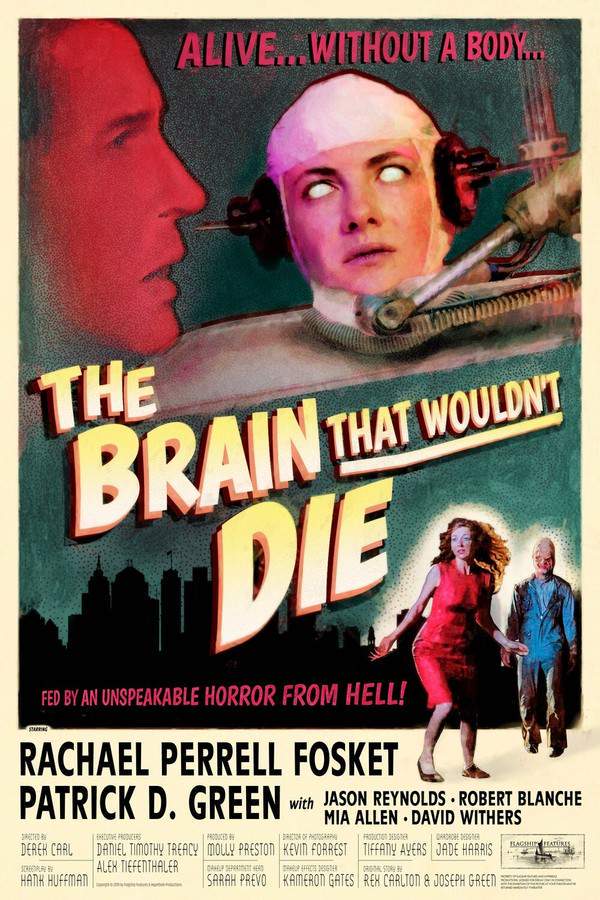
The Brain That Wouldn't Die (1962) movie poster

Characters & Themes

The Brain That Wouldn't Die (1962) Characters, Setting & Themes Explained

Release, runtime and language
1962 · 82 min · English
JustWatch #21,922 1
Directed by
Joseph Green
Starring
Leslie Daniels, Adele Lamont, Arny Freeman, Bonnie Sharie, Bruce Brighton, Fred Martin

After a car accident leaves his fiancée in a vegetative state, a brilliant surgeon becomes determined to find a way to keep her alive. He becomes fixated on preserving her head, leading him down a dark and obsessive path. As he experiments and delves deeper into the science of life and death, he confronts unsettling moral questions and uncovers terrifying secrets that blur the line between love and madness.

On this page (8)
  1. 1 Where to watch
  2. 2 Characters explained (3)
  3. 3 Where & when it takes place
  4. 4 Themes & meaning (3)
  5. 5 Character & meaning questions
  6. 6 Movie threads
  7. 7 Movies like The Brain That Wouldn't Die
  8. 8 Every angle

Where to watch

Where to Watch The Brain That Wouldn't Die (1962)

Where can you watch The Brain That Wouldn't Die? Stream, rent or buy it in the US, including on Amazon Prime Video, Bloodstream and FlixFling: current JustWatch availability with up-to-date prices.

Streaming availability powered by JustWatch

3 main characters · contains spoilers

The Brain That Wouldn't Die Characters Explained: Who Is Who

The main characters of The Brain That Wouldn't Die (1962), heroes and villains: what drives them, how they change over the course of the story and what each of them reveals about the film's bigger ideas.

  • Dr. Bill Cortner

    Dr. Bill Cortner is a brilliant yet morally ambiguous surgeon whose obsession with defying death drives the plot. His skills are overshadowed by his reckless disregard for ethical boundaries, leading him to make horrifying decisions. Bill's complex character oscillates between love for Jan and a disturbing thirst for success.

    • 🧑‍⚕️ Surgeon
    • 🧨 Obsession
  • Jan Compton

    played by Virginia Leith

    Jan Compton, portrayed by Virginia Leith, is the tragic fiancée of Dr. Bill Cortner. After her decapitation, she remains a disembodied head, grappling with her intense feelings of betrayal and anger. Jan's transformation from a hopeful bride to vengeful spirit epitomizes the dire consequences of Bill's obsessive love.

    • 👰 Fiancée
    • 😡 Betrayal
  • Kurt

    played by Leslie Daniels

    Kurt is Bill Cortner's assistant who plays a pivotal role in alerting him to crises at the country house. His character serves as a foil to Bill, providing a semblance of caution amid the madness. Despite his loyalty, Kurt's involvement in Bill’s unethical pursuits hints at complicity in the horrors that unfold.

    • 👨‍🔬 Assistant
    • ⚠️ Caution

Last updated: October 22, 2024 at 21:12

Was this helpful?

Setting

Where and When Does The Brain That Wouldn't Die Take Place?

The setting of The Brain That Wouldn't Die (1962): the year and time period, the places and locations, and how they shape the characters, the mood and the tension of the story.

Time period

The film is set in a contemporary time period, reflecting mid-20th century societal norms and medical ethics. This era was marked by rapid advancements in medicine, often raising significant questions about morality and the limits of scientific exploration.

Location

country house, basement, dark alleys, strip clubs

The country house serves as the primary location where Dr. Bill Cortner conducts his controversial experiments. Its basement is a dark and foreboding space, housing both Jan's severed head and a dangerous creature. The dark alleys and strip clubs symbolize Bill's desperate search for a new body, highlighting the moral decay of his ambition.

  • 🏡 Country House
  • 🚪 Basement
  • 🌃 Urban Nightlife

Last updated: October 22, 2024 at 21:12

Was this helpful?

3 major themes

The Brain That Wouldn't Die Meaning: Themes & Message Explained

What is The Brain That Wouldn't Die (1962) really about? The emotional, social and philosophical themes the film keeps returning to, its symbolism and the message beneath the surface.

  • Obsession

    The theme of obsession is central to the narrative, as Dr. Bill Cortner's relentless pursuit of success leads him to commit unethical acts. His fixation on resurrecting Jan's head blinds him to the moral implications of his actions, creating a chilling atmosphere of desperation and horror. This obsession ultimately spirals out of control, resulting in catastrophic consequences.

  • Love and Loss

    Love and loss permeate the story as Bill’s desire to restore Jan's life transitions into a horrifying quest. Their relationship serves as a poignant reminder of the fragility of life, juxtaposed with the grotesque reality of Bill's experiments. The emotional weight of Jan's condition and her subsequent resentment highlight the dark side of love when tethered to ambition.

  • Ethics

    Ethical dilemmas are a significant theme, evident in the debates between Bill and his father concerning the morality of their medical practices. Bill's unregulated experiments challenge the boundaries of ethical science, leading to a nightmarish scenario that emphasizes the dire consequences of ignoring such considerations.

Last updated: October 22, 2024 at 21:12

Was this helpful?

Character & theme questions

The Brain That Wouldn't Die Characters & Meaning: Your Questions Answered

The questions people ask about The Brain That Wouldn't Die (1962): who the characters really are, their relationships, what the symbols mean, where it takes place and what the movie is really about. Each answer contains spoilers.

Q1

Where is the story set?

The movie primarily takes place in a country house where Dr. Bill Cortner conducts his controversial experiments. The basement of this house serves as the dark, foreboding space for his work. Secondary locations include dark alleys and strip clubs, which symbolize Bill's desperate search for a new body and the moral decay accompanying his ambition.

  • country house
  • basement
  • setting
  • locations
Q2

What time period does the film take place in?

The film is set in a contemporary time period reflecting mid-20th century societal norms and medical ethics. This era was marked by rapid advancements in medicine, which often raised significant questions about morality and the limits of scientific exploration.

  • time period
  • 1960s
  • era
  • contemporary
Q3

What does the movie say about obsession?

The theme of obsession is central to the narrative. Dr. Bill Cortner's relentless pursuit of defying death leads him to commit increasingly unethical acts. His fixation on resurrecting Jan's head blinds him to the moral implications of his actions, creating a chilling atmosphere of desperation. This obsession ultimately spirals out of control, resulting in catastrophic consequences.

  • obsession
  • Dr. Bill Cortner
  • theme
  • obsession with death
Q4

How does the movie handle love and loss?

Love and loss permeate the story as Bill's desire to restore Jan's life transitions into a horrifying quest. Their relationship serves as a poignant reminder of the fragility of life, juxtaposed with the grotesque reality of Bill's experiments. Jan's transformation from a hopeful bride to a vengeful spirit highlights the dark side of love when tethered to ambition.

  • love
  • loss
  • Jan
  • relationship
  • theme
Q5

What ethical dilemmas does the film explore?

Ethical dilemmas are a significant theme, evident in the debates between Bill and his father concerning the morality of their medical practices. Bill's unregulated experiments challenge the boundaries of ethical science, leading to a nightmarish scenario that emphasizes the dire consequences of ignoring such considerations.

  • ethics
  • morality
  • medical ethics
  • theme
  • Bill's father
Q6

Who is Dr. Bill Cortner?

Dr. Bill Cortner is a brilliant yet morally ambiguous surgeon whose obsession with defying death drives the plot. His exceptional medical skills are overshadowed by his reckless disregard for ethical boundaries, leading him to make horrifying decisions. His complex character oscillates between love for Jan and a disturbing thirst for scientific success.

  • Dr. Bill Cortner
  • surgeon
  • protagonist
  • character
Q7

Who is Jan Compton?

Jan Compton is the tragic fiancée of Dr. Bill Cortner, portrayed by Virginia Leith. After a car accident leaves her decapitated, she remains a disembodied head. She grapples with intense feelings of betrayal and anger as her situation becomes increasingly horrifying. Her transformation from a hopeful bride to a vengeful spirit epitomizes the dire consequences of Bill's obsessive love.

  • Jan Compton
  • Virginia Leith
  • fiancée
  • character
Q8

Who is Kurt in the movie?

Kurt is Dr. Bill Cortner's assistant who plays a pivotal role in alerting him to crises at the country house. His character serves as a foil to Bill, providing a semblance of caution amid the madness. Despite his loyalty, Kurt's involvement in Bill's unethical pursuits hints at complicity in the horrors that unfold.

  • Kurt
  • assistant
  • character
  • Leslie Daniels
Q9

What is the significance of the basement setting?

The basement of the country house serves as the primary location where Dr. Bill Cortner conducts his controversial experiments. It is a dark and foreboding space that houses both Jan's severed head and the dangerous creature she controls. This setting symbolizes the hidden, unethical nature of Bill's work and the line between scientific ambition and moral corruption.

  • basement
  • setting
  • experiments
  • symbol
Q10

What makes the movie's tone so dark?

The movie's tone is dominantly dark, characterized by themes of unethical experimentation and the blurring of lines between life and death. There is no redeeming hopefulness in the narrative. The emotional weight is heavy, dealing directly with death, mutilation, and profound betrayal. The bleak ending culminates in destructive revenge, leaving no positive resolution.

  • tone
  • darkness
  • atmosphere
  • mood
  • bleak

Movie threads

More Movies Like The Brain That Wouldn't Die, by Mood & Story

Curated lists built around what makes The Brain That Wouldn't Die tick: the same mood, the same kind of story or the same emotional payoff. Each list explains why these movies belong together.

Mad Science Thrillers like The Brain That Wouldn't Die

Stories of obsessive genius spiraling into horrific, unethical experiments. If you liked the obsessive experimentation and ethical collapse in The Brain That Wouldn't Die, explore more movies about mad scientists. These similar sci-fi and horror stories feature unchecked ambition, grotesque body horror, and the terrifying consequences of playing god.

  • obsessive
  • grotesque
  • unsettling
  • anxious
  • macabre
  • claustrophobic
  • Tone: dark, grotesque
  • Pacing: steady, deliberate
Why these movies?

The story pattern: These narratives typically follow a linear path of obsession, where a driven character's initial goal is corrupted by their ambition. The plot escalates through a series of increasingly unethical actions, building towards a climax where their creations turn against them or their world collapses.

Why they belong together: Movies are grouped here due to their shared focus on the 'mad scientist' archetype, the theme of unethical experimentation, and the visceral impact of body horror. They create a similar feeling of dread and moral revulsion as ambition overrides humanity.
Claustrophobic Body Horror Movies like The Brain That Wouldn't Die

A slow, steady build of psychological terror centered on physical violation. Fans of the intense body horror and bleak atmosphere in The Brain That Wouldn't Die will find more frightening films here. Discover similar movies with themes of physical violation, psychological dread, and unsettling, macabre visuals that challenge the limits of the human form.

  • body horror
  • claustrophobic
  • anxious
  • macabre
  • unsettling
  • bleak
  • Tone: dark, unsettling
  • Pacing: steady, dread-filled
Why these movies?

The story pattern: The narrative pattern involves a physical or psychological trap from which there is no easy escape. The horror builds steadily as characters confront a reality where their bodies are no longer their own, leading to a climax of violent rebellion or complete psychological collapse, often with a bleak resolution.

Why they belong together: These films are united by their potent mix of body horror imagery and a pervasive sense of psychological dread. They share a dark tone, a steady pace that amplifies unease, and a focus on the visceral terror of physical transformation or violation.

If you liked this

Movies Like The Brain That Wouldn't Die

Similar movies to The Brain That Wouldn't Die: the same genre, themes or kind of story. Each one comes with its own plot summary, timeline and ending explained.

Browse all movie summaries

Every angle

The Brain That Wouldn't Die (1962) Explained: Plot, Timeline & Characters

Everything about The Brain That Wouldn't Die in one place: what happens in the plot summary, the timeline in chronological order, the characters and meaning and a spoiler-free summary. What's After the Movie adds the cast, box office and post-credit scenes.

Coming soon on iOS and Android

The Plot Explained Movie Summary App

Plot summaries, endings explained and timelines on your phone. Catch up on any movie in minutes, save your favorites and never miss a twist again.

Be the first to know when we launch. Your email stays private, always.

Learn more about the app