Plot Explained Spoilers guaranteed!
Plot Explained

Browse by genre

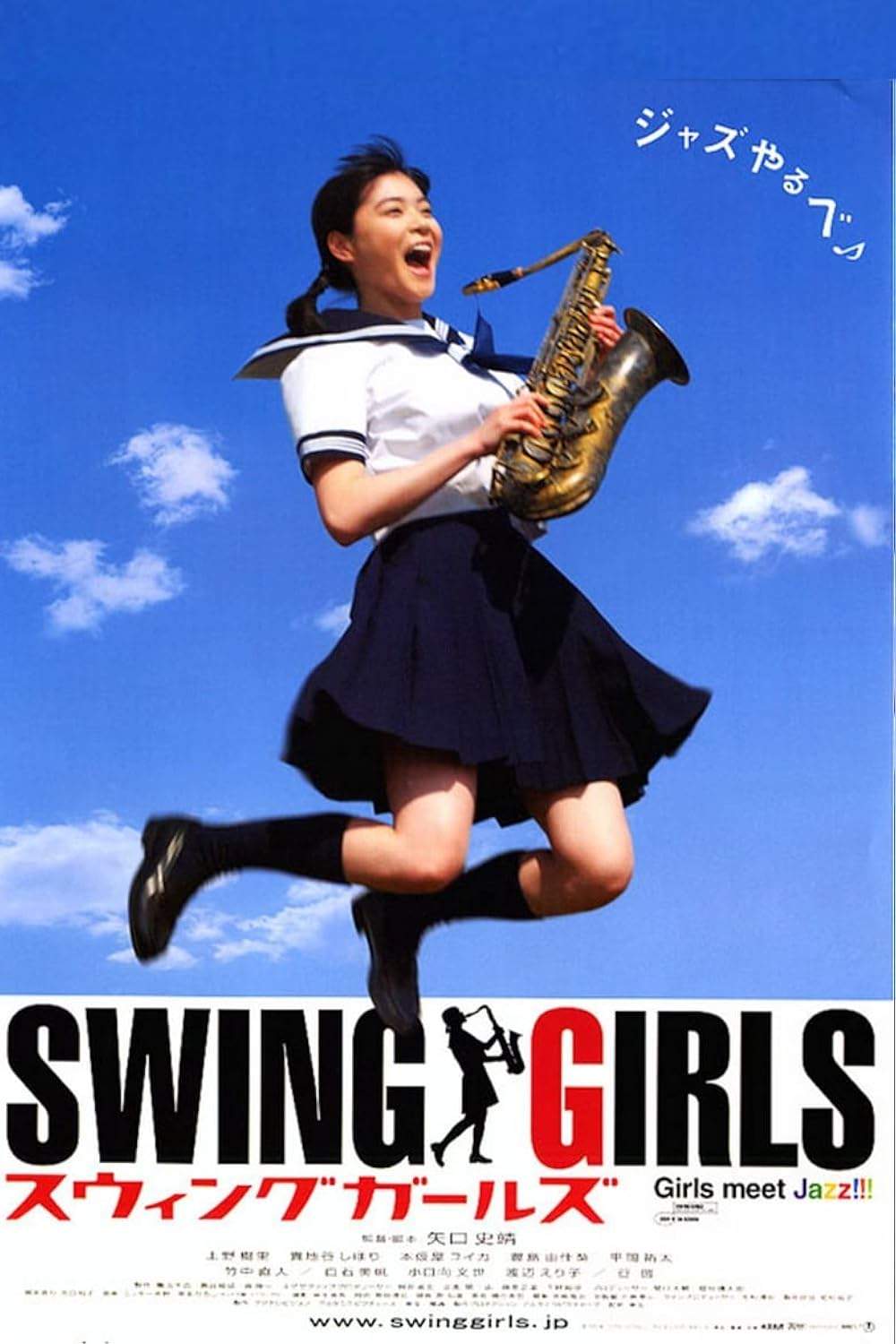
Swing Girls (2004) movie poster

Plot Summary

Swing Girls (2004) Plot Summary Explained

Release, runtime and language
2004 · 105 mins · Japanese
Directed by
Shinobu Yaguchi
Starring
Eri Watanabe, Fumiyo Kohinata, Naoto Takenaka, Mari Hayashida, Hana Kino, Naomi Nishida

A group of rebellious, lazy schoolgirls discover jazz and decide to skip a remedial summer math class. Their scheme leads them to sabotage the school’s brass band, replacing it with their own chaotic, jazzy ensemble, resulting in comedic mayhem as they concoct a plan to avoid the class by tampering with the band’s instruments.

On this page (5)
  1. 1 What happens: full plot
  2. 2 Plot questions answered
  3. 3 Movie threads
  4. 4 Movies like Swing Girls
  5. 5 Every angle

Full plot summary · contains spoilers

What Happens in Swing Girls: Full Plot Summary

The whole story of Swing Girls (2004) explained, from the opening scene to the final frame: every key event, every twist and what it all adds up to. Read it as a quick recap before the sequel, to check a scene you missed, or to finally understand what really happened.

Tomoko Suzuki, Juri Ueno, and a class of schoolgirls drift through a languid summer makeup class, their attention pulled in by curiosity and mischief rather than by lesson plans. When the school brass band heads off to perform at a baseball game and leaves behind their bento lunches, the group seizes the chance to pitch in. They persuade their math teacher, Tadahiko Ozawa, Naoto Takenaka, to let them deliver the meals, hoping for a small, silly diversion in an otherwise uneventful day.

On the train, they sample the lunches and gradually fall asleep, only to wake with a shock: they’ve missed their stop. They trudge back to the band’s destination, lugging empty stomachs and heat-streaked hopes, only to find the meals wasted by the tropical summer. The meal mishap makes most of the group sick, with one notable exception: their cymbal player, Nakamura, Takuo Nakamura, Yuta Hiraoka, who somehow escaped the feast’s aftereffects.

Takuo then organizes an audition for replacements to play at the upcoming baseball game. Only three girls show up: two former punk-band members and the shy Kaori Sekiguchi, Yuika Motokariya. The others are dragged into the process by pressure and fear of punishment for the food-poisoning incident, and the ensemble initially lacks musical focus, joking around with their instruments while Kaori stands out with a quiet, serious talent. Faced with a shortage of players, Takuo decides to transform the group into a big-band outfit and pivot toward swing jazz, hoping that a bold shift might salvage the opportunity.

The girls throw themselves into practice, and Kaori’s budding talent begins to lift everyone’s spirits. They discover the joy of playing together, and a sense of camaraderie starts to knit the group into Swing Girls. But the day before the big game arrives a cruel setback: the original brass band members recover, and the newly formed swing trio—plus their few remaining players—are left decimated and uncertain about their chances.

A new school year rolls in, and Tomoko makes a drastic personal move to fund their dream. She sells her family's PlayStation 2 along with her computer setup and buys a used tenor saxophone, only to discover that the instrument’s low B-flat pad is already failing. While she practices, she spots Takuo at his keyboard, and the two share a brief, intimate duet of Take the "A" Train, a moment that marks a turning point in their musical journey. The Swing Girls begin the process of purchasing their own instruments, pooling money through supermarket jobs and other odd tasks.

Missteps continue to surface as they work toward stability. A cooking demonstration at the store spirals out of control, triggering the sprinkler system and wiping out several of their wages. Undaunted, they spend a day mushroom-picking for matsutake and even fend off a boar that threatens their crops. One girl’s quick thinking leads to a reward, and the prize money funds a batch of cheap, worn instruments that the two rockers manage to repair with the help of their ex-boyfriends, who operate a wrecking yard. The group is finding its voice, and their music begins to take shape in small, imperfect steps that feel like real progress.

The club, now officially dubbed Swing Girls, makes its first public appearance. The performance is imperfect, but Kaori receives encouragement from an anonymous jazz fan. When the group tracks down the admirer, they discover he’s not a distant critic but Mr. Ozawa himself, a man with a vast collection of jazz records and the belief that he can guide them to something authentic. He agrees to lead the band, injecting his passion into their rehearsals and helping them refine their sound.

As the band’s skill grows, they decide to submit an audition tape for a music festival. Tomoko is left in charge of the submission, but she accidentally sends the tape too late, and the group faces rejection. Nakamura, in a quiet moment, confesses that Mr. Ozawa is not a professional saxophonist but an enthusiastic amateur, and the revelation nearly derails the team. Embarrassed, Ozawa asks Nakamura to keep the truth quiet as he steps back from the festival.

On the way to the festival, Tomoko admits that the Swing Girls may not have a formal place there. Snow interrupts the trip, halting their plans, and their spirits dip. Yet Ms. Itami, Miho Shiraishi, arrives on a bus with news: another band canceled because of the weather. She rushes to ferry the Swing Girls to the competition, and they scramble onto the stage just in time. The performance that follows wows the audience—classmates, Ms. Itami, and even Mr. Ozawa—proving that their raw, unpolished passion can carry them to a bright, hopeful future.

What began as a chance to chase a simple errand becomes a journey of friendship, persistence, and a stubborn insistence on finding one’s own voice. The group’s missteps are many, but their willingness to improvise, to rally around a shared dream, and to grow together turns a summer misadventure into a genuine and lasting musical awakening.

Last updated: October 09, 2025 at 15:08

Was this helpful?

Plot questions answered

Swing Girls Plot Explained: Your Questions Answered

The questions people ask most about Swing Girls (2004): what happens in the confusing scenes, why the characters do what they do, the twists, hidden details and what the ending means. Each answer contains spoilers.

Q1

Why did Takuo Nakamura not get sick from the spoiled lunches?

Takuo was the only one who didn't eat the lunches because he had already eaten his own meal before the girls arrived with the bento boxes. While the rest of the group gorged on the food and then fell asleep, Takuo remained hungry but untouched by the spoiled meal, making him the only healthy member of the brass band after the food poisoning incident.

  • takuo nakamura
  • food poisoning
  • cymbal player
  • lunch boxes
Q2

Why did the girls agree to join the brass band after the food poisoning?

Takuo threatened to report them to the school for causing the food poisoning incident. Knowing they would face punishment, the girls reluctantly agreed to become replacement players for the upcoming baseball game performance, seeing it as a way to avoid more serious consequences while also having a chance to escape their boring summer makeup class.

  • takuo nakamura
  • coercion
  • brass band
  • punishment
Q3

Why did the band decide to switch from regular brass to swing jazz?

The girls had almost no musical experience and couldn't play competently as a standard brass ensemble. Takuo suggested transforming the group into a big-band swing outfit because swing music allows for a larger ensemble with more flexible arrangements, making it easier to cover individual skill gaps while creating a fuller, more impressive sound.

  • swing jazz
  • big band
  • musical transformation
  • audition
Q4

Why was Mr. Ozawa hiding his interest in jazz from the students?

Mr. Ozawa was an amateur jazz enthusiast, not a professional musician, and he was embarrassed by this distinction. When Nakamura revealed the truth about Ozawa's lack of professional credentials, Ozawa asked him to keep it secret and withdrew from the festival preparation, fearing the girls would lose respect for him.

  • mr ozawa
  • jazz enthusiast
  • amateur
  • secret identity
Q5

Why was the Swing Girls' audition tape rejected for the music festival?

Tomoko was responsible for submitting the audition tape but accidentally sent it too late. The festival organizers rejected their application because it arrived after the deadline, leaving the band without a confirmed spot at the competition.

  • audition tape
  • festival
  • submission deadline
  • tomoko
Q6

How did the Swing Girls end up performing at the festival despite being rejected?

A snowstorm canceled another band's performance at the festival. Ms. Itami arrived with news of the opening and quickly transported the Swing Girls to the venue. They arrived just in time to take the stage, filling the vacancy created by the canceled band.

  • snow
  • festival
  • ms itami
  • last minute performance
Q7

Why did Tomoko sell her PlayStation 2 and computer?

Tomoko wanted to fund the band's dream of owning their own instruments. She sold her gaming console and computer setup to buy a used tenor saxophone, demonstrating her personal commitment to the Swing Girls' musical journey.

  • tomoko
  • playstation 2
  • saxophone
  • instrument purchase
Q8

Why did Mr. Ozawa agree to mentor the Swing Girls after being discovered?

After the girls found out he was the mysterious jazz fan who had been watching their performances, Ozawa decided to embrace his passion rather than hide it. He agreed to lead the band because he genuinely believed in their potential and wanted to help them develop as musicians, sharing his extensive jazz record collection and knowledge.

Foreshadowing: Earlier, Ozawa had quietly encouraged Kaori at their first public performance, showing his hidden support.

  • mr ozawa
  • mentor
  • jazz records
  • band leader
Q9

How did the Swing Girls afford to buy their own instruments?

The girls worked various jobs at a supermarket, but a cooking demonstration gone wrong triggered the sprinkler system and wiped out their wages. They then spent a day mushroom-picking, and when a boar attacked their crops, one girl killed it and they collected a reward. This money funded the purchase of cheap, damaged instruments that two ex-boyfriends helped repair.

  • instruments
  • supermarket jobs
  • boar
  • mushroom picking
  • money
Q10

What was the significance of Tomoko and Takuo's "Take the 'A' Train" duet?

The duet marked a pivotal moment in their musical and personal relationship. After Tomoko damaged her new saxophone, she discovered Takuo practicing piano in secret. Their spontaneous performance together represented their growing connection and signaled a turning point in the band's direction, moving from reluctant obligation to genuine artistic partnership.

  • take the a train
  • duet
  • tomoko
  • takuo
  • musical connection
Q11

Why was Kaori originally reluctant to join the band, and what changed?

Kaori was shy and initially uncertain about auditioning. She only showed up because two other girls came along. During tryouts, while others joked around with their instruments, Kaori's quiet concentration revealed a natural talent that would later become the band's musical foundation, inspiring the others to take the ensemble seriously.

  • kaori sekiguchi
  • audition
  • shy
  • hidden talent
Q12

Why did the original brass band recovering before the game matter so much?

Just as the Swing Girls gained confidence and cohesion, the original brass band members recovered from their illness. This threatened to sideline the newly formed group entirely, creating a major setback. The girls had to prove they could perform well enough to justify their spot, adding tension before the big game.

  • original brass band
  • recovery
  • competition
  • baseball game

Movie threads

More Movies Like Swing Girls, by Mood & Story

Curated lists built around what makes Swing Girls tick: the same mood, the same kind of story or the same emotional payoff. Each list explains why these movies belong together.

Chaotic underdog ensemble comedies like Swing Girls

A group of misfits coming together through chaos to chase an unlikely dream. If you enjoyed the comedic chaos and teamwork in Swing Girls, you'll love these movies about ragtag groups finding their purpose. This list features stories with similar underdog energy, youthful enthusiasm, and hilarious journeys of self-discovery through a shared goal.

  • comedic
  • uplifting
  • teamwork
  • underdogs
  • chaotic
  • heartwarming
  • Tone: hopeful, comedic, uplifting
  • Pacing: steady, character-driven
Why these movies?

The story pattern: These stories follow a linear underdog arc, beginning with a group of disparate individuals united by a common, often absurd, circumstance. They face a series of manageable, comedic obstacles that test their commitment but ultimately strengthen their bonds. The narrative builds steadily towards a public demonstration of their newfound skills, culminating in a victory that is less about winning and more about personal growth and unity.

Why they belong together: Movies in this thread share a core focus on the transformative power of teamwork among unlikely allies. They balance humor with heart, feature a steady, optimistic pace, and deliver a emotionally light yet deeply satisfying experience centered on friendship and perseverance.

Movies about discovering a passion like in Swing Girls

Stories of young people finding purpose and joy through an unexpected new interest. Fans of Swing Girls will appreciate these stories about young people finding their calling. Discover similar films focused on the energetic and uplifting journey of falling in love with music, art, or a new skill, all while navigating the ups and downs of youth.

  • youthful
  • aspirational
  • heartwarming
  • uplifting
  • passion
  • discovery
  • Tone: hopeful, uplifting, heartwarming
  • Pacing: steady, focused
Why these movies?

The story pattern: The narrative pattern revolves around a catalyst that introduces the protagonist(s) to a new world. The central conflict involves the challenges of learning and committing to this passion, often clashing with prior laziness or societal expectations. The story is a positive arc of growth, where the pursuit itself is the reward, leading to increased self-esteem and stronger friendships.

Why they belong together: These films are grouped by their shared mood of aspirational energy and heartwarming charm. They prioritize the emotional high of discovery and the positive impact of dedication, maintaining a light tone and a steady pace that focuses on personal triumphs rather than high-stakes drama.

If you liked this

Movies Like Swing Girls

Similar movies to Swing Girls: the same genre, themes or kind of story. Each one comes with its own plot summary, timeline and ending explained.

Browse all movie summaries

Every angle

Swing Girls (2004) Explained: Plot, Timeline & Characters

Everything about Swing Girls in one place: what happens in the plot summary, the timeline in chronological order, the characters and meaning and a spoiler-free summary. What's After the Movie adds the cast, box office and post-credit scenes.

Coming soon on iOS and Android

The Plot Explained Movie Summary App

Plot summaries, endings explained and timelines on your phone. Catch up on any movie in minutes, save your favorites and never miss a twist again.

Be the first to know when we launch. Your email stays private, always.

Learn more about the app