Year: 1964
Runtime: 118 min
Language: English
Director: John Frankenheimer
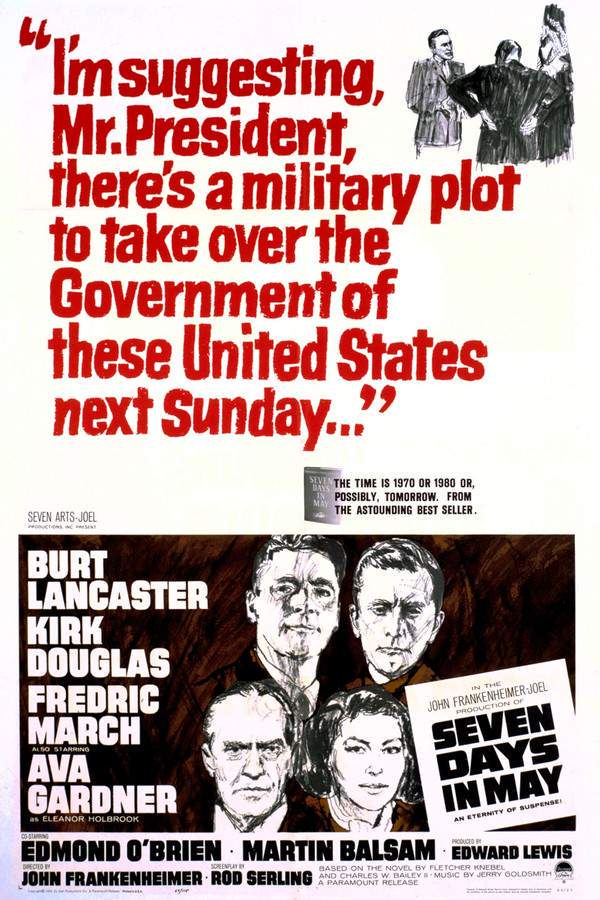
With nuclear disarmament on the table, President Jordan Lyman's policies face opposition from General James Scott, who leads the Joint Chiefs of Staff. A dedicated presidential aide discovers a plot to overthrow the government, triggering a tense race against time. Loyalties are tested as those involved must navigate a dangerous situation to prevent a military coup and protect the country from devastating repercussions.
Warning: spoilers below!
Haven’t seen Seven Days in May yet? This summary contains major spoilers. Bookmark the page, watch the movie, and come back for the full breakdown. If you're ready, scroll on and relive the story!
Read the complete plot breakdown of Seven Days in May (1964), including all key story events, major twists, and the ending explained in detail. Discover what really happened—and what it all means.
The film takes place on Monday, May 12, against the backdrop of impending chaos in the United States, where strikes are on the verge of crippling the coal industry. Tensions escalate on Pennsylvania Avenue, outside the White House, as two opposing groups of demonstrators gather. One side expresses gratitude towards President Jordan Lyman for his recent nuclear disarmament treaty with the Soviet Union, holding placards that declare, > “Peace On Earth Or No Earth At All.” The opposing group, however, belligerently condemns both Lyman and the treaty, promoting a potential presidential bid for four-star Air Force General James Mattoon Scott, the Chairman of the Joint Chiefs of Staff. The situation erupts into chaos when a supporter of Scott disrupts the peaceful demonstration by cutting the banner, prompting a swift response from the Capitol Police.
Inside the White House, Lyman’s physician points out the toll that stress is taking on the President, noting a rise in his blood pressure correlating to the criticisms he faces. Paul Girard, Lyman’s aide, reluctantly reveals a dismal Gallup Poll indicating only 29 percent approval for the treaty. Despite being urged to take a break, Lyman opts for a swim in the White House’s pool.
During his time with Senator Raymond Clark, Lyman explains his rationale for the treaty: without it, the precarious balance could lead to an uncontrollable nuclear war initiated by a deranged officer. He also offers a piece of advice to Clark, an evident alcoholic: to stay sober.
Later, Clark heads to a Senate Committee on Armed Services meeting, where General Scott presents his counterarguments against the treaty, claiming it represents either naivety or negligence. Senator Frederick Prentice appears sympathetic, throwing soft questions to Scott, while Clark mocks the proceedings. It becomes clear that Scott’s support base is limited to those who already share his views.
Scott is closely aided by Colonel Martin “Jiggs” Casey, who, as they leave the Capitol, is instructed to keep a planned alert under wraps. Within the Joint Chiefs’ office, Casey hears rumors about Scott’s questionable behavior, including a request for bets on the upcoming Preakness race. Casey later meets Colonel William “Mud” Henderson, who unveils the existence of a secret unit named EComCon, located in El Paso, Texas, which has been training for offensive operations rather than defense.
Tension mounts when Casey’s inquiries into Scott’s operations are met with hostility from Scott’s aide, Colonel Murdock, who warns him against prying. After a particularly tense social event, Casey meets Eleanor Holbrook, Scott’s former lover, and attempts to comfort her amidst her struggles with alcohol.
Days pass, and Casey’s observations lead him to suspect Scott is organizing a military coup against Lyman. His fears intensify when he discovers evidence pointing to Scott’s plans, culminating in an emergency meeting with the President on Tuesday, May 13. Despite resistance from Girard and Secretary Chris Todd, who doubt the existence of such a plot, Lyman assembles a task force to investigate further.
As tensions rise through mid-week, Casey digs deeper into Scott’s operations, ultimately acquiring incriminating letters from Ellie. Kamikaze-like, Lyman orders his team to hunt down evidence while keeping tabs on Scott. The need for evidence is underscored when Casey discovers Scott’s manipulative ties with Senator Prentice, prompting the President to consider his next moves carefully.
By Friday, May 16, Casey believes he has sufficient evidence to confront Scott. As the plot unfolds, Lyman grapples with civilian and military balances of power, culminated by an emergency press conference planned for Sunday, May 18. Events spiral toward a climax as Lyman weighs his options for a public reveal, knowing the nation’s peace hangs in the balance.
In a suspenseful conclusion, Lyman’s resilience against Scott’s attempt at a military takeover reflects the film’s core message: the enduring belief in democratic processes and the promotion of peace through dialogue rather than force. The story culminates as Lyman expresses that it’s “slander” to suggest the nation’s strength lies not in peaceful negotiation, further solidifying its stance on constitutional authority as the film draws to a close.
Last Updated: November 04, 2024 at 00:28
Discover curated groups of movies connected by mood, themes, and story style. Browse collections built around emotion, atmosphere, and narrative focus to easily find films that match what you feel like watching right now.
Race-against-time thrillers set in the tense corridors of power.If you liked the high-stakes urgency of Seven Days in May, explore more movies like it. These films focus on gripping political conspiracies and constitutional crises, featuring tense narratives where government insiders race to expose threats from within.
These stories often unfold as a procedural discovery of a conspiracy, where a small group of protagonists must gather evidence and outmaneuver powerful, hidden antagonists. The narrative is driven by urgency, moral conviction, and the clash between institutional loyalty and higher principles.
Movies are grouped here based on their shared focus on a high-stakes political threat, a tense and urgent tone, and a narrative structure that pits a few determined individuals against a powerful, systemic conspiracy.
Gripping stories where heroes uncover a vast, dangerous conspiracy.Fans of Seven Days in May who enjoy the thrill of uncovering a secret plot will love these movies. Discover similar stories of paranoia and procedure, where characters piece together clues to reveal a dangerous conspiracy against overwhelming odds.
The narrative pattern follows a protagonist or small team as they stumble upon a clue that leads them down a rabbit hole of deception. They face disbelief, danger, and betrayals as they methodically work to prove the conspiracy's existence to a skeptical world, creating a pervasive mood of distrust.
These movies share a core narrative of investigation and discovery against a hidden enemy. They are united by a mood of paranoia, a focus on procedural detail, and the constant tension of being hunted by an unseen, powerful force.
Don't stop at just watching — explore Seven Days in May in full detail. From the complete plot summary and scene-by-scene timeline to character breakdowns, thematic analysis, and a deep dive into the ending — every page helps you truly understand what Seven Days in May is all about. Plus, discover what's next after the movie.
Track the full timeline of Seven Days in May with every major event arranged chronologically. Perfect for decoding non-linear storytelling, flashbacks, or parallel narratives with a clear scene-by-scene breakdown.
Discover the characters, locations, and core themes that shape Seven Days in May. Get insights into symbolic elements, setting significance, and deeper narrative meaning — ideal for thematic analysis and movie breakdowns.
Get a quick, spoiler-free overview of Seven Days in May that covers the main plot points and key details without revealing any major twists or spoilers. Perfect for those who want to know what to expect before diving in.
Visit What's After the Movie to explore more about Seven Days in May: box office results, cast and crew info, production details, post-credit scenes, and external links — all in one place for movie fans and researchers.
Discover movies like Seven Days in May that share similar genres, themes, and storytelling elements. Whether you’re drawn to the atmosphere, character arcs, or plot structure, these curated recommendations will help you explore more films you’ll love.
Seven Days in May (1964) Scene-by-Scene Movie Timeline
Seven Days in May (1964) Movie Characters, Themes & Settings
Seven Days in May (1964) Spoiler-Free Summary & Key Flow
Movies Like Seven Days in May – Similar Titles You’ll Enjoy
Three Days of the Condor (1975) Story Summary & Characters
7 Days in Entebbe (2018) Plot Summary & Ending Explained
The Sum of All Fears (2002) Detailed Story Recap
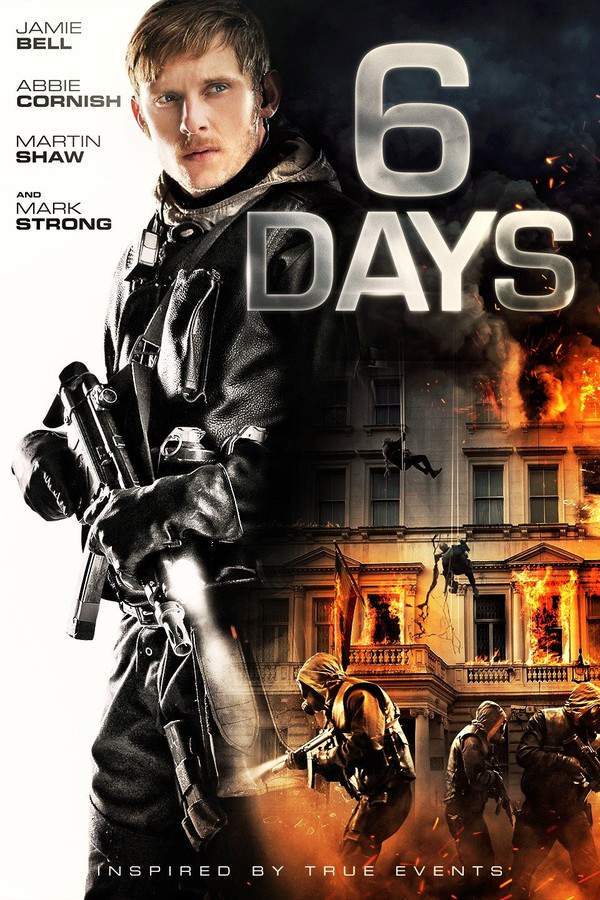
6 Days (2017) Full Movie Breakdown
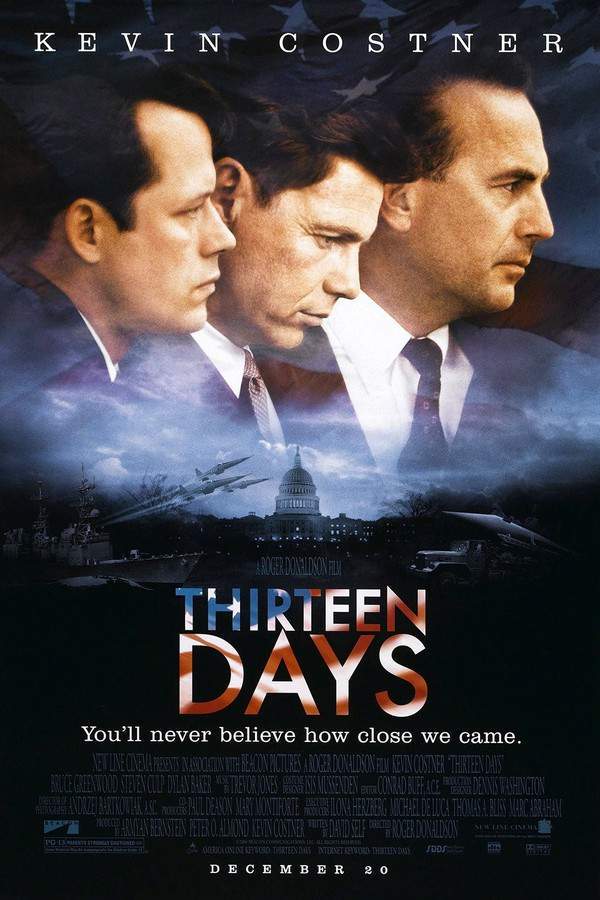
Thirteen Days (2000) Detailed Story Recap
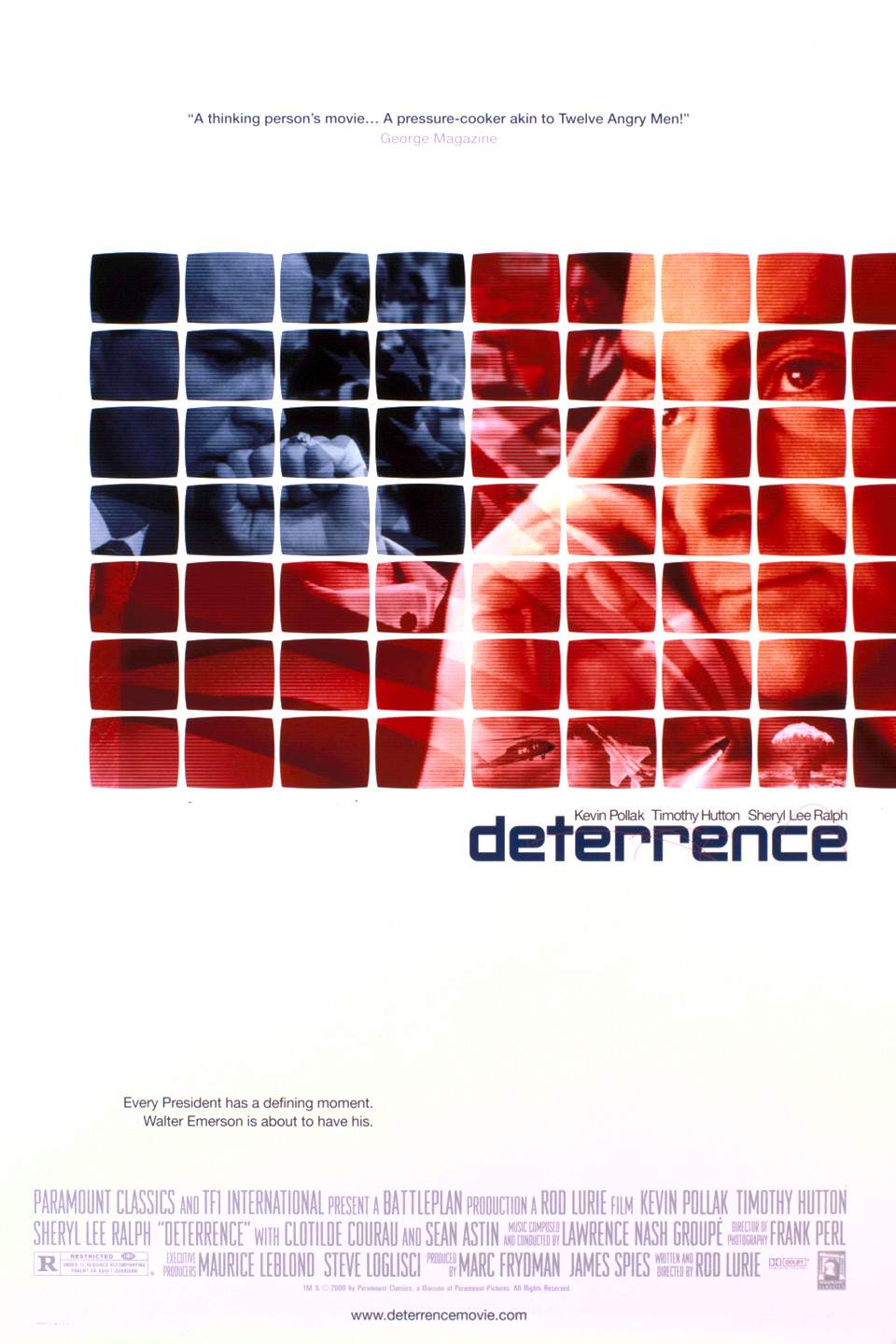
Deterrence (2000) Complete Plot Breakdown
Mayday (2005) Film Overview & Timeline
By Dawn’s Early Light (1990) Plot Summary & Ending Explained
Seven Days War (1988) Film Overview & Timeline
Seven (1979) Complete Plot Breakdown
Seven Days in January (1979) Story Summary & Characters
The Enemy Within (1994) Full Summary & Key Details
Seven Days’ Leave (1942) Full Summary & Key Details
Seven Days to Noon (1950) Plot Summary & Ending Explained
Twilight’s Last Gleaming (1977) Plot Summary & Ending Explained