Year: 1954
Runtime: 87 mins
Language: English
Director: Raoul Walsh
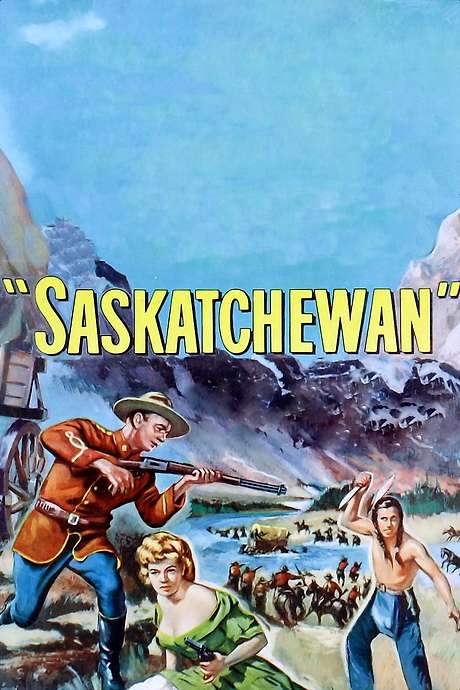
The Royal Northwest Mounted Police stand alone against a ferocious Sioux force that once massacred Custer, while the Cree Nation is drawn into the clash. Blood brothers have their loyalty tested as marauding Sioux cross the border to enlist the peaceful Cree in a battle against the Great White Father.
Warning: spoilers below!
Haven’t seen Saskatchewan yet? This summary contains major spoilers. Bookmark the page, watch the movie, and come back for the full breakdown. If you're ready, scroll on and relive the story!
Read the complete plot breakdown of Saskatchewan (1954), including all key story events, major twists, and the ending explained in detail. Discover what really happened—and what it all means.
After returning from a trapping trip in the northern reaches of Canada, North-West Mounted Police Sub-Inspector Thomas O’Rourke and his Cree ally Cajou discover a burned wagon train and a single survivor, Grace Markey. They bring her back to their fort in Saskatchewan, where the fragile balance of power and loyalty among the officers and Indigenous communities begins to fray. At the fort, the newly arrived post commander, Inspector Benton, unveils a sweeping order to confiscate all Cree rifles. O’Rourke, unaware of this directive—born from decisions taken while he was away trapping—finds himself entangled in a clash between obedience and personal trust. When he finally yields Cajou’s rifle to Benton, the move fractures a deep bond and strains the already tense relationship between the two men.
Across the border, the Sioux, led by a calculating strategy, press the Cree toward an alliance against the Red Coats of Canada. They promise to replace the rifles stripped from the Cree by ransacking the remnants of the dead from the 7th US Cavalry, who fell in a brutal history-making encounter at the Little Bighorn. The idea of a Cree-Sioux coalition intensifies the pressure on the Mounties, forcing hard choices about survival, sovereignty, and the quivering line between loyalty to a post and the larger sweep of history. The Cree, wary of becoming pawns in a larger game, weigh the cost of alliance against the immediate threat from the Sioux, while O’Rourke tries to navigate the political currents without destroying the fragile trust he’s built.
As the fort’s march toward Fort Walsh nears, Benton orders the sergeant to arrest [Thomas O’Rourke] for refusing a direct order. The sergeant resists, sparking a tense confrontation that reveals how fragile discipline can be when faced with competing loyalties. Benton intensifies his threats, signaling that everyone involved faces court-martial once they reach Fort Walsh. The mounting pressure leads O’Rourke to take a solitary path: he leaves the pack to visit the Cree camp and presses the Cree chief to reject any Sioux alliance. The Cree chief agrees to stay out of the alliance, but on one critical condition—having rifles returned to protect their people from Sioux raids. The requirement places O’Rourke in a difficult position, torn between following orders and protecting a fragile beacon of Cree autonomy.
Back at Fort Walsh, the superintendent—unmoved by the Cree chief’s conditional stance—refuses the demand for Rifle restoration and instead orders a sweeping detention of the entire Fort Saskatchewan detachment who had arrived at Fort Walsh earlier. The mood grows heated, and the mounting tension between federal directives and on-the-ground realities threatens to erupt into wider violence. O’Rourke, meanwhile, argues that genuine peace with the Sioux requires a different approach than force alone, but the chain of command remains steadfast in its demands. The superintendent attempts to negotiate with the Sioux to avert bloodshed, insisting that a peaceful coexistence is the only path forward for Canada. Yet the Sioux will not engage, and the Mounties find themselves outmatched and isolated, with their numbers shrinking under relentless pressure.
When the Sioux launch a coordinated attack, the Mounties find themselves trapped, surrounded, and desperate. The odds are heavily against them as casualties mount and morale sags. In a pivotal turn, O’Rourke—accompanied by the Cree—charges to the rescue, breaking the siege and providing a crucial lifeline to the beleaguered Mounties. The assault becomes a test of courage, duty, and the bonds forged between rival groups who must unite to survive. The climactic moments underscore the film’s central themes: the difficult choices forced by colonial borders, the price of obedience to higher authority, and the potential for unlikely alliances to alter the outcome of a dangerous confrontation.
Throughout the narrative, the relationships between [Thomas O’Rourke], [Cajou], [Grace Markey], [Inspector Benton], [Chief Dark Cloud], and [Spotted Eagle] weave a complex tapestry of loyalty, mistrust, and survival. The story does not shy away from showing how decisions made in distant rooms and on distant maps ripple through the lives of those on the frontier. In the end, the rescuing act of courage from O’Rourke and the Cree brothers demonstrates that cooperation can prevail even when orders push individuals toward separation. The film leaves audiences with a restrained, thoughtful meditation on the costs of power, the humanity found in mutual protection, and the enduring pull of courage in the face of overwhelming odds.
Last Updated: October 09, 2025 at 11:26
Discover curated groups of movies connected by mood, themes, and story style. Browse collections built around emotion, atmosphere, and narrative focus to easily find films that match what you feel like watching right now.
Stories where duty and personal bonds are stretched to the breaking point on the frontier.If you liked the tense clash between duty and brotherhood in Saskatchewan, explore other movies with similar conflicts. These films feature characters whose allegiances are tested on the frontier, often involving uneasy alliances and heavy moral choices in a high-stakes environment.
The narrative follows a protagonist or group whose loyalty is divided, typically between a formal institution (like a military or colonial power) and a more personal bond (like family or a sworn brother). The plot escalates steadily as external pressures force a confrontation, culminating in a choice that has heavy, often bittersweet consequences.
These movies share a tense, heavy atmosphere where the core drama comes from internal conflict rather than just external action. They explore themes of honor, betrayal, and the cost of principles in a world where the rules are being written.
The vast frontier feels oppressive, forcing characters into tense, inescapable confrontations.If you were gripped by the tense, claustrophobic feeling in Saskatchewan, you'll find similar films here. These movies masterfully use vast settings to create a sense of entrapment, focusing on survival, escalating conflict, and the psychological pressure of being cornered.
Stories typically involve a group or community isolated and under siege, either literally or metaphorically. The narrative builds pressure steadily as options dwindle and characters are forced together, leading to an explosive confrontation. The focus is on survival and the psychological toll of sustained tension.
These films are grouped by their unique ability to generate a gripping, unsettling mood by making expansive landscapes feel like prisons. They share a steady, tense pacing and a high intensity driven by the constant threat of violence and collapse of order.
Don't stop at just watching — explore Saskatchewan in full detail. From the complete plot summary and scene-by-scene timeline to character breakdowns, thematic analysis, and a deep dive into the ending — every page helps you truly understand what Saskatchewan is all about. Plus, discover what's next after the movie.
Track the full timeline of Saskatchewan with every major event arranged chronologically. Perfect for decoding non-linear storytelling, flashbacks, or parallel narratives with a clear scene-by-scene breakdown.
Discover the characters, locations, and core themes that shape Saskatchewan. Get insights into symbolic elements, setting significance, and deeper narrative meaning — ideal for thematic analysis and movie breakdowns.
Get a quick, spoiler-free overview of Saskatchewan that covers the main plot points and key details without revealing any major twists or spoilers. Perfect for those who want to know what to expect before diving in.
Visit What's After the Movie to explore more about Saskatchewan: box office results, cast and crew info, production details, post-credit scenes, and external links — all in one place for movie fans and researchers.
Discover movies like Saskatchewan that share similar genres, themes, and storytelling elements. Whether you’re drawn to the atmosphere, character arcs, or plot structure, these curated recommendations will help you explore more films you’ll love.
Saskatchewan (1954) Scene-by-Scene Movie Timeline
Saskatchewan (1954) Movie Characters, Themes & Settings
Saskatchewan (1954) Spoiler-Free Summary & Key Flow
Movies Like Saskatchewan – Similar Titles You’ll Enjoy
Northwest Trail (1945) Movie Recap & Themes
Fort Vengeance (1953) Ending Explained & Film Insights
Trail of the Falcon (1968) Full Summary & Key Details
Pony Soldier (1952) Full Movie Breakdown
Dakota Incident (1956) Full Movie Breakdown
The Red Blood of Courage (1935) Story Summary & Characters
The Wild North (1952) Spoiler-Packed Plot Recap
The White Squaw (1956) Complete Plot Breakdown
The Great Sioux Uprising (1953) Full Movie Breakdown
The Great Sioux Massacre (1965) Full Summary & Key Details
The Black Dakotas (1954) Full Summary & Key Details
Custer of the West (1967) Plot Summary & Ending Explained
Red Tomahawk (1967) Complete Plot Breakdown
Django Does Not Forgive (1966) Complete Plot Breakdown
North West Mounted Police (1940) Complete Plot Breakdown