Plot Summary
Portraits (2024) Plot Summary & Ending Explained
- Release, runtime and language
- 2024 · 1 h 22 m · English
- Starring
- Elissa Dowling, Jack Bennett
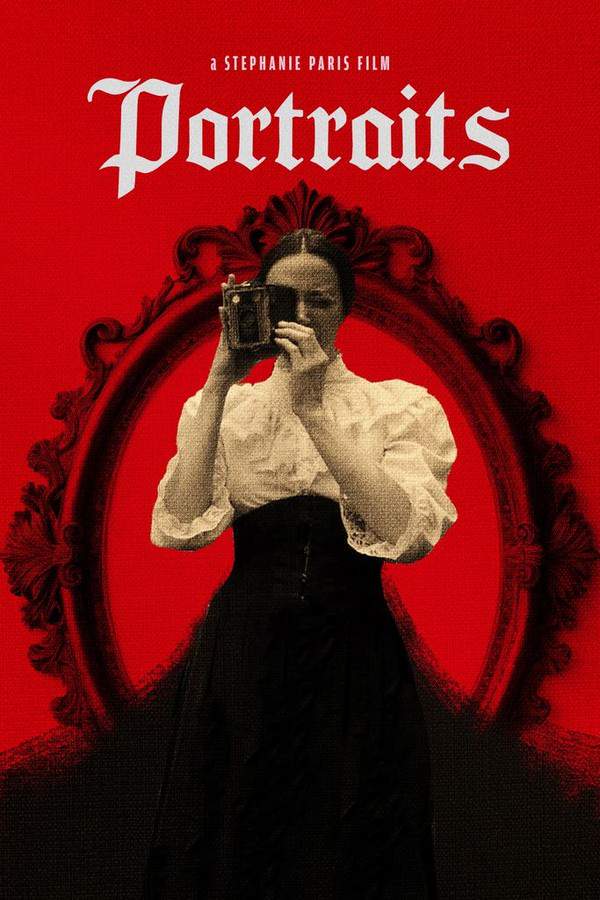
After inheriting a building shrouded in secrets, Mira finds herself surrounded by enigmatic individuals. As she attempts to uncover her family’s hidden past, she must navigate a complex web of relationships and confront a potentially dangerous destiny, unsure if those around her are allies or adversaries.
On this page (4)
Where to watch
Where to Watch Portraits (2024)
Where can you watch Portraits? Stream, rent or buy it in the US, including on Hoopla, Fandango at Home Free and Plex: current JustWatch availability with up-to-date prices.
-
Hoopla Free · SD
-
Fandango at Home Free Free with ads · HD
-
Plex Free with ads · HD
-
Plex Channel Free with ads · HD
-
Tubi TV Free with ads · SD
-
Xumo Play Free with ads · HD
-
Amazon Video Rent $2.99 · SD
-
Apple TV Store Rent $5.99 · HD
-
-
Google Play Movies Rent $4.99 · SD
-
YouTube Rent $4.99 · SD
Streaming availability powered by

Full plot summary
Portraits (2024) Plot Summary Coming Soon
We are working on the full plot summary and ending explained of Portraits (2024). Check back soon, or request it now to move it up the list.
Ending explained
What Happens at the End of Portraits?
How Portraits (2024) ends, in short: the final scene, the last twist and what it means for the characters. The full ending explained, with every spoiler, lives on its own page.
The ending of Portrait of a Lady on Fire is deeply layered with emotional and thematic resonance. After a quiet, powerful scene at a concert, Marianne gazes at Héloïse from across the hall, watching her immersed in the music. Héloïse’s expression embodies a mixture of joy and sorrow, a reflection of the love she still holds for Marianne and the pain of their separation. This moment underscores the film’s exploration of memory, love, and loss, emphasizing that both art and memory serve as eternal vessels for their fleeting romance. Marianne’s focus on Héloïse — seen through her eyes — signifies that even as their love is over, it continues to live on in her gaze and in the portrait Marianne painted, which captures Héloïse as Eurydice, the mythic figure whose love was so profound that it had to be let go.
The final gesture before Marianne leaves is Héloïse running after her in her wedding dress, softly saying “Retourne-toi” (“Turn around”). Here, Héloïse finally drops the formality and speaks informally, revealing her feelings openly for the first time, in a moment of raw vulnerability. This act signifies her surrender and her love—an act of hope and surrender that Marianne fears she may never see again. As Marianne walks away, she notices the portrait of Héloïse and the page number 28 sticking out of a book—a subtle yet powerful symbol. This number refers to a page where Marianne drew herself during a story about Orpheus and Eurydice, signaling Héloïse’s remembrance and the deliberate choice to hold onto their shared love in a concrete, lasting form.
Continue reading the ending (1 more paragraphs)
The film’s ending scene at the concert, set to Vivaldi’s Summer, encapsulates the heart of the story: the longing to hold onto love through art and memory. Héloïse, lost in the music, embodies the emotional complexity of love—joy intertwined with pain, a storm overshadowing a summer’s day. Through her eyes, and Marianne’s perspective, we see how love continues beyond physical presence, forever alive in the soul, in memories, and in art. Céline Sciamma crafted an ending that refuses the conventional notions of a happy or tragic conclusion; instead, it affirms that love’s true power lies in its enduring memory, its ability to transcend time and loss, and in the control women have over their stories and destinies. Despite the sadness, the ending offers a quietly hopeful assertion: love in memory is a form of liberation, and in that memory, both women remain eternally intertwined.
Every angle
Portraits (2024) Explained: Plot, Ending, Timeline & Characters
Everything about Portraits in one place: what happens in the plot summary, the timeline in chronological order, the characters and meaning, the ending explained. What's After the Movie adds the cast, box office and post-credit scenes.
- Portraits Timeline Every key event in chronological order, ideal for flashbacks and time jumps.
- Portraits Characters & Themes Who is who, where it takes place and what the movie really means.
- Portraits Ending Explained What happens at the end, the final scene and what it means.
- Portraits on What's After the Movie Cast and crew, box office, post-credit scenes and more.
Coming soon on iOS and Android
The Plot Explained Movie Summary App
Plot summaries, endings explained and timelines on your phone. Catch up on any movie in minutes, save your favorites and never miss a twist again.
Be the first to know when we launch. Your email stays private, always.
Learn more about the app