Plot Explained Spoilers guaranteed!
Plot Explained

Browse by genre

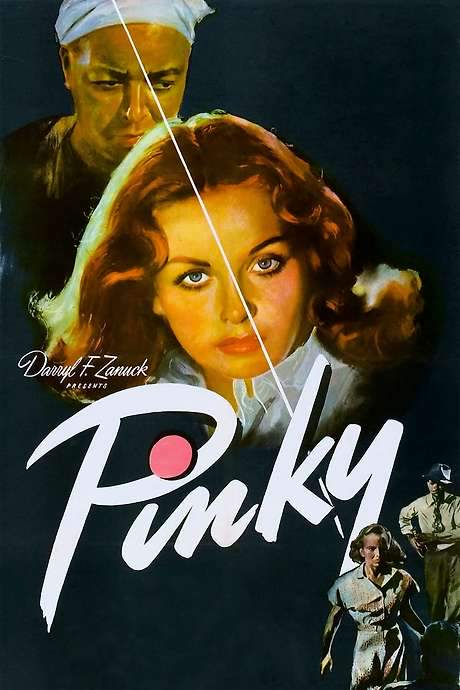
Pinky (1949) movie poster

Characters & Themes

Pinky (1949) Characters, Setting & Themes Explained

Release, runtime and language
1949 · 102 mins · English
Loading streaming availability…
Directed by
Elia Kazan
Starring
Wilfred Jackson, Griff Barnett, Nina Mae McKinney, Juanita Moore, Evelyn Varden, Arthur Hunnicutt

After graduating from a Northern nursing school, Pinky, a light‑skinned Black woman, returns to her Southern grandmother's home. She confides that she has been passing as white at school and reveals her secret, hopeless romance with a young white doctor who knows nothing of her Black heritage, creating a poignant conflict between identity and love.

On this page (8)
  1. 1 Where to watch
  2. 2 Characters explained (8)
  3. 3 Where & when it takes place
  4. 4 Themes & meaning (4)
  5. 5 Character & meaning questions
  6. 6 Movie threads
  7. 7 Movies like Pinky
  8. 8 Every angle
Loading streaming availability…

8 main characters · contains spoilers

Pinky Characters Explained: Who Is Who

The main characters of Pinky (1949), heroes and villains: what drives them, how they change over the course of the story and what each of them reveals about the film's bigger ideas.

  • Pinky Johnson (Jeanne Crain)

    Pinky returns to the segregated South to reclaim her grandmother’s money while grappling with a past she hid by passing as white. Her education and compassion fuel a quiet, stubborn resolve to challenge oppression. She navigates love, betrayal, and the question of where she truly belongs in a world that wants to keep people separated by color.

    • 🎭 Identity
    • 💪 Determination
    • ⚖️ Courage
  • Dr. Thomas Adams (William Lundigan)

    A Black physician who loves Pinky and knows nothing of her heritage at first. He embodies the era’s racial barriers and the loneliness of professional Black men in the South. His relationship with Pinky is tested by social norms that demand secrecy and distance between Black and white communities.

    • 💊 Medicine
    • ❤️ Love
    • 🛡️ Loyalty
  • Dicey Johnson (Ethel Waters)

    Pinky’s illiterate grandmother who raised her and triggers the central stakes of the inheritance dispute. She embodies resilience born from hardship and a pragmatic view of how to secure a future for Pinky and the family.

    • 👵 Family
    • 🧭 Heritage
  • Miss Em (Ethel Barrymore)

    A strong-willed white woman who befriends Pinky and wills her a house and property. Her relationship with Pinky reveals a complex dynamic of generosity and prejudice, and her death becomes a catalyst for the ensuing legal drama.

    • 👵 Patronage
    • 🌟 Generosity
    • ⚖️ Legacy
  • Judge Walker (Basil Ruysdael)

    The defense-friendly judge who agrees to Pinky’s case, bringing legal gravity to the courtroom. His decisions reflect a tension between personal sense of justice and the expectations of a biased society.

    • ⚖️ Justice
    • 🧑‍⚖️ Judge
  • Dr. Canady (Kenny Washington)

    A Black physician who advocates for Black nursing education and trains Pinky’s new Black nursing students. He represents professional Black competence and the capacity to uplift the community through medicine.

    • 🩺 Medicine
    • 🤝 Solidarity
  • Melba Wooley (Evelyn Varden)

    A greedy relative who challenges Miss Em’s will, highlighting the tension between wealth, status, and racial politics in the community.

    • 💰 Greed
    • 🏛️ Inheritance
  • Judge Shoreham (Raymond Greenleaf)

    The presiding judge who unexpectedly rules in Pinky’s favor, underscoring the film’s critique of crowd-driven justice. His decision forces the community to confront the gap between legal form and social reality.

    • 🏛️ Court
    • ⚖️ Law

Last updated: October 04, 2025 at 19:34

Was this helpful?

Setting

Where and When Does Pinky Take Place?

The setting of Pinky (1949): the year and time period, the places and locations, and how they shape the characters, the mood and the tension of the story.

Time period

Late 1940s

The story takes place in the late 1940s Jim Crow South, a period of formalized racial hierarchy and limited opportunities for Black residents. Local law enforcement and the white community wield power backed by tradition and prejudice. Pinky’s decision to reclaim her grandmother's legacy unfolds against a backdrop where equality is rare and legal battles can redefine a town’s conscience.

Location

American South, Southern town

The action unfolds in a Southern town within the Jim Crow era of the American South. The centerpiece is Miss Em's stately house and the surrounding neighborhood, where a contentious will dispute exposes racial tensions. The setting emphasizes everyday life under segregation, where wealth, influence, and legality are filtered through a racialized lens.

  • 🌆 Southern setting
  • 🏛️ Segregation era

Last updated: October 04, 2025 at 19:34

Was this helpful?

4 major themes

Pinky Meaning: Themes & Message Explained

What is Pinky (1949) really about? The emotional, social and philosophical themes the film keeps returning to, its symbolism and the message beneath the surface.

  • Identity

    Pinky’s struggle centers on her double life as a Black woman who has passed for white while pursuing a nursing career in the North. The story probes how identity is shaped by appearance, lineage, and social acceptance. Her choice to embrace her true heritage under pressure reveals the costs and courage of staying true to oneself.

  • Justice

    The courtroom becomes a battleground where personal survival collides with community prejudice. Judge Shoreham (and Judge Walker) must decide between prevailing norms and a fair application of the law. Pinky’s victory exposes the gap between formal justice and the community’s interest.

  • Law & Community

    The will dispute exposes how property, inheritance, and status are entangled with racial power. The case pits legal procedure against social expectation, forcing characters to confront long-standing biases. The outcome reshapes who can access resources and who gets to define a family’s future.

  • Empowerment

    Pinky’s resilience drives her to transform Miss Em’s house into a clinic and nursery school. By training Black nursing students through Dr. Canady’s program, she creates real opportunities for her community. The arc demonstrates how leadership can emerge from adversity and redefine a neighborhood’s possibilities.

Last updated: October 04, 2025 at 19:34

Was this helpful?

Character & theme questions

Pinky Characters & Meaning: Your Questions Answered

The questions people ask about Pinky (1949): who the characters really are, their relationships, what the symbols mean, where it takes place and what the movie is really about. Each answer contains spoilers.

Q1

Where is Pinky set?

The film takes place in a small Southern town during the Jim Crow era of the late 1940s. The primary setting centers on Miss Em's stately house and the surrounding neighborhood, where the story's key events unfold against a backdrop of everyday segregation and racial hierarchy.

  • southern town
  • jim crow
  • segregation
  • setting
  • miss em's house
Q2

What time period does Pinky depict?

Pinky is set in the late 1940s American South, a period when formalized racial segregation was enforced through local laws and social customs. This era was characterized by limited opportunities for Black residents and a system where power was wielded by the white community through tradition and prejudice.

  • 1940s
  • jim crow era
  • late 1940s
  • segregation era
  • american south
Q3

What are the main themes in Pinky?

The film explores several interconnected themes: identity and what it means to stay true to one's heritage despite social pressure; justice and the tension between legal fairness and community prejudice; law and community as they relate to racial power structures; and empowerment through Pinky's transformation of Miss Em's house into a clinic and nursery school that creates opportunities for Black nursing students.

  • identity
  • justice
  • empowerment
  • themes
  • segregation
  • racial prejudice
Q4

Who is Pinky Johnson?

Pinky Johnson is a light-skinned Black woman who returned to her Southern grandmother's home after graduating from a Northern nursing school. She had been passing as white while pursuing her education and now grapples with her dual identity, a secret romance with a white doctor, and her connection to the Black community she left behind.

  • pink johnson
  • main character
  • passing
  • identity
  • nurse
Q5

Who is Miss Em in Pinky?

Miss Em is a strong-willed white woman who befriends Pinky and ultimately wills her house and property. Her relationship with Pinky reveals a complex dynamic of both generosity and prejudice. Her death becomes the catalyst for the legal drama surrounding the inheritance dispute.

  • miss em
  • ethel barrymore
  • inheritance
  • will
  • house
Q6

What does Pinky say about race and identity?

Pinky examines how racial identity is shaped by appearance, lineage, and social acceptance. The story shows the psychological cost of passing for white and celebrates Pinky's courage in choosing to embrace her true heritage. Her journey highlights the arbitrary nature of racial categories and the strength required to reject society's demands to hide one's identity.

  • race
  • identity
  • passing
  • racial identity
  • self-acceptance
  • heritage
Q7

What is the inheritance conflict in Pinky about?

The central legal conflict involves Miss Em's will, which leaves her house and property to Pinky. This bequest is challenged by a greedy relative named Melba Wooley, who uses racial politics to contest the will. The courtroom battle becomes a test of whether the legal system can overcome community prejudice and recognize Pinky's right to inherit.

  • inheritance
  • will
  • court
  • melba wooley
  • legal battle
  • property
Q8

How does Pinky use the house at the end?

After winning her legal battle, Pinky transforms Miss Em's house into a clinic and nursery school. Through Dr. Canady's program, she trains Black nursing students, creating real opportunities for her community. This act of empowerment demonstrates how leadership can emerge from adversity and redefine a neighborhood's possibilities.

  • clinic
  • nursery school
  • nursing students
  • dr canady
  • empowerment
  • house transformation
Q9

Who is Dr. Thomas Adams in the film?

Dr. Thomas Adams is a Black physician who loves Pinky but initially knows nothing of her Black heritage. He embodies the era's racial barriers and the loneliness faced by professional Black men in the segregated South. His relationship with Pinky is tested by social norms that demand secrecy and distance between communities.

  • dr thomas adams
  • black physician
  • love interest
  • racial barriers
Q10

What does Pinky say about the justice system?

The film presents the courtroom as a battleground where judges must choose between prevailing social norms and fair application of the law. Judge Shoreham's unexpected ruling in Pinky's favor exposes the gap between formal justice and the community's prejudiced expectations, suggesting that legal fairness can sometimes triumph over social bias, though not without struggle.

  • court
  • justice system
  • judge shoreham
  • judge walker
  • legal fairness
  • courtroom
Q11

Who is Dicey Johnson?

Dicey Johnson is Pinky's illiterate grandmother who raised her and is at the center of the inheritance stakes. She represents the resilience born from hardship and takes a pragmatic view of how to secure a future for her family. Her relationship with Pinky anchors the emotional core of the story.

  • dicey johnson
  • grandmother
  • inheritance
  • family
  • ethel waters
Q12

What does Pinky reveal about life in the Jim Crow South?

Pinky depicts everyday life under segregation, showing how wealth, influence, and legality were filtered through a racialized lens. The film illustrates how Black residents faced limited opportunities, constant threat of prejudice, and systemic barriers to advancement, while also showing the courage of those who challenged these structures.

  • jim crow
  • segregation
  • everyday life
  • racial hierarchy
  • systemic prejudice

Movie threads

More Movies Like Pinky, by Mood & Story

Curated lists built around what makes Pinky tick: the same mood, the same kind of story or the same emotional payoff. Each list explains why these movies belong together.

Movies about identity and moral courage like Pinky

Characters who must reconcile a hidden identity with their sense of justice. If you enjoyed Pinky's journey of self-discovery, you might like these other films. This collection features movies like Pinky where characters confront prejudice and hidden identities, finding strength through moral conviction and a fight for justice.

  • challenging
  • triumphant
  • dramatic
  • tense
  • hopeful
  • emotionally complex
  • Tone: hopeful, challenging, triumphant
  • Pacing: steady, character-driven
Why these movies?

The story pattern: Stories in this thread typically follow a protagonist living with a secret or conflicted identity. A catalyzing event, often an injustice, forces them to choose between safety and authenticity, leading to a climactic stand—frequently in a legal or public arena—that affirms their true self and values.

Why they belong together: These films are grouped together because they share a powerful focus on the internal and external battles of identity. They combine tense, socially charged drama with a hopeful, character-driven arc, resulting in a cathartic and triumphant viewing experience centered on human dignity.

Hopeful social justice dramas similar to Pinky

Stories where the fight against systemic injustice builds to an uplifting victory. For viewers seeking movies like Pinky that tackle weighty social issues with a steady, hopeful approach. These similar films follow a clear moral arc against injustice, leading to a triumphant and emotionally rewarding conclusion for the characters.

  • hopeful
  • dramatic
  • triumphant
  • socially charged
  • tense
  • courtroom drama
  • Tone: hopeful, dramatic, triumphant
  • Pacing: steady, purposeful
Why these movies?

The story pattern: The narrative pattern involves a protagonist confronting a clear societal ill. Despite facing significant opposition and personal risk, they persevere, often aided by a supportive community or a key ally. The conflict builds steadily rather than explosively, culminating in a legal or symbolic victory that provides closure and hope.

Why they belong together: This thread connects movies that balance the gravity of social commentary with an ultimately optimistic and uplifting tone. They share a steady pacing that allows for character development and a measured build-up of tension, resolving in a way that feels earned and emotionally satisfying without being naive.

If you liked this

Movies Like Pinky

Similar movies to Pinky: the same genre, themes or kind of story. Each one comes with its own plot summary, timeline and ending explained.

Browse all movie summaries

Every angle

Pinky (1949) Explained: Plot, Timeline & Characters

Everything about Pinky in one place: what happens in the plot summary, the timeline in chronological order, the characters and meaning and a spoiler-free summary. What's After the Movie adds the cast, box office and post-credit scenes.

Coming soon on iOS and Android

The Plot Explained Movie Summary App

Plot summaries, endings explained and timelines on your phone. Catch up on any movie in minutes, save your favorites and never miss a twist again.

Be the first to know when we launch. Your email stays private, always.

Learn more about the app