Plot Explained Spoilers guaranteed!
Plot Explained

Browse by genre

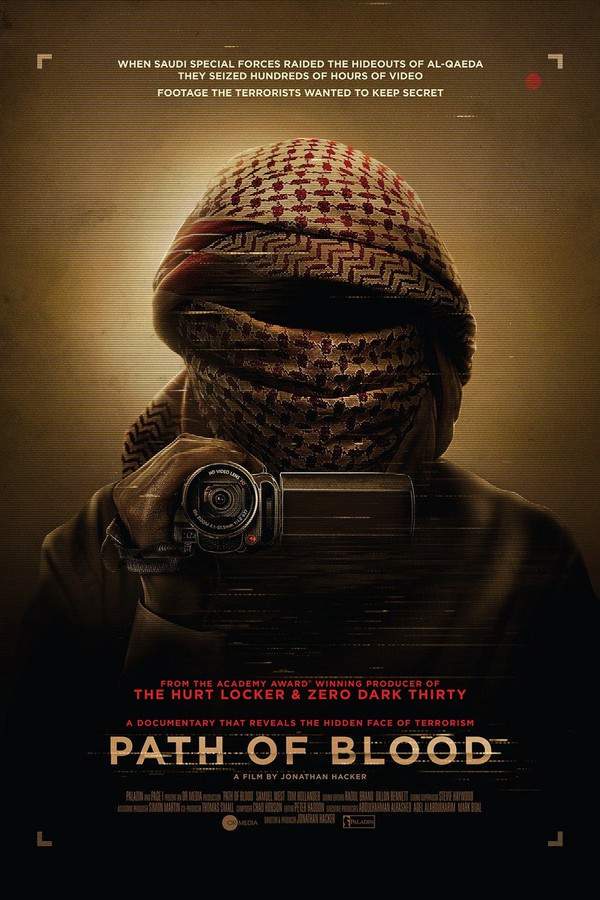
Path of Blood (2018) movie poster

Timeline

Path of Blood (2018) Timeline Explained – Every Event in Order

Release, runtime and language
2018 · 92 min · English
Echo score 75
Loading streaming availability…
Directed by
Jonathan Hacker
Starring
Tom Hollander, Paul Marshall Johnson Jr., Samuel West

This documentary offers a disturbing look into the mindset of young people drawn into extremist ideologies. Through exclusive footage from Saudi security services, the film portrays the descent into violence of those brainwashed by idealism and a thirst for adventure. The subjects plot to overthrow the Saudi government, and the documentary reveals the brutal tactics employed when their plans fall apart. It's a powerful and often shocking cinematic experience that explores the complexities of Islamist terrorism and attempts to humanize the individuals involved.

On this page (6)
  1. 1 Where to watch
  2. 2 Events in order (12)
  3. 3 Timeline questions answered
  4. 4 Movie threads
  5. 5 Movies like Path of Blood
  6. 6 Every angle
Loading streaming availability…

12 events in order · contains spoilers

Path of Blood Timeline: Events in Chronological Order

Every key event of Path of Blood (2018) in order, scene by scene, with when and where it takes place. Use it to untangle flashbacks, time jumps and parallel storylines, to refresh your memory before the sequel or to find the exact scene you are thinking of.

  1. Osama bin Laden's Orders from Tora Bora

    In the rubble of the Tora Bora mountains, Osama bin Laden gathers his most senior lieutenants. He orders them to return to his homeland of Saudi Arabia and launch a revolution to overthrow the ruling regime.

    When
    2001
    Where
    Tora Bora, Afghanistan
  2. The Grand Ambition Is Set

    Al Qaeda's leadership defines its ultimate objective: to conquer the land of the Two Holy Mosques. From there, they plan to establish a worldwide Muslim empire that would take on the West and win.

    When
    2001
    Where
    Tora Bora, Afghanistan
  3. Al Qaeda Operatives Infiltrate the Kingdom

    Bin Laden's most senior lieutenants slip back into Saudi Arabia and begin building a clandestine network. Operatives recruit foot soldiers and prepare the groundwork for an armed campaign against the Saudi state.

    When
    2001-2003
    Where
    Saudi Arabia
  4. The Riyadh Compound Bombings

    Al Qaeda launches its campaign with coordinated bombings targeting residential compounds in Riyadh. The attacks take Saudi society completely by surprise and mark the opening of a long and bloody war.

    When
    May 2003
    Where
    Riyadh, Saudi Arabia
  5. The Saudi State Strikes Back

    The Saudi government responds quickly and decisively to the surprise attacks. The Ministry of Interior mobilizes the full firepower of the state to track down and eliminate those responsible.

    When
    2003
    Where
    Riyadh, Saudi Arabia
  6. Prince Muhammad bin Nayef Takes Charge

    Stoic security chief Prince Muhammad bin Nayef relentlessly focuses the resources of the Saudi state on hunting the terrorists. His leadership becomes the driving force behind the government's counterterrorism campaign.

    When
    2003
    Where
    Saudi Arabia
  7. Al Qaeda Escalates the Violence

    Under mounting pressure from security forces, Al Qaeda proves it still has much up its sleeves. The militants escalate their attacks, forcing the government to intensify its own brutal response.

    Where
    Saudi Arabia
  8. A Long and Bloody War Consumes the Kingdom

    The conflict descends into a protracted and bloody war between Al Qaeda and the Saudi state. Attacks and counterattacks continue to escalate as neither side is willing to back down.

    Where
    Saudi Arabia
  9. Al Qaeda's Foot Soldiers Film Their War

    Throughout the campaign, Al Qaeda's own operatives shoot hundreds of tapes documenting their operations from the inside. The footage offers an unprecedented, first-hand view of the militants' daring mission.

    Where
    Saudi Arabia
  10. Intelligence Services Seize the Archive

    Saudi intelligence services capture hundreds of the tapes shot by Al Qaeda's foot soldiers during the war. The seized material becomes the visual backbone of this film's account of the conflict.

    Where
    Saudi Arabia
  11. Police CSI Footage Documents the Carnage

    Police forensic teams use rare CSI footage to record the aftermath of the attacks. These recordings capture the brutal reality of the bombings and shootings that scarred Saudi society during the war.

    Where
    Saudi Arabia
  12. The Suicide Mission Fails

    Al Qaeda's audacious mission to topple the House of Saud proves to be ultimately suicidal. The relentless pressure of the Saudi security apparatus grinds down the militants, collapsing their dream of a worldwide Muslim empire.

    Where
    Saudi Arabia

Last updated: October 11, 2026 at 16:42

Was this helpful?

Timeline questions answered

Path of Blood Timeline Explained: Your Questions Answered

When does it happen, and why in that order? The questions people ask about the chronology of Path of Blood (2018): time jumps, flashbacks, cause and effect between scenes and the correct order of events, each answered with spoilers.

Q1

Why did Osama bin Laden order his lieutenants back to Saudi Arabia after Tora Bora?

In 2001, Osama bin Laden gathered his senior lieutenants in the rubble of Tora Bora and issued a directive for them to return to his ancestral homeland. Their objective was to ignite a violent revolution that would overthrow the House of Saud and capture the Land of the Two Holy Mosques. From that strategic base, Al Qaeda intended to build a worldwide Muslim empire capable of confronting and defeating the West. This single order set the entire campaign that Path of Blood chronicles in motion.

Foreshadowing: The directive issued at Tora Bora is the origin point for every attack the documentary later examines, including the 2003 Riyadh bombings.

  • bin laden
  • tora bora
  • directive
  • revolution
  • house of saud
  • al qaeda leadership
Q2

What was Al Qaeda's ultimate objective in Saudi Arabia and why did the mission fail?

Al Qaeda aimed to conquer Saudi Arabia as a strategic launchpad for a global Muslim empire that would take on the West. Their mission collapsed because the relentless pressure of the Saudi security apparatus, led by Prince Muhammad bin Nayef, systematically tracked and eliminated the militants, dismantling their clandestine networks. Path of Blood frames this as the moment when ideological ambition far outpaced operational capability, turning what was meant to be a revolution into a grinding, fatal defeat.

Foreshadowing: The grand ambition stated at Tora Bora is set up to be in direct contrast with the attritional warfare the film eventually reveals.

  • al qaeda
  • objective
  • worldwide muslim empire
  • revolution
  • mission failure
Q3

How did Prince Muhammad bin Nayef become central to the Saudi counterterrorism campaign?

After the May 2003 Riyadh compound bombings, Prince Muhammad bin Nayef took command of the response as the security chief of the Ministry of Interior. He relentlessly focused the full resources of the Saudi state on hunting the terrorists, becoming the driving force behind the entire counterterrorism operation. His stoic, methodical leadership is portrayed in Path of Blood as the central reason the militants' revolution never gained lasting traction inside the kingdom.

Foreshadowing: His initial deployment of state resources sets the tone for the escalatory violence the rest of the film documents.

  • prince muhammad bin nayef
  • counterterrorism
  • ministry of interior
  • security chief
Q4

Why were the 2003 Riyadh compound bombings such a shock to Saudi society?

The May 2003 Riyadh compound bombings were Al Qaeda's opening coordinated attacks on Saudi soil and caught the kingdom completely off guard. Residential compounds filled with foreign workers were never expected to become frontline targets of a domestic insurgency. The shock forced Saudi society to confront the reality that returning militants had spent years building a clandestine network capable of striking deep inside the country, a revelation that reshaped every major security decision that followed in Path of Blood.

Foreshadowing: Al Qaeda's quiet infiltration between 2001 and 2003 had been building toward exactly this kind of high-profile urban strike.

  • riyadh bombings
  • 2003
  • residential compounds
  • surprise attack
  • infiltration
Q5

Why did the conflict escalate into a brutal cycle of violence?

As Saudi security forces closed in on Al Qaeda operatives, the militants responded with new attacks to prove they still had capacity and resolve. Each wave of bombings forced the state to escalate its response in turn, deploying harsher tactics and more resources. Path of Blood shows how this ratcheting dynamic turned what began as a bid for revolution into a grinding attritional war that consumed the kingdom for years.

Foreshadowing: Al Qaeda's claim that they had 'many more plans in reserve' foreshadows the retaliatory attacks the militants unleash once they come under pressure.

  • escalation
  • cycle of violence
  • retaliation
  • saudi security forces
  • al qaeda attacks
Q6

Where did the hundreds of Al Qaeda tapes shown in the documentary come from?

Throughout the long campaign in Saudi Arabia, Al Qaeda's own foot soldiers recorded hundreds of tapes documenting their operations from the inside. These recordings captured the militants' own perspective of the conflict, offering an unprecedented first-hand view of their planning, safehouses, and tactics. Path of Blood uses this captured material as its visual backbone, giving viewers an unfiltered look at how the insurgency actually functioned on a daily basis.

Foreshadowing: The militants' habit of self-documentation ultimately produced the very evidence that would later be used to expose their networks.

  • al qaeda tapes
  • internal footage
  • foot soldiers
  • raw material
  • self-documentation
Q7

How did Saudi intelligence manage to seize so much of Al Qaeda's internal footage?

Saudi intelligence services captured hundreds of tapes that Al Qaeda foot soldiers had recorded during the war, often through raids on militant hideouts or during the arrest of operatives. The seized archive gave authorities an insider's record of AQAP's networks, safehouse locations, and operational methods. In Path of Blood, this material allows the documentary to reconstruct the militants' daring but ultimately suicidal mission without relying on outside reconstruction or commentary.

Foreshadowing: The militants' attempts to record their own mission created a documentary trail that intelligence services eventually turned against them.

  • intelligence services
  • seized footage
  • raids
  • militant hideouts
  • archive
Q8

What is AQAP and why does the documentary focus on this faction?

AQAP stands for Al Qaeda in the Arabian Peninsula, the branch of Al Qaeda that actually carried out the campaign to topple the House of Saud. This faction is the central focus of Path of Blood because it was the operational arm that infiltrated Saudi Arabia, launched the 2003 Riyadh bombings, and waged the prolonged insurgency against the Ministry of Interior. The documentary treats AQAP as the specific organization whose daring-and-suicidal mission drove the entire conflict.

Foreshadowing: AQAP's regional identity explains why the insurgency targeted Saudi Arabia specifically rather than another country.

  • aqap
  • al qaeda arabian peninsula
  • faction
  • insurgency
  • house of saud
Q9

Why is the Al Qaeda campaign ultimately described as a 'suicide mission'?

Al Qaeda's attempt to overthrow the Saudi government is described as suicidal because the militants were systematically outmatched by the security forces led by Prince Muhammad bin Nayef. The relentless pressure from the state crushed the insurgents' networks, eliminated their senior lieutenants, and dismantled their capacity for coordinated operations. Path of Blood concludes that the militants' grand ambition of a worldwide Muslim empire collapsed under the weight of their own overreach against a far more powerful state.

Foreshadowing: bin Laden's initial order at Tora Bora already implied a fight the militants could not realistically win against the full Saudi state apparatus.

  • suicidal mission
  • overreach
  • saudi security
  • collapse
  • al qaeda defeat
Q10

What role does police CSI footage play in telling the story of the conflict?

Path of Blood incorporates rare CSI footage recorded by police forensic teams to document the aftermath of bombings and shootings across Saudi Arabia. These recordings capture the brutal reality of the carnage in clinical, unflinching detail, providing a stark counterpoint to the ideological fervor shown in the militants' own tapes. Together, the two source materials allow the documentary to present both sides of the war, the attackers' zeal and the victims' bodies, without resorting to sensationalism.

Foreshadowing: The aftermath footage foreshadows just how devastating each successful Al Qaeda attack was before security forces could fully respond.

  • csi footage
  • forensic evidence
  • aftermath
  • police recordings
  • carnage

Movie threads

More Movies Like Path of Blood, by Mood & Story

Curated lists built around what makes Path of Blood tick: the same mood, the same kind of story or the same emotional payoff. Each list explains why these movies belong together.

Found footage documentaries about extremism like Path of Blood

Watching ideology curdle into violence through the perpetrators' own recordings. Movies like Path of Blood that pull viewers into the terrifying world of radicalization through raw, captured footage. If you are searching for similar found footage documentaries about terrorism, extremism, and the inner workings of militant cells, this collection gathers films that let history speak for itself through haunting, real recordings.

  • found footage
  • radicalization
  • disturbing
  • real recordings
  • ideological
  • raw
  • Tone: dark, grim, chilling
  • Pacing: steady, observational, chronological
Why these movies?

The story pattern: These stories unfold chronologically through real, often handheld recordings that begin with recruitment, bonding rituals, and political sermons, then follow the group as plans take shape and violence arrives. The narrative builds around the slow erosion of idealism into operational brutality, with the camera present at planning meetings, safe houses, and finally at the bloody aftermath when the authorities close in. There is no clean third-act rescue, only a portrait of how ideology metastasizes until it consumes its believers.

Why they belong together: They share the same raw documentary grammar: footage the filmmakers did not shoot themselves, militants on camera before catastrophe, and an unflinching refusal to cut away from the brutal consequences of their choices. The steady pacing, dark tone, and heavy emotional weight all come from the same source — the audience is being asked to witness something that actually happened, not to be entertained by it.

Bleak terrorism and political violence documentaries like Path of Blood

Heavy, unflinching portraits of terrorism and the violent cycles it creates. If you liked Path of Blood and want more documentaries and heavy dramas that explore terrorism, insurgency, and political violence, this thread gathers similar bleak films. Expect movies that follow real events and real operatives, with dark tones, steady pacing, and endings that refuse to offer hope. Perfect for viewers searching for unflinching looks at extremism and its consequences.

  • bleak
  • terrorism
  • political violence
  • gritty
  • somber
  • disturbing
  • Tone: dark, bleak, somber, oppressive
  • Pacing: steady, methodical, chronological
Why these movies?

The story pattern: Stories in this thread tend to follow the lifecycle of an insurgency or terrorist campaign from its ideological origins, through its tactical escalation, to its eventual suppression. Characters are introduced with enough humanity to make their violence feel personal rather than abstract, and the state actors responding to them are rarely portrayed as clean heroes. The arcs end bleak because the films refuse to pretend that anyone truly wins these cycles, only that one side outlasts the other.

Why they belong together: They are united by tone and emotional texture: dark, somber, oppressive atmospheres; steady pacing that lets atrocities accumulate; high intensity carried by graphic, disturbing footage; and heavy emotional weight that lingers after the credits. The shared topic of terrorism, extremism, or political violence gives the thread its thematic spine, but it is the uncompromising bleakness that makes them feel like one family of films.

If you liked this

Movies Like Path of Blood

Similar movies to Path of Blood: the same genre, themes or kind of story. Each one comes with its own plot summary, timeline and ending explained.

Browse all movie summaries

Every angle

Path of Blood (2018) Explained: Plot, Timeline & Characters

Everything about Path of Blood in one place: what happens in the plot summary, the timeline in chronological order, the characters and meaning and a spoiler-free summary. What's After the Movie adds the cast, box office and post-credit scenes.

Coming soon on iOS and Android

The Plot Explained Movie Summary App

Plot summaries, endings explained and timelines on your phone. Catch up on any movie in minutes, save your favorites and never miss a twist again.

Be the first to know when we launch. Your email stays private, always.

Learn more about the app