Plot Explained Spoilers guaranteed!
Plot Explained

Browse by genre

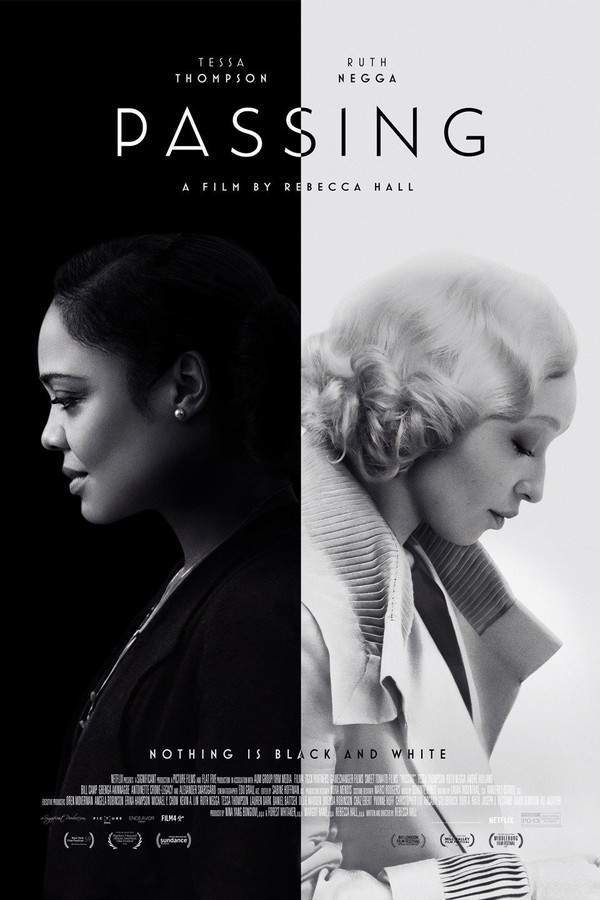
Passing (2021) movie poster

Characters & Themes

Passing (2021) Characters, Setting & Themes Explained

Release, runtime and language
2021 · 98 min · English
Echo score 79
Loading streaming availability…
Directed by
Rebecca Hall
Starring
Tessa Thompson, Bill Camp, Kerry Flanagan, Alexander Skarsgård, Andre Holland, Antoinette Crowe-Legacy

In 1920s New York, childhood friends Irene Redfield and Clare Kendry find their lives intertwined by the complexities of race and identity. Clare, who can pass as white, unexpectedly re-enters Irene’s life, creating a precarious situation built on secrets and deception. As Clare inserts herself into Irene's world, the blurred lines between their realities become increasingly dangerous, threatening to expose hidden truths and upend their carefully constructed lives. The consequences of passing become a matter of survival, testing the limits of their friendship and forcing them to confront uncomfortable truths about themselves and society.

On this page (10)
  1. 1 Where to watch
  2. 2 Characters explained (4)
  3. 3 Character relationship map
  4. 4 Where & when it takes place
  5. 5 Themes & meaning (3)
  6. 6 Character & meaning questions
  7. 7 The book behind the movie
  8. 8 Movie threads
  9. 9 Movies like Passing
  10. 10 Every angle
Loading streaming availability…

4 main characters · contains spoilers

Passing Characters Explained: Who Is Who

The main characters of Passing (2021), heroes and villains: what drives them, how they change over the course of the story and what each of them reveals about the film's bigger ideas.

  • Irene Redfield (Tessa Thompson)

    Irene Redfield is a light-skinned black woman who fully embraces her African-American identity and leads a seemingly stable life with her family. As the narrative unfolds, her insecurities about her friendship with Clare and her marriage come to the forefront, leading to internal conflict and mounting paranoia. Irene embodies the struggle of balancing societal expectations with personal truths.

    • 👩🏽‍🦳 Protagonist
    • 🌍 Identity
    • 🎭 Emotion
  • Clare (Ruth Negga)

    Clare is Irene's childhood friend who has chosen to pass as white, resulting in a life of privilege but also inner turmoil. Her character represents the allure and danger of rejecting one's heritage for acceptance in a different society. As she navigates her complex feelings, Clare's desire for freedom clashes with her reality, leading to tragic consequences.

    • 👩🏿‍🦰 Complex
    • 🏵️ Desire
    • 💼 Socialite
  • John (Alexander Skarsgård)

    John is Clare's wealthy white husband, who embodies the racism and privilege of his time. He remains oblivious to the realities of racial tensions and his wife's heritage, reflecting the dismissive attitudes prevalent in society. His confrontational nature ultimately sets off a tragic turn in the story, highlighting the consequences of ignorance and prejudice.

    • 👨🏽‍💼 Antagonist
    • 🔥 Anger
    • 💔 Conflict
  • Brian (Andre Holland)

    Brian is Irene's husband, who finds himself caught in the emotional turmoil of the events unfolding around him. His character provides a lens into the struggles of addressing race and identity within a family context. As he tries to navigate his loyalty to his wife and his growing bond with Clare, his reactions contribute to the rising tension.

    • 👨🏿‍⚕️ Supportive
    • 🤔 Conflicted
    • 💔 Loyalty

Last updated: October 23, 2026 at 17:50

Was this helpful?

4 characters · 9 connections · contains spoilers

Passing Character Relationship Map

Who is connected to whom in Passing: family, love, friendships, rivalries and hidden ties, colour-coded. Pick a character to see their side of the story, or a connection to see what brings two characters together.

How much of the story to show
IRIrene RedfieldTessa ThompsonCClareRuth NeggaJJohnAlexander SkarsgårdBBrianAndre Holland

Last updated: October 23, 2026 at 17:50

Was this helpful?

Setting

Where and When Does Passing Take Place?

The setting of Passing (2021): the year and time period, the places and locations, and how they shape the characters, the mood and the tension of the story.

Time period

The movie reflects themes relevant to the early to mid-20th century, a period marked by racial segregation and the complexities of identity within the African-American community. Social dynamics, class disparity, and personal choices are pivotal during this time, influencing the characters' interactions and decisions.

Location

Harlem, Jazz Club, Hotel

Harlem is a vibrant neighborhood in New York City known for its rich cultural history and significant role in the African-American community. The setting of the movie showcases the juxtaposition between black and white societies during a time of racial tension. The jazz club serves as a symbol of cultural connection and expression within the African-American experience.

  • 🏙️ Urban
  • 🎶 Music
  • 🏨 Hospitality

Last updated: October 23, 2026 at 17:50

Was this helpful?

3 major themes

Passing Meaning: Themes & Message Explained

What is Passing (2021) really about? The emotional, social and philosophical themes the film keeps returning to, its symbolism and the message beneath the surface.

  • Identity

    The theme of identity is central to the movie, exploring the struggles of being true to oneself in a racially divided society. Irene and Clare represent starkly different choices regarding their racial identities, prompting discussions about privilege, acceptance, and social norms. Their interactions highlight the emotional turbulence that stems from these choices and the impact on personal relationships.

  • Jealousy

    Jealousy weaves its way through the narrative as Irene grapples with feelings of inadequacy and paranoia regarding Clare's relationship with her husband. This theme emphasizes the emotional complexities that arise from their friendship and the dangers of suppressed desires. As Irene's jealousy escalates, it leads to catastrophic consequences, illuminating the destructive nature of such emotions.

  • Social Inequality

    Social inequality is a prominent theme, illustrated through Clare's choice to pass as white for societal acceptance. The film starkly contrasts the privileges afforded by race with the struggles faced due to prejudice. This theme calls attention to the broader implications of race, identity, and the personal sacrifices individuals make to navigate social structures.

Last updated: October 23, 2026 at 17:50

Was this helpful?

Character & theme questions

Passing Characters & Meaning: Your Questions Answered

The questions people ask about Passing (2021): who the characters really are, their relationships, what the symbols mean, where it takes place and what the movie is really about. Each answer contains spoilers.

Q1

Where does the movie take place?

The movie is set primarily in Harlem, a vibrant neighborhood in New York City with a rich African-American cultural history. Additional key locations include a jazz club and a hotel, which serve as important settings that highlight the contrast between Black and white societies during the 1920s.

  • harlem
  • new york
  • setting
  • jazz club
  • location
Q2

What time period is the movie set in?

The movie is set in 1920s New York, during the early to mid-20th century. This period was marked by racial segregation and significant social tensions, providing the historical backdrop that shapes the characters' identities and choices.

  • 1920s
  • time period
  • era
  • historical setting
  • 1920s new york
Q3

What are the main themes of the movie?

The movie explores three interconnected themes: identity, examining the struggles of living authentically in a racially divided society; jealousy, focusing on the emotional turmoil in relationships stemming from envy and insecurity; and social inequality, illustrating the privileges afforded by whiteness versus the prejudice faced by Black Americans.

  • identity
  • jealousy
  • social inequality
  • themes
  • race
Q4

What does "passing" mean in the context of the film?

In the film, "passing" refers to Clare Kendry's choice to live as a white woman, exploiting her light skin to gain societal privileges denied to Black people. This act creates the central tension of the movie, as Clare risks her safety by re-entering the Black community while keeping her true identity hidden from her white husband.

  • passing
  • racial identity
  • passing as white
  • identity politics
Q5

Who are the main characters?

The film centers on four key characters: Irene Redfield, a light-skinned Black woman who embraces her identity and lives in Harlem with her husband Brian; Clare Kendry, Irene's childhood friend who passes as white and marries a wealthy white man named John; Brian, Irene's husband caught in the emotional conflict; and John, Clare's racist white husband unaware of her true heritage.

  • characters
  • irene redfield
  • clare kendry
  • john
  • brian
  • cast
Q6

What does Harlem represent in the film?

Harlem represents a cultural hub and safe haven for the Black community during the Harlem Renaissance. The neighborhood serves as a stark contrast to the white world Clare navigates, symbolizing both cultural pride and the constraints of racial segregation that the characters must navigate daily.

  • harlem
  • cultural significance
  • black community
  • harlem renaissance
Q7

How do Clare and Irene differ in their approach to identity?

Irene fully embraces her African-American identity, living openly in the Black community with her family. Clare, by contrast, has rejected her Black identity to live as white, gaining social privileges but experiencing inner turmoil and a longing for connection to her heritage. Their contrasting choices create the film's central philosophical conflict.

  • identity contrast
  • clare kendry
  • irene redfield
  • racial identity choices
Q8

Why is the jazz club significant in the movie?

The jazz club serves as a powerful symbol of African-American cultural expression and connection. It represents the vibrancy and artistic richness of Black culture during the era, providing a space where the characters can celebrate their heritage, a stark contrast to the white societal spaces that marginalize them.

  • jazz club
  • cultural expression
  • music
  • symbolism
  • black culture
Q9

What motivates Clare to reconnect with Irene?

Clare's motivation to reconnect with Irene stems from her deep longing to reclaim a part of herself that she sacrificed by passing as white. Living in a white world has left her emotionally isolated from her heritage, and reconnecting with her childhood friend represents a desire to bridge the gap between her two separate lives.

  • clare motivation
  • reconnection
  • heritage
  • inner conflict
  • longing
Q10

What social issues does the movie explore?

The movie explores racial segregation, the privilege afforded to white-passing individuals, and the personal sacrifices people make to navigate oppressive social structures. It examines how systemic racism forces individuals into impossible choices about identity, community, and belonging.

  • racial segregation
  • social issues
  • racism
  • privilege
  • systemic inequality
Q11

What is Irene's role in the story?

Irene serves as the moral and emotional center of the film, representing those who choose to live openly as Black people despite societal prejudice. Her perspective provides the lens through which viewers experience the complexities of identity, friendship, and the psychological toll of living with secrets.

  • irene redfield
  • protagonist
  • perspective
  • moral center
Q12

How does the movie depict racial tension in 1920s America?

The film depicts racial tension through the stark divide between the white upper-class world Clare inhabits and the Black community of Harlem. Characters face constant threats from racist attitudes, discriminatory laws, and the ever-present danger of Clare's true identity being exposed, a risk that carries violent consequences.

  • racial tension
  • racism
  • 1920s america
  • segregation
  • discrimination

Movie threads

More Movies Like Passing, by Mood & Story

Curated lists built around what makes Passing tick: the same mood, the same kind of story or the same emotional payoff. Each list explains why these movies belong together.

Claustrophobic period dramas of psychological unease like in Passing

Historical settings where internal tensions simmer into dangerous consequences. Explore movies like Passing that use a historical setting to create a tense, claustrophobic atmosphere. These films focus on internal psychological conflict, social constraints, and dangerous secrets, often leading to heavy emotional consequences. If you liked the oppressive mood and simmering tension of Passing, you'll find similar stories here.

  • claustrophobic
  • oppressive
  • unsettling
  • tense
  • melancholic
  • anxious
  • Tone: tense, melancholic, unsettling
  • Pacing: steady, slow burn
Why these movies?

The story pattern: Stories in this thread typically unfold within rigid social structures of the past, where characters are trapped by conventions or their own secrets. The central conflict is often psychological, building slowly as repressed desires, envy, or deception threaten to shatter a carefully maintained facade, culminating in a dramatic, often tragic, release of tension.

Why they belong together: These movies are grouped by their shared combination of a detailed period setting, a focus on internal psychological drama over external action, and a consistently tense, oppressive mood. They prioritize character psychology and social commentary, creating a specific, intense viewing experience.

Movies about toxic friendships and deception like Passing

Stories where a close relationship becomes a dangerous game of envy and lies. Find movies similar to Passing that explore the dangerous dynamics of friendship warped by obsession and deception. These character-driven dramas focus on how envy and secrets can fracture relationships, leading to intense psychological tension and heavy emotional consequences. If you were captivated by the fraught bond between Irene and Clare, discover more films here.

  • obsessive
  • unsettling
  • paranoid
  • jealousy
  • psychological
  • tense
  • Tone: tense, paranoid, melancholic
  • Pacing: steady, character-driven
Why these movies?

The story pattern: The narrative pattern involves a seemingly stable life disrupted by the arrival or re-emergence of a charismatic but manipulative figure. The central friendship becomes a battleground for power, identity, and desire, with the line between admiration and envy blurring. The story methodically builds psychological pressure until the deceptive foundation of the relationship collapses, often with devastating results.

Why they belong together: These films are united by their intense focus on a dual-character study where friendship is the primary vessel for themes of identity, jealousy, and moral ambiguity. They share a steady, deliberate pacing that allows psychological complexity to build, resulting in a tense, heavy, and ultimately tragic viewing experience.

If you liked this

Movies Like Passing

Similar movies to Passing: the same genre, themes or kind of story. Each one comes with its own plot summary, timeline and ending explained.

Browse all movie summaries

Every angle

Passing (2021) Explained: Plot, Ending, Timeline & Characters

Everything about Passing in one place: what happens in the plot summary, the timeline in chronological order, the characters and meaning, the ending explained and a spoiler-free summary. What's After the Movie adds the cast, box office and post-credit scenes.

Coming soon on iOS and Android

The Plot Explained Movie Summary App

Plot summaries, endings explained and timelines on your phone. Catch up on any movie in minutes, save your favorites and never miss a twist again.

Be the first to know when we launch. Your email stays private, always.

Learn more about the app