Plot Explained Spoilers guaranteed!
Plot Explained

Browse by genre

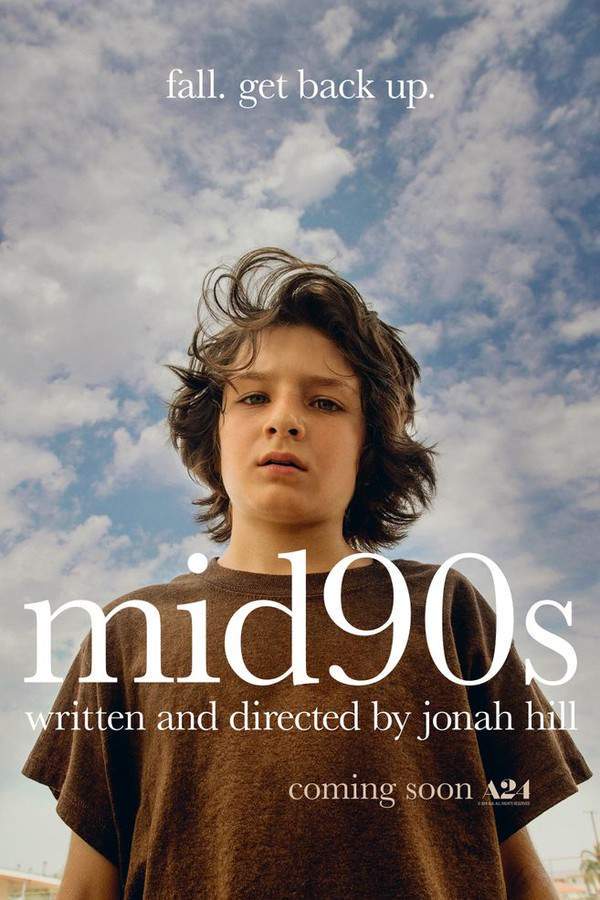
Mid90s (2018) movie poster

Plot Summary

Mid90s (2018) Plot Summary Explained

Release, runtime and language
2018 · 85 min · English
Echo score 78
JustWatch #6,520 107
Starring
Jerrod Carmichael, Lucas Hedges, Katherine Waterston, Sunny Suljic, Alexa Demie, Cici Lau
Budget
$1.7M

In 1990s Los Angeles, thirteen-year-old Stevie escapes a difficult home life by spending his summer at a local skate shop. There, he finds camaraderie and mentorship with a group of older, more experienced skaters, learning about life, friendship, and navigating the challenges of adolescence along the way. He quickly becomes immersed in the skateboarding scene, finding a place where he truly belongs.

On this page (6)
  1. 1 Where to watch
  2. 2 What happens: full plot
  3. 3 Plot questions answered
  4. 4 Movie threads
  5. 5 Movies like Mid90s
  6. 6 Every angle

Where to watch

Where to Watch Mid90s (2018)

Where can you watch Mid90s? Stream, rent or buy it in the US, including on HBO Max, Amazon Video and Apple TV Store: current JustWatch availability with up-to-date prices.

Streaming availability powered by JustWatch

Full plot summary · contains spoilers

What Happens in Mid90s: Full Plot Summary

The whole story of Mid90s (2018) explained, from the opening scene to the final frame: every key event, every twist and what it all adds up to. Read it as a quick recap before the sequel, to check a scene you missed, or to finally understand what really happened.

In 1996, Stevie, a 13-year-old boy living in Palms, Los Angeles, navigates the challenges of a troubled home life, marked by a physically abusive older brother, Ian, and a single mother, Dabney. One fateful day, Stevie's curiosity draws him to Motor Avenue Skateshop, where he is captivated by the lively banter and camaraderie of the skaters outside. Enthralled, he returns the next day and, through a trade with Ian, acquires a skateboard. At the shop, he forms a bond with young skater Ruben, who introduces him to an eclectic group of friends: the charming leader Ray, the boisterous Fuckshit played by [Olan Prenatt], and the more reserved Fourth Grade portrayed by [Ryder McLaughlin]. Despite his lack of experience, Stevie is eager to fit in and emulate their reckless behavior and anti-social attitudes.

During a conversation, Ray dubs Stevie "Sunburn," signaling his acceptance into the group. However, this newfound camaraderie stirs feelings of jealousy in Ruben. As Stevie attempts an ambitious skateboard trick between two rooftops, he suffers a head injury, prompting concern from Dabney about his reckless choices and his association with the group. Nevertheless, Stevie is resolute in his decision to remain part of this new clique. Tensions rise when Ian confronts Fuckshit, yet he backs down before a potential fight can erupt. As Stevie delves deeper into this lifestyle, he starts to smoke, drink, and even experiments with marijuana.

At a party, he has his first kiss and a sexual encounter with Estee, an older teenage girl, highlighting the significant age gap between them. The situation escalates when a drunken confrontation with Ian leads to a violent altercation. In the aftermath, feeling isolated and despondent, Stevie resorts to self-harm, attempting to asphyxiate himself with a SNES controller cord. The following day, Dabney forbids him from associating with his friends, only to have Stevie defiantly reject her orders. Alienated from both his mother and brother, Stevie finds solace behind the skate shop, where Ray offers him comforting words about their shared hardship. Ray shares the struggles that his friends face: Fourth Grade's poverty, Ruben's abusive home life, Fuckshit's worsening behavior, and his own grief over the loss of his younger brother. Eventually, Ray takes Stevie on a nighttime skate adventure, and they find themselves falling asleep beneath the stars at the Santa Monica Courthouse.

A party at the shop subsequently unfolds, with Ray hoping to turn his skating passion into a career by courting potential sponsors. However, Fuckshit, under the influence, tries to undermine Ray’s credibility. After a night of heavy drinking, Stevie and Ruben's friendship deteriorates to the point of physical confrontation. Disheartened by their group’s lack of discipline, Ray asks everyone to leave. However, a persistent Fuckshit convinces the group to head to another party. In a moment of recklessness, Fuckshit crashes the car during a chaotic drive, resulting in Stevie being knocked unconscious and rushed to the hospital.

When he awakes, Stevie finds Ian by his side, offering him solace in the form of orange juice. As Dabney arrives, she sees Stevie's friends camped in the waiting room, prompting her to invite them to his room. Moved by their solidarity, a glimmer of reconciliation appears on the horizon. Meanwhile, Fourth Grade pulls out a camera to share a documentary-style film of their escapades, titled "Mid90s," capturing the essence of their youthful adventure.
Last updated: November 15, 2024 at 15:53

Was this helpful?

Plot questions answered

Mid90s Plot Explained: Your Questions Answered

The questions people ask most about Mid90s (2018): what happens in the confusing scenes, why the characters do what they do, the twists, hidden details and what the ending means. Each answer contains spoilers.

Q1

Why does Stevie try to suffocate himself with the SNES cord?

Stevie attempts self-harm after a violent confrontation with his brother Ian, combined with feeling isolated from both his mother and his new friends. The combination of family rejection, the chaotic party environment, and his underlying emotional turmoil from his abusive home life leads him to a desperate moment of desperation. This scene underscores the severity of his psychological struggle despite his outward attempts to appear resilient.

Foreshadowing: Earlier hints of his troubled home life and Ian's physical abuse establish the emotional pressure that builds to this breaking point.

  • stevie
  • self-harm
  • snes cord
  • emotional breakdown
  • ian
Q2

Why does Ruben become jealous of Stevie?

Ruben feels threatened when Stevie, a newcomer, quickly earns acceptance from Ray and the group. As the person who originally introduced Stevie to the skate crew, Ruben expected to maintain his position, but Ray's nickname for Stevie ('Sunburn') signals that Stevie is becoming more central to the group. This jealousy stems from Ruben's own insecure position and his fear of being replaced, which ultimately leads to their physical confrontation.

Foreshadowing: Ruben is introduced as the one who brings Stevie in, but the seeds of rivalry are planted when Ray gives Stevie immediate validation.

  • ruben
  • jealousy
  • sunbum
  • group dynamics
  • friendship
Q3

What causes the car crash in Mid90s?

Fuckshit, who is heavily intoxicated, crashes the car while driving recklessly during a chaotic moment after leaving the shop party. His irresponsible decision to drive under the influence results in Stevie being knocked unconscious and rushed to the hospital. This event serves as a wake-up call about the dangerous consequences of the group's reckless lifestyle.

Foreshadowing: Earlier scenes show Fuckshit's pattern of disruptive and careless behavior, including undermining Ray at the party.

  • car crash
  • fuckshit
  • accident
  • hospital
  • recklessness
Q4

Why does Ian reconcile with Stevie at the hospital?

The car crash forces Ian to confront the possibility of losing his brother, which triggers a protective instinct he previously expressed through abuse. Seeing Stevie unconscious in the hospital awakens Ian's genuine care for his sibling. His offer of orange juice and sitting by Stevie's bedside represents a turning point in their relationship, showing that the traumatic event created space for genuine reconciliation.

Foreshadowing: Despite his abusive behavior, earlier moments hint at Ian's complicated feelings toward Stevie, including his initial role in helping Stevie get the skateboard.

  • ian
  • reconciliation
  • hospital
  • brotherly bond
  • orange juice
Q5

Why does Stevie choose the skate shop over his family?

Stevie escapes to the skate shop because his home life is marked by physical abuse from Ian and emotional strain from his single mother Dabney. At the skate shop, he finds the belonging, camaraderie, and mentorship missing from his home. The group's acceptance provides him with an identity and community he desperately needs, making the risky lifestyle preferable to staying in an abusive environment.

Foreshadowing: The film opens with Stevie's troubled home life and his immediate attraction to the energy and warmth of the skaters outside the shop.

  • stevie
  • belonging
  • skate shop
  • escape
  • family conflict
Q6

What does Ray's nickname 'Sunburn' signify for Stevie?

When Ray nicknames Stevie 'Sunburn', it signals his acceptance into the skate group. In the hierarchy of the crew, giving a nickname marks someone as a recognized member rather than an outsider. Stevie's elation at receiving this name demonstrates how desperately he seeks validation from his peers, making the nickname a pivotal moment in his integration into the group.

Foreshadowing: Before receiving the nickname, Stevie is shown observing the group from the outside, hoping to be let in.

  • sunburn
  • nickname
  • ray
  • acceptance
  • group membership
Q7

Why does Stevie's encounter with Estee matter to the story?

Stevie's first kiss and sexual encounter with the older Estee represents his desperate attempt to prove his maturity and fit in with older teenagers. The significant age gap highlights Stevie's vulnerability and his willingness to take on experiences he's not ready for, seeking validation through sexual activity just as he does through skateboarding. This moment underscores his chaotic quest for belonging and identity.

Foreshadowing: Earlier scenes show Stevie emulating the older skaters' reckless behaviors, setting up his desire to appear older and more experienced.

  • estee
  • first kiss
  • sexual encounter
  • age gap
  • maturity
Q8

Why does Fuckshit cause so much trouble throughout the film?

Fuckshit represents the self-destructive path within the skate culture. His disruptive behavior at the party, where he tries to sabotage Ray's sponsorship opportunities, and his drunk driving that causes the crash, illustrate how some characters channel their pain through chaos. While the film doesn't fully explain his backstory, his behavior consistently undermines the group's stability and serves as a cautionary element.
Foreshadowing: Ray mentions at the skate shop that Fuckshit's behavior is worsening, hinting at deeper issues beneath his destructive actions.

  • fuckshit
  • reckless behavior
  • party
  • car crash
  • group dynamics
Q9

Why does Ray open up to Stevie about his friends' struggles?

Ray reveals the difficult realities facing each member, Fourth Grade's poverty, Ruben's abusive home life, Fuckshit's worsening behavior, and his own grief over losing his younger brother, to show Stevie that belonging to this group means sharing in each other's burdens. This moment of vulnerability deepens Stevie's trust in Ray and demonstrates that the skate crew functions as a surrogate family for kids who lack stable home environments.

Foreshadowing: Stevie and Ray's late-night skate adventure creates the intimate setting for this heart-to-heart conversation.

  • ray
  • hardship
  • fourth grade
  • ruben
  • grief
  • younger brother
Q10

What is the significance of Fourth Grade's documentary at the end?

Fourth Grade's documentary film titled 'Mid90s' serves as the thematic capstone to the story, capturing the summer's adventures and the bonds formed during that transformative time. The film represents how the group memorializes their experiences and validates the significance of their friendships. It also provides a hopeful final image of the kids finding creative expression and unity, contrasting with the film's more painful moments.

Foreshadowing: Fourth Grade is consistently shown with the camera throughout the film, establishing his role as the group's documentarian.

  • fourth grade
  • documentary
  • mid90s
  • film
  • ending
  • capstone

Movie threads

More Movies Like Mid90s, by Mood & Story

Curated lists built around what makes Mid90s tick: the same mood, the same kind of story or the same emotional payoff. Each list explains why these movies belong together.

Movies like Mid90s with gritty found family stories

Rebellious youths find kinship and identity in rough-around-the-edges subcultures. If you liked the raw, coming-of-age story of Mid90s, you'll find similar movies here. They focus on rebellious youths who discover identity and camaraderie in tough but supportive subcultures, featuring bittersweet tones and a grounded, realistic feel.

  • coming-of-age
  • raw
  • rebellious
  • gritty
  • nostalgic
  • angsty
  • Tone: bittersweet, raw, reflective
  • Pacing: steady, character-driven
Why these movies?

The story pattern: A young protagonist, often feeling isolated or escaping a troubled home life, is drawn into a ragtag group of older peers. Through shared experiences and mentorship, they gain confidence and identity, but the journey is marked by both reckless joy and serious consequences, leading to a complex, earned maturity.

Why they belong together: These films share a focus on the transformative power of found family within specific youth subcultures. They balance the exhilaration of rebellion and acceptance with the gritty realities and dangers of that lifestyle, creating a potent mix of nostalgia, angst, and bittersweet growth.

Movies similar to Mid90s with a nostalgic slice-of-life feel

Authentic and reflective stories capturing the specific mood and rituals of a generation. Looking for movies like Mid90s that capture a specific time and place? This thread gathers nostalgic, slice-of-life portraits of youth. These films prioritize mood and authentic character moments over complex plots, offering a steady, reflective viewing experience.
  • nostalgic
  • slice-of-life
  • reflective
  • atmospheric
  • coming-of-age
  • raw
  • Tone: bittersweet, reflective, nostalgic
  • Pacing: steady, atmospheric
Why these movies?

The story pattern: The narrative is often straightforward and episodic, more concerned with capturing a series of moments and moods than driving a high-stakes plot. The journey is internal—focusing on self-discovery, the nuances of friendship, and the poignant transition from childhood to something more complicated.

Why they belong together: They are grouped by their powerful sense of time and place, their commitment to authenticity, and their steady, reflective pace. The shared experience is one of immersion in a specific cultural moment, evoking a strong feeling of nostalgia and recognition.

If you liked this

Movies Like Mid90s

Similar movies to Mid90s: the same genre, themes or kind of story. Each one comes with its own plot summary, timeline and ending explained.

Browse all movie summaries

Every angle

Mid90s (2018) Explained: Plot, Timeline & Characters

Everything about Mid90s in one place: what happens in the plot summary, the timeline in chronological order, the characters and meaning and a spoiler-free summary. What's After the Movie adds the cast, box office and post-credit scenes.

Coming soon on iOS and Android

The Plot Explained Movie Summary App

Plot summaries, endings explained and timelines on your phone. Catch up on any movie in minutes, save your favorites and never miss a twist again.

Be the first to know when we launch. Your email stays private, always.

Learn more about the app