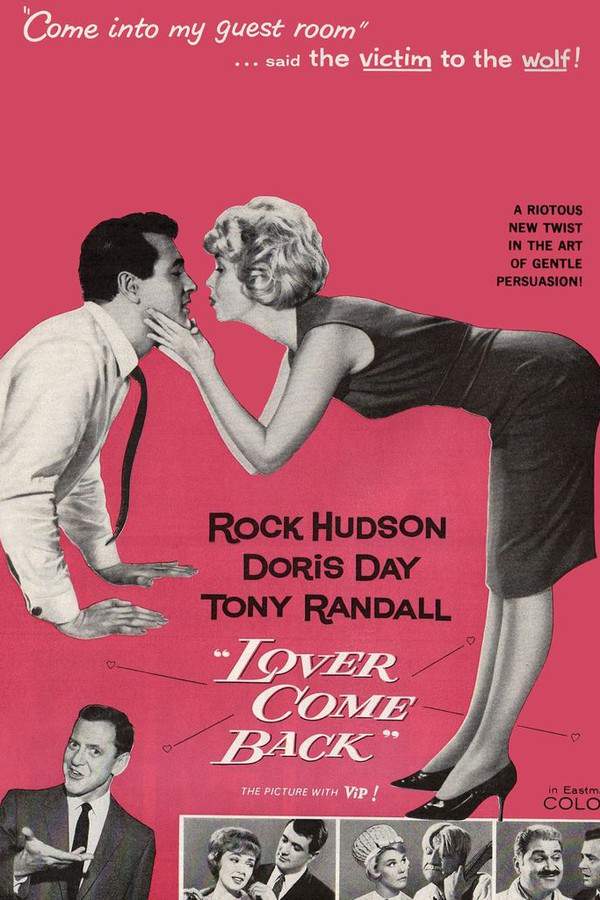
In a bustling Manhattan advertising agency, Jerry Webster, Rock Hudson, has carved out a meteoric rise not through traditional savvy but by slick social maneuvering: wining and dining his clients, pairing them off with glamorous dates, and turning charm into billings. His fiercest competitor is Carol Templeton, a sharp, principled force at a rival agency who has never met him yet remains deeply wary of his methods. Played by Doris Day, she sees through the noise and quietly reports his tactics to the Ad Council, setting off a high-stakes game of cat and mouse across the industry. Jerry deflects trouble with his usual poise, even when he slips a charismatic chorus girl named Rebel Davis into the mix to sweeten the council’s view of him.
Rebel, a striking figure in her own right, is promised a path to commercial work in exchange for her cooperation, and Jerry hatches a scheme around a supposed product called VIP. He arranges shoots to promote VIP, yet keeps the real plan under wraps, believing the whole thing will fade into the background. The company president, Pete Ramsey, powers the notion that the ads will be broadcast, forcing Jerry to improvise on the fly. To salvage the situation, he orchestrates a bold lie: he bankrolls a Nobel Prize–winning chemist to dream up a real product, and, crucially, he leverages the ruse by pretending to be the chemist himself whenever Carol tries to snatch the account away, turning her into an unwitting participant in a game of deception, wining, dining, and frolicking at the beach as if she’s been confiding in Dr. Linus Tyler, the brilliant mind behind VIP.
The chess move pays off when the ruse comes to light and Carol, appalled, reports Jerry again—this time for promoting a product that does not exist. But Jerry arrives at the Ad Council hearing with VIP in hand, delivering generous samples of a mint-flavored candy that Tyler has supposedly created. The candy’s intoxicating effects spark a whirlwind turn of events: Carol, who has little tolerance for alcohol, ends up sharing a one-night liaison with Jerry in a Maryland motel, complete with the surprise of a marriage license.
Carol ultimately has the marriage annulled, and Jerry faces new leverage from liquor-industry representatives who offer a tempting payoff to pull VIP off the market. Rather than surrender, he negotiates a deal: VIP’s backers will channel 25% of their $60 million annual advertising expenditures to Carol’s firm, and he destroys a signed confession he has that would look like a real formula. With New York in his rearview, he departs for the San Francisco branch, only to be called back nine months later to seal a new chapter in their story—remarrying Carol in a hospital maternity ward just before she gives birth to their child.
This satirical look at the advertising world blends ambition, ethics, and romance into a brisk, lively farce, where a single product can upend careers, marriages, and reputations. The film skewers how easily perceptions can be manipulated, how quickly alliances shift when money and power are involved, and how fate can intervene just as quickly as a clever ruse. Throughout, the central dynamic between the tireless schemer Jerry and the principled Carol drives the narrative forward, exposing the costs of chasing success at any price while leaving room for a surprising, if reluctant, reunion that hints at a more complicated future for both of them.