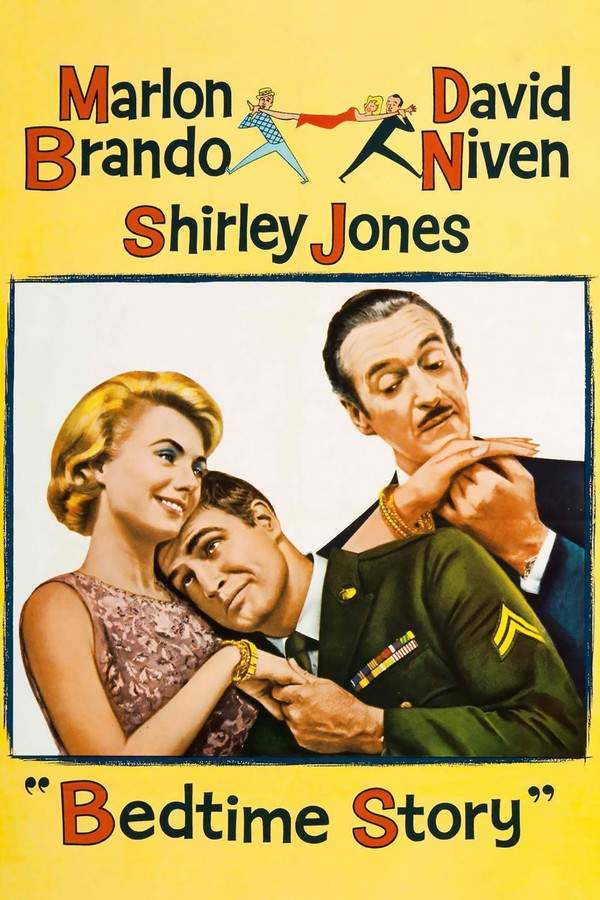
Beaumont-sur-Mer, a glittering corner of the French Riviera, serves as the playground for a pair of suave con artists who trade in charm, lies, and high-stakes exploits. On one side is the polished and coolly confident Lawrence Jameson, a man who passes himself off as the deposed prince of a small European kingdom, coaxing wealthy women to donate money and jewels to a grand, if imagined, revolutionary cause. Across the Atlantic, Freddy Benson is a swaggering small-time operator in the US Army stationed in West Germany, spinning sob stories about his “sick grandmother” to win over young women and skim their wallets. Their paths collide on a train to Beaumont-sur-Mer, where Freddy’s breezy confidence leads him to misjudge Lawrence as a henpecked husband, setting off a chain of clever moves and counter-moves that reveal how easy it is to be fooled by appearances.
Lawrence, sensing danger, tries to steer Freddy away from trouble, but when that fails, he orchestrates Freddy’s arrest and then arranges a quick plane ticket back to the United States. A twist of fate comes when one of Lawrence’s former conquests unknowingly exposes the ruse, returning Freddy to Beaumont-sur-Mer with a sharp new weapon: blackmail. Freddy parries back by threatening to reveal Lawrence’s secret, and the two form an uneasy partnership, with Freddy becoming Lawrence’s apprentice and learning the art of the con in a stylized and meticulous fashion. Freddy is taught to play Ruprecht, the supposed mentally challenged brother of the prince, a tactic designed to deter women from growing attached to the idea of marrying the prince. The lesson is ruthless, effective, and entertaining, and it marks the uneasy birth of a professional rivalry that will soon explode into a high-stakes bet.
The two men set their sights on a single target: Janet Walker, a naïve American heiress who has earned the moniker the American Soap Queen. Freddy adopts the persona of a wounded soldier suffering from psychosomatic paralysis, winning Janet’s affections with a heartbreaking story and a plea for a substantial sum to pay for treatment by a famed Swiss psychiatrist, Dr. Emil Schaffhausen. In response, Lawrence stages a counter-move, presenting himself as Dr. Schaffhausen and insisting that Janet pay the $25,000 directly to him for Freddy’s “care.” What follows is a ruthless tug-of-war: each man sabotages the other’s chances, and Lawrence, with his worldly sophistication, tends to come out ahead in most encounters.
As the scheme unfolds, Lawrence discovers Janet is not a true heiress but the winner of the American Soap Queen contest, and she plans to liquidate everything to pay for Freddy’s supposed treatment. Since Lawrence’s con targets only the truly wealthy, he tries to call off the bet. Freddy refuses to surrender and instead proposes a new challenge: the first to win a night with Janet will claim victory. Lawrence refuses to stoop to seduction, yet wagers that Freddy will fail. The conflict intensifies as Freddy has Lawrence kidnapped by soldiers who are misled into thinking Lawrence is attempting to steal his beloved, and the ruse continues with Freddy’s feigned conquest of paralysis—Walker believes in Freddy’s supposed love and begins to trust him. Lawrence has, in truth, been listening and watching the whole time, and the soldiers’ distraction buys Freddy enough time to arrange Janet’s departure.
On the platform as the train pulls away, a telegram arrives declaring that Dr. Emil Schaffhausen has been dead since 1927, throwing Janet into confusion and sending her back to her hotel room where she finds Freddy, who appears to have succeeded in winning her over. Lawrence, ever the consummate survivor, concedes the fight, yet Freddy’s outlook unexpectedly shifts. He can no longer tolerate taking advantage of Janet, and his feelings have grown genuine. In a surprising turn, Freddy marries Janet and the couple heads home to the United States, choosing a straight path instead of a path of duplicity. Lawrence looks on with interest, acknowledging that Freddy may be happier than he is, but as he surveys his next mark—a ravishing and extraordinarily wealthy target—he sighs, “a man must learn to live with his misery.” The tale closes with a portrait of two con artists who test each other’s wits, one finding a path out of deception, the other discovering a real, if unexpected, happiness.