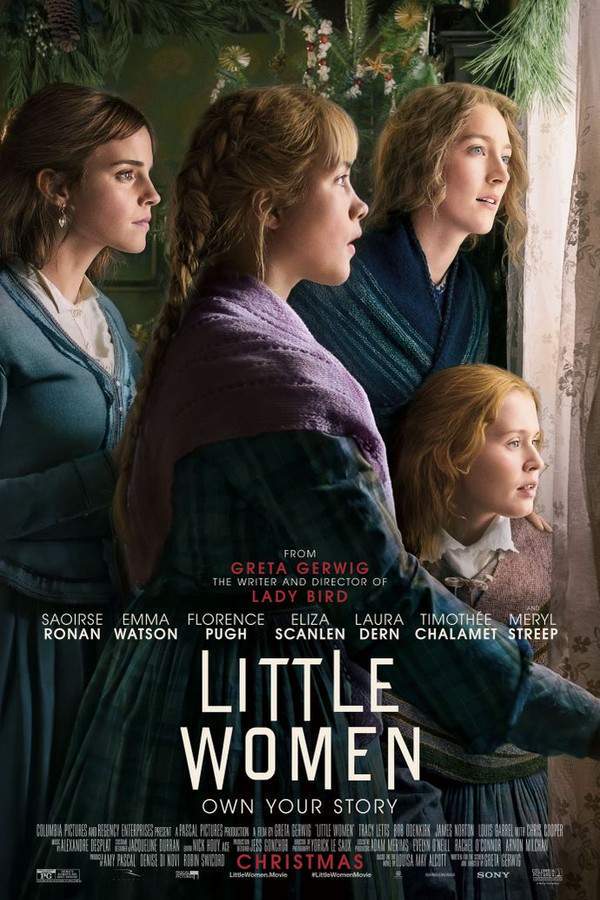
Year: 1949
Runtime: 122 min
Language: English
Director: Mervyn LeRoy
During the American Civil War, four sisters—Jo, Meg, Amy, and Beth—grow up in Concord, Massachusetts. Under the guidance of their mother, they experience love, loss, and the challenges of finding their place in the world while their father serves in the war. The film explores themes of family, faith, and the pursuit of independence for women during a time of significant social change.
Find where to stream, rent, or buy Little Women (1949) in the US with current JustWatch availability, up-to-date pricing, and platform listings for subscription, rental, and digital purchase options.
Warning: spoilers below!
Haven’t seen Little Women yet? This summary contains major spoilers. Bookmark the page, watch the movie, and come back for the full breakdown. If you're ready, scroll on and relive the story!
Trace every key event in Little Women (1949) with our detailed, chronological timeline. Perfect for unpacking nonlinear stories, spotting hidden connections, and understanding how each scene builds toward the film’s climax. Whether you're revisiting or decoding for the first time, this timeline gives you the full picture.
Last updated: November 03, 2024 at 23:50
Find frequently asked questions about the Little Women (1949) timeline, including chronological order, nonlinear jumps, cause-and-effect links, and scene sequence clarifications. This timeline FAQ helps explain when key events happen, how moments connect, and why the story unfolds in that specific order.
Jo rejects Laurie because she values their friendship and is deeply committed to her writing career. She feels out of place in high society and believes marriage would constrain her independence. Jo explains she has no intention of marrying and wants to focus on becoming a writer, even though she cares deeply for Laurie.
Earlier in the story, Jo repeatedly states she dislikes the idea of marriage and prefers intellectual pursuits over domestic life.
Jo sells her long, beautiful hair to raise money for train fare so her mother can travel to Washington, D.C. to be with Mr. March, who was injured and hospitalized during the Civil War. She braves a confrontation with her wealthy Aunt March to ask for help, but ultimately makes the sacrifice of cutting and selling her hair when additional funds are needed.
The family's genteel poverty is established early, making their financial struggles a recurring obstacle.
Beth contracts scarlet fever while Jo is away traveling to Washington, D.C. to be with their father. The illness strikes suddenly and becomes severe, causing the sisters to realize how much they rely on their mother. Beth's condition becomes critical, and the family gathers around her bedside until she recovers.
Laurie marries Amy because by the time they meet in Europe, Jo has already firmly rejected him and left for New York to pursue her writing career. During Laurie's time in Europe with Aunt March, he and Amy spend considerable time together, and their relationship develops into love. When Jo learns of their engagement, she genuinely feels happy for them despite experiencing loneliness.
Jo rejects Laurie's proposal early in the film, leaving him heartbroken and open to finding love elsewhere.
Jo moves to New York to pursue her writing career and boards with the Kirke family. Professor Bhaer is the German tutor for the Kirke children. He introduces Jo to art and culture, but also criticizes her sensationalist writing style, encouraging her to write with more authenticity and depth.
When Professor Bhaer arrives at the March home during the family reunion, he sees Laurie greeting him at the door. Assuming Jo has married her longtime friend, Professor Bhaer politely declines to join the festivities and prepares to leave. Jo must chase after him to clear up the misunderstanding and confess her feelings.
Jo returns home after learning that Beth's condition is deteriorating. Professor Bhaer, who has developed feelings for Jo, encourages her to go, recognizing that her family needs her. Upon arriving at the nearly empty house, Jo dedicates herself to caring for her beloved sister during her final days.
Beth dies after a courageous battle with scarlet fever, leaving the family devastated. Jo channel her grief into writing a novel titled "My Beth," which she sends to Professor Bhaer for his critique. This novel ultimately becomes her path to publication and professional success as a writer.
Mr. Laurence, initially portrayed as gruff and wealthy, softens when he sees Beth at the costume ball. She reminds him of his beloved granddaughter who passed away. Moved by her gentle presence and shy demeanor, he offers Beth the use of his exquisite grand piano, creating a meaningful bond between them.
The film establishes Mr. Laurence's stern demeanor early, making his transformation toward Beth a significant character moment.
While at the costume ball, Amy and Beth overhear Mrs. Gardiner and her daughter making gossipy, derogatory remarks about their mother Marmee. This incident exposes the social prejudices the March family faces as people of modest means and deeply hurts the sisters, particularly affecting Amy who often worries about social status.
Meg meets John Brooke, Laurie's tutor, at the costume ball when he notices her dancing. Their connection grows over time, and despite Jo's initial concerns that marriage might strain their sisterly bond, Meg eventually marries John Brooke. The marriage represents one of the film's happy endings, later followed by Meg becoming the mother of twins.
Marmee receives distressing news that Mr. March, serving in the Union Army, has been injured and is recuperating in a hospital in Washington, D.C. This news prompts Jo to desperately seek funds for travel and leads to her confrontation with Aunt March and the sacrifice of selling her hair.
The father's absence serving in the war is established from the beginning, creating tension throughout the story.
Discover curated groups of movies connected by mood, themes, and story style. Browse collections built around emotion, atmosphere, and narrative focus to easily find films that match what you feel like watching right now.
Heartwarming stories of families facing life's challenges with resilience and love.If you loved the heartfelt family dynamics and resilient spirit of Little Women, explore more movies like it. This collection features similar dramas and family stories about siblings, love, and loss, all carrying a hopeful tone through life's challenges.
Narratives in this thread typically span several years, following a group of characters—often a family—as they navigate significant life events such as love, career pursuits, illness, and personal dreams. The story structure is episodic yet cohesive, building towards a resolution that emphasizes growth and togetherness.
These movies are grouped by their shared focus on domestic life, a steady pace that allows for deep character connection, and a tone that acknowledges sadness but ultimately champions hope, resilience, and the strength found in familial love.

Stories following young women as they define their identity, ambitions, and place in the world.Fans of Jo March's journey in Little Women will appreciate these similar movies about young women finding their voice. Discover dramas and period pieces focused on female independence, artistic ambition, and the complex path to adulthood.
The narrative pattern follows one or more female protagonists from youth into early adulthood. Key plot points involve their education, first loves, career aspirations, and conflicts with traditional gender roles. The journey is often marked by both personal triumphs and poignant sacrifices, culminating in a defined sense of self.
Movies are grouped here based on their central theme of female maturation and self-discovery. They share a moderate complexity from balancing multiple character arcs, a medium emotional weight from the stakes of defining one's life, and a focus on the specific challenges and joys of growing up as a woman.
Don't stop at just watching - explore Little Women in full detail. From the complete plot summary and scene-by-scene timeline to character breakdowns, thematic analysis, and a deep dive into the ending - every page helps you truly understand what Little Women is all about. Plus, discover what's next after the movie.
Read a complete plot summary of Little Women, including all key story points, character arcs, and turning points. This in-depth recap is ideal for understanding the narrative structure or reviewing what happened in the movie.
Discover the characters, locations, and core themes that shape Little Women. Get insights into symbolic elements, setting significance, and deeper narrative meaning - ideal for thematic analysis and movie breakdowns.
Discover movies like Little Women that share similar genres, themes, and storytelling elements. Whether you’re drawn to the atmosphere, character arcs, or plot structure, these curated recommendations will help you explore more films you’ll love.
Little Women (1949) Plot Summary & Movie Recap
Little Women (1949) Scene-by-Scene Movie Timeline
Little Women (1949) Spoiler-Free Summary & Key Flow
Movies Like Little Women – Similar Titles You’ll Enjoy
Little Men (2016) Film Overview & Timeline
Little Sister (2016) Movie Recap & Themes
Little Women (2019) Movie Recap & Themes
3 Men and a Little Lady (1990) Movie Recap & Themes
Little (2019) Spoiler-Packed Plot Recap
Little Women (1994) Plot Summary & Ending Explained
Little Women (2018) Plot Summary & Ending Explained
Little House: Bless All the Dear Children (1983) Complete Plot Breakdown
Little Women (1000) Detailed Story Recap
Tales of Little Women (1000) Full Movie Breakdown
Little Women (1918) Complete Plot Breakdown
Little Women (1000) Movie Recap & Themes
Little Women II : Jo’s Boys (1000) Detailed Story Recap
A Little Women’s Christmas (2024) Plot Summary & Ending Explained
The Little Princess (1939) Full Summary & Key Details