Life of Pi

Life of Pi

JustWatch#8,35718

Year: 2012

Runtime: 127 min

Language: english

Director: Ang Lee

Budget: $120M

AdventureDrama

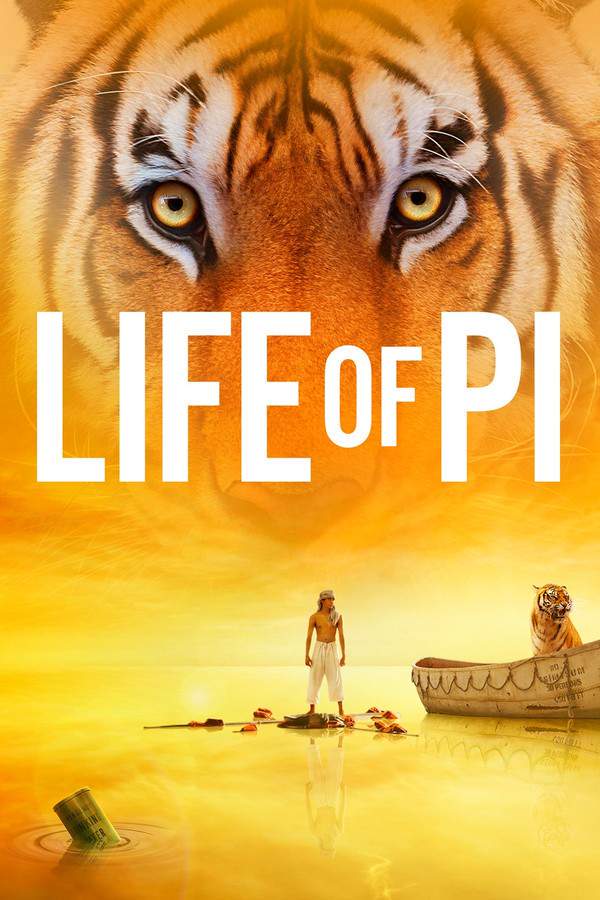
After a devastating shipwreck, young Pi Patel finds himself adrift in the Pacific Ocean on a lifeboat. His only companions are a Bengal tiger named Richard Parker, along with several other animals. Facing starvation and despair, Pi must find a way to survive and navigate the vast ocean, testing his resilience and challenging his understanding of faith and companionship in this incredible story of survival.

Where to Watch Life of Pi?

Find where to stream, rent, or buy Life of Pi (2012) in the US with current JustWatch availability, up-to-date pricing, and platform listings for subscription, rental, and digital purchase options.

Warning: spoilers below!

Haven’t seen Life of Pi yet? This summary contains major spoilers. Bookmark the page, watch the movie, and come back for the full breakdown. If you're ready, scroll on and relive the story!

Timeline – Life of Pi (2012)

Trace every key event in Life of Pi (2012) with our detailed, chronological timeline. Perfect for unpacking nonlinear stories, spotting hidden connections, and understanding how each scene builds toward the film’s climax. Whether you're revisiting or decoding for the first time, this timeline gives you the full picture.

1

Prelude on Truth

The author begins with a thoughtful prelude that sets the tone for a captivating literary adventure. It introduces the complex exploration of truth that threads throughout the narrative, preparing viewers for an intricate story.

2

Pi's Early Life

In the 1960s, we are introduced to Pi Molitor Patel, a boy from Pondicherry, India. His upbringing in a zoo managed by his father provides him with unique insights into the relationships between humans and animals.

1960s Pondicherry, India
3

The Origin of Pi's Name

Pi's unusual name, inspired by the mathematical constant π, reflects his father's interests. This name becomes a source of bullying during his childhood, prompting Pi to adopt the shorter form 'Pi' as his high school identity.

4

Zoo Experiences

As Pe navigates his formative years, he observes the nature of zoo animals. A shocking incident where he witnesses a goat being fed to a tiger shapes his understanding of the inherent dangers within the zoo setting.

Zoo in Pondicherry
5

Embracing Multiple Faiths

At fourteen, despite his family's wishes, Pi embarks on a spiritual journey to explore Christianity and Islam alongside his Hindu upbringing. His quest to 'just love God' leads him to appreciate the unique tenets of each religion.

6

State of Emergency

In February 1976, a state of emergency is declared by Indian Prime Minister Indira Gandhi, causing political upheaval. This tumultuous backdrop influences Pi's father to make the significant decision to sell the zoo and move the family to Canada.

February 1976 India
7

Voyage on the Tsimtsum

By July 1977, Pi and his family board the Tsimtsum, a Japanese freighter, to embark on their journey to North America. What begins as a peaceful voyage soon transforms into a chaotic struggle against nature, culminating in the ship's tragic sinking.

July 1977 Pacific Ocean
8

Shipwreck and Survival

After the ship sinks, Pi finds himself stranded on a lifeboat with several animals, including a tiger named Richard Parker. The immediate threat of survival emerges as the animal hierarchy shifts, leading to a deadly struggle between the hyena, zebra, and orangutan.

Pacific Ocean
9

Taming Richard Parker

With the hyena eliminated, Pi must now coexist with Richard Parker. Through patience and a system of rewards, Pi works to tame the tiger, leading to the development of a unique communication method between them amidst the vast ocean.

Pacific Ocean
10

The Island of Meerkats

In his journey, Pi discovers a mysterious floating island inhabited by meerkats, offering a momentary refuge from the sea. However, the carnivorous plants lurking on the island force Pi to flee and return to the perilous ocean once more.

Floating Island
11

227 Days Adrift

After an arduous journey of 227 days adrift on the lifeboat, Pi finally washes up on a Mexican beach. He experiences a moment of solace, yet the sudden disappearance of Richard Parker into the jungle leaves him emotionally shattered.

Mexican Beach
12

Recounting the Journey

While recovering in a hospital in Mexico, Pi shares his incredible story of survival with officials from the Japanese Ministry of Transport. His initial account involving animals is met with skepticism, prompting him to offer an alternative, more human-centered narrative.

Mexican Hospital
13

The Alternative Story

Pi recounts a darker tale involving a Taiwanese sailor, a cook, and his mother after the shipwreck. This disturbing version, filled with cannibalism and desperation, captures the officials' attention and reflects on the nature of survival.

14

Choosing the Narrative

At the conclusion of the investigation, Pi presents the officials with a choice between his two stories—the one with animals or the grim reality without them. Ultimately, they prefer the simpler tale, leaving Pi to ponder the essence of truth and storytelling.

15

Reflection on Truth

After the investigators leave, Pi reflects on the nature of truth and the significance of storytelling. He concludes with a poignant statement that encapsulates his journey and the complexities of faith and existence.

Last updated: November 22, 2024 at 18:55

Was this helpful?

Life of Pi (2012) Timeline Questions Answered – Chronology FAQ

Find frequently asked questions about the Life of Pi (2012) timeline, including chronological order, nonlinear jumps, cause-and-effect links, and scene sequence clarifications. This timeline FAQ helps explain when key events happen, how moments connect, and why the story unfolds in that specific order.

Q1

Why does Richard Parker disappear into the jungle without saying goodbye?

A.

Richard Parker simply walks into the jungle and disappears without any farewell. This sudden departure devastates Pi, who had formed a deep bond with the tiger during their 227 days together. The ambiguous departure reflects the wild nature of animals, they do not form emotional attachments the way humans do, and once Richard Parker regains his natural habitat, he returns to being a wild animal rather than Pi's companion.

Earlier in the film, Pi's father warns him that animals are not humans and cannot form true bonds with people.

richard parkertigergoodbyejungledeparturewild animal
Q2

Why does Pi tell the Japanese officials two different survival stories?

A.

Pi tells the officials two versions of events because he wants them to choose which truth they prefer. The first story involves animals, a tiger, hyena, zebra, and orangutan, which seems fantastical. The second, darker story involves human characters: a sailor, a cook, and his mother, involving cannibalism and murder. The officials ultimately choose the simpler, more believable human version, prompting Pi's final reflection on how people prefer mundane truth over miraculous wonder.

The opening prelude establishes that the story will explore different versions of truth.

two storiesjapanese officialstruthsurvivalalternative versionchoice
Q3

What happens to the hyena, zebra, and orangutan on the lifeboat?

A.

After the shipwreck, Pi finds himself on a lifeboat with a hyena, a zebra with a broken leg, and an orangutan named Orange Juice. The hyena kills and eats the injured zebra first, then attacks and kills Orange Juice. Finally, Richard Parker emerges from beneath the tarpaulin and kills the hyena. This leaves Pi alone with the tiger, forced to find a way to coexist with the dangerous predator.

Pi's early childhood experience of watching a tiger kill a goat at the zoo establishes the predatory nature of these animals.

hyenazebraorangutanorange juicelifeboatanimal killings
Q4

Why does Pi decide to follow Christianity, Islam, and Hinduism?

A.

At fourteen years old, Pi explores Christianity and Islam despite his Hindu upbringing and his parents' wishes. He is motivated by a simple desire to love God and experience all the ways people can connect with the divine. He tells his mentors from each religion that he wants to love God, not to choose one faith over another. This reflects Pi's open-hearted approach to spirituality and his belief that all religions offer valuable paths to the same truth.

The story's opening prelude about truth sets up Pi's lifelong search for meaning through multiple faiths.

christianityislamhinduismreligionfaithspiritualitythree religions
Q5

What is the floating island and why does Pi leave it?

A.

Pi discovers a mysterious floating island covered in meerkats while drifting at sea. The island provides temporary refuge, food, and fresh water. However, Pi discovers that the island is carnivorous, at night, it transforms and attempts to consume him. He realizes he must leave to survive, so he gathers supplies and sets back out to sea, leaving the island's inhabitants behind.

The island's peaceful appearance during the day contrasts sharply with its deadly nature at night, hinting at hidden dangers.

floating islandmeerkatscarnivorous plantssurvivaldeparture
Q6

Why does Pi's family决定移居加拿大?

A.

In February 1976, Indian Prime Minister Indira Gandhi declares a state of emergency in India, bringing political turmoil and uncertainty. Faced with this unstable environment and seeking better opportunities, Pi's father decides to sell the zoo and relocate the family to Canada, where they plan to start a new life.

The political turmoil and state of emergency create the context for the family's difficult decision to leave India.

indiacanadaemergencypolitical turmoilfamily movezoo sale
Q7

How does Pi manage to survive 227 days with a dangerous tiger?

A.

Pi survives by gradually taming Richard Parker through patience and a system of rewards. He uses whistles as a communication signal and asserts his dominance by using a raft to maintain distance when necessary. Pi trains the tiger with food rewards, establishing himself as the provider and leader. Over time, they develop a respectful coexistence, with Richard Parker recognizing Pi as the one who controls access to food and space.

Pi's early lessons about animal behavior from his father and the zoo environment prepare him for this survival challenge.

227 dayssurvivaltamingrichard parkertigerwhistleraftdominance
Q8

What is the significance of Pi's name?

A.

Pi's full name comes from the mathematical constant π (pi), which represents the ratio of a circle's circumference to its diameter. His father, a zoo manager with an interest in mathematics, chose this name. As a child, Pi was bullied because his peers transformed his birth name into "Pissing," prompting him to adopt the shorter form "Pi" when starting high school.

The mathematical precision of pi foreshadows the story's exploration of truth and exactness in storytelling.

pi namemathematicsconstantbullyingoriginnaming
Q9

Why does the cook become violent in Pi's alternative story?

A.

In Pi's second, darker narrative told to the Japanese officials, the cook represents the desperate survivor who resorts to extreme violence. When a Taiwanese sailor is injured, the cook amputates the sailor's leg to eat it, believing this is necessary for survival. This act of desperation ultimately leads the cook to kill Pi's mother when she confronts him, triggering Pi's own violent response to avenge her death.

The parallel between the animal story, where predators kill the weaker ones, and the human story shows the same brutal survival logic.

cookviolencecannibalismsecond storysurvivalsailor
Q10

What happens to Pi's mother in the alternative story?

A.

In Pi's second version of events told to the Japanese officials, his mother survives the initial shipwreck but later becomes a victim of the cook's violence. When the cook kills and attempts to eat the injured sailor, Pi's mother confronts him in disgust. The cook then kills her in a fit of rage, which motivates Pi to ultimately kill the cook in self-defense.

The parallel between the orangutan (Orange Juice) being a mother figure in the animal story and Pi's mother in the human story connects the two narratives.

motheralternative storycookdeathviolenceparallel
Q11

Why does Richard Parker finally emerge and attack the hyena?

A.

Richard Parker remains hidden beneath the tarpaulin on the lifeboat during the chaos of the storm. When the hyena kills both the zebra and orangutan, it becomes a threat that Pi cannot defend against. The presence of blood and the elimination of other animals likely trigger the tiger's predatory instincts. Parker emerges and kills the hyena, becoming the only animal left on the lifeboat, and Pi's new, dangerous companion.

Pi's early zoo experience watching a tiger attack establishes that tigers will kill when provoked or when prey is available.

tigerhyenaattackemergencepredatorbloodkilling
Q12

How does Pi establish dominance over Richard Parker?

A.

Pi establishes dominance by using a makeshift raft to maintain physical distance from the tiger while assertively claiming the lifeboat as his territory. He develops a whistle command that the tiger learns to obey, and he consistently controls access to food, giving him leverage over Richard Parker. Over time, the tiger recognizes Pi as the provider and leader, allowing them to coexist peacefully.

Pi's father's warning about never turning his back on dangerous animals informs Pi's careful approach to taming Richard Parker.

dominancecontrolraftwhistletigertamingauthorityfood rewards
Q13

Which version of the story do the Japanese officials believe?

A.

The Japanese officials from the Ministry of Transport initially dismiss Pi's animal story as unbelievable. When Pi offers the alternative human story involving cannibalism and murder, they find it more plausible. At the end, they tell Pi they prefer the simpler, mundane version of events, the one without animals. They file their report based on this human-focused narrative rather than the miraculous animal tale.

The opening prelude establishes that the story will question what constitutes truth and which version people choose to believe.

japanese officialsbeliefstory choicetruthreportversion preferred
Q14

Why does the movie end with an ambiguous choice between the two stories?

A.

The ending leaves deliberately ambiguous which version of events actually happened, the miraculous story with animals or the brutal human story involving cannibalism. This reflects the film's central theme that truth can be interpreted differently and that stories have value beyond mere factual accuracy. Pi asks the officials which story they prefer, and when they choose the simpler one, Pi accepts their decision, suggesting that sometimes people prefer comforting lies over difficult truths.

The opening prelude establishes the exploration of truth as the story's primary theme, preparing viewers for this ambiguity.

ambiguous endingtwo storiestruthinterpretationchoicebeliefambiguity
Mobile App Preview

Coming soon on iOS and Android

The Plot Explained Mobile App

From blockbusters to hidden gems - dive into movie stories anytime, anywhere. Save your favorites, discover plots faster, and never miss a twist again.

Sign up to be the first to know when we launch. Your email stays private, always.

Explore Movie Threads

Discover curated groups of movies connected by mood, themes, and story style. Browse collections built around emotion, atmosphere, and narrative focus to easily find films that match what you feel like watching right now.

Epic Survival Movies Like Life of Pi

Ordinary people pushed to their absolute limit in extraordinary circumstances.Discover movies like Life of Pi where characters face monumental survival challenges. If you enjoyed the tense, desperate struggle against nature and the exploration of human resilience, these similar adventure and drama stories will captivate you.

desperateisolatedtensemiraculousendurancehopefulharshresilient

Narrative Summary

These narratives typically begin with a catastrophic event that thrusts a protagonist into a hostile environment. The core of the story is a grueling, episodic journey of finding resources, overcoming despair, and wrestling with existential questions, often leading to a profoundly changed individual.

Why These Movies?

Movies are grouped here for their shared focus on high-stakes survival, the intense psychological and physical ordeal of the protagonist, and the often spiritual or philosophical undertones that give the struggle deeper meaning beyond mere physical endurance.

Movies with Ambiguous Endings Like Life of Pi

Tales that challenge perception and leave the true meaning open to interpretation.If you liked the thought-provoking and ambiguous ending of Life of Pi, explore these similar complex dramas. These movies challenge viewers with unreliable narrators, metaphorical stories, and endings that spark debate about what really happened.

reflectivemysteriouspsychologicalthought-provokingambiguousmetafictionalunsettlingcomplex

Narrative Summary

The narrative pattern often involves a story being recounted, with clues suggesting the teller's perspective may be flawed or metaphorical. The central conflict shifts from external events to an internal questioning of reality, memory, or belief, culminating in an ending that deliberately withholds a single, definitive truth.

Why These Movies?

These films are connected by their complex narrative structures, their thematic focus on the subjectivity of truth and the power of storytelling, and their shared goal of provoking audience reflection long after the credits roll.

Unlock the Full Story of Life of Pi

Don't stop at just watching - explore Life of Pi in full detail. From the complete plot summary and scene-by-scene timeline to character breakdowns, thematic analysis, and a deep dive into the ending - every page helps you truly understand what Life of Pi is all about. Plus, discover what's next after the movie.

Life of Pi Summary

Read a complete plot summary of Life of Pi, including all key story points, character arcs, and turning points. This in-depth recap is ideal for understanding the narrative structure or reviewing what happened in the movie.

Life of Pi Summary

Characters, Settings & Themes in Life of Pi

Discover the characters, locations, and core themes that shape Life of Pi. Get insights into symbolic elements, setting significance, and deeper narrative meaning - ideal for thematic analysis and movie breakdowns.

Characters, Settings & Themes in Life of Pi

Life of Pi Spoiler-Free Summary

Get a quick, spoiler-free overview of Life of Pi that covers the main plot points and key details without revealing any major twists or spoilers. Perfect for those who want to know what to expect before diving in.

Life of Pi Spoiler-Free Summary

More About Life of Pi

Visit What's After the Movie to explore more about Life of Pi: box office results, cast and crew info, production details, post-credit scenes, and external links - all in one place for movie fans and researchers.

More About Life of Pi

Similar Movies to Life of Pi

Discover movies like Life of Pi that share similar genres, themes, and storytelling elements. Whether you’re drawn to the atmosphere, character arcs, or plot structure, these curated recommendations will help you explore more films you’ll love.