Year: 2007
Runtime: 106 min
Language: English
Director: Craig Gillespie
Budget: $12M
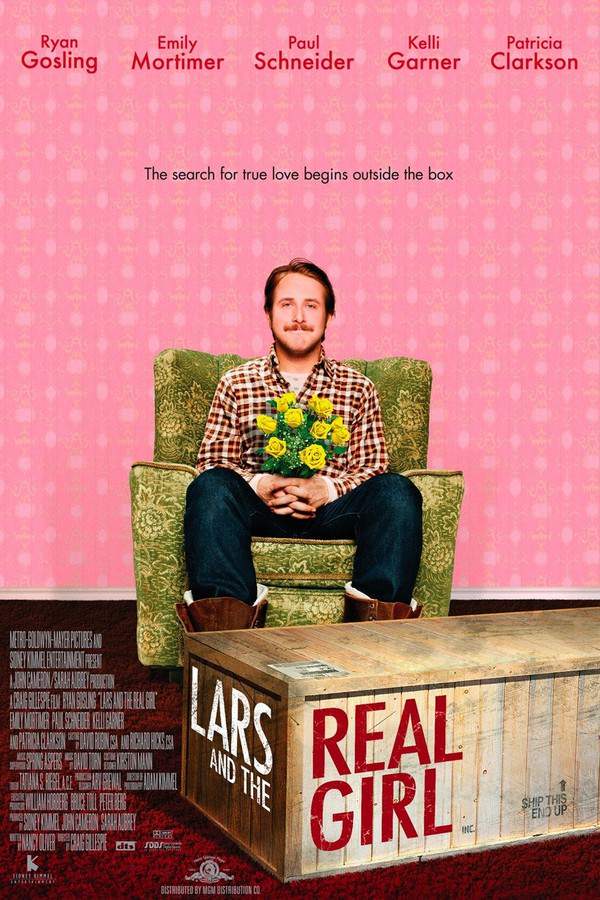
A shy and withdrawn man develops a romantic attachment to a mannequin, leading to unexpected consequences for himself and his close-knit community. As he attempts to navigate a relationship with the doll, those around him grapple with their understanding of love, acceptance, and the complexities of human connection. The story explores themes of loneliness, empathy, and the search for belonging in a heartwarming and poignant way.
Find where to stream, rent, or buy Lars and the Real Girl (2007) in the US with current JustWatch availability, up-to-date pricing, and platform listings for subscription, rental, and digital purchase options.
Warning: spoilers below!
Haven’t seen Lars and the Real Girl yet? This summary contains major spoilers. Bookmark the page, watch the movie, and come back for the full breakdown. If you're ready, scroll on and relive the story!
Read the complete plot breakdown of Lars and the Real Girl (2007), including all key story events, major twists, and the ending explained in detail. Discover what really happened, and what it all means.
Lars Lindstrom resides in a small room adjacent to the garage of the house that he and his brother, Gus, inherited from their father. Despite the warm intentions of his pregnant sister-in-law, Karin, who often invites him for family meals, Lars consistently declines. When he does join them, conversations are typically awkward, and he feels an overwhelming urge to leave swiftly. This young man struggles deeply with forging connections, whether with family, co-workers, or fellow church-goers.
One day, Lars joyfully announces to Gus and Karin that he has made a new friend he met online—a wheelchair-bound missionary named Bianca, who hails from Brazilian and Danish descent. To their shock, they discover this “visitor” is, in fact, a lifelike doll Lars ordered from an adult website. Concerned for his mental well-being, they persuade Lars to consult with Dagmar, the family doctor and psychologist. During the appointment, Dagmar humorously diagnoses Bianca with low blood pressure and emphasizes the necessity of weekly therapy sessions, urging Gus and Karin to treat Bianca as a real woman to aid in Lars’ therapy.
As time passes, Lars begins to introduce Bianca as his girlfriend to friends and fellow townsfolk. The community, aware of the peculiar situation, embraces Bianca as though she were alive. She soon becomes involved in various volunteer efforts, receives a makeover from a local beautician, and even takes up modeling at a nearby clothing store. This acceptance allows Lars to engage more with those around him, igniting an interest in his colleague, Margo. After Margo reveals her recent breakup, Lars agrees to go bowling while Bianca attends a school board meeting. They enjoy the outing, yet Lars is adamant about his devotion, assuring Margo that he could never cheat on Bianca. Margo sweetly replies that she would never expect that from him, expressing her hope to find a man as faithful one day.
The tranquility of Lars’s life comes to a halt when he finds Bianca unresponsive one morning, leading to an emergency ambulance ride. As her condition worsens, he decides that Bianca wishes to be brought home. The news of her ailment reverberates throughout the town, prompting everyone whose life she touched to bring flowers and food to the Lindstrom household. Gus and Karin suggest taking Lars and Bianca on an outing to the lake. While hiking, Lars shares a kiss with Bianca—a pivotal moment—just before her passing.
Bianca receives a heartfelt funeral attended by the entire community. After her burial, Lars and Margo linger by the graveside, both having confronted their past traumas. Finally ready to accept adult responsibilities, Lars, now filled with newfound self-confidence, invites Margo for a walk, which she happily accepts, signaling a promising new chapter in his life.
Last updated: October 27, 2024 at 18:57
Explore frequently asked questions about Lars and the Real Girl (2007) with spoiler-rich answers covering the full plot summary, major story beats, character motivations, hidden details, and ending meaning. This movie summary FAQ helps explain confusing scenes, plot twists, and narrative decisions in clear, searchable detail.
The community accepted Bianca because Dr. Dagmar advised them to treat her as a real person as part of Lars's therapy. The doctor recognized that forcing Lars to abandon the doll could be harmful, so instead recommended that the community play along. This approach allowed Lars to feel safe enough to gradually open up to real human connections while still having the emotional support he needed.
Earlier, Lars consistently rejected family invitations, showing his deep-seated fear of human connection that the community's acceptance was designed to address.
Lars struggled with profound social anxiety and emotional withdrawal, likely stemming from his father's death and growing up in the family's shadow. He consistently declined his sister-in-law Karin's dinner invitations and felt uncomfortable even during brief family gatherings, preferring the safety of isolation over the risk of vulnerability.
The film opens with Lars living in a small room adjacent to the garage, physically separating himself from his brother's household.
Dr. Dagmar understood that abruptly removing Bianca could cause Lars significant psychological harm. By diagnosing Bianca with 'low blood pressure' and prescribing weekly therapy sessions, he created a framework that validated Lars's feelings while providing professional support. This non-confrontational approach let Lars maintain his emotional anchor while gradually building the capacity for real human connection.
Gus and Karin initially wanted to intervene but were advised by the doctor to take a compassionate, therapeutic approach instead.
The kiss represented Lars's first genuine expression of affection and intimacy, even though it was directed at the doll. This moment marked an emotional breakthrough for him, as he was finally able to express feelings he had been suppressing due to his fear of real relationships. It was a pivotal step in his emotional development, occurring just before Bianca's death allowed him to begin letting go.
Throughout the film, Lars struggled with physical and emotional expression, often leaving family dinners early.
The community held a full funeral for Bianca because she had genuinely become a meaningful part of their town over the months she was there. She had volunteered, modeled at the clothing store, and touched many people's lives. The funeral represented their love for Lars and their recognition that whatever Bianca meant to him deserved respect, showing how deeply the community had embraced both him and his unusual situation.
Earlier, townspeople brought flowers and food to support Lars when Bianca fell ill, demonstrating their emotional investment.
Bianca served as a therapeutic bridge that allowed Lars to develop social skills and emotional openness without the overwhelming pressure of a real relationship. Through caring for Bianca and interacting with the community, Lars gradually built confidence and learned to trust others. When Bianca died, he had already grown enough emotionally to be ready for a genuine human connection with Margo.
Lars's bowling date with Margo showed his growing ability to be present with another person, even while still committed to Bianca.
Margo recognized that Lars's faithfulness to Bianca actually reflected admirable qualities, loyalty and devotion, that she valued in a partner. Rather than viewing his situation as strange, she saw his capacity for commitment as something positive. Her own recent breakup made her appreciate someone who could be genuinely devoted, and she respected his honesty about his feelings.
During bowling, Margo told Lars she would never expect him to cheat on Bianca and expressed hope to find a man as faithful.
Lars created an elaborate backstory for Bianca to make his relationship with the doll more socially acceptable. The wheelchair-bound missionary narrative, a person of Brazilian and Danish descent, gave his online purchase a believable human identity that he could share with his brother and sister-in-law without judgment, though they quickly discovered the truth.
Lars announced excitedly that he met Bianca 'online,' setting up the fictional nature of her identity.
The film presents Bianca's decline as a natural end to her role in Lars's journey rather than a literal medical condition. As Lars began developing real human connections with Margo, the emotional necessity of his fantasy relationship diminished. This allowed the story to naturally progress toward Bianca's passing, freeing Lars to move forward with genuine human relationships.
Lars's bowling outing with Margo represented his first real step toward choosing a human connection over his fantasy relationship.
The community's acceptance created a safe space for Lars to practice social interactions gradually. By treating Bianca as a real person, they removed the social stigma around his situation and allowed him to engage with others through accepted activities. This approach recognized that shaming or isolating Lars would have deepened his withdrawal, while acceptance provided the foundation for his eventual emotional growth.
Dagmar's humorous diagnosis of 'low blood pressure' established the therapeutic framework that guided the community's response.
Lars's avoidance of family meals stemmed from his deep discomfort with emotional intimacy and vulnerability. The family setting required engagement, conversation, and presence, exactly what his social anxiety made impossible. By remaining in his isolated room, he could maintain emotional distance while avoiding the fear of being truly seen or judged by others.
The film opens with Lars choosing isolation in the garage room over warm family connections, establishing his core psychological pattern.
Lars's withdrawal appeared to stem from his father's death and growing up in the family home where he felt overshadowed. Living in a small room next to the garage, separate from the main house he and his brother inherited, visually represented his emotional separation from family life. His inability to connect likely developed as a coping mechanism to avoid the pain of loss and vulnerability.

Lars lives in the room adjacent to the garage of the house he inherited from his deceased father, physically isolating himself from the family nucleus.
Discover curated groups of movies connected by mood, themes, and story style. Browse collections built around emotion, atmosphere, and narrative focus to easily find films that match what you feel like watching right now.
Stories where communities come together to support their most vulnerable members.If you were moved by how the town embraced Lars, explore more movies like Lars and the Real Girl that feature close-knit communities practicing acceptance and kindness. These similar films focus on gentle stories of collective support and quiet empathy.
A narrative that introduces a character who is socially isolated or misunderstood, often due to grief, mental health, or simply being different. Instead of rejection, their community chooses a path of compassionate, non-judgmental support, leading to collective healing and the individual's gradual integration or recovery.
These films are grouped together because they share a core belief in the power of community. They prioritize a gentle, hopeful tone and a slow, observant pacing that allows character relationships to blossom. The emotional journey is one of collective growth rather than individual triumph.
Films where an unusual relationship helps characters heal and grow.For viewers who appreciated the unique romance in Lars and the Real Girl, this list features similar movies with unconventional love stories that act as emotional catalysts. Discover films like Lars and the Real Girl where atypical relationships lead to profound healing and personal growth.
The plot revolves around a protagonist who forms a deep attachment to someone or something unconventional—a doll, an AI, an imaginary friend, or a person from a different world. This bond, while seemingly odd, is respected by those around them and becomes the safe space needed for the character to work through internal struggles and ultimately open up to genuine human connection.
These movies are connected by their shared narrative device: using an unconventional relationship to explore themes of mental health, grief, and isolation. They blend whimsy or quirkiness with sincere emotional depth, resulting in a tone that is both bittersweet and ultimately hopeful.
Don't stop at just watching - explore Lars and the Real Girl in full detail. From the complete plot summary and scene-by-scene timeline to character breakdowns, thematic analysis, and a deep dive into the ending - every page helps you truly understand what Lars and the Real Girl is all about. Plus, discover what's next after the movie.
Track the full timeline of Lars and the Real Girl with every major event arranged chronologically. Perfect for decoding non-linear storytelling, flashbacks, or parallel narratives with a clear scene-by-scene breakdown.
Discover the characters, locations, and core themes that shape Lars and the Real Girl. Get insights into symbolic elements, setting significance, and deeper narrative meaning - ideal for thematic analysis and movie breakdowns.
Discover movies like Lars and the Real Girl that share similar genres, themes, and storytelling elements. Whether you’re drawn to the atmosphere, character arcs, or plot structure, these curated recommendations will help you explore more films you’ll love.
Lars and the Real Girl (2007) Scene-by-Scene Movie Timeline
Lars and the Real Girl (2007) Movie Characters, Themes & Settings
Lars and the Real Girl (2007) Spoiler-Free Summary & Key Flow
Movies Like Lars and the Real Girl – Similar Titles You’ll Enjoy
The Lobster (2016) Full Movie Breakdown
Lost in Translation (2003) Detailed Story Recap
Family Romance, LLC (2020) Plot Summary & Ending Explained
The Real Thing (2021) Spoiler-Packed Plot Recap
All the Real Girls (2003) Film Overview & Timeline
Teddy Bear (2012) Story Summary & Characters
Mannequin (1987) Film Overview & Timeline
Loverboy (2006) Plot Summary & Ending Explained
Dummy (2003) Full Movie Breakdown
The Real Blonde (1998) Complete Plot Breakdown
Agalmatophilia (2018) Full Movie Breakdown
Love Me, Love My Doll (2007) Story Summary & Characters
My Sex Doll (2020) Full Summary & Key Details
Mannequin (1937) Movie Recap & Themes
The Doll (1962) Ending Explained & Film Insights