Plot Explained Spoilers guaranteed!
Plot Explained

Browse by genre

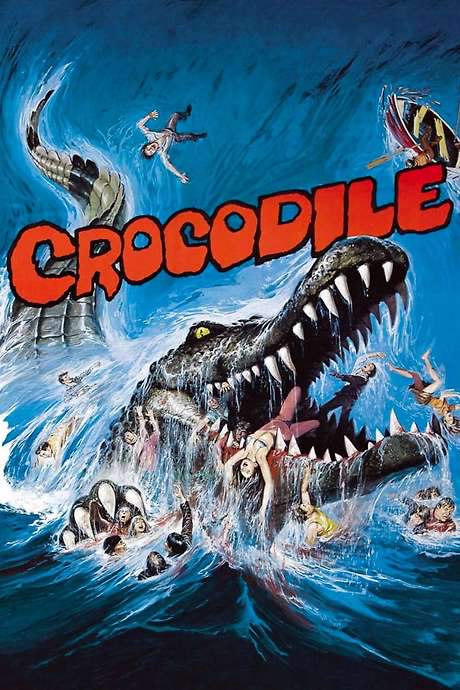
Killer Crocodile (1989) movie poster

Plot Summary

Killer Crocodile (1989) Plot Summary Explained

Release, runtime and language
1989 · 92 mins · English
Directed by
Fabrizio De Angelis
Starring
Van Johnson, Sherrie Rose, Richard Anthony Crenna, Ennio Girolami, Bill Wohrman, Franklin Dominguez

In a remote tropical delta, a team of environmentalists arrives to investigate illegal toxic‑waste dumping, only to discover the murky waters conceal a massive, ravenous crocodile. With the local officials corrupt and unhelpful, the scientists quickly find themselves the intended dinner.

On this page (5)
  1. 1 What happens: full plot
  2. 2 Plot questions answered
  3. 3 Movie threads
  4. 4 Movies like Killer Crocodile
  5. 5 Every angle

Full plot summary · contains spoilers

What Happens in Killer Crocodile: Full Plot Summary

The whole story of Killer Crocodile (1989) explained, from the opening scene to the final frame: every key event, every twist and what it all adds up to. Read it as a quick recap before the sequel, to check a scene you missed, or to finally understand what really happened.

On a tropical island, a team of ecologists treks through a polluted wetland to uncover the source of the contamination. They trace the pollution to barrels of radioactive waste dumped into the waters, a discovery that raises the stakes for their work. Because the waste is too dangerous to handle, they decide to camp nearby in the woods, hoping to observe the area safely. When their dog Candy disappears, their local guide Conchita goes out to search and is killed by a gigantic crocodile, a brutal reminder of the swamp’s hidden dangers.

At dawn the group realizes Conchita and Candy are missing. They dock their boat and head into a nearby village to seek help. From the local law enforcement official, Judge, they are told there isn’t much that can be done, but the tension between science and industry is already surfacing. After they depart, Pamela confronts the Judge, accusing him of being paid off by the company responsible for dumping the radioactive waste. The Judge then asks the shady Foley to temporarily halt the illegal dumping, but Foley dismisses the request and the conflict deepens.

Returning to the swamp, the ecologists push forward, only to have their boat slip into the mud. In the water, Kevin and Bob join Pamela, trying to free the vessel while the group debates the best path forward. Pamela makes a grim discovery—Conchita’s mutilated corpse—before the body is brought to the Pathologist in town. The [Pathologist] suggests that the death could be caused by an animal attack or a propeller, but the Judge and Foley downplay these possibilities, underscoring the mounting blame and fear surrounding the disaster.

The arrival of resident hunter Joe shifts the conversation toward the predator itself. After examining Conchita’s remains, Joe concludes that a crocodile is responsible and warns that the creature has already claimed other victims: a dockside attack kills two men and nearly devours a young girl whom the ecologists manage to save. This brutal series of events forces a renewed debate: the ecologists argue that the crocodile could be an endangered endling or at least a crucial scientific discovery, while some locals see it as a threat that must be eliminated.

As the debate intensifies, Bob hypothesizes that the crocodile’s enormous size might be a result of the radioactive waste’s mutation, and Mark volunteers to photograph the creature, documenting its awe-inspiring presence even as fear and urgency grow. The ecologists insist on safety and caution, but Joe quietly continues his hunt, hoping to put an end to the danger.

The next day, the team is rescued by Joe as they prepare to move deeper into the swamp. They stay at Joe’s house that night, and [Kevin] once again acknowledges that the crocodile may need to be killed to protect people, even as the debate about preserving wildlife lingers.

A new, more dangerous plan unfolds when Judge and Foley drive to a remote dumping site and rig the drums of waste with explosives. Judge resists detonating them, arguing that blowing up the barrels would devastate the swamp, but Foley punches him overboard and drives off—only to be killed by the crocodile shortly after. The unmanned boat explodes, drawing Joe and the ecologists back to the river, where the danger shifts to a direct confrontation with the predator.

Joe lures the crocodile closer and fights to stay afloat, but is dragged underwater in the struggle. Kevin returns to shore to retrieve Mark, and the three men press on, their boat again in peril as the crocodile attacks. In a critical moment, Joe urges Kevin to use the disconnected boat propeller as a weapon. Kevin activates the propeller, flicks it into the crocodile’s mouth, and the creature explodes in a violent blast. The survivors sail away, gliding past a crocodile egg that begins to hatch, a stark reminder that the swamp still harbors life—and danger—long after the immediate threat has been extinguished.

Last updated: October 09, 2025 at 14:31

Was this helpful?

Plot questions answered

Killer Crocodile Plot Explained: Your Questions Answered

The questions people ask most about Killer Crocodile (1989): what happens in the confusing scenes, why the characters do what they do, the twists, hidden details and what the ending means. Each answer contains spoilers.

Q1

Why did the crocodile grow to such enormous size?

Bob hypothesizes that the crocodile's massive size is a result of mutation caused by the radioactive waste dumped in the waters. The toxic barrels created an environmental anomaly that appears to have accelerated the crocodile's growth far beyond normal dimensions, turning it into the gigantic predator that terrorizes the swamp.

  • crocodile size
  • mutation
  • radioactive waste
  • giant crocodile
Q2

Why wouldn't the local Judge help the ecologists?

The Judge was corrupt and had been bribed by the company responsible for the illegal toxic waste dumping. Pamela confronts him directly about this bribery, explaining that his refusal to act was purchased. This corruption prevents any official action to address either the pollution or the crocodile attacks.

  • corrupt judge
  • bribery
  • local officials
  • pollution coverup
Q3

Why did the ecologists want to protect the crocodile instead of killing it?

The ecologists argued that the crocodile could be an endangered 'endling', the last remaining member of a species, or at least a significant scientific discovery worth studying. They believed that killing it would destroy a potentially unique creature that had never been documented before, even as it posed a deadly threat to humans.

  • endangered species
  • conservation
  • scientific discovery
  • wildlife preservation
Q4

How did Kevin kill the crocodile in the final confrontation?

During the climactic showdown, Joe urged Kevin to use the disconnected boat propeller as a weapon. Kevin detached the propeller, lured the crocodile close, and thrust it into the creature's mouth. When activated, the propeller caused the crocodile to explode in a violent blast, ending the immediate threat.

  • kevin
  • propeller
  • crocodile explosion
  • final battle
Q5

What happened to Judge and Foley?

Judge and Foley traveled to a remote dumping site where Foley rigged the radioactive waste drums with explosives, planning to destroy evidence. Judge hesitated, arguing that blowing up the barrels would devastate the swamp. Foley punched him overboard and drove off alone, but the crocodile killed Foley shortly after. The Judge survived and was later seen with the ecologists.

  • judge
  • foley
  • death
  • explosion
  • toxic waste
Q6

What does the hatching crocodile egg signify at the end?

As the survivors sail away from the swamp, they glide past a crocodile egg that begins to hatch. This ending suggests that the threat is cyclical, the crocodile that terrorized them was not the only danger lurking in the polluted waters. It implies the environmental damage has created more threats that could emerge, offering a bittersweet victory with a grim caveat.

Foreshadowing: The crocodile was established as having attacked multiple victims, including a young girl at the docks, suggesting it had been breeding in the area.

  • crocodile egg
  • ending
  • sequel
  • threat continues
  • cycle
Q7

Why did the crocodile start attacking humans?

The crocodile was likely driven to attack by territorial behavior and hunger. The massive creature had established dominance over the swamp territory and viewed humans as prey or intruders. The pollution may have also affected its behavior, making it more aggressive than a typical crocodile, though the exact motivation is not explicitly explained in the film.

  • crocodile attacks
  • predator
  • aggression
  • territory
Q8

What happened to Conchita, the local guide?

When the team's dog Candy disappeared, Conchita went out to search for him in the waters near camp. She found Candy's collar but was then killed by the gigantic crocodile. Her mutilated body was later discovered by the ecologists, and hunter Joe confirmed her death was caused by the crocodile after examining her remains.

  • conchita
  • guide death
  • candy
  • crocodile attack
Q9

How did Bob die in the crocodile attack?

On the third night, while Pamela spotted the crocodile and Mark attempted to photograph it, the predator attacked their boat. It tore the anchor rope and damaged the vessel, creating chaos. In the confusion, Bob was killed and eaten by the crocodile as Kevin fought desperately to reach shore.

Foreshadowing: The crocodile had already killed multiple people including Conchita, establishing its pattern of attacking boats and swimmers.

  • bob death
  • boat attack
  • crocodile eating
Q10

Is the crocodile really mutated by radiation?

Bob explicitly hypothesizes that the crocodile's enormous size results from radiation exposure due to the illegally dumped toxic waste. While this is presented as a theory within the movie rather than confirmed fact, the creature's abnormal size and aggressive behavior lend credence to the mutation hypothesis as the film's underlying science fiction explanation for the monster crocodile.

  • radiation
  • mutation
  • toxic waste
  • monster crocodile

Movie threads

More Movies Like Killer Crocodile, by Mood & Story

Curated lists built around what makes Killer Crocodile tick: the same mood, the same kind of story or the same emotional payoff. Each list explains why these movies belong together.

Eco-Horror Survival Thrillers like Killer Crocodile

Stories where environmental disaster unleashes a monstrous threat on a trapped group. If you liked the tense survival and ecological themes of Killer Crocodile, explore more movies where environmental disasters create monstrous threats. These films often feature small groups battling nature's wrath in isolated locations, blending horror with a critique of human negligence.

  • anxious
  • urgent
  • oppressive
  • gruesome
  • suspenseful
  • claustrophobic
  • Tone: tense, urgent, bleak
  • Pacing: steady, methodical
Why these movies?

The story pattern: The narrative follows a linear discovery-to-confrontation pattern. A group discovers an ecological catastrophe, which directly manifests as a physical threat (usually a creature). They must then survive against this threat while often battling unhelpful or antagonistic human forces, leading to a final confrontation that may not fully resolve the underlying environmental problem.

Why they belong together: These movies are grouped together because they share a specific blend of monster horror and environmental themes. The tone is consistently tense and urgent, driven by a survival scenario against a nature-based antagonist, with a steady pace that builds suspense through repeated attacks and growing desperation.

Bittersweet Creature Feature Hunts like Killer Crocodile

Action-packed monster stories where victory comes with a grim and lasting cost. Fans of Killer Crocodile's ending, where the crocodile is killed but a new threat hatches, will enjoy similar movies. These films deliver the thrilling monster hunt you expect, but conclude with a twist that undermines a pure happy ending, suggesting the cycle of danger continues.

  • suspenseful
  • gruesome
  • anxious
  • bleak
  • tense
  • action-packed
  • Tone: tense, bleak
  • Pacing: steady, building to action
Why these movies?

The story pattern: The narrative builds to a climax where the protagonists finally defeat the monstrous antagonist. However, the resolution is undercut by a final reveal—such as another egg, a companion creature, or the lingering cause of the mutation—that implies the problem is cyclical or unsolvable, transforming triumph into a qualified, often bleak, victory.

Why they belong together: These films are connected by their specific story structure and emotional payoff. They satisfy the audience's desire for a monster showdown but subvert the typical happy ending, creating a more memorable and chilling conclusion focused on the inevitability of danger or the folly of mankind.

If you liked this

Movies Like Killer Crocodile

Similar movies to Killer Crocodile: the same genre, themes or kind of story. Each one comes with its own plot summary, timeline and ending explained.

Browse all movie summaries

Every angle

Killer Crocodile (1989) Explained: Plot, Timeline & Characters

Everything about Killer Crocodile in one place: what happens in the plot summary, the timeline in chronological order, the characters and meaning and a spoiler-free summary. What's After the Movie adds the cast, box office and post-credit scenes.

Coming soon on iOS and Android

The Plot Explained Movie Summary App

Plot summaries, endings explained and timelines on your phone. Catch up on any movie in minutes, save your favorites and never miss a twist again.

Be the first to know when we launch. Your email stays private, always.

Learn more about the app