Plot Explained Spoilers guaranteed!
Plot Explained

Browse by genre

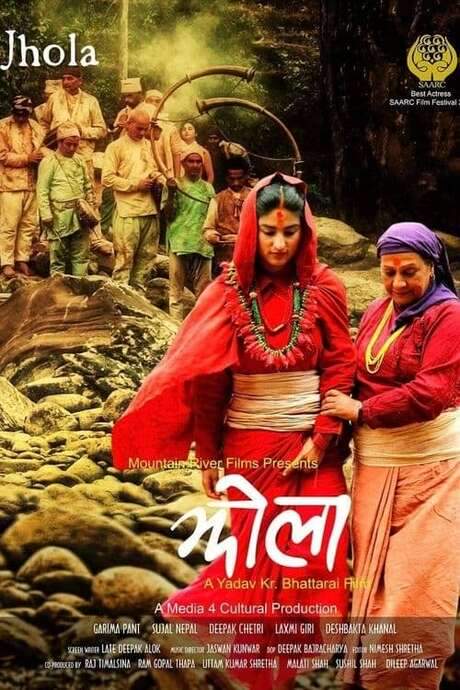
Jhola (2013) movie poster

Timeline

Jhola (2013) Timeline Explained – Every Event in Order

Release, runtime and language
2013 · 90 mins · Nepali
Directed by
Yadav Kumar Bhattarai
Starring
Deepak Chhetri, Garima Panta, Laxmi Giri, Sujal Nepal, Desh Bhakta Khanal

This film explores the disturbing reality of Nepal, where despite the abolition of the Sati system years ago, issues like sexual harassment, violence against women, and human trafficking persist. It sheds light on the ongoing struggles faced by women and the challenges in ensuring their safety and well-being within contemporary society.

On this page (4)
  1. 1 Events in order (12)
  2. 2 Timeline questions answered
  3. 3 Movie threads
  4. 4 Every angle

12 events in order · contains spoilers

Jhola Timeline: Events in Chronological Order

Every key event of Jhola (2013) in order, scene by scene, with when and where it takes place. Use it to untangle flashbacks, time jumps and parallel storylines, to refresh your memory before the sequel or to find the exact scene you are thinking of.

  1. Kanchi's arranged marriage to an elder husband

    Kanchi, a young woman, enters a marriage arranged by tradition with an older husband who is forty years her senior. The union is framed by social rules rather than personal choice. Her future in the village is shaped by this unequal match.

    Where
    Kanchi's village
  2. Husband's illness and death

    The husband falls ill due to old age, and after a period of illness he dies. With his death, the community quickly presses that Kanchi must perform sati. Kanchi's fate becomes a matter of social duty rather than personal desire.

    Where
    Village home
  3. Pressure to perform sati and survival

    Kanchi is expected to follow the ritual of sati, as dictated by tradition. She makes the attempt, but fate intervenes and she survives. This survival disrupts the community's plan and sets a different course for her life.

    Where
    Village outskirts
  4. Fleeing to a jungle cave

    Survival forces her to flee and seek refuge in a cave in the adjacent jungle. She begins living a precarious life, hidden from the village. The cave becomes a shelter where she contemplates the next steps of her life.

    Where
    Nearby jungle
  5. Ghanashyam finds his mother

    Ghanashyam, lonely in the absence of his mother, ventures into the jungle to find her. He discovers her living in the cave and they are briefly reunited. Their reunion is bittersweet because the outside world would not accept them.

    Where
    Jungle cave
  6. A plan to leave the village for a new life

    They decide to leave the village to start a new life elsewhere. Ghanashyam plans to settle in another place, seeking safety from stigma and danger.

    Where
    Village outskirts
  7. Ghanashyam retrieves belongings

    Ghanashyam goes home to bring their belongings for the journey. He asks his mother to stay hidden in the jungle while he retrieves supplies.

    Where
    Village
  8. Telling the aunt and asking for help

    Ghanashyam visits his aunt's house and recounts everything that happened in the jungle. He begs for food and clothes to help his mother during the escape.

    Where
    Aunt's house
  9. Relatives join to assist their departure

    Kanchi's brother-in-law and his wife join the effort to help them leave. Their support marks a rare moment of solidarity amid village hostility.

    Where
    Village
  10. The departure from the village begins

    With help secured, the group begins to leave the village. They move toward a new life, away from judgment and danger.

    Where
    Leaving the village
  11. Witnessing the failed sati and her death

    During the exodus, they witness a woman who is to be sacrificed but cannot go through with it. The crowd pursuing the sati ritual kills her, underscoring the brutality of the tradition.

    Where
    Edge of the village during the ritual
  12. Resolve to start anew despite danger

    The events reinforce their resolve to seek safety elsewhere and start anew. They continue their journey, determined to persevere despite social constraints.

    Where
    Moving through the countryside

Last updated: March 05, 2026 at 18:42

Was this helpful?

Timeline questions answered

Jhola Timeline Explained: Your Questions Answered

When does it happen, and why in that order? The questions people ask about the chronology of Jhola (2013): time jumps, flashbacks, cause and effect between scenes and the correct order of events, each answered with spoilers.

Q1

Why was Kanchi expected to perform Sati after her husband's death?

Kanchi was expected to perform Sati because of rigid social traditions in her village. When her husband died, the community demanded she follow the centuries-old custom where a widow burns herself on her husband's funeral pyre. This was treated as a social duty rather than a personal choice, regardless of Kanchi's own wishes.

  • sati tradition
  • widow
  • social pressure
  • village customs
Q2

How did Kanchi survive the Sati ritual?

The summary states that fate intervened during Kanchi's attempt at Sati, and she survived. The exact mechanism is not detailed, but her survival alone is enough to mark her as an outcast, since a woman surviving Sati was considered shameful and dangerous to the community's traditions.

  • survival
  • sati attempt
  • miracle
  • escape
Q3

Why would the villagers kill Kanchi for surviving Sati?

In the village's strict social code, a widow who survives Sati defies tradition and brings shame to the community. The villagers view her survival as a violation of sacred customs, making her presence dangerous. They would kill her not despite her survival, but because of it, as it challenges the social order.

  • village judgment
  • tradition
  • murder
  • stigma
Q4

Why did Ghanashyam search for his mother in the jungle?

Ghanashyam was lonely without his mother after she fled to the jungle following the Sati incident. His search was driven by emotional need and filial devotion. Despite knowing the danger, he ventured into the jungle and eventually found her living in a cave.

Foreshadowing: Earlier mentions of Kanchi's absence establish Ghanashyam's loneliness as motivation for his search.

  • mother-son bond
  • search
  • jungle
  • reunion
Q5

Why couldn't Kanchi and Ghanashyam remain in the village?

Kanchi and Ghanashyam could not stay because the village would kill any woman who survived Sati, regardless of circumstances. Even though Kanchi did not choose to survive, the community viewed her as a violator of tradition. Remaining would mean almost certain death for her.

  • escape
  • danger
  • village
  • survival
Q6

What happened to the woman Kanchi and Ghanashyam witnessed during their departure?

During their departure, they witnessed another woman who was meant to become Sati but could not go through with it. She tried to escape during a funeral procession, but the crowd caught and killed her. This brutal scene underscores the deadly consequences of defying tradition in their society.

Foreshadowing: This tragic event mirrors Kanchi's own survival and highlights the theme of tradition's deadly grip.

  • sati victim
  • escape
  • murder
  • funeral procession
Q7

Why did Kanchi's brother-in-law and aunt help them escape?

Despite the village's hostility, Kanchi's brother-in-law and his wife, along with Ghanashyam's aunt, chose to help them. This represents rare familial solidarity against social pressure. They provided food, clothes, and support for the escape, showing that compassion exists even within oppressive systems.

  • family support
  • escape
  • relatives
  • compassion
Q8

Why did Ghanashyam return to the village after finding his mother?

Ghanashyam returned to the village to gather their belongings and supplies for the journey to a new place. He asked Kanchi to stay hidden in the jungle while he collected food, clothes, and other necessities they would need to start fresh elsewhere.

  • supplies
  • journey
  • preparation
  • return
Q9

What does the ending imply about the cycle of violence against women?

The ending shows Kanchi and Ghanashyam continuing their journey with hope for a safer future, but the simultaneous murder of another woman attempting to escape Sati underscores that the cycle of ritualistic violence persists. Their escape represents individual hope, while the witnessing of another woman's death highlights the broader, unresolved horror facing women in this society.

  • cycle of violence
  • hope
  • tradition
  • women safety
Q10

Why was Kanchi married to a man forty years older than her?

Kanchi's marriage to an older husband forty years her senior was an arranged marriage dictated by tradition, not personal choice. Such unequal matches were common in the social system depicted, where women's futures were determined by family decisions and social codes rather than individual preference.

  • arranged marriage
  • age gap
  • tradition
  • oppression

Movie threads

More Movies Like Jhola, by Mood & Story

Curated lists built around what makes Jhola tick: the same mood, the same kind of story or the same emotional payoff. Each list explains why these movies belong together.

Movies about surviving brutal traditions like Jhola

Stories of individuals desperately fighting against oppressive and violent societal customs. If you were gripped by the grim fight for survival in Jhola, explore more movies like it. This list features intense dramas where characters face life-or-death stakes imposed by oppressive societal norms, offering similar stories of desperate resistance and social injustice.

  • oppressive
  • desperate
  • grim
  • somber
  • anxious
  • harrowing
  • Tone: dark, oppressive, desperate
  • Pacing: steady, methodical
Why these movies?

The story pattern: The narrative typically follows a straightforward, cause-and-effect chain where the protagonist is victimized by an unjust tradition. The plot is a steady, escalating series of challenges as they attempt to escape or defy the system, often with a bleak or bittersweet resolution that underscores the pervasiveness of the oppression.

Why they belong together: These films are grouped by their shared focus on high-stakes survival within a dark, tradition-bound setting. They create a heavy, oppressive atmosphere through a steady pace and unflinching tone, making the protagonist's desperate struggle the central, emotionally resonant core of the story.


Solemn social exposé dramas like Jhola

Unflinching dramas that shed light on harsh, ongoing societal problems with a heavy heart. For viewers who appreciated Jhola's unflinching look at social issues, this list compiles similar movies like it. Discover other heavy dramas that act as solemn exposés, focusing on grim realities like violence against women and social injustice with a steady, impactful pace.

  • somber
  • melancholic
  • grim
  • serious
  • thought-provoking
  • heavy
  • Tone: dark, somber, melancholic
  • Pacing: steady, deliberate
Why these movies?

The story pattern: The narrative pattern is often straightforward, using a character's plight to illustrate a broader societal failure. The journey is emotionally heavy, methodically building a case against the injustice without resorting to complex subplots, typically concluding on a sad or bleak note to emphasize the persistent nature of the problem.

Why they belong together: This thread unites films based on their shared purpose as grim social commentaries. They possess a dark tone, steady pacing, and heavy emotional weight, creating a cohesive viewing experience defined by its solemnity and its focus on illuminating difficult, real-world truths.

Every angle

Jhola (2013) Explained: Plot, Timeline & Characters

Everything about Jhola in one place: what happens in the plot summary, the timeline in chronological order, the characters and meaning and a spoiler-free summary. What's After the Movie adds the cast, box office and post-credit scenes.

Coming soon on iOS and Android

The Plot Explained Movie Summary App

Plot summaries, endings explained and timelines on your phone. Catch up on any movie in minutes, save your favorites and never miss a twist again.

Be the first to know when we launch. Your email stays private, always.

Learn more about the app