Plot Explained Spoilers guaranteed!
Plot Explained

Browse by genre

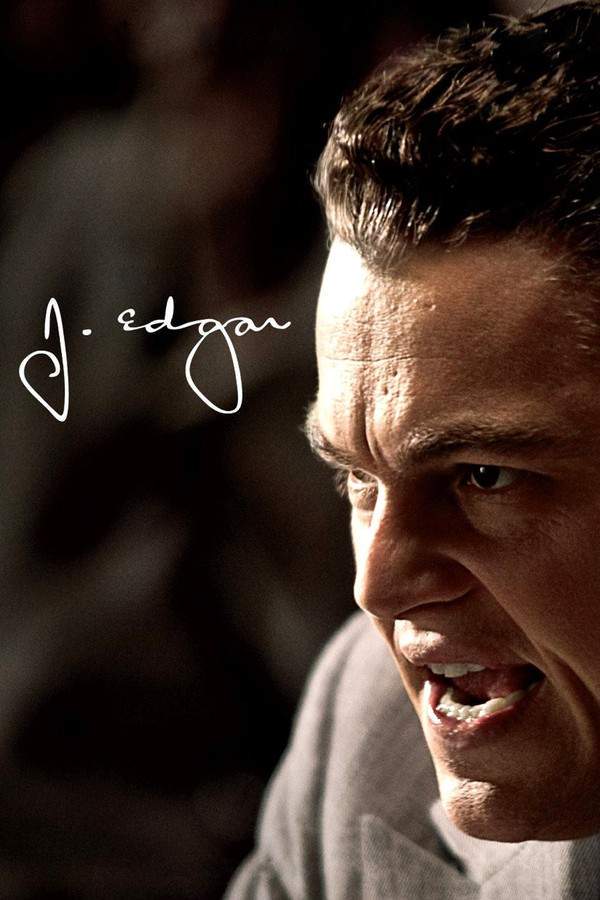
J. Edgar (2011) movie poster

Timeline

J. Edgar (2011) Timeline Explained – Every Event in Order

Release, runtime and language
2011 · 137 min · English
Loading streaming availability…
Budget
$35M

The enigmatic J. Edgar Hoover shaped America's law enforcement for almost fifty years, commanding respect and controversy in equal measure. This film explores the complexities of his life, revealing the secrets and personal struggles he concealed behind a carefully constructed image of authority. It delves into the inner workings of the FBI under his leadership and examines the personal demons that threatened to unravel his carefully controlled world.

On this page (6)
  1. 1 Where to watch
  2. 2 Events in order (14)
  3. 3 Timeline questions answered
  4. 4 Movie threads
  5. 5 Movies like J. Edgar
  6. 6 Every angle
Loading streaming availability…

14 events in order · contains spoilers

J. Edgar Timeline: Events in Chronological Order

Every key event of J. Edgar (2011) in order, scene by scene, with when and where it takes place. Use it to untangle flashbacks, time jumps and parallel storylines, to refresh your memory before the sequel or to find the exact scene you are thinking of.

  1. Hoover Reflects on His Life

    In his later years, J. Edgar Hoover reflects on his life and career in the FBI while in his office. He shares his experiences and the foundational story of the FBI with a visiting writer, taking a nostalgic trip down memory lane.

  2. The Birth of the FBI

    Hoover's story begins in 1919 when he is appointed to lead a new anti-radical division under Attorney General A. Mitchell Palmer. This moment is critically underlined by an assassination attempt on Palmer that prompts Hoover's focus on the need for rigorous crime scene investigations.

    When
    1919
  3. Meeting Helen Gandy

    Hoover meets Helen Gandy, his new secretary with exemplary skills and education, in the Justice Department. He is impressed by her, but his romantic advances are rebuffed, leading to a complicated professional relationship.

  4. Exploiting Political Tensions

    Hoover, facing challenges from the Department of Labor for evidence to act against radicals, seizes the opportunity presented by public disdain for anarchist Emma Goldman. He orchestrates her discrediting and deportation, setting a controversial precedent in law enforcement.

  5. Hoover Becomes Director

    With changes in political leadership, Hoover rises to the position of director of the Bureau of Investigation under Attorney General Harlan F. Stone. It marks a significant elevation in his career and influence within the bureau as he builds a stronger team, including new recruit Clyde Tolson.

  6. Hoover's Blackmail Tactics

    In the present day, Hoover exerts pressure on Robert Kennedy, implying blackmail to secure control over radical groups. This event underscores Hoover's belief in the power dynamics of knowledge and surveillance.

  7. FBI's Innovations in Crime Fighting

    By 1932, the FBI, under Hoover's guidance, begins applying innovative techniques to investigate gangster crimes, especially focusing on John Dillinger. The methods revolutionize criminal investigations in America.

    When
    1932
  8. The Lindbergh Kidnapping Case

    During the highly publicized Lindbergh kidnapping case, Hoover implements scientific techniques that involve tracking ransom bill serial numbers and analyzing handwriting. These groundbreaking efforts lead to the eventual arrest and conviction of Bruno Hauptmann, showcasing the FBI's capabilities.

  9. Hoover and FDR's Tensions

    Franklin D. Roosevelt, initially questioning Hoover's position, is shown surveillance footage of Eleanor Roosevelt with a known communist, leading him to extend Hoover's powers to pacify public concern. This moment clarifies the balance of power between the presidency and the FBI.

  10. Monitoring Dissent

    Facing criticism for a lack of arrests, Hoover starts surveilling dissenting members of Congress, showcasing his determination to maintain control. This reflects Hoover's desire for influence and the lengths he is willing to go to protect his position.

  11. Complex Relationship with Tolson

    The relationship between Hoover and Clyde Tolson deepens as they navigate societal expectations and personal struggles. A confrontation leads to a passionate exchange that reveals their complex emotional bond.

  12. Hoover's Legacy and Declining Health

    As Hoover faces his declining health and contemplates his legacy, he attempts to undermine Martin Luther King, Jr. but ultimately finds his efforts futile as King receives the Nobel Peace Prize. This period marks a significant shift in public perception of both King and Hoover.

  13. Destruction of Files

    Hoover instructs Helen Gandy to destroy his secret files upon his death to prevent future scrutiny of his actions. This decision underscores his awareness of his controversial legacy and desire to protect his reputation.

  14. Hoover's Death and Aftermath

    Upon Hoover's death, Gandy follows through with his instructions to destroy sensitive documents. A televised eulogy by Nixon encapsulates the complexity of Hoover's life, highlighting both his pivotal role in American history and the controversies that surround him.

Last updated: November 03, 2024 at 20:23

Was this helpful?

Timeline questions answered

J. Edgar Timeline Explained: Your Questions Answered

When does it happen, and why in that order? The questions people ask about the chronology of J. Edgar (2011): time jumps, flashbacks, cause and effect between scenes and the correct order of events, each answered with spoilers.

Q1

Why did Hoover instruct Helen Gandy to destroy his secret files after his death?

Hoover ordered Helen Gandy to destroy his confidential files upon his death to protect his legacy and prevent future scrutiny of his actions. These files contained decades of surveillance material, personal secrets, and potentially damaging information about political figures. By destroying them, Hoover ensured that the full extent of his methods and the controversial tactics he used would never be fully revealed to the public, preserving both his reputation and the Bureau's integrity as he saw it.

Foreshadowing: Earlier in the film, Hoover's extensive file-keeping is shown as his primary tool for maintaining power and control over political enemies.

  • hoover
  • gandy
  • files
  • destroy
  • legacy
  • confidential
Q2

How did Hoover orchestrate Emma Goldman's deportation?

Hoover exploited the political tensions and public animosity toward anarchists to discredit Emma Goldman. Facing resistance from the Department of Labor, which refused to act without concrete evidence, Hoover used the widespread fear of radical elements to build a case against Goldman. He orchestrated her discrediting by linking her to radical activities, which led to her deportation. This established a controversial precedent where Hoover used public sentiment rather than solid evidence to target perceived threats.

Foreshadowing: The film establishes early on that Hoover was appointed to compile a list of suspected radicals, showing his focus on building cases against radical figures.

  • emma goldman
  • deportation
  • hoover
  • radical
  • manipulation
Q3

Why did Hoover threaten Robert Kennedy with blackmail?

Hoover pressured Robert Kennedy by implying he possessed incriminating information about President John Kennedy. His goal was to secure authority over radical factions and maintain his grip on FBI operations. Hoover operated under the belief that knowledge equaled power, and he used the information he had gathered as leverage to ensure his continued influence over domestic surveillance and law enforcement matters.

Foreshadowing: Throughout the film, Hoover's philosophy that knowledge equals power is demonstrated through his extensive file-keeping and surveillance practices.

  • hoover
  • kennedy
  • blackmail
  • robert kennedy
  • surveillance
  • power
Q4

What was the nature of Hoover and Clyde Tolson's relationship?

Hoover and Clyde Tolson shared a deeply complex and emotionally charged relationship that evolved over decades of working together. Their bond included a confrontation at a social event where Hoover expressed reluctance to dance, leading to a passionate exchange that revealed their underlying feelings for each other. Eventually, Hoover admitted his feelings for Tolson, and their relationship deepened despite the societal expectations and constraints of the era. The film portrays their connection as both professional and romantic.

Foreshadowing: Early interactions between Hoover and Tolson show a growing closeness as Tolson becomes part of Hoover's inner circle.

  • hoover
  • tolson
  • relationship
  • feelings
  • emotional bond
Q5

How did Hoover use the Lindbergh kidnapping case to build the FBI's reputation?

When the Lindbergh kidnapping case captured national attention, Hoover implemented groundbreaking forensic techniques. He directed the Bureau to track serial numbers on ransom bills and analyze the kidnapper's handwriting. These scientific methods led to the arrest of Bruno Hauptmann, and the DNA and forensic evidence presented in court secured a guilty verdict. This success transformed the FBI's reputation, establishing it as a modern, science-based law enforcement agency.

Foreshadowing: The film shows Hoover emphasizing the need for rigorous crime scene investigation methods from the very beginning of his career.

  • lindbergh
  • kidnapping
  • hoover
  • forensic
  • evidence
  • hauptmann
Q6

Why did FDR extend Hoover's powers after discovering surveillance on Eleanor Roosevelt?

President Franklin D. Roosevelt questioned Hoover's authority but was presented with surveillance footage showing Eleanor Roosevelt meeting with a known communist. Rather than risk public disclosure of this information, Roosevelt chose to expand Hoover's powers to maintain public discretion. This gave Hoover unprecedented authority over domestic surveillance and cemented his position as an indispensable figure in law enforcement.

Foreshadowing: Hoover's file-keeping practices, shown throughout the film, gave him leverage over powerful political figures.

  • fdr
  • roosevelt
  • hoover
  • powers
  • surveillance
  • eleanor
Q7

How did Hoover's early work under A. Mitchell Palmer shape his career?

Hoover's career began in 1919 when Attorney General A. Mitchell Palmer appointed him to lead a new anti-radical division. An assassination attempt on Palmer, where a bomb detonated prematurely, was a pivotal moment that convinced Hoover of the need for meticulous crime scene investigation. This early experience shaped his approach to law enforcement, emphasizing scientific methods and comprehensive file-keeping that would define his legacy at the FBI.

Foreshadowing: The assassination attempt on Palmer is presented as the catalyst that launched Hoover's obsession with crime scene investigation.

  • palmer
  • hoover
  • 1919
  • anti-radical
  • career
  • appointment
Q8

What happened between Hoover and Helen Gandy at the Library of Congress?

During a visit to the Library of Congress, Hoover impressed Helen Gandy with his unique indexing system, demonstrating his organizational genius. However, when he attempted to kiss her, she rebuffed his romantic advances. Despite this rejection, Hoover proposed marriage to her, citing her skills and education, but she declined. Nevertheless, Gandy remained his devoted personal secretary for decades, becoming his most trusted associate.

Foreshadowing: The scene establishes the complex professional dynamic between Hoover and Gandy, setting up her later role in destroying his files.

  • gandy
  • hoover
  • library of congress
  • kiss
  • proposal
  • rejection
Q9

Why did Hoover start surveilling members of Congress?

When Hoover sought further authority from Congress, he faced ridicule for not having made any arrests himself during his tenure. In retaliation, Hoover began monitoring dissenting members of Congress, using his surveillance apparatus to gather information on those who opposed him. This demonstrated his determination to maintain control and protect his position, even at the cost of targeting elected officials.

Foreshadowing: Earlier scenes show Hoover's sensitivity to criticism and his willingness to use his position to target those who challenge him.

  • hoover
  • congress
  • surveillance
  • criticism
  • retaliation
  • arrests
Q10

How did Hoover try to discredit Martin Luther King Jr. and why did it fail?

In his later years, Hoover attempted to undermine Martin Luther King Jr.'s reputation using the FBI's surveillance capabilities. However, his efforts faltered when King accepted the Nobel Peace Prize, which elevated King's public standing and made attacks on his character appear politically motivated. The failure of this campaign marked a significant shift in public perception of both King and Hoover.

Foreshadowing: The film shows Hoover's files as his primary weapon against political enemies, but this case demonstrates the limits of his influence.

  • hoover
  • king
  • nobel peace prize
  • discredit
  • surveillance
  • failure
Q11

Why did Hoover refuse to retire despite declining health and Tolson's urging?

Hoover remained FBI director until his death because he was deeply anxious about the future of the Bureau he had built. Despite Tolson's urging to retire, Hoover feared what would happen to the organization and his legacy without his leadership. He had invested decades building the FBI into what he believed was an essential institution, and the thought of leaving it vulnerable to political changes kept him in power until his final days.

Foreshadowing: Hoover's entire character is defined by his need for control and his belief that only he can protect the Bureau.

  • hoover
  • retirement
  • tolson
  • health
  • bureau
  • legacy
  • anxiety
Q12

How did Hoover build the FBI's forensic capabilities?

Hoover established the FBI's forensic science division by emphasizing the importance of crime scene investigation from his earliest days. The film shows his commitment to scientific methods, particularly during the Lindbergh kidnapping case, where he directed agents to track ransom bill serial numbers and analyze handwriting. These techniques, along with his emphasis on proper evidence collection, transformed the FBI into a modern law enforcement agency with unprecedented forensic capabilities.

Foreshadowing: The assassination attempt on Palmer, which prompted Hoover's focus on crime scene investigation, planted the seeds for his scientific approach.

  • hoover
  • fbi
  • forensic
  • science
  • evidence
  • investigation
  • lindbergh

Movie threads

More Movies Like J. Edgar, by Mood & Story

Curated lists built around what makes J. Edgar tick: the same mood, the same kind of story or the same emotional payoff. Each list explains why these movies belong together.

Movies about secrets and power like J. Edgar

Stories of public figures grappling with hidden lives and immense power. For viewers who liked the secretive power dynamics of J. Edgar, this collection features movies about influential public figures whose carefully crafted personas hide private turmoil. Discover similar biographical dramas and political thrillers that explore the high-stakes world of authority, image, and concealed truths.

  • secretive
  • oppressive
  • somber
  • reflective
  • lonely
  • anxious
  • Tone: melancholic, reflective, tense
  • Pacing: steady, methodical
Why these movies?

The story pattern: These narratives often follow a non-linear or reflective structure, looking back on a life of influence. The central conflict arises from the tension between the protagonist's public duties and their private desires or flaws, leading to a story of psychological strain, moral compromise, and the heavy burden of legacy.

Why they belong together: Movies in this thread share a focus on the psychological toll of wielding power while hiding a fundamental part of oneself. They are united by a melancholic tone, a steady pacing that allows for deep character study, and themes of duality, legacy, and the corrosive nature of secrets.

Movies about the cost of a double life like J. Edgar

Emotional dramas about the profound loneliness of living a lie. If you were captivated by the portrayal of J. Edgar Hoover's hidden struggles, explore these films about characters burdened by a double life. These somber dramas depict the heavy emotional weight and loneliness of concealing one's true self, featuring similar themes of identity, repression, and bittersweet reflection.

  • lonely
  • anxious
  • somber
  • melancholic
  • oppressive
  • secretive
  • Tone: somber, melancholic, anxious
  • Pacing: steady, introspective
Why these movies?

The story pattern: The narrative journey in these films is an internal one, charting the slow erosion of a character's spirit as they compartmentalize their existence. The plot is often less about external events and more about the increasing strain of the secret, leading to a climax of emotional revelation or quiet despair, rather than action.

Why they belong together: These films are grouped by their shared exploration of internal conflict and repression. They create a similarly oppressive and somber atmosphere, utilize a steady, character-focused pacing, and deliver a heavy emotional weight rooted in sadness and loneliness.

If you liked this

Movies Like J. Edgar

Similar movies to J. Edgar: the same genre, themes or kind of story. Each one comes with its own plot summary, timeline and ending explained.

Browse all movie summaries

Every angle

J. Edgar (2011) Explained: Plot, Timeline & Characters

Everything about J. Edgar in one place: what happens in the plot summary, the timeline in chronological order, the characters and meaning and a spoiler-free summary. What's After the Movie adds the cast, box office and post-credit scenes.

Coming soon on iOS and Android

The Plot Explained Movie Summary App

Plot summaries, endings explained and timelines on your phone. Catch up on any movie in minutes, save your favorites and never miss a twist again.

Be the first to know when we launch. Your email stays private, always.

Learn more about the app