Plot Explained Spoilers guaranteed!
Plot Explained

Browse by genre

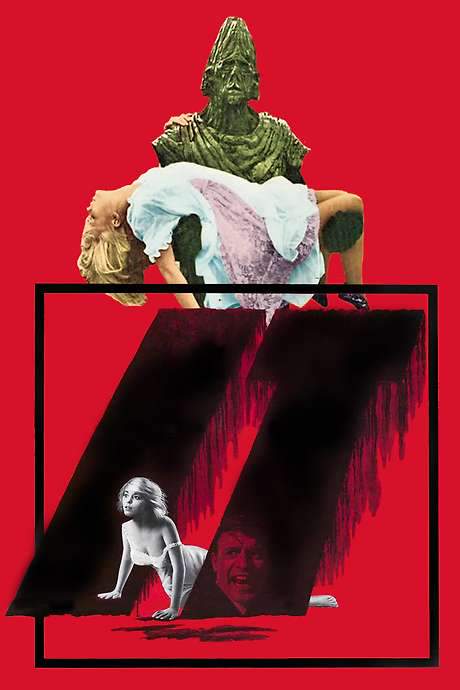
It! (1967) movie poster

Plot Summary

It! (1967) Plot Summary Explained

Release, runtime and language
1967 · 96 mins · English
Loading streaming availability…
Directed by
Herbert J. Leder
Starring
Ernest Clark, Roddy McDowall, Ian McCulloch, Aubrey Richards, John Baker, Paul Maxwell

Bullets, fire, water—nothing can destroy the cursed statue. After a warehouse blaze wipes out a museum’s collection, director Grove and assistant Pimm find a single figure that survived untouched. Grove is later found dead, apparently killed by the statue. Pimm discovers it was forged by a 16th‑century Rabbi Loew, immune to all damage, and schemes to use its power for his own advantage.

On this page (6)
  1. 1 Where to watch
  2. 2 What happens: full plot
  3. 3 Plot questions answered
  4. 4 Movie threads
  5. 5 Movies like It!
  6. 6 Every angle
Loading streaming availability…

Full plot summary · contains spoilers

What Happens in It!: Full Plot Summary

The whole story of It! (1967) explained, from the opening scene to the final frame: every key event, every twist and what it all adds up to. Read it as a quick recap before the sequel, to check a scene you missed, or to finally understand what really happened.

In a quiet London setting, a warehouse fire at a museum sparks a mystery that will coil through art, obsession, and ancient danger. The blaze leaves intact a statue that the museum’s head curator, Ernest Clark, identifies as a relic labeled the “Mid-European Primitive.” The catastrophe is followed by a chilling turn of events when the curator is killed during a late inspection of the artifact, and his assistant, Roddy McDowall as Arthur Pimm, is sent off to fetch a flashlight. What begins as a routine recovery mission quickly spirals into a sequence of unexplained deaths and catastrophic accidents, all strangely tied to the statue.

The object itself is soon revealed to be the legendary Golem of Judah Loew from the sixteenth century, a being forged to defend its community. Arthur Pimm—who carries a disturbing mood and a fixation on his late mother—cossets a macabre home life, keeping his mother’s corpse in his apartment and surreptitiously borrowing jewelry to adorn it. In the process of handling the Golem, he performs a perilous ritual: he places a small scroll containing the Hebrew word emeth (truth) into a hidden compartment at the top of the golem’s right foot. When the scroll is activated, the Golem stirs to life and immediately becomes Pimm’s dangerous ally, bending to his will in ways that betray the creature’s intended role as a protector of its community.

As the Golem grows more active, it is implicated in a spectacular crisis: the supposed destruction of the Hammersmith Bridge. Society’s fear intensifies as the statue’s presence appears to unleash devastation, and Pimm himself becomes embroiled in the murderous aftermath. The film posits a chilling caution about power unleashed and control wrested away from human hands. The inscription on the statue seems to foretell its fate: a warning that it cannot be destroyed by ordinary means. As the threat escalates, the movie leans into a foreboding sense that the Golem will endure where others fail.

> for neither by fire, nor water, nor force, nor anything by man created

Meanwhile, a romantic and professional triangle tightens around Ellen Grove, the earlier curator’s daughter, who finds herself drawn to a new admirer from the New York Museum. Jill Haworth portrays Ellen, while Paul Maxwell plays Jim Perkins, a curator from the New York institution who quickly identifies the Golem and senses a strategic opportunity to acquire it for his own museum. Perkins’s presence creates a counterforce to Pimm’s escalating danger, and Ellen’s affections become a focal point in a story that blends love, ambition, and peril.

As the plot advances, Perkins exposes Pimm to the authorities, and the troubled assistant is committed to an insane asylum. Yet the fixation does not end there: Pimm stages a dramatic breakout, kidnapping Ellen with the Golem’s unwelcome complicity. The two retreat to the museum’s annex in a rural area known as the Cloisters, where tension and danger converge. Perkins makes a desperate stand to salvage Ellen and prevent further catastrophe, culminating in a dramatic rescue just as a nuclear blast threatens to annihilate the Cloisters. The explosion vaporizes Pimm and the Cloisters, but intriguingly, the Golem remains, retreating into the sea with an almost inexplicable silence.

The film closes on a note of unresolved mystery, where the Golem’s ultimate fate is left to the sea’s tides. The tale threads together themes of obsession, ethical boundaries in the face of ancient power, and the fragile line between guardian and danger. The cast’s performances ground a narrative that marries Gothic dread with a modern sense of peril, anchored by the chilling possibility that some old legends refuse to stay buried.

- Main cast elements recur through the narrative, with a focus on the intertwined fates of the human characters and the living statue, and the enduring question of whether power can ever be fully controlled once awakened.
Last updated: December 06, 2025 at 16:32

Was this helpful?

Plot questions answered

It! Plot Explained: Your Questions Answered

The questions people ask most about It! (1967): what happens in the confusing scenes, why the characters do what they do, the twists, hidden details and what the ending means. Each answer contains spoilers.

Q1

Why does the statue survive the warehouse fire?

The statue survives because it is the legendary Golem of Judah Loew, a supernatural creature that cannot be destroyed by fire or any other conventional means. The inscription on the statue reads 'for neither by fire, nor water, nor force, nor anything by man created,' explaining its immunity to damage.

Foreshadowing: Earlier in the film, investigators note the statue's inexplicable survival amid total destruction, foreshadowing its supernatural nature.

  • golem
  • statue
  • fire
  • survival
  • indestructible
Q2

How does Arthur Pimm bring the Golem to life?

Pimm discovers a hidden compartment at the top of the Golem's right foot containing a small scroll with the Hebrew word 'emeth' (truth). When he places the scroll in the statue and activates it, the Golem stirs to life and becomes bound to Pimm's will.

Foreshadowing: The statue is labeled as a 'Mid-European Primitive,' hinting at its ancient origins before its true nature is revealed.

  • arthur pimm
  • golem
  • emeth
  • scroll
  • ritual
Q3

Why does the Golem obey Pimm instead of protecting the community?

The Golem was originally created by Rabbi Loew in the 16th century to defend its community, but Pimm's ritual using the 'emeth' scroll binds the creature to his will. This perverts the Golem's original purpose, turning it from a protector into a weapon that carries out Pimm's murders.

Foreshadowing: Pimm is established as a psychologically unstable character who keeps his mother's corpse, suggesting his capacity to corrupt the Golem's intended purpose.

  • golem
  • rabbi loew
  • protection
  • command
  • pimm
Q4

Why does Arthur Pimm keep his mother's corpse in his apartment?

Pimm is portrayed as a Norman Bates-like figure with severe psychological issues. He keeps his dead mother's body in his apartment and even steals jewelry to adorn her corpse, indicating deep emotional instability and an unhealthy attachment to his mother.

Foreshadowing: This disturbing detail establishes Pimm's psychological state from the beginning, explaining why he would misuse the Golem for murder.

  • arthur pimm
  • mother
  • corpse
  • psychological
  • obsession
Q5

What destroys Hammersmith Bridge in the film?

The Golem is suspected and implied to be responsible for the destruction of Hammersmith Bridge. This catastrophic event occurs as the Golem becomes more active under Pimm's control, demonstrating its immense destructive power and escalating the film's threat level.

Foreshadowing: The bridge destruction follows the pattern of mysterious deaths and accidents that begin after the Golem awakens.

  • golem
  • hamnersmith bridge
  • destruction
  • mayhem
Q6

What does the inscription on the Golem mean?

The inscription reads 'for neither by fire, nor water, nor force, nor anything by man created.' This ancient Hebrew warning explains that the Golem is immune to all conventional methods of destruction, making it an unstoppable force once awakened.

Foreshadowing: This inscription is introduced after the bridge destruction, when Pimm attempts to destroy the Golem and fails.

  • golem
  • inscription
  • indestructible
  • hebrew
  • protection
Q7

Why does Pimm kidnap Ellen Grove?

After being exposed by Jim Perkins and committed to an insane asylum, Pimm stages a breakout and kidnaps Ellen Grove, using the Golem's assistance. His motive appears to be both romantic obsession and using her as a pawn in his continued control over the Golem.

Foreshadowing: Ellen is established as a romantic interest for both Pimm and Perkins, creating a love triangle that escalates into violence.

  • arthur pimm
  • ellen grove
  • kidnap
  • golem
  • asylum
Q8

Why does the Golem survive the nuclear explosion?

The Golem survives the nuclear detonation because, as established by the ancient inscription, it cannot be destroyed by any human-created force, including nuclear weapons. The inscription explicitly states the creature is immune to 'anything by man created,' which includes nuclear technology.

Foreshadowing: The inscription's promise of invincibility foreshadows the Golem's survival of even the most extreme attempt at destruction.

  • golem
  • nuclear
  • explosion
  • survival
  • indestructible
Q9

What happens to the Golem at the end of the film?

After the nuclear explosion vaporizes Pimm and destroys the Cloisters, the Golem remains untouched and retreats into the sea. The film ends with the creature slipping from view, leaving its ultimate fate ambiguous and its threat unresolved.

Foreshadowing: The inscription's promise of invincibility and the Golem's survival of every attempt to destroy it foreshadow this final retreat.

  • golem
  • sea
  • ending
  • fate
  • ambiguous
Q10

How does the curator Mr. Grove die?

Mr. Grove, the museum curator, is killed during a late-night inspection of the Golem statue. While his assistant Arthur Pimm is sent to fetch a flashlight, Grove is murdered in what appears to be the first of the mysterious deaths linked to the Golem's awakening.

Foreshadowing: The fire that revealed the undamaged statue immediately precedes Grove's death, establishing the pattern of danger surrounding the artifact.

  • mr grove
  • curator
  • death
  • museum
  • killed
Q11

What is Jim Perkins's role in the story?

Jim Perkins is a curator from the New York Museum who arrives in London, identifies the Golem, and tries to acquire it for his institution. He becomes a counterforce to Pimm, ultimately exposing Pimm's crimes to the authorities and rescuing Ellen from the final confrontation.

Foreshadowing: Perkins's interest in acquiring the Golem creates conflict with Pimm and drives much of the plot's second half.

  • jim perkins
  • new york museum
  • curator
  • ellen grove

Movie threads

More Movies Like It!, by Mood & Story

Curated lists built around what makes It! tick: the same mood, the same kind of story or the same emotional payoff. Each list explains why these movies belong together.

Movies about obsession and corruption like in It!

Stories of characters whose obsession with an object leads to their own ruin. If you liked the theme of a curator's obsession with a cursed artifact in It!, you'll find similar chilling narratives here. These movies feature characters whose fascination with a powerful object leads to psychological collapse and dark consequences, perfect for fans of gothic horror and tragic character studies.

  • obsessive
  • unsettling
  • gothic
  • fatalistic
  • psychological
  • corrupting
  • Tone: dark, psychological
  • Pacing: steady, deliberate
Why these movies?

The story pattern: Narratives in this thread typically follow a protagonist, often an expert or intellectual, who discovers something extraordinary. Their initial academic or acquisitive interest morphs into a destructive obsession, causing them to lose their moral compass and sanity. The story arc is a downward spiral, where the protagonist's control over the object is an illusion, and the object ultimately controls or destroys them.

Why they belong together: Movies are grouped here because they share a core narrative of intellectual obsession turning malignant. They blend psychological horror with a steady, fatalistic pacing, creating a sense of inevitable doom driven by a character's own flawed nature rather than an external enemy.

Movies with unstoppable monsters like the Golem in It!

Terrifying tales where humanity faces an ancient, indestructible entity. For viewers who enjoyed the relentless threat of the indestructible Golem in It!, this collection features similar horror stories. These films pit characters against ancient curses, supernatural entities, or monsters that are immune to harm, creating a feeling of inescapable dread and high-stakes terror.

  • sinister
  • anxious
  • fatalistic
  • terrifying
  • supernatural
  • ancient evil
  • Tone: dark, terrifying
  • Pacing: steady escalation
Why these movies?

The story pattern: The narrative pattern involves the introduction of an ancient, supernatural antagonist that is effectively unstoppable. The plot follows characters discovering the entity's origin and futilely attempting to contain or destroy it. The conflict escalates steadily, highlighting the characters' vulnerability. Endings are often ambiguous or bleak, with the evil force surviving to threaten another day.

Why they belong together: These movies are united by the core experience of confronting an invincible antagonist. They generate anxiety through a steady build of tension and a high-intensity atmosphere, focusing on the existential dread of facing a power beyond human comprehension or control.

If you liked this

Movies Like It!

Similar movies to It!: the same genre, themes or kind of story. Each one comes with its own plot summary, timeline and ending explained.

Browse all movie summaries

Every angle

It! (1967) Explained: Plot, Timeline & Characters

Everything about It! in one place: what happens in the plot summary, the timeline in chronological order, the characters and meaning and a spoiler-free summary. What's After the Movie adds the cast, box office and post-credit scenes.

Coming soon on iOS and Android

The Plot Explained Movie Summary App

Plot summaries, endings explained and timelines on your phone. Catch up on any movie in minutes, save your favorites and never miss a twist again.

Be the first to know when we launch. Your email stays private, always.

Learn more about the app