

Plot Explained Spoilers guaranteed!
Plot Explained

Browse by genre

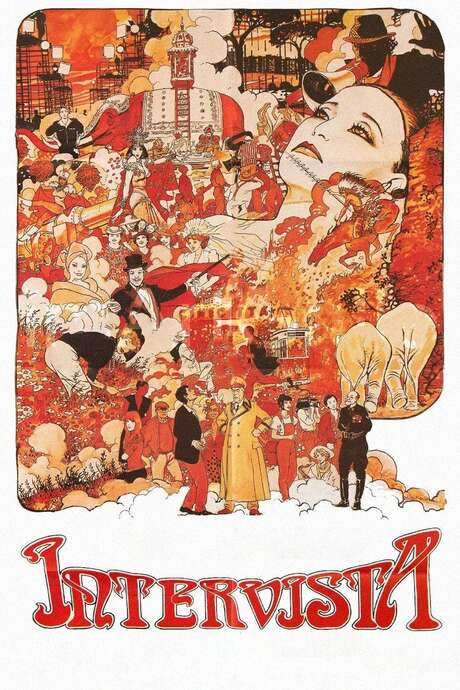
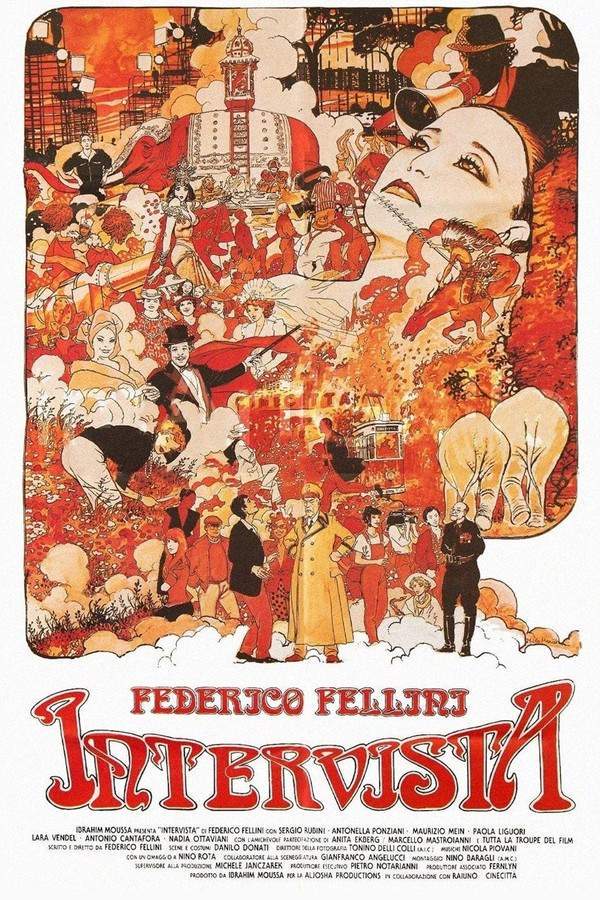
Intervista (1987) movie poster

Characters & Themes

Intervista (1987) Characters, Setting & Themes Explained

Release, runtime and language
1987 · 107 mins · Italian
Starring
Marcello Mastroianni, Federico Fellini, Christian Borromeo, Anita Ekberg, Antonella Ponziani, Antonio Cantafora

Federico Fellini welcomes us into his world of film making with a mockumentary about his life in film, as a Japanese film crew follows him around.

On this page (8)
  1. 1 Where to watch
  2. 2 Characters explained (9)
  3. 3 Where & when it takes place
  4. 4 Themes & meaning (3)
  5. 5 Character & meaning questions
  6. 6 Movie threads
  7. 7 Movies like Intervista
  8. 8 Every angle

Where to watch

Where to Watch Intervista (1987)

Where can you watch Intervista? Stream, rent or buy it in the US: current JustWatch availability with up-to-date prices.

Streaming availability powered by JustWatch

9 main characters · contains spoilers

Intervista Characters Explained: Who Is Who

The main characters of Intervista (1987), heroes and villains: what drives them, how they change over the course of the story and what each of them reveals about the film's bigger ideas.

  • Marcello Mastroianni as Marcello Mastroianni

    A veteran film star within Fellini's meta-film, Marcello appears in a TV commercial as Mandrake the Magician. His screen persona underscores the spectacle and commodification of fame in cinema. Through this cameo, the film probes how actors become symbols as much as performers.

    • 🎭 Icon
    • 🎬 Cameo
    • ✨ Fame
  • Federico Fellini as Federico Fellini

    The maestro-director guiding the backstage exploration of his own process. He negotiates endings, fame, and the aging of a filmmaker, using the set as a living notebook. His presence anchors the film’s meditation on art, memory, and the burden of legacy.

    • 🎬 Director
    • 🧠 Master
    • ⭐ Legend
  • Sergio Rubini as Il Giornalista

    A journalist observer who moves through set pieces and memory, documenting the behind-the-scenes drama. He embodies the media perspective within Fellini’s world and helps link present-day production to past experiences. His presence sharpens the film’s commentary on storytelling and perception.

    • 📰 Reporter
    • 🗣️ Interviewer
    • 🧭 Guide
  • Nadia Ottaviani as La Vestale

    The Cinecittà custodian who vanishes into the backlot to gather dandelions for herbal tea, adding an air of ritual and mystery to the studio environment. Her brief, almost ceremonial appearances evoke cinema’s quiet guardianship of memory. She helps infuse the set with a sense of forgotten time.

    • 🕯️ Guardian
    • 🪄 Mysterious
    • 🏛️ Studio lore
  • Maurizio Mein as L'Aiuto Regista

    The assistant director scrambling to assemble cast and crew, managing the day’s shoots and auditions. He embodies the logistical heartbeat of filmmaking under pressure. His role highlights the practical side of bringing Fellini’s visions to life.

    • 🎬 Assistant
    • ⚙️ Logistics
    • 🧭 Coordination
  • Lara Wendel as La Sposa

    La Sposa appears as a romantic figure within the frame, contributing to the film’s exploration of performance and attraction. Her presence adds to the spectacle and the idea of cinema as theater. She embodies the allure and demands of star power within a production.

    • 💃 Romance
    • 🎭 Starlet
    • ✨ Glamor
  • Paola Liguori as La Diva

    La Diva represents the glamour and theatricality of leading cinema, shaping the on-set fantasy and audience expectations. Her presence tests the boundaries between art and commerce on the film’s staging. She symbolizes the high-stakes world of stardom within Fellini’s meta-narrative.

    • 🎤 Star
    • 🎬 Glamour
    • 🏰 Authority
  • Francesca Reggiani as Francesca, Diva's Secretary

    Diva’s secretary who navigates backstage politics and scheduling. She embodies the administrative labor behind cinema’s glamour and the quiet influence of assistants in shaping a shoot. Her interactions illuminate power dynamics and organizational fragility on set.

    • 🗂️ Secretary
    • 🧭 Organizer
    • 🗣️ Liaison
  • Antonella Ponziani as La Ragazza del Tram

    La Ragazza del Tram appears in the tram-set context, hinting at the casting process and the search for a face to carry Fellini’s Amerika. Her presence underlines the audition culture and the constant pursuit of the perfect performer. She embodies the tension between potential and selection in cinema.

    • 🚋 Extra
    • 🎭 Audition
    • 🧪 Casting

Last updated: October 04, 2025 at 13:24

Was this helpful?

Setting

Where and When Does Intervista Take Place?

The setting of Intervista (1987): the year and time period, the places and locations, and how they shape the characters, the mood and the tension of the story.

Time period

1980s

The present-day action unfolds in the late 1980s as Fellini guides a Japanese TV crew through Cinecittà. A recurring 1938 flashback recalls his early visit to Cinecittà during the Fascist era, illustrating the long arc of his relationship with the studio. This temporal layering blurs the line between past and present, memory and making.

Location

Cinecittà, Rome, Casa del Passeggero, Studio 5 Backlot

Intervista is set largely at Cinecittà in Rome, the iconic studio complex where Fellini stages his look at filmmaking. The production also centers on the deserted backlot of Studio 5, used for dreamlike sequences, and on the Casa del Passeggero, a former budget hotel repurposed as a filming location. Together, these spaces underscore cinema as a place where memory, fantasy, and production collide.

  • 🎬 Cinecittà
  • 🗺️ Rome
  • 🏨 Casa del Passeggero
  • 🏗️ Backlot

Last updated: October 04, 2025 at 13:24

Was this helpful?

3 major themes

Intervista Meaning: Themes & Message Explained

What is Intervista (1987) really about? The emotional, social and philosophical themes the film keeps returning to, its symbolism and the message beneath the surface.

  • Filmmaking

    Intervista functions as a meta-portrait of cinema, showing the chaotic elegance of casting, set-building, and directing. It highlights how ideas are tested, rejected, and revised on the fly, revealing the craft behind the final product. The film treats production as a living process, where images are born through collaboration and improvisation. In doing so, it asks what a finished film can and cannot capture.

  • Time

    Time acts as a sculpting force, alternating between the late 1980s present and a 1938 memory that frames Fellini’s history with Cinecittà. The shifting timelines intensify the sense that cinema is a vessel for recollection as much as a tool for storytelling. By weaving past and present, the film suggests that film-making itself is a perpetual conversation with memory.

  • Illusion vs Reality

    The narrative continually tests what is real and what is staged, with dreamlike sequences and on-set fantasies seeping into documentary-style moments. Performances, commercials, and re-creations of past interviews all blur boundaries, inviting viewers to question the truth of what they see. The result is a meditation on cinema’s power to create, distort, and preserve reality.

Last updated: October 04, 2025 at 13:24

Was this helpful?

Character & theme questions

Intervista Characters & Meaning: Your Questions Answered

The questions people ask about Intervista (1987): who the characters really are, their relationships, what the symbols mean, where it takes place and what the movie is really about. Each answer contains spoilers.

Q1

Where is Intervista filmed and what locations are featured?

Intervista is primarily set at Cinecittà, the famous film studio complex in Rome. The movie also features Studio 5's deserted backlot, used for dreamlike sequences, and the Casa del Passeggero, a former budget hotel repurposed as a filming location. These spaces create a backdrop where memory, fantasy, and film production intersect throughout the narrative.

  • cinecittà
  • rome
  • film studio
  • backlot
  • filming locations
Q2

What time period does Intervista portray?

The main action unfolds in the late 1980s, showing Fellini guiding a Japanese TV crew through Cinecittà. The film also includes a recurring flashback to 1938, depicting Fellini's early visit to the studio during the Fascist era. This temporal layering connects past and present, showing the evolution of the director's relationship with the studio.

Foreshadowing: The 1938 flashback establishes Fellini's lifelong connection to Cinecittà before showing his present-day work there.

  • 1980s
  • 1938
  • flashback
  • time period
  • fascist era
  • cinecittà history
Q3

What are the main themes explored in Intervista?

Intervista explores three core themes: the art and craft of filmmaking as a living, collaborative process; the nature of time and memory in cinema, weaving between present and past; and the blurred line between illusion and reality, where documentary moments mix with fantasy and staged sequences. The film examines what film can and cannot capture about life and art.

  • filmmaking
  • time
  • memory
  • illusion
  • reality
  • meta cinema
Q4

How does Intervista portray the filmmaking process?

Intervista functions as a meta-portrait of cinema, showing the chaotic elegance of casting, set-building, and directing. It reveals how ideas are tested, rejected, and revised on the fly, exposing the craft behind the finished product. The film treats production as a living process where images are born through collaboration and improvisation.

  • filmmaking process
  • behind the scenes
  • production
  • cinecittà
  • collaboration
Q5

Who is Federico Fellini in Intervista and what is his role?

Federico Fellini appears as himself, serving as the maestro-director who guides a Japanese TV crew through his world of filmmaking. He negotiates endings, fame, and the aging of a filmmaker, using the Cinecittà set as a living notebook. His presence anchors the film's meditation on art, memory, and the burden of legacy.

  • federico fellini
  • director
  • self portrait
  • filmmaker
  • legacy
Q6

What role does Marcello Mastroianni play in Intervista?

Marcello Mastroianni appears as himself, playing a veteran film star within Fellini's meta-film. He appears in a TV commercial as Mandrake the Magician, a cameo that underscores the spectacle and commodification of fame in cinema. The film uses his presence to probe how actors become symbols as much as performers.

  • marcello mastroianni
  • magician cameo
  • fame
  • celebrity
  • mandrake
Q7

Who is the journalist character in Intervista?

Sergio Rubini plays Il Giornalista (the Journalist), an observer who moves through set pieces and memory, documenting the behind-the-scenes drama. He embodies the media perspective within Fellini's world and helps link present-day production to past experiences, sharpening the film's commentary on storytelling and perception.

  • journalist
  • sergio rubini
  • observer
  • media
  • documentary perspective
Q8

How does Intervista explore illusion versus reality?

The film continually tests what is real and what is staged, with dreamlike sequences and on-set fantasies seeping into documentary-style moments. Performances, commercials, and re-creations of past interviews all blur boundaries, inviting viewers to question the truth of what they see. The result is a meditation on cinema's power to create, distort, and preserve reality.

  • illusion
  • reality
  • dream sequence
  • staged
  • documentary
  • fantasy
Q9

Why is Cinecittà significant to Intervista's story?

Cinecittà serves as both setting and subject in Intervista, representing the heart of Italian cinema. The film's structure moves through its soundstages and backlots, using the studio's spaces to explore memory and filmmaking. The 1938 flashback shows Fellini's first visit to this iconic studio, making it central to understanding his artistic journey.

  • cinecittà
  • italian cinema
  • studio
  • film history
  • rome
Q10

What is the significance of the 1938 flashback in Intervista?

The 1938 flashback shows a young Fellini visiting Cinecittà during the Fascist era, illustrating the long arc of his relationship with the studio. This temporal layering blurs the line between past and present, suggesting that filmmaking itself is a perpetual conversation with memory. It establishes the studio as a place where personal history and cinematic creation intertwine.

  • 1938
  • flashback
  • fascist era
  • cinecittà
  • memory
  • personal history
Q11

What female characters appear in Intervista and what roles do they play?

Intervista features several female characters representing different aspects of cinema: Nadia Ottaviani plays La Vestale, the Cinecittà custodian who gathers dandelions in the backlot, adding ritual and mystery; Lara Wendel appears as La Sposa, a romantic figure exploring performance; Paola Liguori portrays La Diva, representing the glamour and theatricality of leading cinema; and Francesca Reggiani plays the diva's secretary navigating backstage politics.

  • female characters
  • la diva
  • vestale
  • cinecittà
  • custodian
  • stardom

Movie threads

More Movies Like Intervista, by Mood & Story

Curated lists built around what makes Intervista tick: the same mood, the same kind of story or the same emotional payoff. Each list explains why these movies belong together.

Movies about filmmaking and artistic reflection like Intervista

Stories where creators look back on their work with a mix of nostalgia and whimsy. If you enjoyed the self-reflexive and nostalgic look at cinema in Intervista, you'll appreciate these movies that explore the lives of artists, filmmakers, and creators. These films often blend documentary and fiction, offering a whimsical and contemplative perspective on memory and the creative process.

  • self reflective
  • nostalgic
  • contemplative
  • whimsical
  • dreamlike
  • magical
  • Tone: whimsical, melancholic, self-reflective
  • Pacing: variable, contemplative
Why these movies?

The story pattern: The narrative often eschews a traditional plot in favor of a reflective journey. The central conflict is usually internal, concerning memory, legacy, and the gap between artistic ambition and reality, frequently unfolding through a series of vignettes, dreams, and recollections.

Why they belong together: These films are grouped by their shared focus on the artist's perspective, a whimsical yet melancholic tone, and a complex structure that plays with the boundaries between life and art. They create a specific, introspective mood centered on creation.
Dreamlike and nostalgic movies with a bittersweet feel like Intervista

Films that use surrealism and memory to explore the bittersweet passage of time. For viewers who loved the dreamlike, nostalgic atmosphere of Intervista, this collection features films that use surrealism and magical elements to explore memory and the passage of time. These stories often have a bittersweet, contemplative mood and a variable, impressionistic pacing.

  • dreamlike
  • nostalgic
  • surreal
  • melancholic
  • whimsical
  • magical
  • Tone: nostalgic, whimsical, melancholic
  • Pacing: variable, atmospheric
Why these movies?

The story pattern: The narrative is driven by emotion and memory rather than a conventional plot. The journey is internal, moving fluidly between past and present, reality and dream, to examine themes of aging, loss, and the elusive nature of memory, often leading to a contemplative or hopeful resolution.

Why they belong together: This thread connects films based on a shared dreamlike atmosphere, a focus on nostalgia and memory, and a tonal blend of whimsy and melancholy. The viewing experience is defined by this specific, emotionally resonant vibe.

If you liked this

Movies Like Intervista

Similar movies to Intervista: the same genre, themes or kind of story. Each one comes with its own plot summary, timeline and ending explained.

Browse all movie summaries

Every angle

Intervista (1987) Explained: Plot, Timeline & Characters

Everything about Intervista in one place: what happens in the plot summary, the timeline in chronological order, the characters and meaning and a spoiler-free summary. What's After the Movie adds the cast, box office and post-credit scenes.

Coming soon on iOS and Android

The Plot Explained Movie Summary App

Plot summaries, endings explained and timelines on your phone. Catch up on any movie in minutes, save your favorites and never miss a twist again.

Be the first to know when we launch. Your email stays private, always.

Learn more about the app