











Plot Explained Spoilers guaranteed!
Plot Explained

Browse by genre

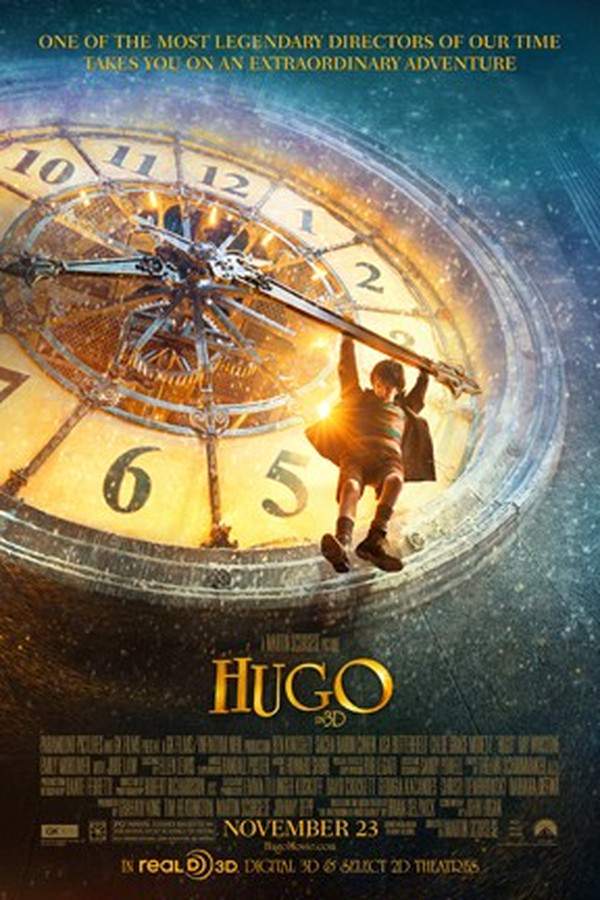
Hugo  (2011) movie poster

Plot Summary

Hugo (2011) Plot Summary Explained

Release, runtime and language
2011 · 127 min · English
JustWatch #29,208 6
Directed by
Martin Scorsese

Beneath the bustling Paris train station, Hugo Cabret lives a solitary existence, tending to the clocks. He's a resourceful orphan caught up in a world of secrets and shadows. When Hugo discovers a mysterious automaton and forms an unexpected friendship with a young girl and an eccentric toy shop owner, he uncovers a hidden past and a series of long-held mysteries that could change his life forever.

On this page (8)
  1. 1 Where to watch
  2. 2 What happens: full plot
  3. 3 Plot questions answered
  4. 4 The book behind the movie
  5. 5 Movie threads
  6. 6 Movies like Hugo
  7. 7 Categories
  8. 8 Every angle

Where to watch

Where to Watch Hugo (2011)

Where can you watch Hugo ? Stream, rent or buy it in the US, including on MGM Plus, Hoopla and Kanopy: current JustWatch availability with up-to-date prices.

Streaming availability powered by JustWatch

Full plot summary · contains spoilers

What Happens in Hugo : Full Plot Summary

The whole story of Hugo (2011) explained, from the opening scene to the final frame: every key event, every twist and what it all adds up to. Read it as a quick recap before the sequel, to check a scene you missed, or to finally understand what really happened.

In 1931 Paris, a young boy named Hugo Cabret (Asa Butterfield) navigates a life filled with loss and secrecy. After witnessing the tragic death of his father, a skilled clockmaker (Jude Law), in a fire, Hugo lives with his disinterested uncle, Claude, who takes care of the clocks at the bustling Gare Montparnasse railway station. As he hides within the walls of the station, Hugo dedicates himself to completing his father’s unfinished work: repairing a mysterious broken automaton, which he believes carries a message from his late father.

In his quest, Hugo finds himself in the crosshairs of Georges Méliès (Ben Kingsley), the shopkeeper of a toy store, who becomes suspicious of the boy's thieving. After being captured, Hugo desperately seeks to retrieve his notebook containing the blueprints for the automaton, leading to an exhilarating chase through the station with the relentless Train Inspector (Sacha Baron Cohen) on his tail.

As fate would have it, Hugo meets Isabelle (Chloë Grace Moretz), the goddaughter of Méliès. She helps him find common ground, and together, they embark on a series of adventures, including a secret trip to the cinema, a place Isabelle had never been allowed to explore. In their quest for answers about the automaton, Isabelle reveals that she possesses the key to activate it — a heart-shaped object that holds the power to unlock Hugo's father’s legacy.

When the automaton finally comes to life, it draws a scene from an old movie that Hugo's father cherished, leading the duo to unravel more profound truths about Méliès. They discover that Georges had once been a revered filmmaker whose creations were lost to the ravages of war and time. As they delve into the past, they uncover secrets and artifacts that shed light on Méliès's illustrious career and tragic downfall.

Despite being intercepted multiple times by the police, Hugo's determination drives him back to the train station. There, amid the ticking clocks and the looming threat of the inspector, he risks everything to save the automaton, which symbolizes not just his father's broken dreams but also the magic of cinema itself. After a harrowing rescue, Georges finally acknowledges Hugo and his contributions, leading to a heartwarming conclusion where Méliès is celebrated for his artistry.

As a new chapter unfolds, Hugo becomes an apprentice to Méliès, while Isabelle chooses to express her creativity through writing. Together, they learn that dreams can be rekindled and that the stories of the past remain alive through the magic of film. As Georges reflects on his journey, he encourages others to "follow their dreams," ultimately highlighting the importance of perseverance, friendship, and the wonders of storytelling.

Last updated: October 28, 2024 at 18:12

Was this helpful?

Plot questions answered

Hugo Plot Explained: Your Questions Answered

The questions people ask most about Hugo (2011): what happens in the confusing scenes, why the characters do what they do, the twists, hidden details and what the ending means. Each answer contains spoilers.

Q1

Why does Hugo live hidden in the train station?

Hugo lives hidden in the Gare Montparnasse station because his father died in a fire, leaving him orphaned. His uncle Claude, who was supposed to care for him, was indifferent and only maintained the station clocks. Without other family to turn to, Hugo hid within the station walls to avoid being sent to an orphanage and to continue his secret work of repairing the automaton his father left behind.

Foreshadowing: Earlier scenes show Hugo sneaking through the station's hidden passages, establishing his precarious living situation.

  • Hugo Cabret
  • Gare Montparnasse
  • orphan
  • uncle Claude
  • living in station
Q2

What is the automaton and why is it so important to Hugo?

The automaton is a mechanical man that Hugo's father was repairing before he died. Hugo believes fixing it will reveal a message or purpose his father left behind, making it a connection to his late father. The automaton represents both Hugo's grief and his hope for closure, driving much of his actions throughout the film.

Foreshadowing: Hugo is first seen guarding a hidden workshop with the broken automaton, hinting at its significance.

  • automaton
  • mechanical man
  • Hugo's father
  • repair
  • message
Q3

Why is Georges Méliès suspicious of Hugo?

Méliès grows suspicious because Hugo frequently steals small parts from his toy shop to repair the automaton. When Hugo is caught stealing, Méliès confronts him and becomes wary of the boy's activities, not knowing Hugo is simply trying to complete his father's unfinished work.

Foreshadowing: Hugo's first appearance shows him taking parts from the toy store, establishing the conflict with Méliès.

  • Méliès
  • toy shop
  • stealing
  • suspicion
  • conflict
Q4

What is the heart-shaped key and what does it do?

Isabelle reveals she has a heart-shaped key that belongs to the automaton. When Hugo uses it to activate the mechanical man, the automaton comes to life and draws a scene from a film Hugo's father loved. This moment connects Hugo's quest to Méliès's forgotten film career and reveals the two stories are intertwined.

Foreshadowing: Isabelle mentions having a special object early in their friendship, building anticipation for its purpose.

  • heart-shaped key
  • Isabelle
  • automaton activation
  • film scene
  • father
Q5

What secret about Georges Méliès is uncovered in the film?

Hugo and Isabelle discover that Georges Méliès was once a celebrated filmmaker in the early 1900s, known for his innovative silent films. His career was destroyed when World War I broke out and his studio was lost. He retreated to running the toy shop anonymously, hiding his artistic legacy out of shame and grief.

Foreshadowing: Méliès's toy shop contains numerous film reels and memorabilia hinting at his former life.

  • Méliès
  • filmmaker
  • silent films
  • lost career
  • World War I
Q6

What happened to Hugo's father?

Hugo's father, a skilled clockmaker, died in a tragic fire before the events of the film. This loss left Hugo orphaned and profoundly affected. The fire destroyed their home and left Hugo with only his father's broken automaton and the mission to complete his father's work.

Foreshadowing: The opening establishes Hugo's loneliness and his obsession with fixing the automaton as a way to cope with loss.

  • Hugo's father
  • clockmaker
  • fire
  • death
  • orphaned
Q7

How do Hugo and Isabelle meet?

Hugo meets Isabelle when he is caught stealing from her godfather Méliès's toy shop. After being intercepted by the Train Inspector, Hugo escapes and encounters Isabelle in the station. Their meeting becomes the catalyst for both their adventures and the unraveling of Méliès's secret.

Foreshadowing: The chase scene brings Hugo into direct contact with Isabelle, changing the direction of his quest.

  • Isabelle
  • meeting
  • Méliès goddaughter
  • station encounter
Q8

Why does the Train Inspector chase Hugo throughout the movie?

The Train Inspector, Gustav, is tasked with catching orphans living in the station to send them to the orphanage. Hugo becomes his primary target because he lives hidden within the station and frequently gets caught stealing. The inspector's relentless pursuit creates ongoing tension and drives several action sequences.

Foreshadowing: Early scenes establish the inspector's habit of checking under benches and in hidden corners for orphans.

  • Train Inspector
  • Gustav
  • chase
  • orphanage
  • stealing
Q9

What leads Georges Méliès to finally acknowledge Hugo?

After Hugo risks everything to save the automaton from being seized by the inspector, Méliès witnesses Hugo's courage and dedication to preserving his father's legacy. This act of bravery, combined with the revelation that the automaton contains a drawing from Méliès's own film, makes Méliès recognize Hugo's value and commitment.

Foreshadowing: The climactic rescue scene shows Hugo's determination, which clearly moves Méliès.

  • Méliès
  • acknowledgment
  • automaton rescue
  • recognition
  • apprenticeship
Q10

What happens to Hugo at the end of the movie?

At the end, Hugo is officially adopted by Méliès and becomes his apprentice, learning the art of filmmaking. Isabelle chooses to pursue writing. The film concludes with Méliès being celebrated for his lost films, and Hugo having found a new family and purpose, leaving his life of hiding behind.

Foreshadowing: The entire film builds toward Hugo finding belonging, which the ending fulfills.

  • apprenticeship
  • Méliès
  • new family
  • ending
  • resolution

Movie threads

More Movies Like Hugo , by Mood & Story

Curated lists built around what makes Hugo tick: the same mood, the same kind of story or the same emotional payoff. Each list explains why these movies belong together.

Movies with melancholic whimsy and historical rediscovery like Hugo

Stories where a touch of sadness meets whimsical discovery and the restoration of forgotten magic. If you liked the blend of wistful emotion and magical discovery in Hugo, explore these movies that balance a touch of sadness with whimsical quests. These similar stories often involve forgotten histories, artistic legacies, and characters who heal through uncovering the past, resulting in heartwarming journeys like Hugo's.

  • nostalgic
  • melancholic
  • wonder-filled
  • heartwarming
  • hopeful
  • magical
  • Tone: whimsical, melancholic, hopeful
  • Pacing: steady, contemplative
Why these movies?

The story pattern: Stories in this thread typically follow a lonely or grieving protagonist who becomes involved in a mysterious quest. Their investigation leads them to uncover a forgotten piece of history, art, or personal legacy, which provides healing, connection, and a renewed sense of purpose. The narrative arc moves from isolation to community through wonder.

Why they belong together: Movies are grouped here for their shared emotional texture: a core of melancholy or loss is consistently balanced by a tone of whimsical wonder. They share a focus on uncovering the past, often involving mechanical marvels, artistic secrets, or forgotten stories, and they deliver an ultimately hopeful and heartwarming conclusion.

Orphan and found family adventure movies like Hugo

Heartwarming tales where lonely orphans find belonging and uncover secrets in enchanting settings. For viewers who loved Hugo's story of a lonely orphan finding a new family, this collection features similar movies with young protagonists on quests of discovery. These films share a focus on resourceful orphans, mysterious automata or objects, magical worlds, and the heartwarming theme of building a chosen family, just like in Hugo.

  • lonely
  • heartwarming
  • hopeful
  • magical
  • mysterious
  • nostalgic
  • Tone: heartwarming, hopeful, whimsical
  • Pacing: steady, character-driven
Why these movies?

The story pattern: The narrative pattern follows a child protagonist, often an orphan, living on the margins of a richly imagined world. Their loneliness drives them to pursue a mystery, leading to friendships with eccentric adults and other children. The quest reveals a larger secret, resolves a past wound, and culminates in the protagonist finding a true home and family.

Why they belong together: These films are connected by their central archetype of the intelligent, lonely orphan and the powerful theme of found family. They share a specific mood blend of initial sadness giving way to wonder and warmth, set within worlds that feel slightly magical or meticulously crafted, and feature a steady pace that allows for character connection.

If you liked this

Movies Like Hugo

Similar movies to Hugo : the same genre, themes or kind of story. Each one comes with its own plot summary, timeline and ending explained.

Browse all movie summaries

Categories

Movie Lists Featuring Hugo

Hugo appears in these hand-built movie categories. Each one groups movies by a specific mood, theme or story type, with their plot summaries and endings explained.

View all movie categories

Every angle

Hugo (2011) Explained: Plot, Timeline & Characters

Everything about Hugo in one place: what happens in the plot summary, the timeline in chronological order, the characters and meaning and a spoiler-free summary. What's After the Movie adds the cast, box office and post-credit scenes.

Coming soon on iOS and Android

The Plot Explained Movie Summary App

Plot summaries, endings explained and timelines on your phone. Catch up on any movie in minutes, save your favorites and never miss a twist again.

Be the first to know when we launch. Your email stays private, always.

Learn more about the app