Plot Explained Spoilers guaranteed!
Plot Explained

Browse by genre

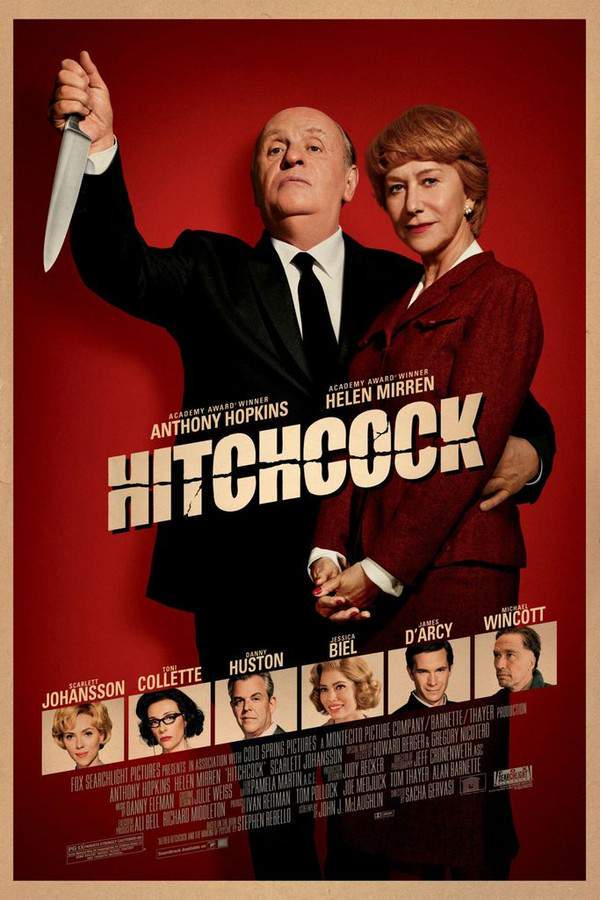
Hitchcock (2012) movie poster

Timeline

Hitchcock (2012) Timeline Explained – Every Event in Order

Release, runtime and language
2012 · 98 min · English
Loading streaming availability…
Directed by
Sacha Gervasi
Starring
Helen Mirren, Anthony Hopkins, Scarlett Johansson, Danny Huston, Toni Collette

Following the success of "North by Northwest," director Alfred Hitchcock decides to adapt Robert Bloch’s novel, "Psycho." Despite studio reservations, he pushes forward with his vision, challenging conventions and risking his career. The production places immense pressure on his marriage to Alma Reville, portrayed by Helen Mirren, who voices her anxieties but ultimately supports his artistic choices. As the film progresses, the demands of the project test the strength of their relationship and explore the complexities of creative ambition.

On this page (6)
  1. 1 Where to watch
  2. 2 Events in order (15)
  3. 3 Timeline questions answered
  4. 4 Movie threads
  5. 5 Movies like Hitchcock
  6. 6 Every angle
Loading streaming availability…

15 events in order · contains spoilers

Hitchcock Timeline: Events in Chronological Order

Every key event of Hitchcock (2012) in order, scene by scene, with when and where it takes place. Use it to untangle flashbacks, time jumps and parallel storylines, to refresh your memory before the sequel or to find the exact scene you are thinking of.

  1. Success of North by Northwest

    In 1959, director Alfred Hitchcock celebrates the success of his film *North by Northwest*. This achievement puts him back in the spotlight, but it also brings an unsettling suggestion from a reporter that it's time for him to retire.

    When
    1959
  2. Rejection of Adaptation Offers

    Feeling the pressure to innovate, Hitchcock rejects multiple offers for adaptations, including the chance to work on *Casino Royale*. Instead, he becomes captivated by the horror novel *Psycho* by Robert Bloch, inspired by the gruesome details of serial killer Ed Gein.

  3. Discontent from Alma and Friends

    Hitchcock's wife Alma expresses her skepticism towards his choice to adapt *Psycho*, echoing concerns raised by their mutual friends. However, she gradually begins to see the bold potential in his vision.

  4. Alma's Innovative Suggestion

    As Alma warms up to the project, she proposes a daring twist: to kill off the film’s female lead early in the story. This idea pushes the boundaries of conventional storytelling and reflects the couple's innovative spirit.

  5. Self-Funding the Film

    Faced with resistance from studio executives, Hitchcock decides to self-fund the film, investing his own money. He enlists the crew from his television series *Alfred Hitchcock Presents*, showcasing his commitment to the project.

  6. Pressure from Production Code

    During the film's production, Hitchcock encounters scrutiny from Geoffrey Shurlock of the Motion Picture Production Code. This creates additional tension, as Hitchcock juggles both creative challenges and external pressures.

  7. Alma's Secret Collaboration

    While Hitchcock becomes consumed by the film, Alma begins to secretly collaborate with writer Whitfield Cook on his screenplay. This decision stems from her need for creative expression and support during a tumultuous time.

    Where
    Whitfield's beach house
  8. Jealousy and Conflict

    Upon discovering Alma's partnership with Cook, Hitchcock's jealousy grows, causing rifts in their relationship. His imagination of betrayal leads to a decline in his focus on key film scenes, particularly the infamous shower scene.

  9. Alma’s Resolute Support

    As Hitchcock faces exhaustion and illness, Alma steps in to oversee production, demonstrating her unwavering commitment to both him and the film. Their partnership is tested as emotional tensions peak.

  10. Alma's Defiant Denial

    Tensions rise dramatically when Hitchcock confronts Alma about her loyalty, accusing her of infidelity. Feeling deeply hurt and offended by his accusations, Alma vehemently denies any wrongdoing, underscoring her sacrifices for their marriage.

  11. Psycho's Rough Cut Disappointment

    After pouring his heart into *Psycho*, Hitchcock is met with a disappointing reception of the rough cut. Both he and Alma experience frustrations as they navigate ongoing challenges in their professional and personal lives.

  12. Creative Reconciliation

    Despite previous conflicts, Hitchcock and Alma reconcile and begin collaborating more closely on the film. Their renewed partnership is pivotal, leading them to refine the movie into a groundbreaking cinematic experience.

  13. Incorporating Musical Elements

    Alma persuades Hitchcock to include Bernard Hermann's iconic string score to amplify the shower scene's tension. This decision heightens the film's emotional impact and solidifies the scene as one of the most memorable in cinematic history.

  14. Marketing Challenges

    As release day approaches, Hitchcock faces disappointing news about *Psycho*'s limited marketing and distribution. Determined, he devises unique strategies, including restricting theater entry after showtime, to attract audiences.

  15. Triumphant Premiere

    At the premiere of *Psycho*, Hitchcock anxiously awaits audience reactions. The film receives overwhelming praise, marking a triumphant moment in his career, and he publicly acknowledges Alma's vital contributions to their success.

Last updated: November 03, 2024 at 13:52

Was this helpful?

Timeline questions answered

Hitchcock Timeline Explained: Your Questions Answered

When does it happen, and why in that order? The questions people ask about the chronology of Hitchcock (2012): time jumps, flashbacks, cause and effect between scenes and the correct order of events, each answered with spoilers.

Q1

Why does Hitchcock decide to make Psycho after his success with North by Northwest?

After achieving major success with North by Northwest in 1959, Hitchcock felt pressure to prove he wasn't past his prime. A reporter suggested it was time for him to retire, which unsettled him. Rather than playing it safe with another adaptation like Casino Royale, he chose the controversial horror novel Psycho because he wanted to reclaim the creative boldness of his earlier career and take a bold creative risk.

Foreshadowing: Earlier in his career, Hitchcock was known for pushing boundaries, and the reporter's comment about retirement directly challenges that legacy.

  • alfred hitchcock
  • pyscho
  • north by northwest
  • retirement
  • creative ambition
Q2

Why is Alma initially skeptical about Psycho?

Alma Reville, Hitchcock's wife and creative partner, expresses strong reservations about adapting Robert Bloch's horror novel. She shares the concerns of their friends, including writer Whitfield Cook, who believe the project is too risky for a director of Hitchcock's stature. The subject matter, inspired by real-life serial killer Ed Gein, was considered distasteful and potentially damaging to Hitchcock's reputation after his successful career.

Foreshadowing: Alma's initial resistance sets up her later transformation into a supportive collaborator who helps shape the film's most innovative elements.

  • alma reville
  • psycho
  • robert bloch
  • ed gein
  • skepticism
Q3

What was Alma's key creative contribution to Psycho?

Alma proposes the groundbreaking narrative twist that kills off the film's female lead early in the story. This radical decision, one that shocked contemporary audiences and studio executives, becomes central to Psycho's shocking impact. Her suggestion demonstrates her understanding of storytelling conventions and her willingness to push Alfred toward innovative choices that would forever change cinema.

Foreshadowing: Alma's suggestion challenges traditional Hollywood formulas where the female lead survives until the end, reflecting the film's overall theme of subverting audience expectations.

  • alma reville
  • psycho twist
  • female lead
  • narrative innovation
  • screenplay
Q4

Why does Hitchcock self-fund Psycho instead of getting studio backing?

Major studios refuse to finance Psycho due to its controversial subject matter, the controversial decision to kill the female lead, and concerns about the Production Code. Determined to make the film his way, Hitchcock invests his own money and uses the crew from his television series Alfred Hitchcock Presents. This self-funded approach gives him complete creative control but also places enormous financial pressure on him.

Foreshadowing: The financial risk mirrors the psychological risk Hitchcock takes creatively, betting everything on a vision that others dismiss.

  • self-funding
  • studio
  • production code
  • creative control
  • investment
Q5

What causes the major tension between Hitchcock and Alma during production?

Hitchcock becomes increasingly jealous and suspicious when Alma begins secretly collaborating with writer Whitfield Cook on his screenplay at his beach house. Feeling neglected due to Hitchcock's obsessive focus on Psycho, Alma seeks creative fulfillment elsewhere. When Alfred discovers this collaboration, he imagines an affair, leading to heated confrontations that strain their marriage and affect his work on key scenes like the shower sequence.

Foreshadowing: Earlier, Hitchcock's well-known flirtation with actresses, including Janet Leigh, has already irritated Alma, creating a foundation of mistrust that escalates with the Whitfield situation.

  • alma
  • whitfield cook
  • jealousy
  • marriage tension
  • production
Q6

How does Alma help save the Psycho production when Hitchcock falls ill?

When Hitchcock suffers from exhaustion and illness during the demanding production, Alma steps in to oversee the film directly. Her organizational skills and dedication keep the production moving forward during his absence. This act of commitment demonstrates her loyalty despite their marital tensions, and it becomes a turning point in their relationship.

Foreshadowing: Alma's ability to manage production reflects her years of experience as Hitchcock's uncredited creative collaborator, showing her indispensable role behind the scenes.

  • alma
  • production
  • illness
  • exhaustion
  • support
Q7

Why does Hitchcock accuse Alma of infidelity, and how does she respond?

Hitchcock confronts Alma about her loyalty after discovering her secret collaboration with Whitfield Cook, accusing her of romantic infidelity. Feeling deeply hurt and offended given her sacrifices for their marriage and career, Alma fiercely denies any affair. Her angry response highlights her frustration with Hitchcock's paranoia and double standards, especially given his own publicized flirtations with actresses.

Foreshadowing: This confrontation represents the lowest point in their marriage, but it also forces both to confront their issues directly rather than continuing to passive-aggressively circle each other.

  • accusation
  • infidelity
  • confrontation
  • marriage
  • whitfield cook
Q8

What makes Bernard Hermann's score for Psycho so important?

Alma persuades Hitchcock to hire Bernard Hermann to compose an original score for the shower scene. Hermann's iconic string-only score creates intense psychological tension and has become one of the most recognizable film scores in cinema history. The decision to use only strings, rather than a full orchestra, produces a sharp, visceral sound that amplifies the scene's terror and contributes significantly to the film's lasting impact.

Foreshadowing: This collaboration between Alma and Alfred on the music mirrors their broader reconciliation and demonstrates how their partnership finally functions at full strength.

  • bernard hermann
  • score
  • shower scene
  • strings
  • iconic music
Q9

How does Hitchcock deal with the Production Code office during Psycho?

Hitchcock faces scrutiny from Geoffrey Shurlock of the Motion Picture Production Code, who reviews the film for content violations. Hitchcock skillfully navigates these restrictions by making strategic edits and negotiations, ultimately leaving most of the shocking content intact. His ability to work around censorship while preserving the film's shocking elements becomes a major achievement.

Foreshadowing: The shower scene's infamous violence exists partly because Hitchcock found creative ways to suggest brutality without explicitly showing it, working within and around the Code's limitations.

  • production code
  • censorship
  • geoffrey shurlock
  • content restrictions
Q10

What happens at Psycho's premiere and how does the audience react?

At the premiere, Hitchcock anxiously awaits the audience's reaction to his unconventional film. Despite limited marketing and a restricted release, Hitchcock famously required theaters to forbid entry after the film started to prevent spoilers, the film receives overwhelming praise. Audiences and critics recognize Psycho as a groundbreaking masterpiece that revolutionized horror cinema.

Foreshadowing: The innovative theatrical restriction Hitchcock implements becomes a marketing sensation, generating buzz and ensuring audiences experience the film as intended, without prior knowledge of its twists.

  • premiere
  • audience reaction
  • success
  • limited release
  • marketing
Q11

How does Hitchcock publicly acknowledge Alma's contributions to Psycho?

During the Psycho premiere, Alfred Hitchcock publicly thanks his wife Alma in front of the audience, acknowledging her vital contributions to the film's success. This public recognition marks the culmination of their reconciliation and serves as a heartfelt acknowledgment of her creative input, including the narrative twist idea and the iconic musical score. Their partnership is reaffirmed, strengthening their marriage.

Foreshadowing: This moment represents the emotional resolution of the film, professional triumph reinforcing personal reconciliation, with love and creativity intertwined.

  • alma
  • public acknowledgment
  • premiere
  • gratitude
  • partnership

Movie threads

More Movies Like Hitchcock, by Mood & Story

Curated lists built around what makes Hitchcock tick: the same mood, the same kind of story or the same emotional payoff. Each list explains why these movies belong together.

Movies about creative partnerships like Hitchcock

Stories where a creative duo's bond is tested by the demands of their shared ambition. Explore movies like Hitchcock that focus on the intense dynamics of a creative duo, often a marriage, navigating the high-stakes world of artistic production. If you enjoyed seeing the collaboration and strain between Alfred and Alma, you'll find similar stories of ambitious partnerships tested by their work.

  • creative energy
  • marital strain
  • defiant
  • collaborative
  • resilient
  • professional risk
  • Tone: tense, resilient
  • Pacing: steady, character-driven
Why these movies?

The story pattern: The narrative follows a pair of creators—directors, writers, artists—as they embark on a risky or demanding project. The central conflict arises from external pressures (studio interference, financial risk) and internal strains (ego, differing visions) that test their personal relationship. The story arc typically resolves with their collaboration ultimately strengthening their bond and leading to professional triumph.

Why they belong together: Movies are grouped here because they share a focus on the emotional core of a collaborative relationship as the driving force of the story. They balance the thrill of creation with the intimate drama of a partnership under strain, resulting in a satisfying blend of professional and personal resolution.
Behind the scenes filmmaking dramas like Hitchcock

A tense look at the chaos and defiance involved in creating a iconic work of art. Discover movies similar to Hitchcock that offer a tense, dramatic look at the making of a famous film or other artistic masterpiece. If you liked the story of Hitchcock fighting the studio to make Psycho, you'll enjoy these tales of defiant creators challenging the system.

  • tense
  • anxious
  • defiant
  • creative process
  • filmmaking
  • artistic ambition
  • Tone: tense, anxious, defiant
  • Pacing: steady, linear
Why these movies?

The story pattern: The plot follows a visionary artist or director as they pursue a controversial or difficult project that everyone doubts. The narrative is built around overcoming a series of obstacles—financial, creative, or personal—that build tension and risk failure. The journey is linear, focusing on the step-by-step process of creation, culminating in the triumphant completion and reception of the work.

Why they belong together: These movies are connected by their specific focus on the 'making-of' narrative structure. They share a tense, defiant mood born from creative struggle, a steady pacing that mirrors the production process, and a central theme of artistic ambition prevailing against the odds.

If you liked this

Movies Like Hitchcock

Similar movies to Hitchcock: the same genre, themes or kind of story. Each one comes with its own plot summary, timeline and ending explained.

Browse all movie summaries

Every angle

Hitchcock (2012) Explained: Plot, Timeline & Characters

Everything about Hitchcock in one place: what happens in the plot summary, the timeline in chronological order, the characters and meaning and a spoiler-free summary. What's After the Movie adds the cast, box office and post-credit scenes.

Coming soon on iOS and Android

The Plot Explained Movie Summary App

Plot summaries, endings explained and timelines on your phone. Catch up on any movie in minutes, save your favorites and never miss a twist again.

Be the first to know when we launch. Your email stays private, always.

Learn more about the app