


Plot Explained Spoilers guaranteed!
Plot Explained

Browse by genre

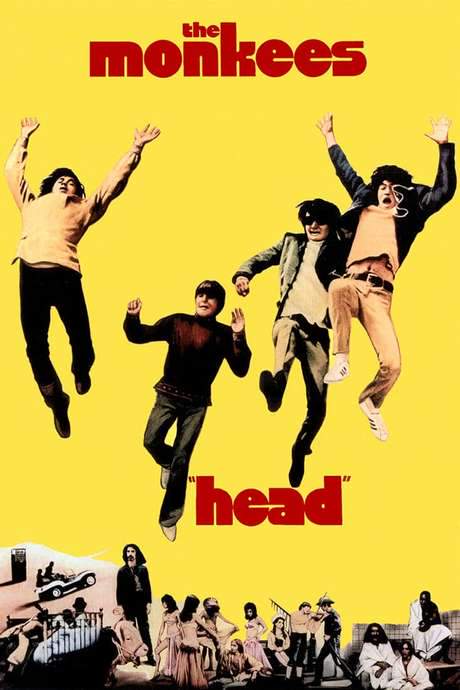
Head (1968) movie poster

Characters & Themes

Head (1968) Characters, Setting & Themes Explained

Release, runtime and language
1968 · 86 mins · English
JustWatch #18,463 10
Starring
Jack Nicholson, Charles Macaulay, Helena Kallianiotes, Bob Rafelson, Teri Garr, Dennis Hopper

Following the Monkees in a surreal, free‑form sequel to their TV series, the band wanders through a string of musical set pieces and quirky vignettes. Guided only by John Brockman’s therapist, the sequences blend humor with anti‑establishment commentary, creating a whimsical, off‑beat portrait of pop‑culture rebellion.

On this page (8)
  1. 1 Where to watch
  2. 2 Characters explained (4)
  3. 3 Where & when it takes place
  4. 4 Themes & meaning (3)
  5. 5 Character & meaning questions
  6. 6 Movie threads
  7. 7 Movies like Head
  8. 8 Every angle

Where to watch

Where to Watch Head (1968)

Where can you watch Head? Stream, rent or buy it in the US, including on fuboTV: current JustWatch availability with up-to-date prices.

Streaming availability powered by JustWatch

4 main characters · contains spoilers

Head Characters Explained: Who Is Who

The main characters of Head (1968), heroes and villains: what drives them, how they change over the course of the story and what each of them reveals about the film's bigger ideas.

  • Micky Dolenz as Micky

    Micky is the energetic frontman who embodies the Monkees' public persona while wrestling with the film's rigid script. He often pushes for spontaneous moments, only to be reminded that his actions must fit the director's plan. His humor masks a deeper desire for authentic expression within a manufactured world.

    • 🎭 Frontman
    • ⚡ Energetic
    • 🧩 Rebellious within a script
  • Davy Jones as Davy

    Davy performs with wry charm and self-awareness, frequently challenging the premise that he is just a scripted character. He plays with incongruity and comic timing to test the system, while remaining part of the troupe. His resilience under the script's constraints highlights the tension between role and self.

    • 🎭 Charmer
    • 😏 Witty
    • 🧭 Self-aware
  • Peter Tork as Peter

    Peter brings a thoughtful, improvisational vibe, often acting as the voice of reason amid chaos. He questions the reality of the scenes and debates the nature of performance within a movie that controls them. His curiosity mirrors the audience's own wonder about fiction and fate.

    • 🎓 Thinker
    • 🤔 Curious
    • 🧭 Self-aware
  • Michael Nesmith as Mike

    Mike is the laid-back skeptic who notices the borders between script and life. He leans into cool detachment but also probes for autonomy, challenging the idea that a film's structure defines who they are. His dry humor undercuts the illusion of total control.

    • 🎭 Skeptic
    • 😎 Cool
    • 🧭 Observant

Last updated: October 04, 2025 at 14:45

Was this helpful?

Setting

Where and When Does Head Take Place?

The setting of Head (1968): the year and time period, the places and locations, and how they shape the characters, the mood and the tension of the story.

Time period

1968

Set in the late 1960s, a period known for experimental cinema and counterculture. The film mirrors the era's appetite for breaking traditional storytelling and playful self-awareness. Its structure and humor reflect the era's willingness to blur lines between reality and fiction.

Location

Film studio lot, painted sets, bridge

Head largely unfolds on a film studio lot, moving between painted sets and actual production space. The opening dedication on a bridge anchors the action, while the narrative shifts through various genre backdrops. The space is deliberately constructed to blur production constraints with storytelling, highlighting cinema as a controlled playground.

  • 🎬 Studio
  • 🧭 Meta-narrative
  • 🪄 Surreal

Last updated: October 04, 2025 at 14:45

Was this helpful?

3 major themes

Head Meaning: Themes & Message Explained

What is Head (1968) really about? The emotional, social and philosophical themes the film keeps returning to, its symbolism and the message beneath the surface.

  • Free Will

    The Monkees seek genuine choice within a world where every move is scripted and directed. They try to diverge from planned lines and actions, only to discover the script bends to the director's will. This tension turns personal agency into a commentary on the illusion of spontaneity in mass media. The theme asks how much real freedom exists when entertainment is manufactured for an audience.

  • Metafiction

    Head constantly draws attention to its own construction, with the director and actors discussing the 'production' on set. The characters smash through painted walls, walk off sets, and are introduced as both performers and puppets. The reveal that even escape attempts are pre-scripted highlights cinema as a manufactured experience. It’s a meditation on authorship, control, and the relationship between viewer, actor, and director.

  • Genre Mashup

    The film moves through mystery, war, western, desert adventure, and more, all within a single piece. This collage-like approach parodies and honors multiple film genres, reflecting 1960s experimentation with form. The Monkees' identities shift with each vignette, underscoring artificiality and the pliability of cinematic storytelling. It showcases cinema's capacity to remix cultural tropes into new, playful mosaics.

Last updated: October 04, 2025 at 14:45

Was this helpful?

Character & theme questions

Head Characters & Meaning: Your Questions Answered

The questions people ask about Head (1968): who the characters really are, their relationships, what the symbols mean, where it takes place and what the movie is really about. Each answer contains spoilers.

Q1

Where is Head set?

Head primarily takes place on a film studio lot, moving between painted sets and actual production spaces. The film deliberately constructs its environment to blur the line between production constraints and storytelling, creating a meta-narrative playground where cinema itself becomes part of the story.

  • film studio
  • set
  • painted sets
  • movie set
  • location
Q2

When does Head take place?

Head is set in 1968, during the late 1960s counterculture era. The film mirrors that period's experimental cinema movement and its appetite for breaking traditional storytelling rules, using playful self-awareness to blur boundaries between reality and fiction.

  • 1968
  • late 1960s
  • counterculture
  • era
  • time period
Q3

What is the Free Will theme in Head about?

The Free Will theme explores how the Monkees seek genuine choice within a world where every move is scripted and directed. They attempt to diverge from planned lines and actions, only to discover the script bends to the director's will, turning personal agency into a commentary on the illusion of spontaneity in mass media.

  • free will
  • agency
  • script
  • control
  • spontaneity
  • manufactured entertainment
Q4

What is the Metafiction theme in Head about?

The Metafiction theme constantly draws attention to the film's own construction, with the director and actors discussing the production on set. Characters smash through painted walls and walk off sets, yet even escape attempts are revealed to be pre-scripted, highlighting cinema as a manufactured experience and exploring authorship and control.

  • metafiction
  • self-referential
  • director
  • production
  • painted walls
  • authorship
Q5

What is the Genre Mashup theme in Head about?

The Genre Mashup theme sees the film move through mystery, war, western, and desert adventure sequences within a single piece. This collage-like approach parodies and honors multiple film genres, reflecting 1960s experimentation while showcasing cinema's capacity to remix cultural tropes into playful mosaics.

  • genre
  • mashup
  • parody
  • collage
  • western
  • mystery
  • war
  • film genres
Q6

Who are the main characters in Head?

Head features the four Monkees as the central characters: Micky Dolenz as the energetic frontman, Davy Jones with his wry charm and self-awareness, Peter Tork as the thoughtful improvisational voice of reason, and Michael Nesmith as the laid-back skeptic who probes for autonomy.

  • monkees
  • micky
  • davy
  • jones
  • peter tork
  • michael nesmith
  • characters
  • band members
Q7

What is Micky's role in Head?

Micky Dolenz plays the energetic frontman who embodies the Monkees' public persona while wrestling with the film's rigid script. His humor masks a deeper desire for authentic expression within a manufactured world, often pushing for spontaneous moments only to be reminded his actions must fit the director's plan.

  • micky dolenz
  • frontman
  • energy
  • authentic expression
  • script
Q8

What is Davy's role in Head?

Davy Jones performs with wry charm and self-awareness, frequently challenging the premise that he is just a scripted character. He uses comic timing to test the system while remaining part of the troupe, highlighting the tension between role and self.

  • davy jones
  • charm
  • self-awareness
  • comic timing
  • scripted character
Q9

What is Peter's role in Head?

Peter Tork brings a thoughtful, improvisational vibe and often acts as the voice of reason amid chaos. He questions the reality of the scenes and debates the nature of performance within a movie that controls them, mirroring the audience's own wonder about fiction and fate.

  • peter tork
  • improvisational
  • voice of reason
  • performance
  • fiction
Q10

What is Mike's role in Head?

Michael Nesmith plays the laid-back skeptic who notices the borders between script and life. He leans into cool detachment but also probes for autonomy, challenging the idea that a film's structure defines who they are, using dry humor to undercut the illusion of total control.

  • michael nesmith
  • skeptic
  • autonomy
  • cool detachment
  • film structure
Q11

What is the tone of Head?

Head has a primarily whimsical tone due to its playful, psychedelic collage of musical set pieces and quirky humor. However, this is deliberately contrasted with a darker undercurrent centered on existential entrapment and lost autonomy, giving the film an underlying anxious feel despite its playful surface.

  • tone
  • whimsical
  • dark
  • psychedelic
  • humor
  • existential
  • counterbalance
Q12

What does the ending of Head mean?

The ending of Head is bleak, depicting the band as puppets stored in an aquarium, conveying a profound sense of hopelessness and permanent containment. Despite the film's whimsical and humorous surface, this final image crystallizes its darker theme of lost autonomy within manufactured entertainment.

Foreshadowing: The film's constant reminder that even escape attempts are pre-scripted builds toward this suffocating conclusion.

  • ending
  • bleak
  • puppets
  • aquarium
  • hopelessness
  • containment
  • autonomy

Movie threads

More Movies Like Head, by Mood & Story

Curated lists built around what makes Head tick: the same mood, the same kind of story or the same emotional payoff. Each list explains why these movies belong together.

Surreal and meta-narrative movies like Head

Movies that blend reality and fiction in a playful, chaotic, and self-referential structure. If you liked the chaotic, self-referential structure of Head, explore more movies that deconstruct storytelling. These films share a playful, surreal approach to narrative, blending reality and performance in ways that challenge the viewer. Discover similar meta-commentaries on art and identity.

  • metafictional
  • surreal
  • playful
  • anxious
  • dreamlike
  • satirical
  • Tone: whimsical, satirical
  • Pacing: fast, chaotic
Why these movies?

The story pattern: The narrative is non-linear and often presented as a series of vignettes or set pieces. The central conflict revolves around questioning reality, performance, and authorship, with characters frequently aware they are in a story.

Why they belong together: These films are grouped by their shared experimental structure and thematic focus on deconstructing narrative itself. They create a specific viewing experience defined by intellectual playfulness, visual chaos, and a persistent, underlying commentary on the nature of art.

Movies about the anxiety of celebrity like Head

Stories exploring the existential dread and loss of identity faced by public figures. For viewers who appreciated Head's portrayal of the Monkees as trapped performers, this section collects films with similar themes. Find stories that explore the dark side of fame, the loss of autonomy, and the surreal pressure of living under public scrutiny.

  • trapped
  • anxious
  • existential
  • rebellious
  • satirical
  • claustrophobic
  • Tone: bleak, whimsical
  • Pacing: variable, reflective
Why these movies?

The story pattern: Characters journey through a world they no longer control, facing the absurdity and constraints of their manufactured identity. The story often escalates into a surreal critique of the media machine, culminating in a feeling of inescapable entrapment.

Why they belong together: They share a central theme of existential entrapment within a public role, often using surreal or satirical elements to highlight the dissonance between the public image and the private self. The tone balances playful presentation with a bleak underlying message.

If you liked this

Movies Like Head

Similar movies to Head: the same genre, themes or kind of story. Each one comes with its own plot summary, timeline and ending explained.

Browse all movie summaries

Every angle

Head (1968) Explained: Plot, Timeline & Characters

Everything about Head in one place: what happens in the plot summary, the timeline in chronological order, the characters and meaning and a spoiler-free summary. What's After the Movie adds the cast, box office and post-credit scenes.

Coming soon on iOS and Android

The Plot Explained Movie Summary App

Plot summaries, endings explained and timelines on your phone. Catch up on any movie in minutes, save your favorites and never miss a twist again.

Be the first to know when we launch. Your email stays private, always.

Learn more about the app