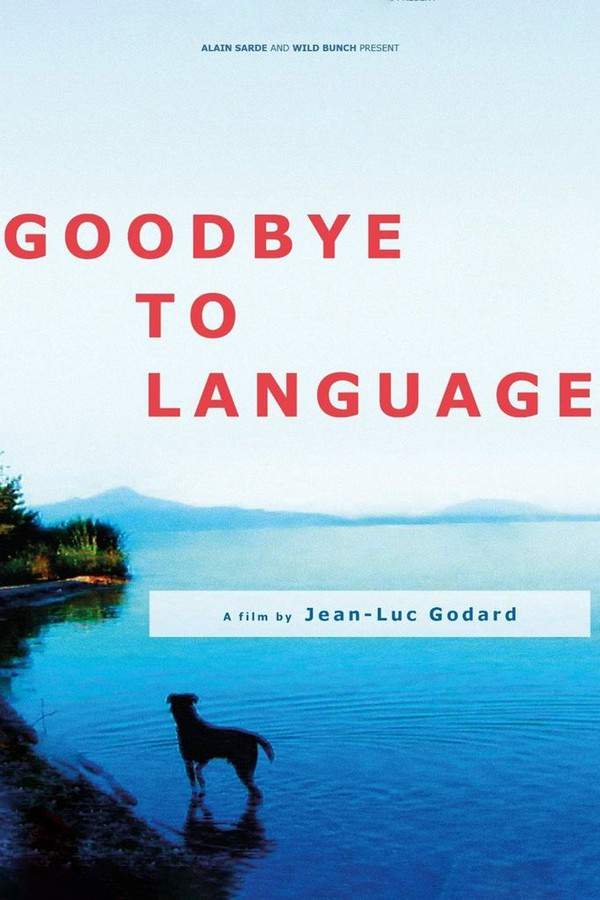
Plot Summary
Goodbye to Language 3D (2014) Plot Summary Explained
- Release, runtime and language
- 2014 · 70 min · French
- Loading streaming availability…
- Directed by
- Jean-Luc Godard
- Starring
- Christian Gregori, H, Jessica Erickson, Kamel Abdeli, Richard Chevallier, Zoé Bruneau
A married woman and a single man unexpectedly find themselves drawn to each other, beginning a passionate and turbulent romance. Their connection is marked by both intense conflict and heartfelt intimacy. As time passes, their lives become intertwined with a lost dog, adding another layer to their complex relationship and leading them through a deeply emotional journey.
On this page (4)
Full plot summary · contains spoilers
What Happens in Goodbye to Language 3D: Full Plot Summary
The whole story of Goodbye to Language 3D (2014) explained, from the opening scene to the final frame: every key event, every twist and what it all adds up to. Read it as a quick recap before the sequel, to check a scene you missed, or to finally understand what really happened.
Goodbye to Language is an experimental narrative that tells two similar versions of a couple having an affair. These two stories are named "1 Nature" and "2 Metaphor", and they respectively focus on the couples Josette and Gédéon and Ivitch and Marcus, along with a dog.
The film begins with "1 Nature" at the Nyon cultural center. A young couple, Marie and her boyfriend, are setting up a used bookstand. Another couple, Davidson and Isabelle, arrive. From the way that Marie, her boyfriend, and later the character Ivitch address Davidson, it appears that he is a professor. Brandishing a copy of The Gulag Archipelago, Davidson remarks that its author, Aleksandr Solzhenitsyn, did not need to use Google to search for the book's subtitle. The professor then asks Isabelle what thumbs used to be for before smartphones, making a punning reference to the French children's story Hop-o'-My-Thumb. He proceeds to deliver an impromptu lecture on the ideas of Jacques Ellul, such as the abdication of individual rights and responsibilities to the state, a situation that Ellul declared to be the triumph of Adolf Hitler. Abruptly a car drives up, a man gets out and, speaking in German, accosts Josette, who has been standing nearby. After demanding that she come home (implying that the man is Josette's husband), threatening her with consequences, and trying to drag her away, the man retreats out of frame and fires shots from a gun. As the other characters rush to where the shots were fired, the car departs. Josette wanders away, while Gédéon, who has been watching all along, follows her. As Josette washes her hands in a fountain, Gédéon approaches and declares to her, "I am at your service."
The film switches to "2 Metaphor". At the Nyon lakefront, Davidson is sitting on a bench looking through a book of Nicolas de Staël reproductions when Marie and her boyfriend arrive to say goodbye before they go to the United States. Ivitch arrives, dressed like Davidson in matching trench coat and hat. While the two discuss the tyranny of images, the German-speaking man arrives and the scene plays out as before: he accosts Ivitch, fires his gun, and leaves. As before, a man approaches the shaken woman. This time it is the man that is offscreen and the woman who is onscreen (Ivitch behind metal bars, an image used in promotion of the film). The man, Marcus, puts his hand on the bars and declares, "I am at your service."
The film returns to "1 Nature." Gédéon and Josette are having an affair and staying in a house together in the summer; they discuss literature and domestic issues. Gédéon references Rodin's The Thinker while sitting on a toilet and declares that people are made equal through the act of defecating. At some point, the scene shifts to Nyon, where Marie examines an unidentified man's body. Returning to Gédéon and Josette's affair, the dog Roxy frolics in the countryside as a narrator talks about humans' relationship with dogs. He wanders into a car with Gédéon and Josette, who bring him home and continue talking with Roxy present. Josette mentions a knife that Gédéon gave her four years earlier. Gédéon and Josette leave to board a ferry, leaving Roxy behind.
The film returns to "2 Metaphor." Marcus and Ivitch have an affair in the same house in the winter; they talk about painting and political issues, such as Mao Zedong's opinion of the French Revolution and how Russians will never be Europeans. They have an argument while showering together, followed by shot of a bloody knife in a sink. As their relationship deteriorates, Ivitch reminds Marcus that he told her "I am at your service." Marcus says they should have children. Ivitch says that they should get a dog instead.
In an epilogue, "3 Memory/historical misfortune", Roxy is again in the countryside while a voiceover narration representing Roxy's thoughts (and paraphrasing Clifford D. Simak's Time and Again) wonders what the water is trying to tell him. A narrator mentions that Mary Shelley wrote Frankenstein near the couple's house in Cologny; Shelley is seen in the country writing her book with quill and ink and is joined by Lord Byron and Percy Shelley. An unseen man and woman (Godard and Florence Colombani) paint with watercolors and black ink. They order Roxy out of the room and (paraphrasing Dostoyevsky's Demons) compare Kirillov's two questions, "a big one and a little one" (the other world and suffering) and the "difficult[y of] fit[ting] flatness into depth" to the act of creating art. Roxy falls asleep on a couch as a narrator (Anne-Marie Miéville) describes his thoughts and the film ends with the sounds of a dog barking and a baby crying.
Like many of Godard's films, Goodbye to Language contains numerous references to other works of art or science intertwined within the narrative. It includes clips from such films as Boris Barnet's By the Bluest of Seas, Rouben Mamoulian's Dr. Jekyll and Mr. Hyde, Jean-Pierre Melville's Les Enfants terribles, Artur Aristakisyan's Ladoni, Fritz Lang's Metropolis, Howard Hawks's Only Angels Have Wings, Robert Siodmak's People on Sunday, Alexandre Aja's Piranha 3D and Henry King's The Snows of Kilimanjaro. It verbally quotes Jean Cocteau's Testament of Orpheus without showing any clips and uses archival footage from political events of the 20th century, such as Nazi Germany and the Soviet Union.
The film references or quotes several writers of literature, science, philosophy and political theory. These include both direct quotes (often paraphrased by characters or unseen narrators) and copies of books seen in shots. The references include Alain's Feelings, Passions and Signs, Jean Anouilh's Antigone, Guillaume Apollinaire's Alcools, Louis Aragon's Elsa, je t'aime, Alain Badiou's The Rebirth of History, Samuel Beckett's The Image, Joceyln Benoist's Concepts: Introduction to Analysis, Maurice Blanchot's Awaiting Oblivion, Jorge Luis Borges' The Book of Sand, Louis-Ferdinand Céline's The Church and Letter to Elie Faure, Jacques Chardonne's Eva or the Interrupted Journal, Pierre Clastres' Society Against the State, Jean-Paul Curnier's A World at War, Charles Darwin's The Descent of Man, and Selection in Relation to Sex, Jacques Derrida's The Animal That Therefore I Am, Françoise Dolto's The Gospel at the Risk of Psychoanalysis, Fyodor Dostoyevsky's Demons, Jacques Ellul's The Victory of Hitler?, Gustave Flaubert's Sentimental Education, Hadrien France-Lanord's Heidegger: Thought Irreducible to its Errors, Didier Franck's Nietzsche and the Shadow of God, Sigmund Freud's Introductory Lectures on Psycho-Analysis, Julien Green's Journal, Victor Hugo's Expiation, Emmanuel Levinas's Totality and Infinity, Cesar Pavese's The House on the Hill, Ezra Pound's Works and Usury: Three Essays, Marcel Proust's Jean Santeuil and La Prisonnière, Rainer Maria Rilke's Duino Elegies, George Sand's Elle et Lui and Lettres à Alfred de Musset, Louis Antoine de Saint-Just's Rapport à la convention, March 3, 1794, Jean-Paul Sartre's Being and Nothingness, The Age of Reason, Nausea and The Traitor, Mary Shelley's Frankenstein, Percy Bysshe Shelley's Peter Bell the Third, Clifford D. Simak's Time and Again and City, Philippe Sollers's Interview with Philippe Forest, Paul Valéry's Aphorismes, François Villon's Hanged Man's Ballad, Ludwig Wittgenstein's Philosophical Investigations, Aleksandr Solzhenitsyn's The Gulag Archipelago, Léon Brunschvicg's Descartes et Pascal, lecteurs de Montaigne, A. E. van Vogt's The World of Null-A, V.S. Naipaul's A Bend in the River, Mao Zedong (or Zhou Enlai's) famous "too early to tell" quote, Laurent Schwartz's Theory of Distributions, Paul Dirac's Dirac delta function, Plato's proverb "beauty is the splendour of the truth" and works by Bernhard Riemann, Jack London and Luc Ferry. It also includes references to Claude Monet and Auguste Rodin's The Thinker and images by painter Nicolas de Staël.
Godard even quotes himself: "Showing a forest, easy. But showing a room with a forest nearby, difficult" is paraphrased from Godard's 1958 review of Alexandre Astruc's film Une Vie. Some of the references are false, such as a Marcel Proust quote erroneously attributed to Claude Monet and a quote by William Faulkner that is not traceable in his known works.
Music in the film includes Alfredo Bandelli's folk song The Witch Hunt, sung by Pino Masi. There are also brief fragments of Ludwig van Beethoven's Symphony No. 7, Second Movement, Giya Kancheli's Abii Ne Viderem, Dobrinka Tabakova's Suite in Old Style, Part II, Pyotr Ilyich Tchaikovsky's Slavic March, Arnold Schoenberg's Transfigured Night, Jean Sibelius's Symphony No. 2 and Valse triste and Valentyn Sylvestrov's Holy God.
Last updated: November 21, 2026 at 21:33
If you liked this
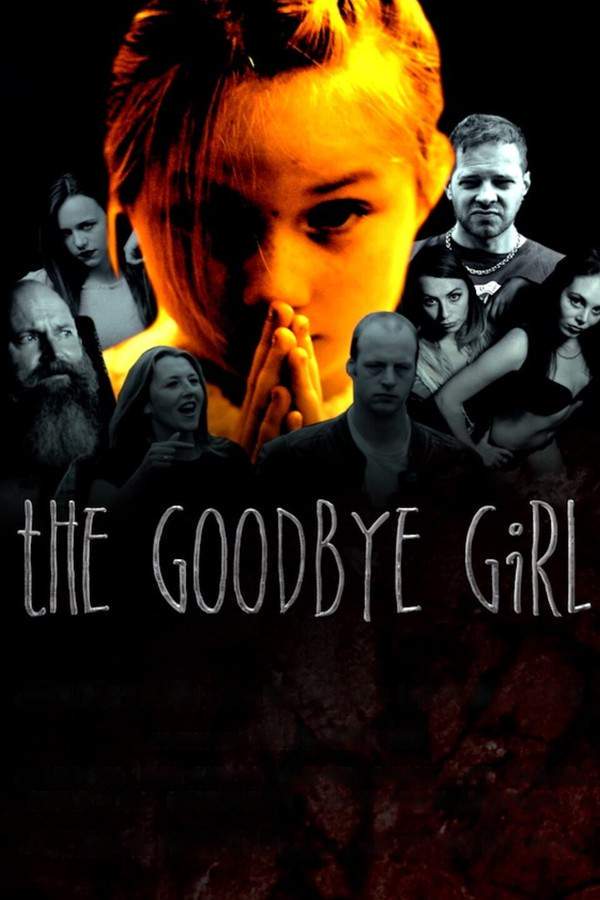
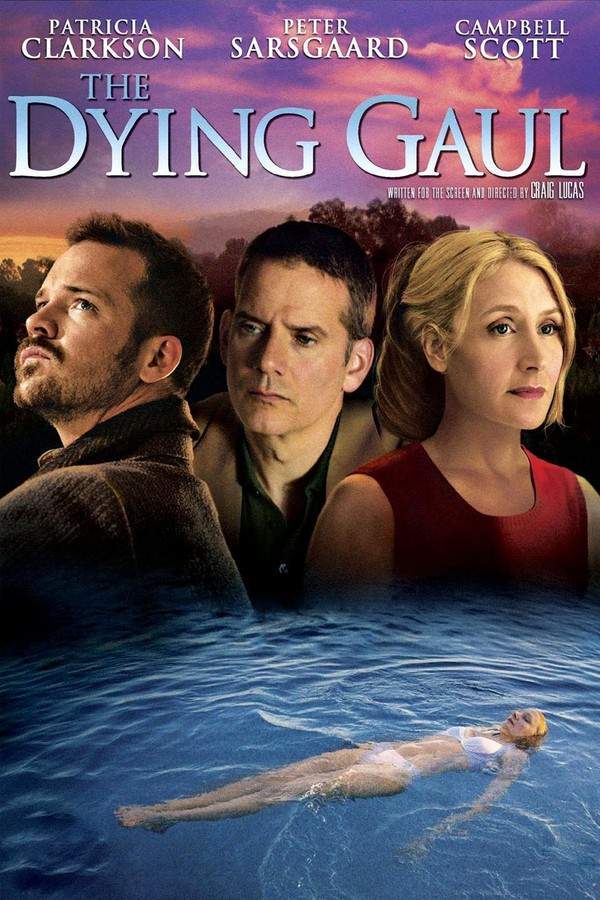
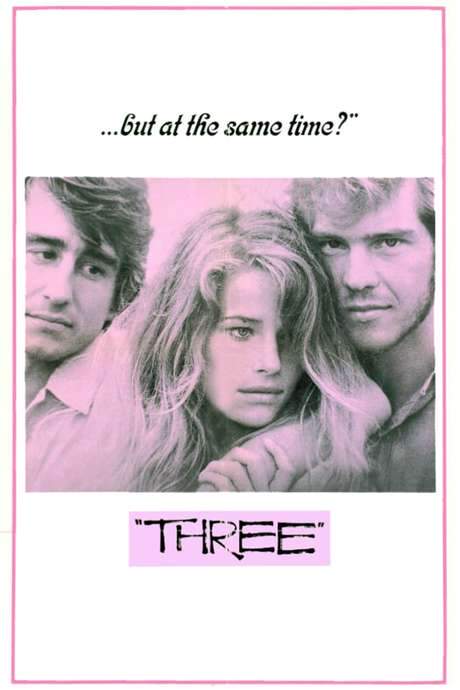
Movies Like Goodbye to Language 3D
Similar movies to Goodbye to Language 3D: the same genre, themes or kind of story. Each one comes with its own plot summary, timeline and ending explained.







Every angle
Goodbye to Language 3D (2014) Explained: Plot, Timeline & Characters
Everything about Goodbye to Language 3D in one place: what happens in the plot summary, the timeline in chronological order, the characters and meaning. What's After the Movie adds the cast, box office and post-credit scenes.
- Goodbye to Language 3D Timeline Every key event in chronological order, ideal for flashbacks and time jumps.
- Goodbye to Language 3D Characters & Themes Who is who, where it takes place and what the movie really means.
- Goodbye to Language 3D on What's After the Movie Cast and crew, box office, post-credit scenes and more.
Coming soon on iOS and Android
The Plot Explained Movie Summary App
Plot summaries, endings explained and timelines on your phone. Catch up on any movie in minutes, save your favorites and never miss a twist again.
Be the first to know when we launch. Your email stays private, always.
Learn more about the app