Plot Explained Spoilers guaranteed!
Plot Explained

Browse by genre

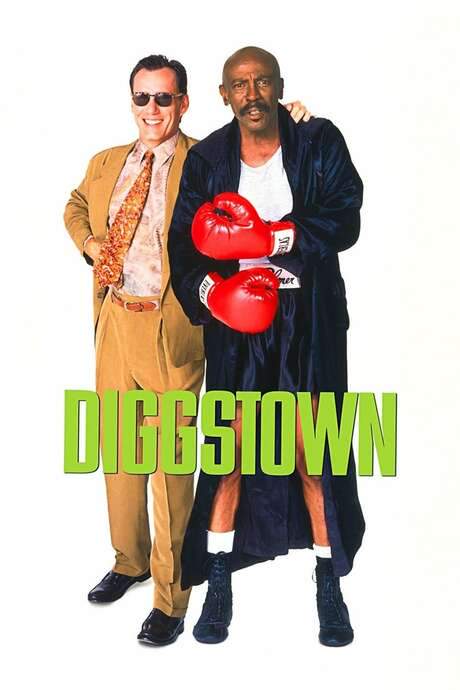
Diggstown (1992) movie poster

Plot Summary

Diggstown (1992) Plot Summary Explained

Release, runtime and language
1992 · 98 mins · English
JustWatch #9,940 12
Directed by
Michael Ritchie
Starring
Bruce Dern, Louis Gossett Jr., James Woods, Heather Graham, Oliver Platt, Alex Garcia

Gabriel Caine, newly freed from prison, strikes a wager with the powerful owner of Diggstown, a town obsessed with boxing. He must recruit a fighter who can knock out ten of the town’s men inside a ring in just 24 hours. The unexpected contender is 48‑year‑old Roy “Honey” Palmer, whom many consider past his prime.

On this page (6)
  1. 1 Where to watch
  2. 2 What happens: full plot
  3. 3 Plot questions answered
  4. 4 Movie threads
  5. 5 Movies like Diggstown
  6. 6 Every angle

Where to watch

Where to Watch Diggstown (1992)

Where can you watch Diggstown? Stream, rent or buy it in the US, including on ScreenPix Amazon Channel , Tubi TV and YouTube Free: current JustWatch availability with up-to-date prices.

Streaming availability powered by JustWatch

Full plot summary · contains spoilers

What Happens in Diggstown: Full Plot Summary

The whole story of Diggstown (1992) explained, from the opening scene to the final frame: every key event, every twist and what it all adds up to. Read it as a quick recap before the sequel, to check a scene you missed, or to finally understand what really happened.

After his release from prison in Winfield, Georgia, con man Gabriel Caine [James Woods] teams up with his partner, Daniel Patrick O'Shannon, known as “Fitz” [Oliver Platt], and heads to the boxing-obsessed town of Diggstown to pull off a daring new con.

Diggstown is effectively controlled by John Gillon [Bruce Dern], the former manager of Diggstown’s legendary boxer Charles Macum Diggs [Wilhelm von Homburg], the man the town is named after. The local legend Diggs once knocked out five fighters in a single day, a feat that has given Diggstown a larger-than-life reputation. Fitz believes there is a fighter who could take on ten Diggstown boxers in one day: the veteran paladin of the ring, “Honey” Roy Palmer [Louis Gossett Jr.], a 48-year-old YMCA supervisor who has spent years sharpening his skills away from the spotlight. Palmer’s readiness to take on the impossible becomes the spark that lights Caine and Fitz’s plan, but it also sets the stage for a high-stakes showdown.

To make the bet work, Caine and Gillon lay out a set of strict conditions: the contest lasts one full day (24 hours), and the boxers can come from Diggstown’s surrounding Olivair County, not just the town itself. A loan shark, Victor Corsini [Orestes Matacena], backs Caine’s audacious wager, setting the financial stakes high and the pressure daunting. As the plan takes shape, Emily Forrester [Heather Graham], sister of Caine’s former cellmate Edward “Wolf” Forrester [Randall 'Tex' Cobb], lends her support, adding a fragile layer of personal risk and moral complexity to the con.

The scheme hinges on Palmer stepping into a series of fights against Diggstown’s fighters. The lineup begins with Sonny Hawkins, who falls to Palmer’s skilled hand. Robby Gillon, John Gillon’s son, approaches the ring next but withdraws at his father’s orders, a moment that the crowd misreads as a forfeit and a crack in Diggstown’s confidence. Frank Mangrum is disqualified after an illegal kick to Palmer’s groin and a strike against the referee, yet Palmer still manages to knock Mangrum out. Tank Miller follows, and Palmer defeats him as well. The momentum builds, but the tension deepens as Diggstown’s best fighter, Hammerhead Hagan, is brought in as a surprise ringer. Hagan’s presence raises the stakes because he’s the only man Palmer has ever failed to beat in a professional match.

The fight with Hagan is brutal yet decisive. Palmer fights through exhaustion, fueled by a renewed sense of purpose when Diggs—who sits ringside—moves his hand, a small sign of support that spurs Palmer to push through adversity. Caine, worried for Palmer’s safety, tries to throw in the towel, but Palmer catches it and throws it back. The crowd roars as Palmer finds a second wind and knocks out Hagan.

Just when Palmer and Caine think they’ve secured victory, Gillon points out a crucial omission: Robby never actually stepped into the ring, so only nine fights have occurred. The true tenth fighter is Minoso Torres [Alex Garcia], the underground boxing king who once ruled Diggstown’s streets and rings. Torres, a formidable challenger, seems unbeatable, and Palmer is no match for him—until Caine reveals the long-ago bribery that has been planned all along. With a calculated touch, Caine signals Torres, brFing him to throw the fight at the right moment. Torres drops his gloves and invites Palmer to strike, hitting the canvas instead, a staged moment that completes the con.

Gillon’s world collapses as his assets crumble and his temper frays. In a desperate rage, he pulls a gun and fires a shot, only to be restrained by his own son. Palmer steps in, seizing the moment to confront Gillon, but Hambone Busby [Duane Davis] steps forward, delivering the final knockout blow that ends Gillon’s control over the town.

In the quiet aftermath, Palmer and Caine sit alone in the empty gym, reflecting on the extraordinary sequence of events. Caine admits that what they did couldn’t truly be done, while Palmer offers a more hopeful perspective: a new, deeper motivation to live and fight for something beyond schemes. The moment is sealed with Palmer’s quiet, resolute resolve:

> now you motivate me.
Last updated: October 09, 2025 at 11:27

Was this helpful?

Plot questions answered

Diggstown Plot Explained: Your Questions Answered

The questions people ask most about Diggstown (1992): what happens in the confusing scenes, why the characters do what they do, the twists, hidden details and what the ending means. Each answer contains spoilers.

Q1

Why does John Gillon agree to the boxing bet with Gabriel Caine?

John Gillon agrees to the bet because he believes his town of Diggstown is unbeatable in boxing. As the former manager of the legendary Charles Macum Diggs (who knocked out five fighters in one day), Gillon is confident that ten local fighters can defeat any challenger in 24 hours. He also controls much of the town's boxing power and sees the bet as an opportunity to make easy money while proving Diggstown's superiority.

Foreshadowing: Earlier, Fitz explains that Diggstown's entire identity revolves around boxing, making any challenge to their fighters a matter of town pride.

  • john gillon
  • boxing bet
  • diggstown
  • confidence
  • charles macum diggs
Q2

Who is Honey Palmer and why is he chosen for the ten fights?

Roy 'Honey' Palmer is a 48-year-old YMCA supervisor who has spent years sharpening his boxing skills away from the spotlight. Fitz believes Palmer is the only fighter capable of defeating ten Diggstown boxers in one day. Despite being considered past his prime by many, Palmer possesses the skill and endurance needed for the impossible challenge. His willingness to participate gives Caine and Fitz's plan real legitimacy.

Foreshadowing: Fitz specifically identifies Palmer as the one man who could accomplish this feat, noting his veteran experience and proven abilities.

  • roy honey palmer
  • fighter selection
  • 48 years old
  • veteran boxer
  • ymca supervisor
Q3

Why is the Hammerhead Hagan fight significant for Palmer?

Hammerhead Hagan is significant because he is the only fighter who has ever beaten Palmer in a professional match. When Gillon brings Hagan in as a surprise ringer, it represents the ultimate test for Palmer, both professionally and emotionally. The fight is brutal and exhausting, but when Diggs (the town legend) shows a small gesture of support from ringside, Palmer finds renewed strength and manages to knock out Hagan.

Foreshadowing: The film establishes early that Hagan is Palmer's only defeats, creating anticipation for their eventual confrontation.

  • hammerhead hagan
  • only defeat
  • professional loss
  • surprise fighter
  • ringside support
Q4

Why does Gabriel Caine try to throw in the towel during the Hagan fight?

Caine tries to throw in the towel because he becomes genuinely worried about Palmer's safety. The fight with Hagan is brutal and Palmer is exhausted and taking significant punishment. Despite the money at stake, Caine's concern for Palmer's wellbeing supersedes his greed, at least momentarily. However, Palmer catches the towel and throws it back, refusing to give up.

Foreshadowing: This moment shows Caine's developing genuine care for Palmer, which becomes important in their relationship.

  • caine throws towel
  • safety concern
  • exhaustion
  • refuses to quit
Q5

Why does Gillon claim only nine fights have occurred?

Gillon claims only nine fights have occurred because his son Robby Gillon never actually stepped into the ring. When Robby approached the ring, John Gillon ordered him to withdraw at the last moment, making it appear as a forfeit. Since Robby never actually fought, Gillon uses this technicality to argue that Palmer hasn't completed the required ten fights, revealing his willingness to cheat to avoid paying out the bet.

Foreshadowing: The moment when Robby withdraws is initially misread by the crowd as a sign of Diggstown's weakness, but Gillon's true motive is revealed later.

  • robbie gillon
  • ten fights
  • technicality
  • withdrawal
  • cheating
Q6

Who is Minoso Torres and why is he the final opponent?

Minoso Torres is introduced as the underground boxing king who once ruled Diggstown's streets and rings. He has been serving time in prison but returns as the so-called 'tenth fighter' when Gillon exploits the technicality about Robby's non-fight. Torres has an intimidating reputation and is portrayed as nearly unbeatable, making him the ultimate threat to Palmer's chances of winning the bet.

Foreshadowing: Gillon reveals Torres as his trump card when he needs to salvage the wager after Palmer defeats nine fighters.

  • minoso torress
  • underground boxing king
  • tenth fighter
  • prison
  • final opponent
Q7

Why does Minoso Torres throw the fight against Palmer?

Torres throws the fight because Caine had bribed him in advance. Before the contest, Caine arranged for Torres to take a dive at the precise moment Caine would signal. When the time comes, Caine signals Torres, who drops his gloves and deliberately goes down, allowing Palmer to land the final 'knockout.' The crowd believes Palmer has legitimately defeated ten fighters, unaware the tenth win was staged.

Foreshadowing: Caine reveals he orchestrated the bribery after Torres proves too powerful for Palmer to defeat fairly.

  • bribery
  • staged fight
  • caine signal
  • prearranged knockout
  • con revealed
Q8

Why does John Gillon pull a gun at the end of the bet?

Gillon pulls a gun because he loses everything when the con is revealed. After Torres' staged knockout, Gillon's assets crumble and his control over Diggstown collapses. In a desperate rage, he attempts to shoot Caine, but his own son Robby restrains him before he can fire. Palmer then delivers the final blow to Gillon's power through Hambone Busby.

Foreshadowing: The rigged bet was Gillon's primary source of power and income, so its destruction sends him into a violent breakdown.

  • john gillon
  • gun
  • downfall
  • desperation
  • loses everything
Q9

What does Palmer mean when he says 'now you motivate me'?

When Palmer says 'now you motivate me,' he tells Caine that their成功了 (successful con) has given him a new reason to live and fight for something meaningful beyond just money or survival. Despite the scheme being dubious and the victory being partly staged, Palmer has rediscovered purpose and motivation through the experience. The line signifies his transformation from a reluctant participant into someone with genuine drive and hope for the future.

Foreshadowing: Throughout the film, Palmer evolves from a skeptical YMCA supervisor into a fighter who truly cares about the outcome.

  • motivation
  • hope
  • transformation
  • new purpose
  • palmer成长
Q10

Why does Emily Forrester support Caine's plan?

Emily Forrester supports the plan because Gabriel Caine was her late brother's cellmate. Her brother Edward 'Wolf' Forrester was Caine's former cellmate, and she becomes involved in the con partly out of loyalty to his memory and partly because she has little else left. Her support adds personal risk and moral complexity to the scheme, as she is genuinely helping the man her brother trusted.

Foreshadowing: The connection to Caine's past is revealed early, establishing Emily as an ally with personal stakes.

  • emily forrestor
  • edward wolf forrestor
  • cellmate
  • support
  • personal stakes
Q11

Why does Charles Macum Diggs show support during Palmer's fight?

Charles Macum Diggs, the legendary boxer Diggstown is named after, shows support for Palmer during his brutal fight with Hagan by moving his hand, a small but meaningful gesture from ringside. This sign of approval from the town's greatest boxing icon inspires Palmer to push through his exhaustion and find a second wind. Diggs' recognition represents the ultimate validation for Palmer's skills.

Foreshadowing: Diggs' presence throughout the day builds toward this moment of explicit support, which becomes the turning point in the Hagan fight.

  • charles macum diggs
  • town legend
  • ringside support
  • gesture
  • inspiration
Q12

Why are fighters allowed from Olivair County besides Diggstown?

The bet's rules allow fighters from Olivair County, the surrounding area beyond Diggstown proper, because Gillon wants to strengthen his chances of winning. By expanding the pool of available fighters, he believes he can bring in more skilled boxers like Hammerhead Hagan. This rule ultimately becomes crucial when Hagan is moved in as a county resident to face Palmer.

Foreshadowing: The expanded geographic scope is part of the original terms Caine and Gillon negotiate.

  • olivair county
  • fighter eligibility
  • expanded pool
  • county resident
  • bet rules

Movie threads

More Movies Like Diggstown, by Mood & Story

Curated lists built around what makes Diggstown tick: the same mood, the same kind of story or the same emotional payoff. Each list explains why these movies belong together.

Race Against Time Thrillers like Diggstown

Stories where a desperate team battles overwhelming odds on a tight deadline. Movies like Diggstown where a high-stakes gamble unfolds under intense time pressure. If you enjoyed the 24-hour boxing challenge and the constant tension of the clock ticking down, you'll find similar adrenaline-filled stories here featuring underdogs taking on impossible bets and desperate missions.

  • tense
  • suspenseful
  • underdog
  • high-stakes
  • triumphant
  • race against time
  • Tone: tense, suspenseful, triumphant
  • Pacing: fast, relentless
Why these movies?

The story pattern: The narrative typically revolves around a clear, high-stakes objective that must be completed within a strict and often absurdly short timeframe. The plot is a series of escalating challenges and clever maneuvers as the protagonists use their wits and skills to overcome a powerful, entrenched opposition, building towards a final, decisive confrontation.

Why they belong together: Movies in this thread share a core structure of a deadline-driven plot, creating a shared experience of nail-biting suspense and triumphant payoff. They are united by fast pacing, high intensity, and the emotional satisfaction of watching a clever plan unfold against all odds.

Clever Con Artist Movies like Diggstown

Stories of sophisticated scams playing out in corrupt, high-stakes environments. If you liked the clever scam and witty dialogue in Diggstown, this thread collects movies with similar smart cons and high-stakes gambling. You'll find stories of charismatic hustlers outsmarting corrupt opponents in gritty settings, blending tension with clever humor.

  • con artist
  • clever
  • gritty
  • tense
  • corruption
  • betrayal
  • Tone: tense, clever, gritty
  • Pacing: fast, twist-driven
Why these movies?

The story pattern: The narrative follows a master manipulator or team as they execute an elaborate con against a powerful, unethical mark. The story is built on layers of deception, unexpected twists, and moments where the plan seems to falter before a final, satisfying reveal where the tables are turned on the villains.

Why they belong together: These movies are grouped by their shared focus on intellectual cleverness over brute force, a tense but often witty tone, and the specific pattern of a con unfolding. They balance high-stakes tension with the satisfaction of seeing a clever plan come together, often in a morally ambiguous world.

If you liked this

Movies Like Diggstown

Similar movies to Diggstown: the same genre, themes or kind of story. Each one comes with its own plot summary, timeline and ending explained.

Browse all movie summaries

Every angle

Diggstown (1992) Explained: Plot, Timeline & Characters

Everything about Diggstown in one place: what happens in the plot summary, the timeline in chronological order, the characters and meaning and a spoiler-free summary. What's After the Movie adds the cast, box office and post-credit scenes.

Coming soon on iOS and Android

The Plot Explained Movie Summary App

Plot summaries, endings explained and timelines on your phone. Catch up on any movie in minutes, save your favorites and never miss a twist again.

Be the first to know when we launch. Your email stays private, always.

Learn more about the app