Plot Explained Spoilers guaranteed!
Plot Explained

Browse by genre

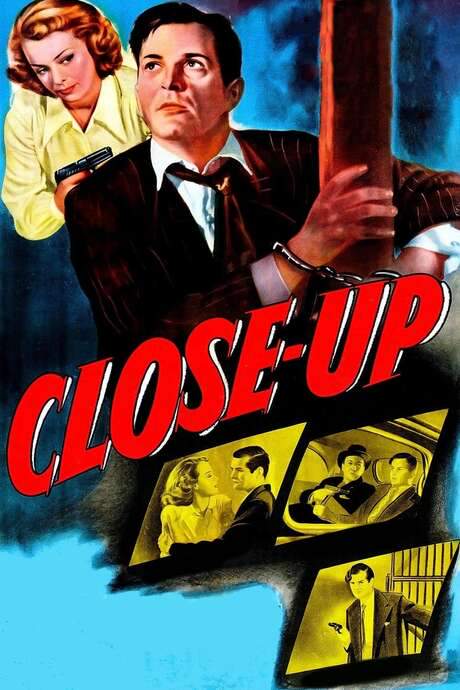
Close-Up (1948) movie poster

Timeline

Close-Up (1948) Timeline Explained – Every Event in Order

Release, runtime and language
1948 · 76 mins · English
Loading streaming availability…
Directed by
Jack Donohue
Starring
Alan Baxter, Russell Collins, Loring Smith, Sid Melton, Erin Selwyn, Joey Faye

Thrill-a-minute close-up of MURDER! A photographer accidentally photographs a Nazi war criminal on the streets of New York and becomes a target for reprisals and murder.

On this page (6)
  1. 1 Where to watch
  2. 2 Events in order (15)
  3. 3 Timeline questions answered
  4. 4 Movie threads
  5. 5 Movies like Close-Up
  6. 6 Every angle
Loading streaming availability…

15 events in order · contains spoilers

Close-Up Timeline: Events in Chronological Order

Every key event of Close-Up (1948) in order, scene by scene, with when and where it takes place. Use it to untangle flashbacks, time jumps and parallel storylines, to refresh your memory before the sequel or to find the exact scene you are thinking of.

  1. Phil shoots outside a bank

    Phil Sparr, a newsreel photographer, is doing a fashion shoot outside a busy New York bank. The location places him near money and potential danger, foreshadowing the chase for the footage. The scene establishes the bank as the catalyst for the conspiracy that follows.

    When
    Afternoon
    Where
    New York City, outside the bank
  2. A large withdrawal is planned

    Inside the bank, Fredericks informs that he will close his account tomorrow and withdraw $800,000. The sum signals a lucrative payoff and draws criminals toward the footage. The bank's routine becomes the launchpad for the plot.

    When
    Morning
    Where
    Inside the bank, New York
  3. Beaumont is filmed leaving the bank

    Phil unintentionally films Martin Beaumont as he leaves the bank, recording a man of interest on camera. The footage becomes a target for those who want it. The recording triggers pursuit by Beck and the gang.

    When
    Afternoon
    Where
    Bank exterior, New York
  4. Beck approaches Phil to buy the film

    Beck, Fredericks' associate, offers to buy the film and tells a story about his wife and girlfriend not needing to see him in it. Phil senses danger and weighs his options between profit and safety. The encounter marks the first direct link between the footage and the criminals.

    When
    Afternoon
    Where
    Near the bank
  5. Phil meets Peggy Lane

    Phil meets magazine reporter Peggy Lane, and they decide to deliver the film to Beck. Their collaboration combines journalism with a high-stakes criminal chase. Peggy's presence adds a new dynamic to the pursuit.

    When
    Afternoon
    Where
    New York
  6. Beaumont's true identity revealed to Avery

    Phil's boss, Harry Avery, learns that the man behind the alias is Kurt Bauer, a wanted Nazi war criminal. The revelation escalates the danger surrounding the footage. It also shifts who can be trusted among the principals.

    When
    Evening
    Where
    Phil's office
  7. Rendezvous planned; kidnapping begins

    Phil arranges a rendezvous with Peggy at his apartment to hand off the film, but Gibbons, posing as a detective, kidnaps Phil. The trap demonstrates the criminals' reach and willingness to seize control. Peggy becomes entangled in the danger as well.

    When
    Night
    Where
    Phil's apartment, New York
  8. Phil escapes on the Hoboken ferry

    Phil makes a daring escape from his captors by slipping away on the Hoboken ferry. The waterborne exit pushes the chase into a new territory and reveals Phil's resourcefulness. The escape changes the balance of power in the pursuit.

    When
    Night
    Where
    Hoboken ferry, New Jersey
  9. Back at the office—the hitman is killed

    Upon returning to his office, Phil finds that his boss has killed the hitman who was sent to knock him off and steal the film negative. The act confirms the ruthlessness of Avery and the criminals. It also injects a sense of urgency to protect the footage at all costs.

    When
    Next day
    Where
    New York office
  10. Abduction of Phil and Peggy

    Phil tries to give the film can to a cabbie to take to the police, but the criminals knock out the cabbie and kidnap Phil and Peggy. The capture dumps them back into danger and accelerates the plot toward a final confrontation. Peggy's loyalties begin to shift under pressure.

    When
    Evening
    Where
    New York City street
  11. Peggy's change of heart

    Peggy is revealed to be tied to the criminals, but she experiences a change of heart and acts to protect Phil from harm. Her decision creates a glimmer of hope amid the mounting peril. This turn deepens the moral complexity of the story.

    When
    During captivity
    Where
    Captivity/criminal hideout
  12. Beaumont negotiates flight; Gibbons plots double-cross

    Beaumont hires Gibbons to fly him out with the $800,000, but Gibbons schemes to take the money for himself. Beaumont remains one step ahead, turning the tables on his would-be betrayer. The power shift tightens the conspiracy around the seaplane plan.

    When
    Evening
    Where
    Seaplane base / airfield
  13. Confrontation at the seaplane base

    Beaumont heads to meet the seaplane, using Phil as a shield to ensure his escape. Peggy calls the cops to intervene amid the tense standoff. The plan hurtles toward a violent resolution.

    When
    Evening
    Where
    Seaplane base / waterfront
  14. Gunfight and the fall of the mastermind

    Gibbons arrives and engages in a gunfight with Beaumont by the water. Beaumont kills Gibbons and his henchman, but Phil pursues the mastermind and the police shoot Beaumont. The climax leaves Phil alive but winds up with a heavy loss.

    When
    Late night
    Where
    Seaplane base / waterfront
  15. Ending: Peggy's fate and gratitude

    Phil thanks Peggy for saving his life before she leaves for jail. The ending underscores the personal cost of their battle against the criminals. The footage remains a symbol of courage amid a world of danger.

    When
    Aftermath
    Where
    New York / jail

Last updated: October 09, 2025 at 11:17

Was this helpful?

Timeline questions answered

Close-Up Timeline Explained: Your Questions Answered

When does it happen, and why in that order? The questions people ask about the chronology of Close-Up (1948): time jumps, flashbacks, cause and effect between scenes and the correct order of events, each answered with spoilers.

Q1

Why does everyone want Phil's film in Close-Up?

The film contains footage of Martin Beaumont, who is actually Kurt Bauer, a notorious Nazi war criminal. The criminals want to destroy the evidence because Beaumont is hiding in New York under an alias, and the footage could expose his identity and lead to his capture. The film becomes extremely valuable to multiple parties - the criminals want it destroyed, while Phil wants to use it to expose the war criminal.

Foreshadowing: Earlier, Beck's desperate attempt to buy the film at the bank hints at its dangerous value.

  • film footage
  • Nazi war criminal
  • Kurt Bauer
  • Martin Beaumont
  • evidence
Q2

Who is Martin Beaumont really in Close-Up?

Martin Beaumont is actually Kurt Bauer, a notorious Nazi war criminal who is using a fake identity to hide in New York City. Phil's boss, Harry Avery, reveals this critical piece of information after checking Beaumont's background. This revelation transforms the stakes from a simple criminal pursuit to a matter of exposing a war criminal at large.

Foreshadowing: The large $800,000 withdrawal and the nervous behavior of bank employees hint that something larger than 普通 theft is occurring.

  • Kurt Bauer
  • Martin Beaumont alias
  • Nazi war criminal
  • identity reveal
Q3

Why does Peggy change sides and help Phil in Close-Up?

Peggy Lane initially appears to be working with the criminals, but she undergoes a change of heart during captivity. Though the exact motivation isn't detailed in the summary, her decision to protect Phil suggests she cannot go through with helping harm an innocent man who only stumbled onto criminal activity. Her shift creates a crucial turning point that helps save Phil's life.

Foreshadowing: Peggy's initial alignment with criminals is ambiguous, leaving room for her moral reversal.

  • Peggy Lane
  • change of heart
  • loyalty shift
  • captivity
Q4

How does Phil escape from the kidnappers in Close-Up?

Phil escapes by slipping away on the Hoboken ferry while being transported by his captors. After being kidnapped by Gibbons, who posed as a detective, Phil manages to break free during the ferry crossing to New Jersey. This daring escape demonstrates his resourcefulness and allows him to return to his office to continue pursuing the case.

Foreshadowing: The kidnapping scene establishes Phil's precarious situation, making his escape feel earned.

  • Hoboken ferry
  • escape
  • kidnapping
  • Phil Sparr
Q5

Why does Harry Avery kill the hitman in Close-Up?

Harry Avery, Phil's boss, kills the hitman who was sent to eliminate Phil and steal the film negative. This act suggests Avery is protecting both Phil and the valuable footage, though his motivations are complex - he may be protecting his employee, protecting the story potential, or perhaps has his own stake in the matter. The killing confirms the extreme danger surrounding the film.

Foreshadowing: Avery's earlier revelation about Beaumont's true identity shows he has deeper knowledge of the situation.

  • Harry Avery
  • hitman killed
  • boss
  • protection
  • film negative
Q6

What happens at the seaplane in Close-Up?

The final confrontation takes place at the seaplane base where Beaumont plans to flee the country with the $800,000. Beaumont uses Phil as a human shield during the standoff. When Gibbons arrives intending to double-cross Beaumont, a gunfight erupts. Beaumont kills both Gibbons and his henchman, but then pursues Phil. The police ultimately shoot Beaumont, ending the threat.

Foreshadowing: Earlier negotiations between Beaumont and Gibbons set up the betrayal that triggers this climax.

  • seaplane
  • final confrontation
  • gunfight
  • Beaumont death
  • police
Q7

Why does Gibbons try to double-cross Beaumont in Close-Up?

Gibbons, the criminal hired to fly Beaumont out of the country, attempts to seize all the $800,000 for himself rather than just the payment for his services. This greed leads him to betray his employer, but Beaumont anticipates the betrayal and outsmarts Gibbons. The double-cross triggers the violent showdown at the seaplane base.

Foreshadowing: Gibbons' willingness to kidnap Phil for money establishes his untrustworthy nature.

  • Gibbons double-cross
  • betrayal
  • money
  • $800000
  • seaplane escape
Q8

Why does Peggy go to jail at the end of Close-Up?

Peggy goes to jail because she was initially aligned with the criminals and participated in their activities, including the kidnapping of Phil. Although she experiences a change of heart and helps save Phil's life during the final confrontation, her prior involvement with the criminal group still results in legal consequences. Phil thanks her for saving his life before she leaves for jail, acknowledging her sacrifice.

Foreshadowing: Peggy's ambiguous role early in the film foreshadows her complicated legal situation.

  • Peggy Lane jail
  • arrest
  • criminal alignment
  • sacrifice
  • ending
Q9

What is the $800,000 withdrawal in Close-Up about?

The $800,000 represents a large sum being withdrawn from the bank by Fredericks, an associate of Joseph Gibbons. This withdrawal signals that a major financial crime is about to occur, and it draws the criminals' attention to Phil's footage because Beaumont's appearance at the bank during this suspicious transaction could help investigators connect the dots.

Foreshadowing: The bank's routine being disrupted by this enormous withdrawal sets the criminal conspiracy in motion.

  • $800000
  • withdrawal
  • bank
  • financial crime
  • conspiracy
Q10

Why does Peggy appear to work with the criminals initially in Close-Up?

Peggy Lane is revealed to be tied to the criminals during the story, though the exact nature of her involvement isn't fully detailed in the summary. She participates in the initial pursuit of Phil and is present during his abduction. However, she later experiences a change of heart and helps protect Phil from harm, suggesting her initial involvement may have been reluctant or coerced.

Foreshadowing: Her collaboration with Phil to deliver the film creates initial confusion about her true loyalties.

  • Peggy Lane criminals
  • initial alliance
  • deception
  • loyalties

Movie threads

More Movies Like Close-Up, by Mood & Story

Curated lists built around what makes Close-Up tick: the same mood, the same kind of story or the same emotional payoff. Each list explains why these movies belong together.

High-Stakes Journalistic Thrillers like Close-Up

Thrillers about ordinary people uncovering dangerous conspiracies through their work. If you liked the tense, high-stakes energy of Close-Up, you'll find similar excitement in these movies about uncovering conspiracies. This thread features films where characters like photographers and reporters risk everything to expose the truth, leading to fast-paced, life-or-de-danger situations.

  • tense
  • urgent
  • anxious
  • paranoid
  • thrilling
  • gritty
  • Tone: tense, urgent, paranoid
  • Pacing: fast, relentless
Why these movies?

The story pattern: This narrative pattern centers on an everyman protagonist, often from a media background, who inadvertently uncovers a significant crime or conspiracy. The story escalates quickly into a desperate cat-and-mouse chase, where the protagonist must use their wits and courage to survive and bring the villains to light, often at great personal cost.

Why they belong together: These films are grouped by their shared tone of relentless tension and high intensity, driven by a straightforward plot of conspiracy and pursuit. They deliver a specific kind of anxiety rooted in professional integrity clashing with criminal power, offering a thrilling, fast-paced ride.

Post-War Noir and Crime Pursuits like Close-Up

Gritty crime stories set in the aftermath of war, featuring fugitives and moral shadows. Fans of Close-Up's gritty hunt for a Nazi war criminal will enjoy this thread of post-war crime movies. Discover similar films set in the aftermath of conflict, where the past haunts the present through tense investigations, fugitive chases, and morally complex confrontations in shadowy urban landscapes.

  • gritty
  • tense
  • suspenseful
  • historical
  • noir
  • morally complex
  • Tone: gritty, tense, morally complex
  • Pacing: fast, steady
Why these movies?

The story pattern: These films typically unfold as a linear pursuit, where a protagonist is drawn into a conflict with figures from a recent, traumatic past. The journey is direct and suspenseful, focusing on the tangible threat posed by these fugitives and the complex, often bittersweet, resolution that acknowledges the scars of war.

Why they belong together: This thread connects movies through their specific historical milieu and the thematic focus on unresolved wartime evil. The shared elements of a gritty tone, fast pacing, and a straightforward narrative of pursuit against a backdrop of recent global conflict create a distinct and coherent viewing experience.

If you liked this

Movies Like Close-Up

Similar movies to Close-Up: the same genre, themes or kind of story. Each one comes with its own plot summary, timeline and ending explained.

Browse all movie summaries

Every angle

Close-Up (1948) Explained: Plot, Timeline & Characters

Everything about Close-Up in one place: what happens in the plot summary, the timeline in chronological order, the characters and meaning and a spoiler-free summary. What's After the Movie adds the cast, box office and post-credit scenes.

Coming soon on iOS and Android

The Plot Explained Movie Summary App

Plot summaries, endings explained and timelines on your phone. Catch up on any movie in minutes, save your favorites and never miss a twist again.

Be the first to know when we launch. Your email stays private, always.

Learn more about the app