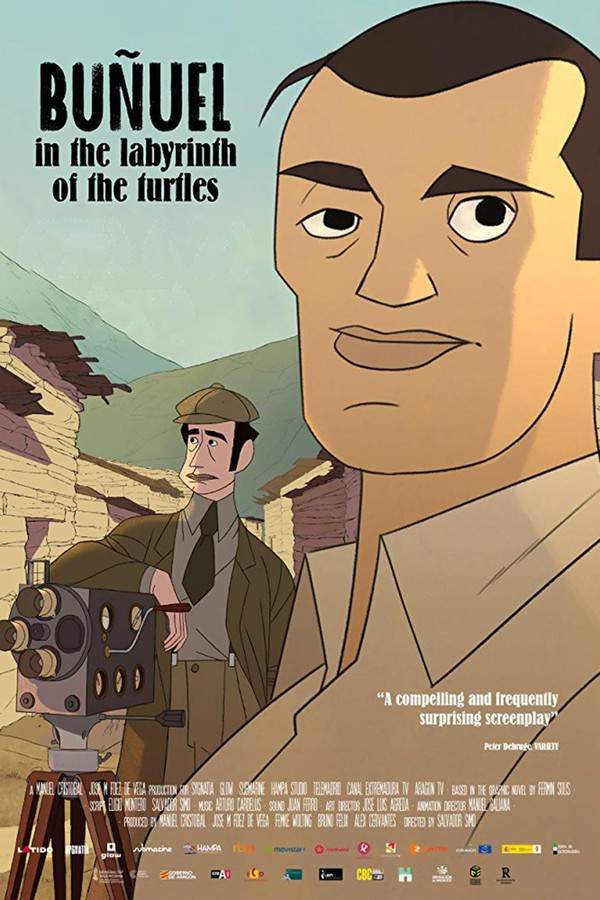
Buñuel in the Labyrinth of the Turtles

Buñuel in the Labyrinth of the Turtles

Year: 2019

Runtime: 80 min

Language: Spanish

Director: Salvador Simó

Echo Score: 82

Budget: $1.8M

BiographyDramaHistoryAnimation

In 1930s Paris, following a period of scandal, filmmaker Luis Buñuel receives unexpected funding from a friend who has won the lottery. This allows him to embark on a documentary project, Las Hurdes: Land Without Bread, which takes him to the remote, impoverished mountains of Spain. The journey becomes more than just a film shoot; it's a profound exploration of mortality, the human condition, and the search for artistic truth as Buñuel observes the lives of the people he is documenting.

Where to Watch Buñuel in the Labyrinth of the Turtles?

Find where to stream, rent, or buy Buñuel in the Labyrinth of the Turtles (2019) in the US with current JustWatch availability, up-to-date pricing, and platform listings for subscription, rental, and digital purchase options.

Warning: spoilers below!

Haven’t seen Buñuel in the Labyrinth of the Turtles yet? This summary contains major spoilers. Bookmark the page, watch the movie, and come back for the full breakdown. If you're ready, scroll on and relive the story!

Timeline – Buñuel in the Labyrinth of the Turtles (2019)

Trace every key event in Buñuel in the Labyrinth of the Turtles (2019) with our detailed, chronological timeline. Perfect for unpacking nonlinear stories, spotting hidden connections, and understanding how each scene builds toward the film’s climax. Whether you're revisiting or decoding for the first time, this timeline gives you the full picture.

1

Luis Buñuel's Struggles

After the controversy surrounding his debut feature, *L'Age d'Or*, Luis Buñuel faces challenges in securing new filmmaking projects. This tough period reflects the impact of public opinion on his career as a director.

2

Maurice Legendre's Proposal

Anthropologist Maurice Legendre approaches Buñuel with an idea to create a documentary based on an ethnographic study of the Las Hurdes region in Spain. Buñuel recognizes the potential for storytelling in this untapped area and decides to pursue the project.

Las Hurdes, Spain
3

Ramón Acín's Lottery Win

With unwavering support from his friend Ramón Acín, who buys a lottery ticket, Buñuel's filmmaking dreams reignite when Ramón wins the jackpot. This windfall empowers them to move forward with the documentary project.

4

Journey from La Alberca

Gathering a film crew in the scenic town of La Alberca, Buñuel and his team start their journey toward a monastery that will serve as their lodging during the shoot. The picturesque settings contrast sharply with the region's social realities.

La Alberca, Spain
5

Exploring Local Villages

As they travel through the nearby villages, the crew observes the stark contrast between the picturesque scenery and the poverty that the locals endure. The cramped, dilapidated homes and the villagers' astonished reactions to the film team's provisions reveal the harsh conditions.

Las Hurdes, Spain
6

Education and Orphan Care

During a visit to a local school, Buñuel learns about the government's subsidies that help families care for orphaned children. The children's eager approach reveals their longing for affection and connection amidst their challenging circumstances.

Las Hurdes, Spain
7

Heartbreaking Encounter

Buñuel experiences a devastating moment when he encounters a dying little girl on the street, unable to provide the medical help she needs. This emotional encounter highlights the severe healthcare shortages faced by the villagers.

Las Hurdes, Spain
8

Dramatic Filmmaking

Despite the documentary's documentary nature, Buñuel begins to stage various dramatic scenes, which raises tensions among his crew. His decision to hire a farmer to reenact a rooster beheading for cinematic effect disappoints some members of the crew.

La Alberca, Spain
9

Orchestrating Animal Scenes

In pursuit of symbolic imagery, Buñuel insists on capturing a mountain goat's tumble down a cliff, ultimately opting for a quicker route by shooting one dead. Additionally, he orchestrates a scene where a donkey is stung by bees, symbolizing the local populace's suffering.

Las Hurdes, Spain
10

Haunted by Nightmares

While working on the documentary, Buñuel is plagued by nightmares rooted in his traumatic childhood. One particularly haunting vision compels him to don a nun's habit, symbolizing his internal struggle and personal demons.

11

Staging a Funeral Scene

Following the emotional toll of the little girl's passing, Buñuel experiences a chilling nightmare that inspires him to stage a funeral for an infant within the film. This poignant sequence serves to illustrate themes of life, death, and loss.

12

Completion in Paris

Years later, in 1933, Buñuel starts piecing together his film, *Las Hurdes: Tierra Sin Pan*, back in Paris. This phase of editing and finalizing marks a crucial step in bringing his vision to life.

1933 Paris, France
13

Tragic End for Ramón Acín

The film’s end notes reveal the tragic fate of Ramón Acín and his wife, who were executed shortly after the Nationalist coup in Spain due to their Anarchist beliefs. This somber detail adds depth to Ramón's role in Buñuel's life.

Spain
14

Release of the Documentary

Buñuel successfully releases *Las Hurdes: Tierra Sin Pan* in Spain, although initial credits neglect to mention Ramón's contribution. This oversight reflects the struggles of artistic acknowledgment in tumultuous times.

Spain
15

Restoration of Legacy

In later years, Buñuel takes steps to honor his friend’s legacy by correcting the credits to include Ramón Acín's name. This act serves as a tribute to the invaluable support Ramón provided during the creation of the documentary.

Last updated: November 16, 2024 at 12:32

Was this helpful?

Buñuel in the Labyrinth of the Turtles (2019) Timeline Questions Answered – Chronology FAQ

Find frequently asked questions about the Buñuel in the Labyrinth of the Turtles (2019) timeline, including chronological order, nonlinear jumps, cause-and-effect links, and scene sequence clarifications. This timeline FAQ helps explain when key events happen, how moments connect, and why the story unfolds in that specific order.

Q1

Why did Ramón Acín agree to fund Buñuel's documentary?

A.

Ramón Acín was a loyal friend who believed in Buñuel's artistic vision. When Buñuel struggled to find funding after the controversy surrounding "L'Age d'Or," Ramón bought a lottery ticket and promised to fund the documentary if he won. When Ramón unexpectedly won the jackpot, he honored his promise, providing the financial means for Buñuel to pursue the Las Hurdes project.

Ramón's willingness to support Buñuel foreshadows his later sacrifice and tragic fate.

ramón acínfundinglottery winfriend supportlas hurdes documentary
Q2

Why does Buñuel stage dramatic scenes in his documentary?

A.

Buñuel believed that pure observation was insufficient to convey the harsh reality of Las Hurdes. He constructed staged scenes, like the rooster beheading ritual and the donkey being stung by bees, to create powerful symbolic imagery that would shock viewers and emphasize the suffering of the local population, even though this approach conflicted with traditional documentary ethics.

His willingness to manipulate reality for artistic impact reflects the moral compromises he makes throughout the film.

staged scenesdocumentary ethicsartistic manipulationsymbolismlas hurdes
Q3

Why does Buñuel order the deaths of animals during filming?

A.

Buñuel orchestrates the deaths of a goat and a donkey to create dramatic visual metaphors for the suffering in Las Hurdes. Rather than waiting for a goat to naturally fall from a cliff, he shoots one dead to quickly capture the shot. He also has a donkey stung to death by bees to illustrate the local populace's misery. These choices reflect his controversial belief that artistic truth sometimes requires staging extreme situations.

animal deathsethical controversyartistic sacrificestaged sufferinglas hurdes
Q4

What happens to Ramón Acín after the documentary is completed?

A.

Ramón Acín and his wife were executed shortly after the Nationalist coup in Spain, which occurred during the Spanish Civil War. Their deaths were due to their Anarchist beliefs. This tragic fate occurred off-screen, years after Buñuel returned to Paris, and adds a somber weight to the story of their friendship and collaboration.

The film briefly mentions this tragedy in its end notes, transforming the earlier hopeful lottery win into a devastating loss.

ramón acín executionspanish civil waranarchisttragic fatehistorical
Q5

What is the significance of the dying little girl Buñuel encounters?

A.

Buñuel encounters a dying little girl on the street who needs medicine he cannot provide. This devastating moment highlights the severe healthcare shortages in Las Hurdes and represents the powerlessness Buñuel feels as an outsider documenting suffering without being able to help. The experience deeply affects him and contributes to his increasingly disturbing artistic choices.

This encounter directly inspires the nightmare in which Buñuel stages a funeral for an infant in the film.

dying girlpovertyhealthcareemotional impactlas hurdes village
Q6

Why does Buñuel have nightmares and wear a nun's habit?

A.

Buñuel is haunted by nightmares stemming from his troubled childhood. One particularly disturbing vision features his mother and the Virgin Mary, which compels him to don a nun's habit. These dream sequences reveal his internal psychological turmoil, guilt, and spiritual conflict, blending his personal trauma with the bleak reality he documents in Las Hurdes.

nightmareschildhood traumanun habitpsychological turmoilsurrealism
Q7

Why was Ramón Acín's name missing from the original credits?

A.

When "Las Hurdes: Tierra Sin Pan" was initially released in Spain, Buñuel omitted Ramón's name from the credits, likely due to the political climate and potential controversy surrounding Ramón's Anarchist associations. Years later, Buñuel corrected this oversight and restored Ramón's name to the credits, honoring his friend's crucial role in making the documentary possible.

credits restorationfilm historyacknowledgmentpolitical climateramón acín
Q8

What is the significance of the turtle imagery in the film?

A.

While staying in La Alberca, Ramón observes that the jagged rooftops of the village houses resemble turtle scales. This observation gives the film its title "Buñuel in the Labyrinth of the Turtles" and creates a visual metaphor for the labyrinthine, claustrophobic nature of both the physical landscape and the poverty-stricken communities the filmmakers document.

turtle imageryla albercarooftopslabyrinthvisual metaphor
Q9

What does the title "Land Without Bread" signify?

A.

"Las Hurdes: Tierra Sin Pan" (Land Without Bread) refers to the extreme poverty of the Las Hurdes region in Spain, where the land was too barren to grow crops and the inhabitants lived in severe material deprivation. The ironic title highlights the disconnect between the region's scenic beauty and the desperate poverty of its residents.

land without breadtitle meaninglas hurdespovertyregional history
Q10

Why does Maurice Legendre approach Buñuel about Las Hurdes?

A.

Anthropologist Maurice Legendre approaches Buñuel with an ethnographic study of Las Hurdes, suggesting he create a documentary about this impoverished region. Legendre recognized Buñuel's ability to confront uncomfortable truths and believed his artistic eye could effectively expose the harsh living conditions in this remote Spanish area that remained largely unknown to the outside world.

maurice legendreanthropologistethnographic studylas hurdes proposaldocumentary idea
Q11

Why is Buñuel struggling to find work before making Las Hurdes?

A.

Buñuel faces difficulty securing new filmmaking projects because his debut feature "L'Age d'Or" caused major scandal upon its release. The controversial film, known for its provocative imagery and anti-establishment themes, alienated potential backers and made investors wary of supporting his subsequent work, leaving him professionally stranded.

l'age d'orscandalcareer strugglescontroversyfilmmaker reputation
Mobile App Preview

Coming soon on iOS and Android

The Plot Explained Mobile App

From blockbusters to hidden gems - dive into movie stories anytime, anywhere. Save your favorites, discover plots faster, and never miss a twist again.

Sign up to be the first to know when we launch. Your email stays private, always.

Explore Movie Threads

Discover curated groups of movies connected by mood, themes, and story style. Browse collections built around emotion, atmosphere, and narrative focus to easily find films that match what you feel like watching right now.

Movies about artistic crisis like Buñuel in the Labyrinth of the Turtles

Stories of creators grappling with the ethical cost of their own work.If you were captivated by Buñuel's internal conflict, these movies explore similar stories of artists, filmmakers, and creators facing the dark side of their craft. Find films like Buñuel in the Labyrinth of the Turtles that examine the heavy moral burden and existential dread of making art from real-world suffering.

unsettlingreflectivedisturbingexistentialsorrowfulmelancholicpsychological distress

Narrative Summary

These stories typically follow a creator who embarks on a project with a specific vision, only to be confronted by harsh realities that challenge their ethics. The central conflict is internal, pitting creative ambition against empathy, often leading to acts of compromise that haunt the protagonist and force a re-evaluation of their work's meaning.

Why These Movies?

Movies in this thread are grouped by their focus on the creator's psyche. They share a heavy emotional weight, a dark or melancholic tone, and a steady pacing that allows the moral unease to build gradually. The experience is defined by a shared feeling of witnessing an artist's painful, transformative self-confrontation.
Surreal biographical dramas like Buñuel in the Labyrinth of the Turtles

Biographical stories where memory and trauma distort reality through surreal imagery.For viewers who appreciated the dreamlike sequences in Buñuel in the Labyrinth of the Turtles, this list features similar movies that blend harsh reality with surreal elements. Discover films like Buñuel that use animation or stylized visuals to explore the inner turmoil and memory of their subjects in biographical or historical settings.

dreamlikeatmosphericbleakunsettlingmelancholicreflectivepsychologicalsorrowful

Narrative Summary

The narrative pattern in this thread involves a linear, reality-based story—often a biography or a journey—that is periodically interrupted by surreal or symbolic sequences. These dreamlike interruptions are not random; they directly comment on the protagonist's inner fears, memories, or unspoken anxieties, enriching the factual narrative with profound psychological depth.

Why These Movies?

These films are connected by their unique aesthetic and emotional approach. They share an atmospheric and reflective mood, a bittersweet or dark tone, and a moderate complexity that balances a clear story with symbolic layers. The experience is consistently thought-provoking and haunting, leaving a lingering, unsettling impression.

Unlock the Full Story of Buñuel in the Labyrinth of the Turtles

Don't stop at just watching - explore Buñuel in the Labyrinth of the Turtles in full detail. From the complete plot summary and scene-by-scene timeline to character breakdowns, thematic analysis, and a deep dive into the ending - every page helps you truly understand what Buñuel in the Labyrinth of the Turtles is all about. Plus, discover what's next after the movie.

Buñuel in the Labyrinth of the Turtles Summary

Read a complete plot summary of Buñuel in the Labyrinth of the Turtles, including all key story points, character arcs, and turning points. This in-depth recap is ideal for understanding the narrative structure or reviewing what happened in the movie.

Buñuel in the Labyrinth of the Turtles Summary

Characters, Settings & Themes in Buñuel in the Labyrinth of the Turtles

Discover the characters, locations, and core themes that shape Buñuel in the Labyrinth of the Turtles. Get insights into symbolic elements, setting significance, and deeper narrative meaning - ideal for thematic analysis and movie breakdowns.

Characters, Settings & Themes in Buñuel in the Labyrinth of the Turtles

Buñuel in the Labyrinth of the Turtles Spoiler-Free Summary

Get a quick, spoiler-free overview of Buñuel in the Labyrinth of the Turtles that covers the main plot points and key details without revealing any major twists or spoilers. Perfect for those who want to know what to expect before diving in.

Buñuel in the Labyrinth of the Turtles Spoiler-Free Summary

More About Buñuel in the Labyrinth of the Turtles

Visit What's After the Movie to explore more about Buñuel in the Labyrinth of the Turtles: box office results, cast and crew info, production details, post-credit scenes, and external links - all in one place for movie fans and researchers.

More About Buñuel in the Labyrinth of the Turtles

Similar Movies to Buñuel in the Labyrinth of the Turtles

Discover movies like Buñuel in the Labyrinth of the Turtles that share similar genres, themes, and storytelling elements. Whether you’re drawn to the atmosphere, character arcs, or plot structure, these curated recommendations will help you explore more films you’ll love.