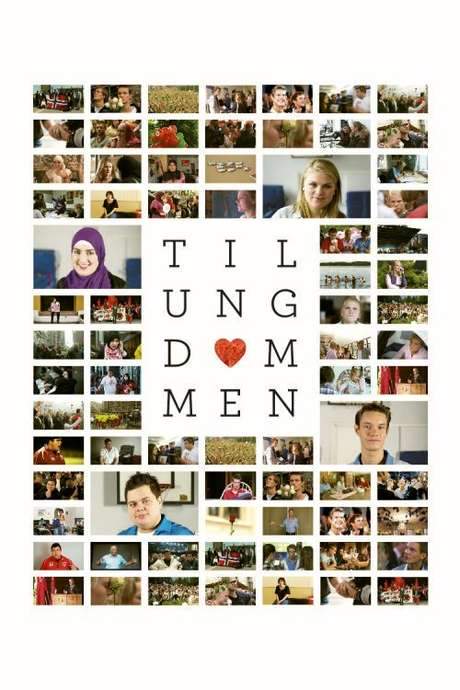
Year: 2012
Runtime: 108 mins
Language: Norwegian
Director: Kari Anne Moe
A documentary about youth politicians changes radically on July 22nd 2011, when a right-wing extremist murders 69 people at a summer camp run by the Workers Youth Party.
Warning: spoilers below!
Haven’t seen Bravehearts yet? This summary contains major spoilers. Bookmark the page, watch the movie, and come back for the full breakdown. If you're ready, scroll on and relive the story!
Trace every key event in Bravehearts (2012) with our detailed, chronological timeline. Perfect for unpacking nonlinear stories, spotting hidden connections, and understanding how each scene builds toward the film’s climax. Whether you're revisiting or decoding for the first time, this timeline gives you the full picture.
Last updated: October 09, 2025 at 16:55
Find frequently asked questions about the Bravehearts (2012) timeline, including chronological order, nonlinear jumps, cause-and-effect links, and scene sequence clarifications. This timeline FAQ helps explain when key events happen, how moments connect, and why the story unfolds in that specific order.
Murron's execution by English authorities represents the final straw for the Scottish villagers who have endured years of oppressive rule, including jus primae noctis and brutal crackdowns. Her death transforms passive resentment into active resistance, as Wallace leads the townspeople to overthrow the Magistrate, burn the English garrison, and kill the local lord. This local spark quickly spreads into a broader rebellion across Scotland.
The earlier executions of Scottish nobles and Wallace's personal losses of his father and brother had already planted the seeds of defiance.
Mornay and Lochlan, Scottish nobles with cavalry forces, betray Wallace at Falkirk because they are bribed by Longshanks. During the battle, they deliberately hold back their cavalry, leaving Wallace's forces severely outnumbered and vulnerable despite the Irish mercenaries switching sides to support him. This treachery directly contributes to Wallace's defeat.
Earlier in the film, Longshanks is shown granting lands and privileges to loyal nobles, establishing that he can buy loyalty.
Robert the Bruce, despite having a claim to the Scottish crown, initially aligns with Longshanks because he is a pragmatist navigating the complex political landscape of occupied Scotland. His father ultimately betrays Wallace, and Robert himself struggles with the moral dilemma of fighting fellow Scots versus pursuing his royal ambition. He eventually renounces his father's treachery and switches sides.
Robert is introduced as a noble pondering where his loyalties lie, showing his internal conflict from the start.
Princess Isabelle is sent by Longshanks as a diplomatic distraction to negotiate with Wallace, but she becomes genuinely drawn to his cause and his character. She warns Wallace of Longshanks's calculated schemes, helps him foil an assassination plot, and eventually reveals she is carrying his child. Her shift from political pawn to secret ally is driven by both personal attraction and moral conviction.
Longshanks's decision to send Isabelle as a distraction creates the opportunity for her to meet Wallace and witness his conviction firsthand.
Wallace defeats the royal army at Stirling through tactical skill and the element of surprise. After surviving an assassination attempt ordered by Longshanks, he mobilizes local Scottish forces and confronts the English army. The victory at Stirling becomes a major turning point, proving that organized Scottish resistance can defeat professional English troops and inspiring broader uprising.
The earlier assassination attempt fails, showing Longshanks underestimates Wallace's resourcefulness.
Robert the Bruce renounces his father after learning the truth about his father's betrayal of William Wallace. The revelation that his own father was responsible for betraying Wallace to Longshanks forces Robert to break with the treacherous path he had been following. This moral reckoning marks his complete shift toward supporting the Scottish resistance.
Robert's internal conflict about loyalty and honor has been building throughout the film.
Longshanks dies precisely as Wallace shouts "Freedom!" during his brutal execution. The film presents this as a symbolic moment where Wallace's defiance and ultimate sacrifice somehow trigger Longshanks's death, though it is presented with a supernatural or symbolic quality. This ties together the personal and political narratives, suggesting Wallace's spirit cannot be broken even in death.
Longshanks's declining health is noted earlier in the film, but the timing of his death is dramatized.
Wallace is captured in Edinburgh through a pivotal meeting that leads to his betrayal. He is then taken to England where he faces brutal execution - being hanged, drawn, and quartered - as punishment for treason against the English crown. His execution is intended to crush the Scottish resistance, but instead his martyrdom strengthens the cause.
The earlier revelation about Robert's father being the betrayer sets up the capture.
Isabelle reveals to Wallace before his execution that she is carrying his child. This personal twist has political implications: since Isabelle is married to Longshanks's son, the child would technically be in line for the English throne, potentially shortening the future monarch's reign. This adds a final layer of irony and vengeance to Wallace's sacrifice.
The intimate moment between Wallace and Isabelle earlier in the film establishes their relationship.
Wallace sacks York and beheads the Duke of York to send a direct, shocking message to Longshanks. This bold raid into English territory demonstrates that the Scottish rebellion has escalated beyond defensive warfare and can strike at the heart of English power. The brutal act is designed to intimidate Longshanks and boost Scottish morale.
Longshanks is shown campaigning in France, leaving England vulnerable.
At Falkirk, Longshanks's Irish mercenaries defect to Wallace's forces, recognizing the injustice of fighting for the English oppressors against their Celtic neighbors. This defection initially gives Wallace an advantage, but the betrayal by Mornay and Lochlan negates this benefit. The mercenaries' switch represents the growing international support for the Scottish cause.
Earlier scenes show Longshanks recruiting foreign soldiers to suppress Scottish resistance.
By 1314, Robert the Bruce has fully transformed from a conflicted noble into the King of Scotland. His journey from someone who initially collaborated with Longshanks to a dedicated Scottish patriot culminates at Bannockburn. He invokes Wallace's memory as inspiration for his troops and secures the final victory that Wallace's sacrifice made possible.
Robert's gradual shift away from treachery and toward Scottish independence has been building since he renounced his father.
Wallace's claymore, inscribed with the word "Braveheart," is planted point-down in the ground at Bannockburn as a symbol of continued resistance. This iconic moment connects Wallace's legacy to the ultimate Scottish victory, showing that his spirit and cause endure beyond his death. The weapon becomes a rallying symbol for Robert's forces.
The title "Braveheart" has been associated with Wallace throughout the film as a symbol of his courage.
Discover curated groups of movies connected by mood, themes, and story style. Browse collections built around emotion, atmosphere, and narrative focus to easily find films that match what you feel like watching right now.
Stories of movements and individuals facing violent oppression in the political arena.Find more documentaries and dramas like Bravehearts that explore real-world political struggles, acts of defiance, and the impact of violence on social movements. If you were gripped by the story of a political youth movement facing tragedy, you'll find similar films about resistance and historical upheaval here.
Movies in this thread typically follow a pattern of a political ideal or movement being challenged by a sudden, violent act. The story then unfolds as a chronicle of response, resilience, and the high-stakes conflict between ideology and oppression, often leading to profound loss but also enduring legacy.
These films are grouped together because they share a core focus on political conflict, a dark and oppressive tone, and a high-intensity, fast-paced viewing experience. They are united by themes of struggle against tyranny, the emotional weight of real-world tragedy, and a narrative driven by defiance in the face of brutal opposition.
Narratives where profound loss ultimately sparks a legacy of hope or change.Discover films with emotional arcs similar to Bravehearts, where a story of profound personal tragedy leads to a bittersweet conclusion of hope or legacy. If you appreciated the mix of deep sorrow and inspirational resolve, these movies explore how sacrifice can pave the way for future change.
The narrative pattern involves a catastrophic event that shatters the protagonist's world, triggering a journey of response. The story builds towards an ending where the immediate outcome is a personal defeat or loss, but the actions of the characters sow the seeds for a larger, hopeful future, creating a powerful emotional paradox.
These films are connected by their shared emotional structure: they deliver a heavy, tragic core experience but resolve with a bittersweet feeling. They balance high sadness with a undercurrent of hope or inspiration, creating a complex and resonant viewing experience defined by the weight of loss and the light of legacy.
Don't stop at just watching - explore Bravehearts in full detail. From the complete plot summary and scene-by-scene timeline to character breakdowns, thematic analysis, and a deep dive into the ending - every page helps you truly understand what Bravehearts is all about. Plus, discover what's next after the movie.
Read a complete plot summary of Bravehearts, including all key story points, character arcs, and turning points. This in-depth recap is ideal for understanding the narrative structure or reviewing what happened in the movie.
Discover the characters, locations, and core themes that shape Bravehearts. Get insights into symbolic elements, setting significance, and deeper narrative meaning - ideal for thematic analysis and movie breakdowns.