Plot Explained Spoilers guaranteed!
Plot Explained

Browse by genre

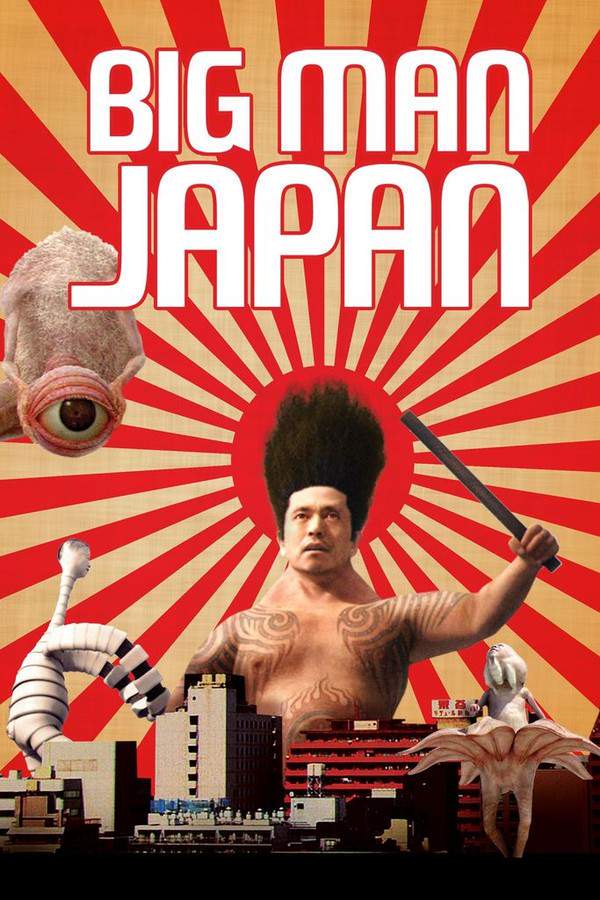
Big Man Japan (2009) movie poster

Timeline

Big Man Japan (2009) Timeline Explained – Every Event in Order

Release, runtime and language
2009 · 113 min · Japanese
Directed by
Hitoshi Matsumoto

Daisato's ordinary existence is upended when he unexpectedly becomes Japan's protector against bizarre, outlandish creatures. As a middle-aged man transformed into a giant due to electrical incidents, he finds himself a reluctant hero, simultaneously celebrated and criticized by the populace. His challenging situation is further complicated by an overzealous government agent, his eccentric grandfather, and a family deeply embarrassed by his less-than-perfect attempts at heroism.

On this page (5)
  1. 1 Events in order (12)
  2. 2 Timeline questions answered
  3. 3 Movie threads
  4. 4 Movies like Big Man Japan
  5. 5 Every angle

12 events in order · contains spoilers

Big Man Japan Timeline: Events in Chronological Order

Every key event of Big Man Japan (2009) in order, scene by scene, with when and where it takes place. Use it to untangle flashbacks, time jumps and parallel storylines, to refresh your memory before the sequel or to find the exact scene you are thinking of.

  1. Big Man's Transformation

    The protagonist, Big Man, also known as Sato, undergoes a physical transformation into a giant whenever the Ministry of Monster Prevention requires it. This process not only alters his physical form but also takes a toll on his mental health, as he grapples with the intense pressures of his superhero duties.

    Where
    Ministry of Monster Prevention
  2. Feeling Undervalued

    Sato feels underappreciated and inadequately compensated for his dangerous role in defending his city from monsters. The lack of proper remuneration exacerbates his feelings of isolation and neglect, particularly as he risks his life to protect the very officials who disregard him.

  3. Family Struggles

    Sato's strained relationship with his wife and daughter deepens his sense of isolation. His longing to support his aging grandfather, who is suffering from senility, intensifies his feelings of inadequacy and despair regarding his personal life.

  4. Body Advertising

    In an effort to improve his financial situation, Sato resorts to selling advertising space on his own body during monster confrontations. This drastic measure highlights his desperate circumstances and further complicates his already tumultuous life as a superhero.

  5. Televised Monster Fights

    Sato frequently engages in battles against various monsters, which are broadcast live as episodes of a reality show. However, as the ratings begin to decline, tensions arise between him and his talent agent, impacting his professional reputation.

    Where
    Television Studio
  6. The Monster Encounters

    Over the course of his career, Sato faces numerous monsters, including a tossing monster and a one-legged leaping monster, exhibiting his prowess in combat. Each encounter contributes to his growing fame, albeit accompanied by increasing public scrutiny.

  7. The Incident with the Monster Baby

    A defining moment occurs when Sato unintentionally harms a seemingly harmless monster baby. This incident sparks public outrage, leading many to question his morality and motivations as a protector of the city, ultimately impacting his livelihood.

  8. Challenge from the Stink Monster

    Sato's battle with the stink monster proves to be particularly troublesome, as it not only evades capture but also disrupts the fight by creating interactions with other monsters. This public spectacle challenges social norms and adds to Sato's growing list of problems.

  9. Grandfather's Night Out

    Sato's grandfather escapes from his care facility, eager to relive his youthful adventures in Tokyo. This escapade not only leads to chaos in the city but also casts a shadow over Sato's reputation as a responsible hero, leading to increased scrutiny from the media.

    Where
    Tokyo
  10. Confrontation with the Gangster Monster

    In a climactic struggle, Sato faces a gangster-type monster who overwhelms him, resulting in a broken nose and heightened embarrassment. This defeat forces him to confront the reality of his weakened state and the negative impacts on his public image.

  11. Escalating Reputation Crisis

    As Sato grapples with personal and professional challenges, his reputation becomes increasingly fragile after his defeat and public incidents. The mounting pressures from all sides leave him feeling cornered and desperate as he strives to reclaim his status.

  12. The Arrival of the Justice Family

    Just when Sato is at his lowest, the Justice Family appears to save the day. This group steps in to confront the foreign red monster, showcasing their skills and providing Sato with the much-needed support he has been lacking.

Last updated: November 03, 2024 at 12:31

Was this helpful?

Timeline questions answered

Big Man Japan Timeline Explained: Your Questions Answered

When does it happen, and why in that order? The questions people ask about the chronology of Big Man Japan (2009): time jumps, flashbacks, cause and effect between scenes and the correct order of events, each answered with spoilers.

Q1

Why does Big Man advertise on his body during monster fights?

Sato advertises on his body because he feels severely underpaid by the Ministry of Monster Prevention for his dangerous work. Despite risking his life to protect Japan, he receives inadequate compensation, leaving him financially struggling. This desperation to supplement his income leads him to sell advertising space on his body during his televised monster battles, highlighting his desperation and the irony of monetizing heroism.

  • advertising
  • big man
  • financial struggle
  • monster fights
  • sato
Q2

Why did killing the monster baby cause such public outrage?

The monster baby appeared harmless and innocent, which led viewers to perceive Sato's killing of it as cruel and unnecessary. Since his monster fights were broadcast as a reality show, the incident became a major media controversy. The public turned against him, questioning his morality and whether he truly deserved to be Japan's protector, significantly damaging his public image and livelihood.

  • monster baby
  • public outrage
  • killing
  • reality show
  • reputation
Q3

Who are the Justice Family that appear at the end?

The Justice Family is a group of guardians who suddenly appear to assist Sato when he's at his lowest point, taking on the foreign red monster that had defeated him. Their arrival functions as a deus ex machina, providing an ambiguous resolution to Sato's crisis. The film leaves their origins unclear, presenting them as satirical savior figures who swoop in to fix problems that the struggling hero couldn't handle alone.

  • justice family
  • foreign red monster
  • deus ex machina
  • rescue
  • saved
Q4

Why is Sato so dissatisfied with being Japan's protector?

Sato feels grossly underappreciated and undercompensated for the dangerous work he performs. He risks his life fighting monsters for the government, yet receives minimal pay and recognition. Additionally, the constant pressure of being on call, the mental toll of transforming into a giant, and the public scrutiny have damaged his mental health and personal relationships, leaving him feeling isolated and abandoned by the very people he protects.

Foreshadowing: Earlier scenes establish his constant complaints about compensation and his strained family life.

  • dissatisfied
  • underpaid
  • government job
  • sato
  • mental health
Q5

How does Big Man's transformation into a giant work?

The Ministry of Monster Prevention arranges for Sato to undergo a physical transformation into a gigantic figure whenever the need arises. This government-controlled process is triggered by the Ministry's requirements, not by Sato's will. The transformation takes a significant toll on his mental stability, suggesting the process is physically and psychologically taxing despite being government-sanctioned.

  • transformation
  • giant
  • ministry of monster prevention
  • government
Q6

Why did Sato's grandfather escaping cause a scandal?

Sato's senile grandfather escaped from his care facility seeking a nostalgic night out in Tokyo, which created chaos in the city. Since Sato is publicly known as Japan's protector and is responsible for caring for his grandfather, this incident reflected poorly on him. Media portrayed his family as irresponsible, damaging his already struggling public image and complicating his efforts to monetize his hero career through TV deals and body advertising.

  • grandfather
  • escape
  • senile
  • reputation
  • scandal
  • tokyo
Q7

Why couldn't Big Man defeat the gangster-type monster?

The foreign gangster monster overpowered Sato, breaking his nose and forcing him to flee in humiliation. This defeat represents Sato at his weakest point, his reputation was already damaged by the monster baby incident, his grandfather's escape, and declining TV ratings. The loss signals his diminished capabilities and the cumulative toll of his personal and professional struggles, marking a turning point where he's no longer capable of saving himself.

  • gangster monster
  • defeat
  • broken nose
  • fled
  • weakened state
Q8

Why are Big Man's monster fights broadcast as a reality show?

Sato's battles against monsters are televised as a reality show, turning his dangerous superhero work into entertainment. The broadcasts generate revenue and keep the public engaged with his heroics. However, as ratings begin to drop, tension rises between Sato and his talent agent, reflecting how his heroic duties have become commercialized and subject to the entertainment industry's demands.

  • reality show
  • broadcast
  • television
  • ratings
  • entertainment
Q9

Why did the stink monster cause a public decency scandal?

The stink monster evaded Sato's capture and engaged with another monster during the live broadcast, creating a chaotic and inappropriate spectacle that upset public decency standards. This incident added to Sato's growing list of problems, as his monster fights were meant to be controlled demonstrations of heroism. The scandal further eroded viewer trust and complicated his attempts to maintain his career and public image.

  • stink monster
  • decency scandal
  • evaded
  • broadcast
  • public image
Q10

Why does Sato want to provide care for his aging grandfather?

Sato feels a strong obligation to care for his aging, senile grandfather, who was also a monster slayer and passed his unique abilities down to Sato and his father. This responsibility stems from family legacy and duty. Sato aspires to become financially secure specifically so he can properly care for his grandfather, viewing this as both a personal and familial obligation that ties into his deeper motivations for continuing his thankless hero work.

  • grandfather
  • aging
  • senile
  • family legacy
  • care
  • obligation
Q11

What caused Sato's reputation to decline so drastically?

Sato's reputation crisis accumulated from multiple incidents: killing the innocent monster baby triggered public outrage, his grandfather's city-wide escapade made headlines, and his defeat by the gangster monster left him humiliated and fleeing. These events, combined with declining TV ratings and his desperation to monetize through body advertising, painted him as an incompetent and morally questionable hero, leaving him cornered and desperate.

  • reputation crisis
  • decline
  • public image
  • multiple incidents
Q12

Why is Sato isolated from his wife and daughter?

Sato's constant on-call status for the Ministry of Monster Prevention and the demands of his superhero duties have created a significant disconnect between him and his family. His preoccupation with fighting monsters, combined with his financial struggles and mental instability from transformations, has left him feeling isolated from his wife and daughter. This personal loneliness compounds his professional dissatisfaction, deepening his overall sense of alienation.

  • family
  • isolation
  • wife
  • daughter
  • disconnected
  • loneliness

Movie threads

More Movies Like Big Man Japan, by Mood & Story

Curated lists built around what makes Big Man Japan tick: the same mood, the same kind of story or the same emotional payoff. Each list explains why these movies belong together.

Absurdist hero satires like Big Man Japan

Stories where extraordinary powers meet crushing everyday disappointments. If you enjoyed the quirky, melancholic take on heroism in Big Man Japan, this section features movies with similar satirical premises. Find other comedies and dramas where reluctant heroes grapple with fame, failure, and bizarre circumstances in stories that mix absurd spectacle with emotional depth.

  • satirical
  • absurd
  • melancholic
  • quirky
  • frustrated
  • isolated
  • Tone: whimsical, melancholic, satirical
  • Pacing: variable, mixing chaotic and contemplative scenes
Why these movies?

The story pattern: These narratives typically follow a character reluctantly given a grand role or power, only to find the experience underwhelming, poorly managed, or publicly ridiculed. The plot often contrasts moments of high-concept action or fantasy with the anti-climax of daily life, resulting in a journey that is more about personal frustration than triumphant success.

Why they belong together: Movies in this thread share a unique tonal blend of whimsical absurdity and grounded sadness. They are connected by their satirical look at institutions like media, government, or fame, and their focus on the isolated, often disappointed individual at the center of the chaos.

Quirky mockumentaries similar to Big Man Japan

Faux-documentaries following uniquely troubled and isolated individuals. For viewers who liked the mockumentary style and quirky protagonist of Big Man Japan, this section highlights similar films. Discover other movies that use a documentary format to tell stories about eccentric, isolated characters dealing with bizarre situations and personal sadness.

  • quirky
  • melancholic
  • isolated
  • observational
  • deadpan
  • eccentric
  • Tone: quirky, melancholic, observational
  • Pacing: variable, reflective
Why these movies?

The story pattern: The narrative is framed as a documentary, often including interviews, candid footage, and a narrator. This structure allows for a meandering exploration of a character's eccentric life, their strained relationships, and their internal struggles, which are frequently at odds with the bizarre external world they inhabit. The ending is often ambiguous or bittersweet.

Why they belong together: These films are grouped by their distinctive mockumentary format and their focus on a central character who is an outsider. They share a specific mood that mixes deadpan humor with genuine pathos, creating a unique, contemplative, and often quirky viewing experience.

If you liked this

Movies Like Big Man Japan

Similar movies to Big Man Japan: the same genre, themes or kind of story. Each one comes with its own plot summary, timeline and ending explained.

Browse all movie summaries

Every angle

Big Man Japan (2009) Explained: Plot, Timeline & Characters

Everything about Big Man Japan in one place: what happens in the plot summary, the timeline in chronological order, the characters and meaning and a spoiler-free summary. What's After the Movie adds the cast, box office and post-credit scenes.

Coming soon on iOS and Android

The Plot Explained Movie Summary App

Plot summaries, endings explained and timelines on your phone. Catch up on any movie in minutes, save your favorites and never miss a twist again.

Be the first to know when we launch. Your email stays private, always.

Learn more about the app