

Plot Explained Spoilers guaranteed!
Plot Explained

Browse by genre

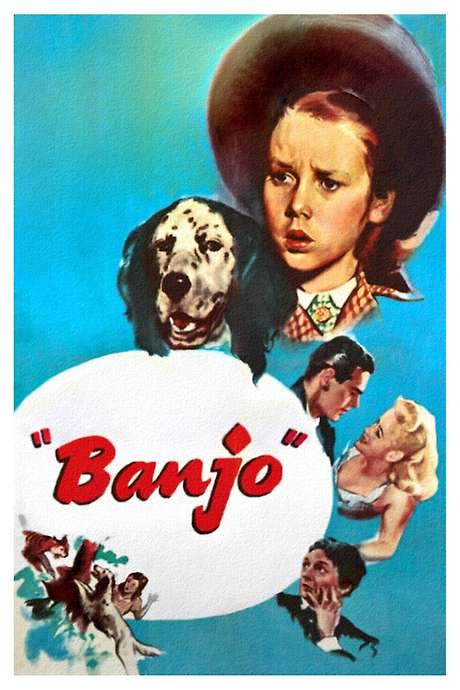
Banjo (1947) movie poster

Characters & Themes

Banjo (1947) Characters, Setting & Themes Explained

Release, runtime and language
1947 · 68 mins · English
Directed by
Richard Fleischer
Starring
Harry Harvey, Sharyn Moffett, Una O'Connor, Louise Beavers, Walter Reed, Banjo

TOGETHER - against the world! Family drama about a young farm girl, suddenly orphaned, who must give up her beloved dog when she’s sent to live with her aunt in Boston.

On this page (8)
  1. 1 Where to watch
  2. 2 Characters explained (8)
  3. 3 Where & when it takes place
  4. 4 Themes & meaning (4)
  5. 5 Character & meaning questions
  6. 6 Movie threads
  7. 7 Movies like Banjo
  8. 8 Every angle

Where to watch

Where to Watch Banjo (1947)

Where can you watch Banjo? Stream, rent or buy it in the US, including on TCM: current JustWatch availability with up-to-date prices.

Streaming availability powered by JustWatch

8 main characters · contains spoilers

Banjo Characters Explained: Who Is Who

The main characters of Banjo (1947), heroes and villains: what drives them, how they change over the course of the story and what each of them reveals about the film's bigger ideas.

  • Patricia 'Pat' Warren (Sharyn Moffett)

    A brave, imaginative nine-year-old who refuses to leave Banjo behind. She engineers opportunities to maintain Banjo's presence in her life and uses clever schemes to navigate the adult world of her aunt. Pat's loyalty and resourcefulness drive the plot and her emotional growth.

    • 🧒 Child
    • 💗 Loving
    • 🧭 Resourceful
    • 🔄 Determined
  • Banjo the Dog (Banjo)

    An English Setter whose loyalty defines the story. Banjo breaks out of confinement, protects Pat, and acts as the catalyst for Pat's attempt to win acceptance in Boston. The dog's courage and companionship symbolize unconditional love.

    • 🐕 Loyal
    • 🐾 Brave
    • 🐶 Companion
  • Elizabeth Ames (Jacqueline White)

    A wealthy, vain Boston aunt who initially resents Banjo and disapproves of Pat. Her social vanity creates the central conflict, but her feelings gradually soften as the family bonds strengthen.

    • 💼 Wealthy
    • 🕶️ Snobbish
    • 💬 Socialite
  • Dr. Robert M. Hartley (Walter Reed)

    A physician who was once engaged to Elizabeth. He shows sympathy for Pat and Banjo and works to bridge the gulf between the aunt's world and Pat's devotion. He becomes a mediator and ally in the family reconciliation.

    • 🩺 Doctor
    • ❤️ Compassionate
    • 🤝 Mediator
  • Mr. Bill (Harry Harvey)

    A railroad worker who befriends Pat on the train, representing a kind, ordinary presence in Pat's journey. He helps depict the supportive network Pat encounters along her travels.

    • 🧑‍🚂 Helper
    • 🧭 Friendly
  • Jeffries (Herbert Evans)

    The servant who builds Banjo's garden pen, repeatedly raising the walls as Banjo escapes. He embodies the period's service role in a wealthy household and the practical challenges of Pat's quest.

    • 🧰 Servant
    • 🧱 Builder
  • Uncle Jasper (Ernest Whitman)

    One of Pat's former servants who reappears to aid in the climactic moments and shoots the bobcat to protect Banjo. His return underscores themes of loyalty and community.

    • 🧔 Elder
    • 🛡️ Protector
  • Conductor Matthews (Jason Robards Sr.)

    The train conductor encountered during Pat's journeys, reflecting the era's railroad culture and the incidental kindness she experiences on the road.

    • 🚆 Conductor
    • 🧭 Helper

Last updated: October 04, 2025 at 15:09

Was this helpful?

Setting

Where and When Does Banjo Take Place?

The setting of Banjo (1947): the year and time period, the places and locations, and how they shape the characters, the mood and the tension of the story.

Time period

1940s

The narrative unfolds in mid-20th century America, a period when rail travel and class distinctions frame family dynamics. The film's tone and situations—train journeys, domestic life, and a blend of outdoor danger—reflect cinematic conventions of the 1940s. The era anchors the characters' expectations and resolutions.

Location

Georgia, Boston, Bermuda

Pat's story spans rural Georgia, the urban Boston home of her wealthy aunt, and a Bermuda vacation backdrop referenced in the plot. Georgia provides the initial setting where Pat bonds with Banjo and where the adventure begins. Boston represents social status and family tension, while Bermuda appears as a planned escape that heightens the stakes for the aunt and Pat.

  • 🏡 Georgia countryside
  • 🏙 Boston city
  • 🏝 Bermuda island

Last updated: October 04, 2025 at 15:09

Was this helpful?

4 major themes

Banjo Meaning: Themes & Message Explained

What is Banjo (1947) really about? The emotional, social and philosophical themes the film keeps returning to, its symbolism and the message beneath the surface.

  • Family

    Family loyalty motivates Pat's actions and underpins the plot, driving her to fight for Banjo's place in the Boston house. The relationships between Pat, Elizabeth, and Dr. Hartley show how affection can bridge gaps created by wealth and pride. The story uses family bonds to reshape misunderstandings into reconciliation.

  • Class & Privilege

    Elizabeth's wealth and social expectations create obstacles Pat must overcome. The contrast between Georgia's rural roots and Boston's privileged lifestyle highlights how status can strain empathy. Pat's persistence and Banjo's loyalty push the aunt toward a softer view of family obligations.

  • Loyalty & Courage

    Banjo embodies loyalty, risking confinement and danger to protect Pat. The dog's actions—escaping, aiding Pat, and saving her in the swamp—frame courage as a family value. The bond between Pat and Banjo becomes the emotional core that unites the characters.

  • Journey

    Travel by train is a key motif, transporting Pat between Georgia and Boston and pushing the story through different social worlds. The journey tests Pat's resolve and grows her bond with Banjo. The cross-country movement mirrors the film's themes of adaptation and belonging.

Last updated: October 04, 2025 at 15:09

Was this helpful?

Character & theme questions

Banjo Characters & Meaning: Your Questions Answered

The questions people ask about Banjo (1947): who the characters really are, their relationships, what the symbols mean, where it takes place and what the movie is really about. Each answer contains spoilers.

Q1

Where is the movie set?

The story takes place across three main locations: rural Georgia where Pat lives on a farm with Banjo, Boston where her wealthy aunt Elizabeth lives, and Bermuda which is referenced as a vacation destination. Georgia represents the girl's rural roots and freedom, while Boston symbolizes the social world of privilege that Pat must navigate.

Foreshadowing: Georgia appears first in the film, establishing the pastoral world before Pat's upheaval.

  • georgia
  • boston
  • bermuda
  • setting
  • rural
  • city
Q2

What time period is the movie set in?

Banjo is set in the 1940s, during mid-20th century America. This era is characterized by rail travel as a primary mode of transportation and distinct class divisions that shape family relationships. The period influences the film's tone, the characters' expectations, and the straightforward narrative style typical of 1940s family films.

Foreshadowing: The train journeys and domestic settings reflect cinematic conventions of the era.

  • 1940s
  • era
  • time period
  • mid-20th century
  • railroad
Q3

What are the main themes of the movie?

The film explores several interconnected themes: family loyalty, which drives Pat's fight to keep Banjo; class and privilege, shown through the contrast between Georgia's rural life and Boston's wealthy society; loyalty and courage, embodied by Banjo's devotion to Pat; and the journey motif, as train travel moves Pat between different social worlds. These themes work together to convey a message about perseverance and belonging.

Foreshadowing: The journey theme is established early through Pat's train trip from Georgia to Boston.

  • family
  • loyalty
  • class
  • privilege
  • courage
  • journey
  • themes
Q4

Who is the main character Pat?

Patricia 'Pat' Warren is a brave, imaginative nine-year-old girl who is suddenly orphaned and sent to live with her wealthy aunt Elizabeth in Boston. Her defining trait is her unwavering loyalty to her dog Banjo, which drives her to use clever schemes to keep him in her life. Pat represents childhood resilience and the power of unconditional love.

Foreshadowing: Pat's resourcefulness is established early as she engineers ways to maintain Banjo's presence.

  • pat
  • patricia warren
  • main character
  • protagonist
  • child
Q5

Who is Elizabeth Ames in the movie?

Elizabeth Ames is Pat's wealthy Boston aunt, played by Jacqueline White. She is vain and concerned with social status, initially resenting Banjo and disapproving of Pat's rural ways. However, her feelings gradually soften as she witnesses Pat's loyalty and the bond between the girl and her dog, leading her to embrace a more compassionate view of family.

Foreshadowing: Elizabeth's initial resistance sets up the central conflict of the story.

  • elizabeth ames
  • aunt
  • wealthy
  • social class
  • boston
Q6

What does Banjo the dog symbolize?

Banjo, an English Setter, symbolizes loyalty, courage, and unconditional love throughout the film. His actions, escaping confinement, protecting Pat, and saving her in the swamp, demonstrate that courage is a family value. The bond between Pat and Banjo becomes the emotional core that ultimately unites the fractured family.

Foreshadowing: Banjo's escape attempts early in Boston hint at his protective nature.

  • banjo
  • dog
  • english setter
  • loyalty
  • courage
  • symbol
Q7

How does class and privilege play a role in the story?

Class and privilege create the central conflict in Banjo. Elizabeth's wealth and social expectations form obstacles Pat must overcome. The contrast between Georgia's rural roots and Boston's privileged lifestyle highlights how status can strain empathy between family members. Pat's persistence and Banjo's loyalty ultimately push Elizabeth toward recognizing that family bonds matter more than social position.

Foreshadowing: The Boston home setting immediately establishes the world of privilege Pat must navigate.

  • class
  • privilege
  • wealth
  • boston
  • social status
  • georgia
  • rural
Q8

What is the tone of the movie?

Banjo has a hopeful tone, balanced with moderate emotional intensity. While the story deals with significant stressors like parental death and relocation, these are counterbalanced by gentle character interactions and a steady narrative pace. The film maintains an uplifting quality because the protagonist's determination and kind adult allies consistently point toward a positive resolution.

Foreshadowing: The hopeful tone is established through supportive characters like Dr. Hartley who help Pat.

  • tone
  • hopeful
  • emotional
  • intensity
  • family film
Q9

Why does the 1940s setting matter?

The 1940s setting matters because it frames the story's family dynamics through the lens of that era's social conventions. Rail travel, domestic life, and class distinctions reflect the period's values and constraints. The straightforward narrative pace and cause-and-effect progression also mirror 1940s cinematic storytelling conventions, giving the film its characteristic gentle, linear quality.

Foreshadowing: The train conductor and railroad worker characters reflect the era's railroad culture.

  • 1940s setting
  • rail travel
  • era relevance
  • narrative style
Q10

What is the message of Banjo?

Banjo conveys that loyalty and perseverance can bridge social divides and heal family rifts. The story shows how unconditional love, whether from a child for her pet or between family members, can transform pride and misunderstanding into reconciliation. The message emphasizes that belonging comes from genuine connection rather than wealth or status.

Foreshadowing: The theme of reconciliation is set up through Dr. Hartley's role as mediator.

  • message
  • meaning
  • reconciliation
  • belonging
  • family bonds

Movie threads

More Movies Like Banjo, by Mood & Story

Curated lists built around what makes Banjo tick: the same mood, the same kind of story or the same emotional payoff. Each list explains why these movies belong together.

Childhood resilience stories like Banjo

Emotional stories about children overcoming profound loss and finding strength. Find movies like Banjo that explore the emotional strength of children facing life-altering challenges. These heartfelt dramas feature young protagonists who persevere through grief or change, often with the help of a steadfast bond, leading to uplifting and hopeful resolutions similar to this film.

  • heartfelt
  • determined
  • childhood
  • innocence
  • lonely
  • gentle drama
  • Tone: hopeful, heartfelt
  • Pacing: steady, character-driven
Why these movies?

The story pattern: The narrative follows a child protagonist through a major life disruption, frequently involving the loss of a parent or home. The core of the story is their emotional adaptation and determination to overcome adversity, culminating in a positive resolution that affirms their resilience and re-establishes a sense of security.

Why they belong together: Movies in this thread share a focus on the child's perspective during hardship, balancing emotional weight with a fundamentally hopeful tone. They feature steady pacing, straightforward narratives, and center on themes of loyalty and perseverance, creating a gentle yet impactful viewing experience.

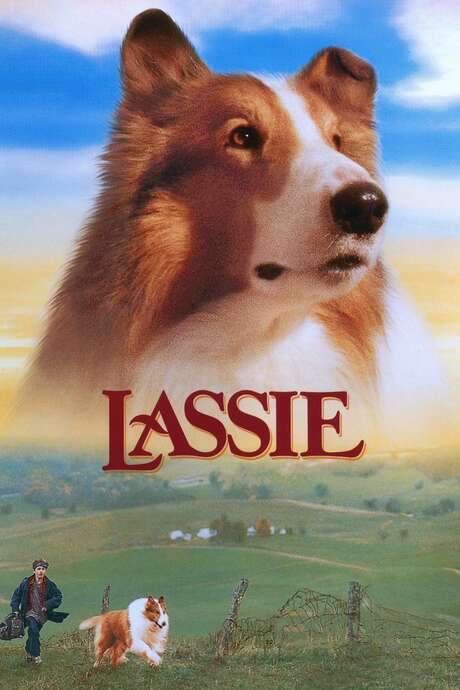
Movies with loyal animal bonds like Banjo

Stories where the unwavering loyalty of an animal helps heal emotional wounds. If you liked the central relationship in Banjo, explore these movies that also feature a powerful human-animal bond. These gentle dramas use the loyalty of a pet to explore themes of grief, belonging, and perseverance, resulting in heartwarming and emotionally satisfying stories.

  • heartfelt
  • loyalty
  • gentle drama
  • companionship
  • grief and loss
  • hopeful
  • Tone: hopeful, gentle
  • Pacing: steady, linear
Why these movies?

The story pattern: The plot is built around the relationship between a protagonist and their animal companion. A period of separation or challenge tests this bond, which ultimately proves essential for the character's emotional growth and resolution of their central conflict, reinforcing themes of loyalty and unconditional support.

Why they belong together: These films are united by their focus on the redemptive and comforting power of an animal companion. They share a medium emotional intensity, a steady, heartfelt pacing, and a tone that is ultimately hopeful, using the bond to navigate difficult themes without becoming overwhelmingly dark.

If you liked this

Movies Like Banjo

Similar movies to Banjo: the same genre, themes or kind of story. Each one comes with its own plot summary, timeline and ending explained.

Browse all movie summaries

Every angle

Banjo (1947) Explained: Plot, Timeline & Characters

Everything about Banjo in one place: what happens in the plot summary, the timeline in chronological order, the characters and meaning and a spoiler-free summary. What's After the Movie adds the cast, box office and post-credit scenes.

Coming soon on iOS and Android

The Plot Explained Movie Summary App

Plot summaries, endings explained and timelines on your phone. Catch up on any movie in minutes, save your favorites and never miss a twist again.

Be the first to know when we launch. Your email stays private, always.

Learn more about the app