

Plot Explained Spoilers guaranteed!
Plot Explained

Browse by genre

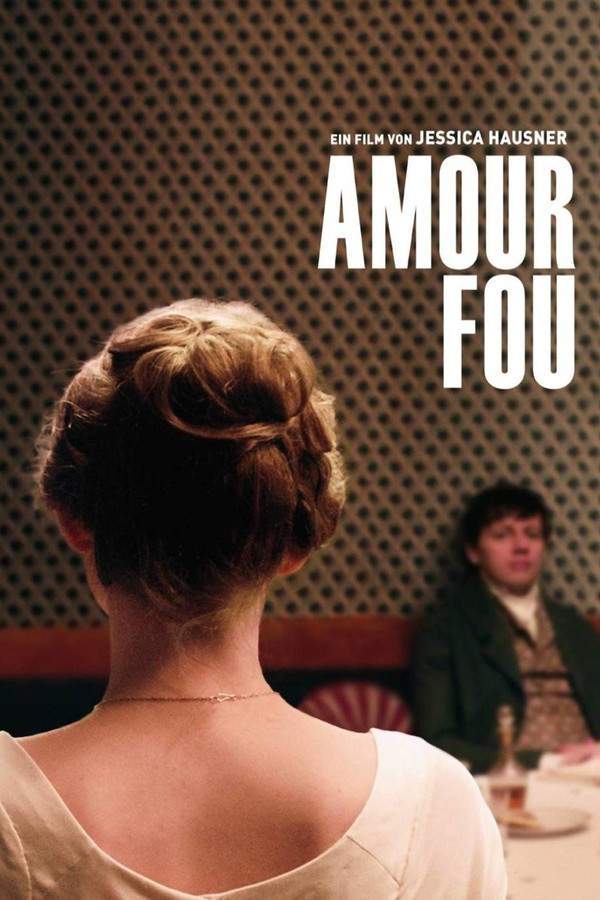
Amour Fou (2015) movie poster

Characters & Themes

Amour Fou (2015) Characters, Setting & Themes Explained

Release, runtime and language
2015 · 96 min · German
Directed by
Jessica Hausner

In 19th-century Berlin, the poet Heinrich grapples with mortality and seeks to overcome it through intense love. He is initially rejected by his cousin Marie, leading to despair. However, his outlook changes when he encounters Henriette, the captivating wife of a business partner. Henriette shares Heinrich's fatalistic views, as she is suffering from a terminal illness and embraces a romantic, shared demise.

On this page (8)
  1. 1 Where to watch
  2. 2 Characters explained (4)
  3. 3 Where & when it takes place
  4. 4 Themes & meaning (3)
  5. 5 Character & meaning questions
  6. 6 Movie threads
  7. 7 Movies like Amour Fou
  8. 8 Every angle

Where to watch

Where to Watch Amour Fou (2015)

Where can you watch Amour Fou? Stream, rent or buy it in the US, including on Kanopy: current JustWatch availability with up-to-date prices.

Streaming availability powered by JustWatch

4 main characters · contains spoilers

Amour Fou Characters Explained: Who Is Who

The main characters of Amour Fou (2015), heroes and villains: what drives them, how they change over the course of the story and what each of them reveals about the film's bigger ideas.

  • Henriette Vogel

    Henriette is a complex character faced with the struggle of societal expectations and her emotional needs. As a woman of status, she seeks love and connection but ultimately feels isolated. Her journey towards contemplating suicide reflects her profound sense of despair and longing for companionship.

    • 👩‍🎤 Romantic
    • 🤝 Isolation
    • 💔 Despair
  • Heinrich von Kleist

    Heinrich is portrayed as a troubled poet consumed by loneliness and existential thoughts. His character embodies the despair of unrequited love and the longing for an emotional bond. Heinrich's tragic pursuit of the suicide pact underscores his deep-seated fears and the search for meaning in life.

    • ✍️ Poet
    • 💔 Tragic
    • 🔍 Existential
  • Vogel

    Henriette's husband, Vogel, represents the conventional man caught between societal duty and personal emotions. His character evolves as he confronts the repercussions of Henriette's choices and ultimately realizes the depth of her despair. Vogel's arc highlights the themes of love, betrayal, and understanding.

    • 👨‍⚕️ Husband
    • 🤔 Conflicted
    • 💔 Betrayal
  • Marie

    Marie, Heinrich's cousin, embodies a voice of reason in the narrative. Her refusal to engage in Heinrich's morbid thoughts reflects an inherent belief in finding joy amid life's absurdities. Though she dismisses Heinrich's requests, her character illustrates the importance of embracing life despite its hardships.

    • 👩‍❤️‍👨 Supportive
    • 💭 Reason
    • 🌸 Life

Last updated: September 22, 2026 at 18:32

Was this helpful?

Setting

Where and When Does Amour Fou Take Place?

The setting of Amour Fou (2015): the year and time period, the places and locations, and how they shape the characters, the mood and the tension of the story.

Time period

Early 19th Century

The story is set in the early 19th century, a period characterized by romanticism and existential despair. This era saw a rise in literary exploration of themes like love, death, and societal conventions. The struggles faced by the characters resonate with the emotional and philosophical currents of the time.

Location

Berlin, Country Inn, Paris

The film primarily takes place in Berlin, a city known for its rich history and cultural significance. A key moment also unfolds at a country inn, symbolizing isolation and contemplation. Paris is mentioned as a destination for medical treatment, representing hope and a search for better possibilities.

  • 🏙️ City
  • 🏨 Inn
  • 🇫🇷 France

Last updated: September 22, 2026 at 18:32

Was this helpful?

3 major themes

Amour Fou Meaning: Themes & Message Explained

What is Amour Fou (2015) really about? The emotional, social and philosophical themes the film keeps returning to, its symbolism and the message beneath the surface.

  • Love and Despair

    The film grapples with the intense emotions of love intertwined with despair. Heinrich's longing for connection drives him to contemplate suicide, showcasing a tragic view of love. Henriette's eventual agreement to the pact reflects a profound sense of loneliness and the struggles of emotional isolation.

  • Mortality

    Mortality is a central theme, explored through the characters' discussions of life and death. Heinrich and Henriette's pact serves as a grim reflection on their attitudes toward existence. The film poses existential questions about the value of life and the lengths individuals go to escape their suffering.

  • Rejection

    Rejection plays a vital role, particularly in Heinrich's interactions with both Henriette and Marie. His persistence in seeking death with them highlights his emotional turmoil and societal rejection. The theme suggests that rejection can lead to despair, yet also illustrates the struggle to find meaning in relationships.

Last updated: September 22, 2026 at 18:32

Was this helpful?

Character & theme questions

Amour Fou Characters & Meaning: Your Questions Answered

The questions people ask about Amour Fou (2015): who the characters really are, their relationships, what the symbols mean, where it takes place and what the movie is really about. Each answer contains spoilers.

Q1

What are the main themes of Amour Fou?

Amour Fou centers on three intertwined themes: love entangled with despair, the inescapable presence of mortality, and the corrosive weight of rejection. The story frames romantic attachment not as hopeful union but as a path toward self-destruction and shared ruin. Together, these themes explore how emotional isolation and existential dread can warp the idea of love into something fatal.

  • amour fou themes
  • love despair
  • mortality
  • rejection
  • romanticism
Q2

Who is Heinrich von Kleist in the movie?

Heinrich is the central character of Amour Fou, a Berlin-based poet consumed by loneliness and existential despair. He becomes obsessed with finding someone willing to join him in a murder-suicide pact, which he frames as the ultimate expression of love. His character embodies the Romantic-era tension between intense feeling and the search for meaning in the face of death.

  • heinrich von kleist
  • poet
  • protagonist
  • romantic poet
  • murder-suicide pact
Q3

Who is Henriette Vogel in Amour Fou?

Henriette is a woman of social standing married to Vogel, Heinrich's business partner. Beneath her composed exterior, she harbors deep loneliness and reportedly shares Heinrich's fatalistic outlook on life. Her eventual agreement to join Heinrich's pact transforms the film's emotional direction and reveals the depth of her own despair.

  • henriette vogel
  • wife
  • fatalistic
  • despair
  • suicide pact
Q4

Is Amour Fou based on a true story?

Yes, Amour Fou is loosely inspired by the real figures of German poet Heinrich von Kleist and Henriette Vogel, who died together in a murder-suicide in 1811. The film dramatizes their historical bond and the events leading to their deaths, though it takes creative liberties with dialogue and personal motivations. This historical anchor gives the story its inevitability and emotional weight.

  • amour fou true story
  • heinrich kleist 1811
  • henriette vogel
  • historical basis
  • real events
Q5

How does mortality function as a central theme?

Mortality is woven into nearly every conversation and decision in Amour Fou, from Heinrich's poetry to Henriette's reported illness. The characters treat death not as an abstract fear but as a philosophical and romantic possibility to be shared with another person. The film uses mortality as both motivation and resolution, framing dying together as the purest form of connection.

  • mortality
  • death
  • existential
  • fatalism
  • suicide pact
Q6

Where is Amour Fou set?

Amour Fou is primarily set in early 19th-century Berlin, a city central to the Romantic literary movement and Heinrich's world. A key scene also takes place at a country inn, which symbolizes isolation and quiet contemplation outside the city. Paris is mentioned as a destination for potential medical treatment, representing a fleeting hope that ultimately goes unfulfilled.

  • amour fou setting
  • berlin
  • country inn
  • paris
  • 19th century
Q7

What role does rejection play in the story?

Rejection is a driving force throughout Amour Fou, beginning with Marie's refusal to join Heinrich and continuing through Henriette's hesitation. Each refusal deepens Heinrich's despair while sharpening his resolve to find someone who shares his worldview. The theme illustrates how repeated rejection can transform longing into a desperate, destructive search for validation.

  • rejection
  • heinrich
  • marie
  • henriette
  • emotional isolation
  • despair
Q8

What time period does Amour Fou take place in?

The story takes place in the early 19th century, an era defined by romanticism, existential thought, and literary exploration of mortality and emotional extremes. This period shaped the characters' worldview, particularly Heinrich's poetic sensibility and fatalistic philosophy. The setting reflects a cultural atmosphere in which questions about life's meaning and death were openly debated among intellectuals.

  • early 19th century
  • romantic era
  • romanticism
  • 1800s
  • historical period
Q9

What does "Amour Fou" mean?

Amour Fou is French for "mad love," a phrase that captures the film's central idea of love fused with obsession, despair, and fatalism. The title reflects Heinrich and Henriette's relationship, which transcends ordinary affection into something darker and more absolute. It signals that the romance at the heart of Amour Fou is not hopeful but doomed.

  • amour fou meaning
  • mad love
  • french title
  • obsession
  • fatalistic romance
Q10

Who is Marie in Amour Fou?

Marie is Heinrich's cousin and serves as a voice of reason and normalcy in the story. She firmly refuses Heinrich's morbid requests, representing an alternative perspective that embraces life despite its hardships. Her rejection of his philosophy highlights the contrast between conventional living and Heinrich's romanticized fatalism.

  • marie
  • heinrich cousin
  • voice of reason
  • refusal
  • conventional living
Q11

Who is Vogel in Amour Fou?

Vogel is Henriette's husband and a business associate connected to Heinrich. He represents the conventional, socially dutiful man caught between societal expectations and personal emotion. As the story progresses, he is forced to confront the depth of Henriette's despair and the consequences of choices made without his knowledge.

  • vogel
  • husband
  • henriette husband
  • business partner
  • conventional man
Q12

Why is Amour Fou categorized as a comedy?

Although Amour Fou is officially labeled a comedy, its humor is dark, absurdist, and infrequent. Any levity emerges from awkward social situations and the absurd persistence of Heinrich's solicitations rather than from wit or warmth. The genre label reflects a tonal approach rather than genuine lightness, distinguishing it from conventional period dramas.

  • amour fou genre
  • comedy
  • dark humor
  • absurdist
  • bleak tone

Movie threads

More Movies Like Amour Fou, by Mood & Story

Curated lists built around what makes Amour Fou tick: the same mood, the same kind of story or the same emotional payoff. Each list explains why these movies belong together.

Fatalistic love stories like Amour Fou

Stories where love and mortality collide, forging bonds that crave destruction as much as devotion. Movies like Amour Fou explore love stories intertwined with mortality, suicide pacts, and terminal illness. If you liked Amour Fou and want similar bleak romantic dramas about doomed devotion and shared demise, these films offer the same haunting blend of passion and fatalism, dark humor, and tragic inevitability in period settings.

  • fatalistic
  • doomed romance
  • mortality
  • dark humor
  • melancholic
  • suicidal ideation
  • Tone: bleak, melancholic, somber
  • Pacing: slow burn, contemplative
Why these movies?

The story pattern: Stories in this thread typically follow one or two characters who fixate on death as the only meaningful destination, and seek a partner willing to walk there with them. Courtship is replaced by negotiation, seduction by philosophical agreement. Along the way there are refusals, hesitations, and tests of conviction. The romance often reveals itself to be twisted — embedded with manipulation, delusion, or desperation — and the climax usually delivers a tragic shared ending that reframes everything that came before.

Why they belong together: These films share a sense of inevitability and fatalism, where the central bond is built around endings rather than beginnings. They favor slow, introspective pacing, awkward social rituals that mask deeper despair, and bleak conclusions. Common threads include terminal illness, misdiagnosis, suicide pacts, aristocratic or bohemian settings, and a tone that blends dark comedy with sorrowful contemplation.

Slow existential period dramas like Amour Fou

Quiet historical films that linger on mortality, loneliness, and the absurdity of polite society. Movies like Amour Fou appeal to viewers who love slow paced period dramas steeped in existential dread and dark humor. If you liked Amour Fou, these contemplative historical films offer similar themes of mortality, loneliness, and aristocratic absurdity, with deliberately paced storytelling, bleak endings, and heavy emotional weight grounded in 19th century settings.

  • existential
  • slow burn
  • period drama
  • 19th century
  • oppressive
  • dark humor
  • Tone: bleak, contemplative, darkly comic
  • Pacing: slow, deliberate, conversation-driven
Why these movies?

The story pattern: Films in this thread tend to follow an outsider — a writer, poet, philosopher, or eccentric — navigating a rigid social world while privately wrestling with meaninglessness, depression, or death. The narrative moves through social gatherings, letters, and long silences rather than action. Tension builds not from plot mechanics but from the gap between outward civility and inner despair. Climaxes often arrive quietly and devastatingly, sometimes through violence, sometimes through disappearance.

Why they belong together: These films share a deliberately unhurried rhythm, an aristocratic or bourgeois 19th-century European setting, and a thematic preoccupation with mortality, faith, and the failure of social rituals to console. They combine intellectual conversation with physical stillness, dark absurdist humor with weighty sorrow, and high cultural literacy with deeply bleak conclusions. The mood is consistently oppressive, contemplative, and fatalistic.

If you liked this

Movies Like Amour Fou

Similar movies to Amour Fou: the same genre, themes or kind of story. Each one comes with its own plot summary, timeline and ending explained.

Browse all movie summaries

Every angle

Amour Fou (2015) Explained: Plot, Timeline & Characters

Everything about Amour Fou in one place: what happens in the plot summary, the timeline in chronological order, the characters and meaning and a spoiler-free summary. What's After the Movie adds the cast, box office and post-credit scenes.

Coming soon on iOS and Android

The Plot Explained Movie Summary App

Plot summaries, endings explained and timelines on your phone. Catch up on any movie in minutes, save your favorites and never miss a twist again.

Be the first to know when we launch. Your email stays private, always.

Learn more about the app