Plot Explained Spoilers guaranteed!
Plot Explained

Browse by genre

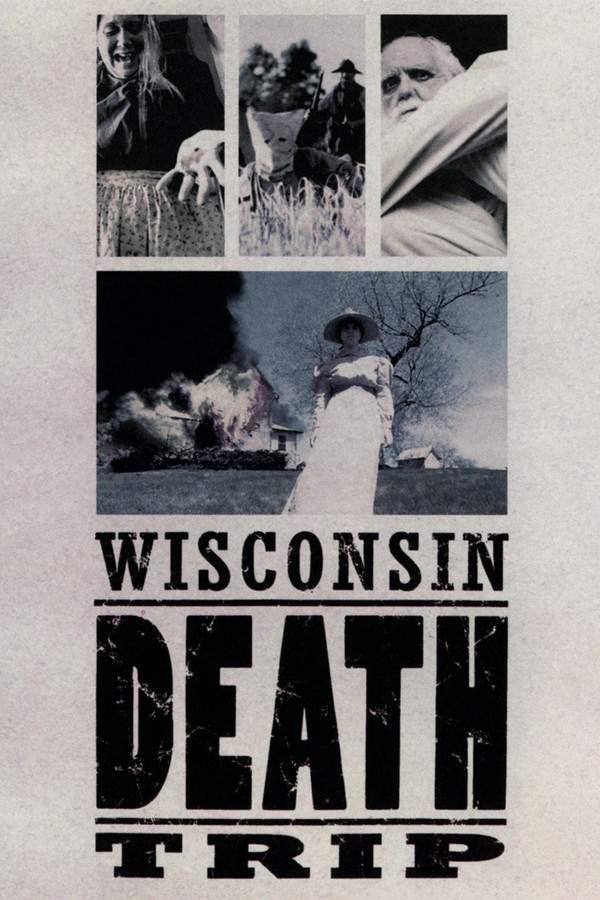
Wisconsin Death Trip (1999) movie poster

Timeline

Wisconsin Death Trip (1999) Timeline Explained – Every Event in Order

Release, runtime and language
1999 · 76 mins · English
Directed by
James Marsh
Starring
Ian Holm, Molly Nikki Anderson, Marcus Monroe, Steven Strobel, Marilyn White, Eddie Kunz

Inspired by the book of the same name, filmmaker James Marsh tells the story of tragedy, murder and mayhem that unfolded beneath the respectable façade of Black River Falls, Wisconsin, during the 19th century, revealing the town’s hidden darkness and the violent events that shattered its seemingly genteel reputation.

On this page (5)
  1. 1 Events in order (14)
  2. 2 Timeline questions answered
  3. 3 Movie threads
  4. 4 Movies like Wisconsin Death Trip
  5. 5 Every angle

14 events in order · contains spoilers

Wisconsin Death Trip Timeline: Events in Chronological Order

Every key event of Wisconsin Death Trip (1999) in order, scene by scene, with when and where it takes place. Use it to untangle flashbacks, time jumps and parallel storylines, to refresh your memory before the sequel or to find the exact scene you are thinking of.

  1. Bizarre Events Begin in Northern Wisconsin

    Between 1890 and 1900, a series of strange occurrences start happening among immigrant communities in northern Wisconsin following mine closures and economic decline. Infants are abandoned, and a diphtheria epidemic sweeps through the region causing many children's deaths. Local residents experience rising instability and fear as these events unfold.

    When
    1890-1900
    Where
    Northern Wisconsin
  2. Mary Sweeny's Rampage

    A schoolteacher named Mary Sweeny is institutionalized after going on a violent rampage, breaking windows of homes and buildings while under the influence of cocaine. Her behavior highlights the growing chaos and mental health struggles within the community. Her actions cause concern among local residents and authorities.

    When
    Early 1890s
    Where
    Unspecified
  3. Tragic Death of a Woman Outside Black River Falls

    A German immigrant's wife is found frozen to death six miles outside of Black River Falls. She had been mourning the death of her own child, and her death underscores the harsh conditions and emotional toll faced by the community during this tumultuous period.

    When
    Late 1890s
    Where
    Black River Falls
  4. Violent Crime in Brandon

    In Brandon, two young boys ambush and murder a farmer using a shotgun before taking over his home. The elder brother flees, leading to a manhunt, and is eventually sentenced to life imprisonment. This event reflects the violence and lawlessness spreading in the region.

    When
    1890s
    Where
    Brandon
  5. Suicides Among Young People

    Several young individuals, including a Norwegian girl and other jilted lovers, commit suicides through drowning and hanging. These tragic acts are driven by personal despair, abuse, and social pressures prevalent in the community.

    When
    Late 1890s
    Where
    Various locations in Wisconsin
  6. Anna the Arsonist

    Anna, a Polish girl, is discovered to be a serial arsonist responsible for setting multiple properties on fire. Her destructive behavior adds to the climate of fear and chaos gripping the region during this time.

    When
    Late 1890s
    Where
    Unspecified
  7. Violent Incidents Among Adults

    A father kills his infant son and tries to murder his wife, while another young man shoots a woman over a rejected marriage proposal before taking his own life. These acts of violence illustrate the rising personal and social turmoil faced by residents.

    When
    1890s
    Where
    Various locations in Wisconsin
  8. Religious and Witch-Hunt Delusions

    John Isaacson holds a knife to community members during a Christian meeting, believing he is vanquishing Satan. Additionally, a German immigrant blames witches for starving his livestock, while others believe they are haunted by evil spirits, reflecting widespread religious delusions.

    When
    Late 1890s
    Where
    Unspecified
  9. Mrs. Dutton and Mrs. Lawson's Tragic Actions

    Mrs. Dutton, believing she is Jesus reincarnated, and Mrs. Lawson, convinced she is haunted by Satan, drown their three children in lakes, highlighting the extreme mental instability and religious hysteria among some community members.

    When
    Late 1890s
    Where
    La Crosse and St. Croix
  10. Pauline L'Allemand's Arrival and Decline

    A woman claiming to be a French opera singer, Pauline L'Allemand, arrives in Brockway, building a home and performing music. Her mental health deteriorates, leading to her trial for insanity and institutionalization, revealing themes of mental instability among outsiders.

    When
    Late 1890s
    Where
    Brockway
  11. Collapse of Ventures and Infidelity

    Economic collapse causes several businesses to fail, and adulterous affairs among middle-aged residents lead to further violence and murders. These events depict the social decay exacerbated by economic hardship.

    When
    1890s
    Where
    Various locations
  12. Mary Sweeny's Continued Destruction

    After being released, Mary Sweeny continues her destructive behavior, breaking windows at a train station in Eau Claire and wandering across the region, signaling ongoing chaos and mental instability.

    When
    Late 1890s
    Where
    Eau Claire
  13. Pauline's Disappearance and Later Reappearance

    Pauline escapes from Mendota Hospital and later appears in Chicago, falsely claiming to have been tormented by spirits. Her story underscores the persistent influence of mental health issues and paranoia.

    When
    Late 1890s
    Where
    Chicago
  14. Juxtaposition with Contemporary Crimes

    The narrative contrasts the historical chaos with modern crimes committed by Wisconsin natives Ed Gein and Jeffrey Dahmer, connecting past and present themes of violence and psychological disturbance.

    When
    Mid-to-late 20th century
    Where
    Wisconsin

Last updated: August 19, 2025 at 05:15

Was this helpful?

Timeline questions answered

Wisconsin Death Trip Timeline Explained: Your Questions Answered

When does it happen, and why in that order? The questions people ask about the chronology of Wisconsin Death Trip (1999): time jumps, flashbacks, cause and effect between scenes and the correct order of events, each answered with spoilers.

Q1

What events does Wisconsin Death Trip cover from the 1890s?

The documentary covers a decade of tragedy in northern Wisconsin between 1890-1900, focusing on immigrant communities in Black River Falls and surrounding areas. It includes stories of abandonment, disease (notably a diphtheria epidemic), violent crimes, suicides, arsons, and extreme acts committed by individuals suffering from mental illness. The film presents these events through historical newspaper clippings, photographs, and narration.

  • 1890s
  • wisconsin
  • tragedy
  • historical events
  • diphtheria
Q2

Why does the film connect 1890s tragedies to Ed Gein and Jeffrey Dahmer?

The documentary draws a direct parallel between the violent crimes of the late 19th century and those committed by Wisconsin natives Ed Gein (1950s) and Jeffrey Dahmer (1970s-1990s). This juxtaposition suggests that the darkness and psychological torment seen in the 1890s was not an isolated phenomenon but part of a persistent pattern in the region, implying that the economic hardship, isolation, and mental instability that plagued these communities left a lasting legacy of violence.

Foreshadowing: The film foreshadows this connection early by presenting increasingly disturbing events that build toward the modern-era parallels.

  • ed gein
  • jeffrey dahmer
  • connection
  • modern crimes
  • wisconsin killers
Q3

What economic conditions led to the wave of tragedies in Wisconsin?

The tragedies unfolded against a backdrop of severe economic collapse following the closure of several mines in northern Wisconsin. This led to bank liquidations, widespread unemployment, and profound hardship among immigrant communities predominantly composed of German, Swedish, and Norwegian settlers. The economic devastation contributed to social decay, family breakdown, and psychological desperation that fueled many of the violent and tragic events depicted.

  • economic collapse
  • mining
  • unemployment
  • wisconsin economy
  • hardship
Q4

Who was Mary Sweeny and what did she do?

Mary Sweeny was a local schoolteacher who, after becoming addicted to cocaine, went on a violent rampage in the early 1890s, smashing windows and damaging property throughout her community. She was institutionalized as a result of her behavior. After her release, she continued wandering throughout Wisconsin, causing further destruction including vandalizing a train station in Eau Claire, demonstrating the ongoing chaos and mental health struggles exacerbated by substance abuse.

  • mary sweeny
  • teacher
  • cocaine
  • rampage
  • institutionalized
Q5

Who was Pauline L'Allemand and what happened to her?

Pauline L'Allemand was a woman who arrived in Brockway, Wisconsin from Chicago claiming to be a renowned French opera singer. She built a home and attempted to stage performances, but her mental health rapidly deteriorated. She began hearing voices, claimed to communicate with spirits, and was eventually declared legally insane and committed to Mendota Hospital. Local suspicion grew that she might be an imposter. She later escaped the hospital and resurfaced in Chicago, claiming to have been tormented by supernatural forces.

  • pauline lallemand
  • opera singer
  • insanity
  • hospital
  • chicago
Q6

Why did so many young people commit suicide in the 1890s Wisconsin communities?

The documentary presents several suicides driven by personal despair, abuse, and social pressures. A Norwegian teenage girl drowned herself after leaving a letter describing abuse and overwork by her parents. Other young lovers ended their lives through hanging after being prevented from being together. These acts reflect the intense psychological toll of economic hardship, cultural isolation, and rigid social expectations on young residents already coping with widespread suffering and instability.

  • suicide
  • young people
  • despair
  • abuse
  • social pressure
Q7

What happened with Mrs. Dutton and Mrs. Lawson who drowned their children?

Mrs. Dutton of La Crosse believed she was Jesus Christ reincarnated, while Mrs. Lawson became convinced her three children were haunted by Satan. Both women drowned their own children in lakes, believing they were saving them from spiritual evil. These extreme acts illustrate the widespread religious delusions and mental instability that gripped some community members, with the documentary using these cases to show how desperation and psychological breakdown manifested in violent ways.

  • drowning
  • children
  • mrs dutton
  • mrs lawson
  • religious delusion
Q8

Is Wisconsin Death Trip based on a true story?

Yes, Wisconsin Death Trip is a documentary adaptation of the 1997 nonfiction book of the same name by Lesley Bannatyne. The film was directed by James Marsh and uses the book's extensive research into historical records, newspaper clippings, and photographs to tell the real story of tragic events that occurred in Black River Falls, Wisconsin during the 1890s. The film presents these as documented historical events rather than fictionalized narratives.

  • based on book
  • lesley bannatyne
  • james marsh
  • true story
  • nonfiction
Q9

Who was John Isaacson and what happened at his religious gathering?

John Isaacson was a man who held a violent religious gathering in the late 1890s, believing he was confronting Satan and combating evil. During what began as a Christian meeting, he held a knife to community members, convinced he was performing a divine mission to purge evil. This event reflects the broader pattern of religious fanaticism and delusions that spread through the region during this period of widespread psychological distress.

  • john isaacson
  • religious
  • satan
  • knife
  • gathering
Q10

Who was Anna the Arsonist mentioned in the documentary?

Anna was a Polish girl who emerged as a serial arsonist responsible for setting multiple fires that devastated property throughout the region in the late 1890s. Her destructive behavior added to the climate of fear and chaos gripping northern Wisconsin during this period, representing another example of how psychological distress led to extreme actions among young people affected by the community's widespread suffering.

  • anna
  • arsonist
  • arson
  • polish
  • fire
Q11

What was the story of the German woman found frozen outside Black River Falls?

In the late 1890s, a woman of German descent was mysteriously found frozen to death six miles outside of Black River Falls. She had been mourning the death of her own child, and her death underscores the harsh winter conditions and profound emotional toll faced by residents during this tumultuous period. The documentary presents this case as emblematic of the psychological and emotional devastation affecting the community.

  • frozen death
  • german immigrant
  • black river falls
  • child death
Q12

What happened in the Brandon murder case with the two boys?

In Brandon during the 1890s, two young boys ambushed and fatally shot a farmer with a shotgun before taking over his home. The older brother fled, leading to a manhunt, and was eventually captured and sentenced to life imprisonment. This violent crime reflects the lawlessness and escalating brutality that spread throughout the region during this period of economic collapse and social disintegration.

  • brandon
  • murder
  • boys
  • farmer
  • shotgun
  • life imprisonment

Movie threads

More Movies Like Wisconsin Death Trip, by Mood & Story

Curated lists built around what makes Wisconsin Death Trip tick: the same mood, the same kind of story or the same emotional payoff. Each list explains why these movies belong together.

Documentaries of true crime and societal decay like Wisconsin Death Trip

Historical accounts that expose the darkness festering beneath a community's surface. If you were fascinated by the dark historical account in Wisconsin Death Trip, explore more movies like it. This collection features similar documentaries and docudramas about true crime, mental illness, and the collapse of small communities, all presented with a sober, investigative tone.

  • disturbing
  • grim
  • investigative
  • melancholic
  • historical
  • unsettling
  • Tone: bleak, investigative, sober
  • Pacing: steady, methodical
Why these movies?

The story pattern: These stories are typically non-fiction or based on true events, structured as a series of vignettes or a chronological investigation. They build a cumulative case of a community's descent, often through primary sources like newspaper articles, photographs, and interviews, without offering narrative redemption.

Why they belong together: Movies in this thread are grouped by their shared foundation in real historical tragedy, their bleak tone, and their focus on exposing the systemic and psychological roots of violence and decay within a specific time and place.
Bleak chronicles of psychological collapse like Wisconsin Death Trip

Stories where cumulative tragedy and mental anguish lead to an inevitable, dark end. For viewers who appreciated the oppressive mood and focus on mental collapse in Wisconsin Death Trip, this list curates similar movies with a bleak tone. Discover other films, both documentary and fiction, that explore cascading tragedies and psychological unraveling with high emotional weight.

  • grim
  • oppressive
  • sorrowful
  • disturbing
  • unsettling
  • psychological
  • Tone: bleak, oppressive, melancholic
  • Pacing: steady, cumulative
Why these movies?

The story pattern: The narrative pattern involves a steady, often episodic, accumulation of tragic events that psychologically break characters or an entire community. There is no redemptive arc; the story's momentum is solely towards despair, highlighting the fragility of the human mind in the face of overwhelming adversity.

Why they belong together: These films share a core experience: a bleak, slow-burn portrait of psychological unraveling driven by external pressures. The similarity lies in the oppressive mood, the high emotional weight, and the narrative commitment to a hopeless conclusion.

If you liked this

Movies Like Wisconsin Death Trip

Similar movies to Wisconsin Death Trip: the same genre, themes or kind of story. Each one comes with its own plot summary, timeline and ending explained.

Browse all movie summaries

Every angle

Wisconsin Death Trip (1999) Explained: Plot, Timeline & Characters

Everything about Wisconsin Death Trip in one place: what happens in the plot summary, the timeline in chronological order, the characters and meaning and a spoiler-free summary. What's After the Movie adds the cast, box office and post-credit scenes.

Coming soon on iOS and Android

The Plot Explained Movie Summary App

Plot summaries, endings explained and timelines on your phone. Catch up on any movie in minutes, save your favorites and never miss a twist again.

Be the first to know when we launch. Your email stays private, always.

Learn more about the app