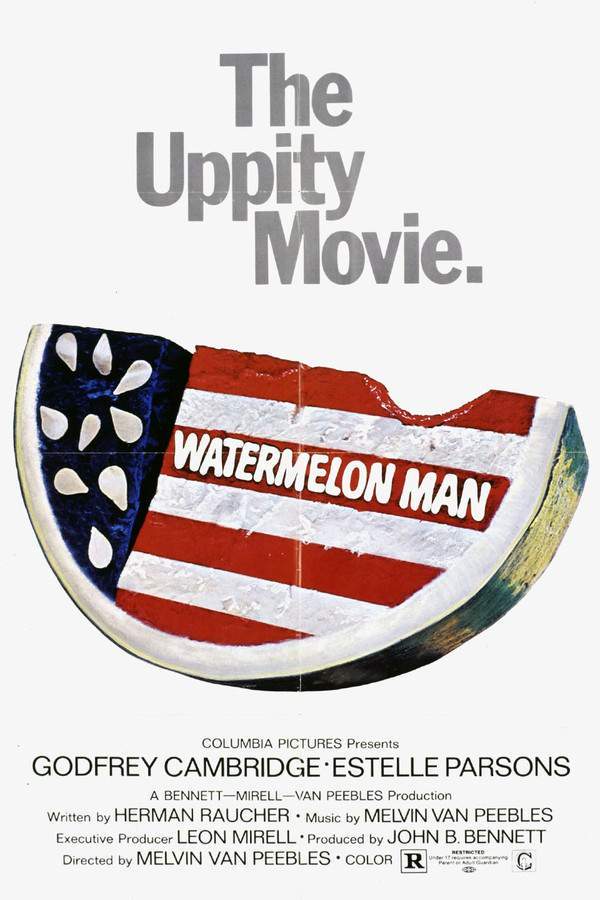
Watermelon Man

Watermelon Man

Year: 1970

Runtime: 100 min

Language: English

Comedy

Jeff Gerber, an insurance salesman, experiences a startling physical transformation that changes his skin color. Suddenly facing prejudice and racial assumptions firsthand, he's forced to confront his own biases and the complexities of social injustice. As he adjusts to this unexpected reality, his personal life unravels, leading him on a journey of self-discovery and ultimately, the importance of understanding and acceptance.

Warning: spoilers below!

Haven’t seen Watermelon Man yet? This summary contains major spoilers. Bookmark the page, watch the movie, and come back for the full breakdown. If you're ready, scroll on and relive the story!

Watermelon Man (1970) – Full Plot Summary & Ending Explained

Read the complete plot breakdown of Watermelon Man (1970), including all key story events, major twists, and the ending explained in detail. Discover what really happened—and what it all means.

Jeff Gerber, affectionately known as Jeff, leads a stereotypical suburban life with his apparently open-minded wife, Althea. His daily routine is marked by a peculiar combination of self-care practices, including sessions at a tanning machine, punching the speedbag, and downing health drinks, all culminating in a spirited run to work, almost as if he is endeavoring to escape the drudgery of his mundane existence. Despite putting on a cheerful face, many find Jeff’s personality grating, a characteristic that only seems to heighten Althea’s patience with her husband’s quirks.

As Althea tunes into the evening news, she becomes engrossed in the deepening racial tensions portrayed, gently admonishing Jeff for what she perceives as his lack of empathy. Unbeknownst to her, Jeff is about to embark on a surreal odyssey that will force him to reevaluate his very identity.

One pivotal morning, Jeff wakes up to a shocking transformation; his skin color has drastically changed. At first, he tries to dismiss it as a bizarre dream or a misfunctioning tanning machine. However, as the day progresses and his efforts to scrub away the newly acquired darkness prove unsuccessful, Jeff must confront the grim reality of his altered appearance.

Initially, Althea is taken aback, reacting with screams of disbelief as she sees “the Negro” standing in front of her. Throughout the day, Jeff retreats into isolation, terrified to face the outside world with his altered visage. In a desperate bid to revert to his original look, he ventures into the “colored part of town,” seeking out potions or elixirs that can restore his skin tone.

Come morning, Jeff’s dread transforms into a reluctant acceptance as he heads back to work. The day begins smoothly, but it isn’t long before he finds himself unjustly accused of robbery while sprinting alongside the bus, underscoring the harsh judgments often based solely on appearance. The treatment he receives from a police officer serves as a stark reminder of the systemic biases prevalent in society.

As Jeff navigates his new workplace dynamic, he encounters varying reactions—his boss’s suggestion to leverage his “Negro” charm contrasts starkly with an office secretary’s unexpected advances, as if his newfound appearance has suddenly enhanced his appeal. Amidst this chaos, Jeff starts to grasp the profound implications of his bizarre transformation—it serves as a wake-up call to the stark realities of racial discrimination and bias, challenging his previously held beliefs about himself and society.

As the sun sets, casting a warm glow across his domestic life, Jeff is unexpectedly drawn into a confrontation with the anonymous individuals behind the threatening phone calls he had previously received. It turns out that these seemingly unremarkable neighbors harbor ulterior motives; they aim to buy his property for a mere $50,000, motivated by their fears of declining property values. Determined to stand his ground, Jeff seizes the moment and elevates the negotiation to an impressive $100,000.

Simultaneously, the atmosphere within his household is shifting dramatically as Althea’s growing disenchantment with their life compels her to decide to send their children to live with her sister. As tensions flare, Althea ultimately opts to leave her husband, signaling a profound transformation in both Jeff’s personal and professional realms.

Throughout a series of poignant introspective moments, Jeff grapples with his identity, leading to a significant epiphany as he starts to accept the reality of being Black. This newfound self-awareness initiates a ripple effect of transformation in his life, prompting him to resign from his conventional job and venture into entrepreneurial opportunities, including the acquisition of an apartment building and the launch of his own insurance company.

As the narrative gracefully draws to a close, we find Jeff practicing martial arts alongside a group of everyday Black workers—a powerful testament to his personal growth, self-acceptance, and newly discovered sense of purpose.
Last Updated: November 17, 2024 at 22:07

Mobile App Preview

Coming soon on iOS and Android

The Plot Explained Mobile App

From blockbusters to hidden gems — dive into movie stories anytime, anywhere. Save your favorites, discover plots faster, and never miss a twist again.

Sign up to be the first to know when we launch. Your email stays private — always.

Explore Movie Threads

Discover curated groups of movies connected by mood, themes, and story style. Browse collections built around emotion, atmosphere, and narrative focus to easily find films that match what you feel like watching right now.

Satirical Transformation Movies like Watermelon Man

Surreal transformations that force characters to confront society's injustices.Find movies like Watermelon Man that use surreal body-swap or identity-shift premises for social commentary. These similar satirical stories explore themes of prejudice and self-discovery through a comedic yet thought-provoking lens, perfect if you enjoyed the uncomfortable humor of Watermelon Man.

satiricaluncomfortabletransformativethought-provokingconfrontingabsurd

Narrative Summary

These narratives typically begin with a self-satisfied protagonist whose worldview is shattered by a sudden, involuntary transformation. The story follows their journey through a society that now treats them differently, exposing hidden prejudices and forcing them to challenge their own beliefs, often culminating in a new, more empathetic understanding.

Why These Movies?

Movies are grouped here for their shared use of a high-concept, allegorical premise to deliver social satire. They blend dark comedy with serious themes, creating an experience that is both humorous and deeply confronting, using a character's forced perspective shift to explore complex societal issues.

Movies that Build Empathy Through Discomfort like Watermelon Man

Stories that use discomfort as a catalyst for personal growth and understanding.Discover films similar to Watermelon Man that use uncomfortable and anxious narratives to foster empathy and understanding. If you liked how Watermelon Man forces its protagonist to confront bias, you'll find more thought-provoking stories here about personal transformation through difficult experiences.

anxiousconfrontingthought-provokinguncomfortablehopefulempathetictransformative

Narrative Summary

The narrative pattern involves a character being thrust into a situation that directly contradicts their privileged or ignorant worldview. The plot is driven by their series of awkward, tense, or hostile encounters, which chip away at their former self, leading to a crisis and eventual acceptance of a more complex reality.

Why These Movies?

These films are connected by their core goal of using narrative discomfort as a vehicle for empathy. They share a medium emotional weight and a steady pacing that allows the unease to simmer, resulting in a viewing experience that is intentionally challenging but ultimately hopeful or enlightening.

Unlock the Full Story of Watermelon Man

Don't stop at just watching — explore Watermelon Man in full detail. From the complete plot summary and scene-by-scene timeline to character breakdowns, thematic analysis, and a deep dive into the ending — every page helps you truly understand what Watermelon Man is all about. Plus, discover what's next after the movie.

Watermelon Man Timeline

Track the full timeline of Watermelon Man with every major event arranged chronologically. Perfect for decoding non-linear storytelling, flashbacks, or parallel narratives with a clear scene-by-scene breakdown.

Watermelon Man Timeline

Characters, Settings & Themes in Watermelon Man

Discover the characters, locations, and core themes that shape Watermelon Man. Get insights into symbolic elements, setting significance, and deeper narrative meaning — ideal for thematic analysis and movie breakdowns.

Characters, Settings & Themes in Watermelon Man

Watermelon Man Spoiler-Free Summary

Get a quick, spoiler-free overview of Watermelon Man that covers the main plot points and key details without revealing any major twists or spoilers. Perfect for those who want to know what to expect before diving in.

Watermelon Man Spoiler-Free Summary

More About Watermelon Man

Visit What's After the Movie to explore more about Watermelon Man: box office results, cast and crew info, production details, post-credit scenes, and external links — all in one place for movie fans and researchers.

More About Watermelon Man

Similar Movies to Watermelon Man

Discover movies like Watermelon Man that share similar genres, themes, and storytelling elements. Whether you’re drawn to the atmosphere, character arcs, or plot structure, these curated recommendations will help you explore more films you’ll love.