Plot Explained Spoilers guaranteed!
Plot Explained

Browse by genre

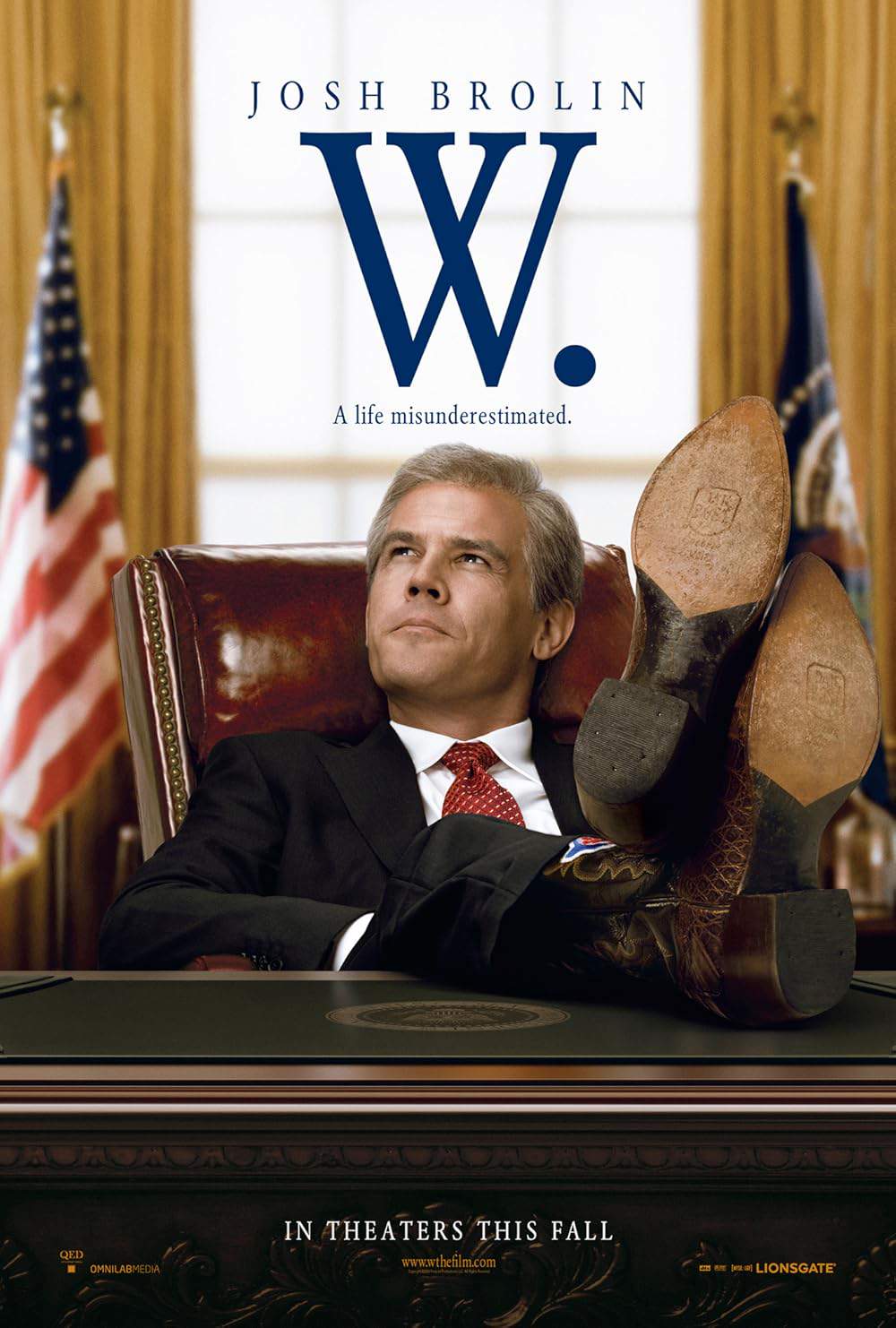
W. (2008) movie poster

Spoiler-Free Summary

W. (2008) Spoiler-Free Summary – What It's About

Release, runtime and language
2008 · 129 min · English
Loading streaming availability…
Directed by
Oliver Stone
Starring
Josh Brolin
Budget
$25.1M

This unflinching portrait explores the life of George W. Bush, from his early struggles and finding faith to the defining moments of his presidency. The film delves into his personal journey and examines the complex decisions that shaped his time in office, including the controversial decision to invade Iraq. It offers a nuanced perspective on a highly debated figure and the impact he had on the world.

On this page (6)
  1. 1 Where to watch
  2. 2 What it is about
  3. 3 Is it worth watching?
  4. 4 After you watch
  5. 5 Movie threads
  6. 6 Every angle
Loading streaming availability…

Spoiler-free summary · safe to read

What Is W. About? (No Spoilers)

The plot of W. (2008) without spoilers: what it is about, who it follows and where it takes place, told without the twists or the ending. Enough to decide whether it is your next watch, not enough to ruin it.

In a sweeping biographical portrait, W. examines the life of one of the most debated figures in modern American history, George W. Bush, tracing his journey from privileged roots to the highest office in the land. The film approaches its subject with an unflinching yet nuanced gaze, refusing easy judgments while digging into the formative experiences that shaped a man long before the world came to know his name. Set against the backdrop of a changing America, the story moves through decades of personal reinvention, ambition, and political awakening.

The narrative weaves between intimate moments of self-discovery and the larger currents of family legacy, faith, and public expectation. Bush is portrayed not as a caricature but as a complex figure navigating the pressure of a famous surname while seeking his own identity. His relationships with his father, his wife Laura, and the political mentors who believed in his potential form the emotional scaffolding of the story, hinting at the personal stakes behind every public decision.

As the film progresses into his time in office, it confronts the weighty responsibilities and moral ambiguities of leadership during turbulent times. The tone remains thoughtful and provocative, inviting viewers to consider how a man of modest political beginnings came to shape history in ways that continue to spark debate. The world of Washington politics, with its advisors, strategists, and entrenched powers, emerges as a force both alluring and daunting.

Ultimately, W. offers less a verdict than an invitation to look closer, painting a portrait of ambition, faith, and consequence. The film lingers on the gap between private conviction and public consequence, leaving the audience to wrestle with questions of legacy, identity, and the unpredictable paths that lead ordinary individuals into extraordinary circumstances.

Last updated: September 28, 2026 at 10:54

Was this helpful?

What to expect

Is W. Worth Watching? What It Feels Like

Is it dark, sad, slow, intense or confusing? The mood of W. (2008) in a few tags, without a word about how it ends. Each tag opens a list of movies that feel the same.

After you watch

Seen W.? Now Read the Spoilers

Once you have watched W. (2008), come back for the full story: the plot summary with spoilers, the timeline in chronological order, the characters and meaning.

Movie threads

More Movies Like W., by Mood & Story

Curated lists built around what makes W. tick: the same mood, the same kind of story or the same emotional payoff. Each list explains why these movies belong together.

Movies like W.: Father-son legacy dramas about inherited burden

Stories where sons must reckon with a powerful father's shadow and rewrite or ruin the family name. If you liked W., explore movies like this cerebral character study of inherited expectation. These films trace protagonists wrestling with powerful fathers, family dynasties, and the cost of carrying a famous name, blending intimate psychology with historical weight and bittersweet, ambiguous conclusions.

  • contemplative
  • bittersweet
  • father-son
  • legacy
  • introspective
  • ambiguous ending
  • Tone: bittersweet, contemplative
  • Pacing: steady, reflective
Why these movies?

The story pattern: Stories in this thread typically open with the protagonist already shaped by a formidable father figure or institutional heritage, then follow a chronological arc through formative struggles, rise to power, and a defining crisis. Personal transformation, faith, or disillusionment often intersect with public consequence. Climaxes tend to surface the unspoken verdict of the father, real or symbolic, leaving the protagonist's legacy unresolved and morally ambiguous rather than triumphant.

Why they belong together: These films cluster around shared narrative DNA: a dominant paternal or institutional inheritance, a protagonist whose identity is forged in tension with that legacy, and a meditative pacing that lets private moments share screen time with world-shaping decisions. The mood is bittersweet and contemplative, the emotional register heavy, and the endings deliberately open ended, inviting reflection on competence, character, and the meaning of a name.


Movies like W.: Cerebral political biographies of controversial leaders

Slow, thoughtful biographies of controversial leaders where psychology meets history. If you liked W., try these movies like that sober, reflective political biography. Expect cerebral dramas about powerful wartime or presidential figures, blending personal psychology with the weight of consequential decisions, somber tones, steady pacing, and ambiguous endings that resist easy answers.

  • political
  • cerebral
  • somber
  • biographical
  • contemplative
  • serious
  • Tone: somber, bittersweet, cerebral
  • Pacing: steady, measured
Why these movies?

The story pattern: Films in this thread usually unfold chronologically across decades of a leader's life, weaving formative years, spiritual or ideological awakening, political ascent, and crisis into a single meditative arc. Pacing stays measured so private scenes and press conference style set pieces share equal gravity. Wars, scandals, or institutional breakdowns provide the structural climax, and the conclusion tends to loop back to haunting imagery that questions competence, conviction, and legacy.

Why they belong together: These films share a commitment to treating polarizing figures as fully realized humans rather than caricatures. They pair steady, dialogue heavy pacing with complex thematic layering, heavy emotional weight, and a bittersweet or somber tone. War, faith, family, and political accountability recur as recurring themes, while ambiguous, unresolved endings give the audience space to weigh judgment themselves.

Every angle

W. (2008) Explained: Plot, Timeline & Characters

Everything about W. in one place: what happens in the plot summary, the timeline in chronological order, the characters and meaning and a spoiler-free summary. What's After the Movie adds the cast, box office and post-credit scenes.

Coming soon on iOS and Android

The Plot Explained Movie Summary App

Plot summaries, endings explained and timelines on your phone. Catch up on any movie in minutes, save your favorites and never miss a twist again.

Be the first to know when we launch. Your email stays private, always.

Learn more about the app