Plot Explained Spoilers guaranteed!
Plot Explained

Browse by genre

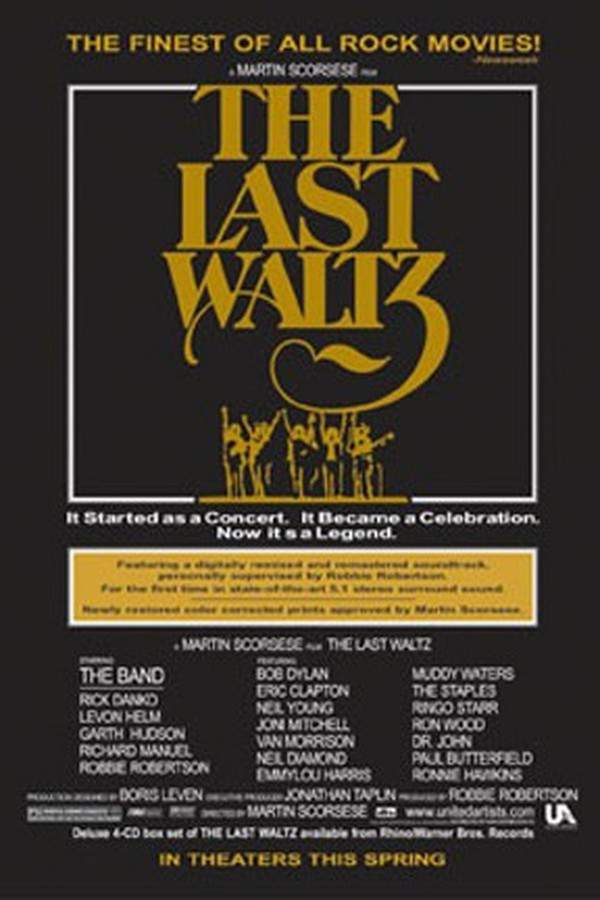
The Last Waltz (1978) movie poster

Plot Summary

The Last Waltz (1978) Plot Summary Explained

Release, runtime and language
1978 · 117 min · English
Loading streaming availability…
Directed by
Martin Scorsese
Starring
Robbie Robertson, Bob Dylan, Emmylou Harris, Eric Clapton, Joni Mitchell, Neil Diamond

In 1976, The Band gave a memorable farewell concert at San Francisco’s Winterland Ballroom, marking the end of an era. This poignant event, documented in a concert film, features a star-studded lineup of legendary artists joining them on stage. Bob Dylan, Van Morrison, Eric Clapton, Joni Mitchell, and Muddy Waters all deliver unforgettable performances, paying tribute to The Band and celebrating their influential career.

On this page (6)
  1. 1 Where to watch
  2. 2 What happens: full plot
  3. 3 Plot questions answered
  4. 4 Movie threads
  5. 5 Movies like The Last Waltz
  6. 6 Every angle
Loading streaming availability…

Full plot summary · contains spoilers

What Happens in The Last Waltz: Full Plot Summary

The whole story of The Last Waltz (1978) explained, from the opening scene to the final frame: every key event, every twist and what it all adds up to. Read it as a quick recap before the sequel, to check a scene you missed, or to finally understand what really happened.

Beginning with a striking title card proclaiming, "This film should be played loud!", this concert documentary delves into the influential career of the Band. The ensemble features the talents of Robbie Robertson on guitar and vocals, alongside Rick Danko playing bass, violin, and sharing vocals, Levon Helm handling drums, mandolin, and vocals, Richard Manuel contributing as a songwriter with keyboards, drums, and vocals, and Garth Hudson showcasing his skills on keyboards, saxophone, and accordion.

Throughout the film, a variety of notable artists join the Band, including the legendary Muddy Waters, Paul Butterfield, Neil Young, Joni Mitchell, Van Morrison, Dr. John, Neil Diamond, and Eric Clapton. The concert traverses multiple genres, celebrating blues, rock and roll, New Orleans R&B, Tin Pan Alley pop, folk, and rock. Additional genres are showcased in segments filmed later with the celebrated Emmylou Harris representing country music, along with the Staple Singers embodying soul and gospel.

The film opens with the Band delivering a powerful performance of their cover of Marvin Gaye's "Don't Do It" as an encore, immediately drawing viewers into the eclectic energy of the concert. It then transitions to the beginning of the show, presenting the Band’s journey in a mostly chronological fashion. Accompanied by a vibrant horn section, they deliver a medley of fan favorites, including "Up on Cripple Creek," "Stage Fright," and "The Night They Drove Old Dixie Down."

Interspersed within the live performances are studio segments and reflective interviews conducted by director Martin Scorsese. Here, the Band members share their past experiences and anecdotes about their musical journey. Robbie Robertson shares a humorous story of how Hudson joined the group with the quirky condition that each member pay him $10 a week for music lessons, allowing Hudson to explain to his family that he was a music teacher rather than a mere rock musician. Moreover, Robertson reminisces about the bizarre occasions of performing in a burned-out nightclub owned by the infamous Jack Ruby.

Throughout the retrospective dialogues, Manuel humorously reflects on some of the early names considered for the Band, such as "The Honkies" and "The Crackers." They ultimately settled on simply "the band," a name adopted from their association with Bob Dylan and their friends in Woodstock, New York.

Danko gives a glimpse of the Band's Shangri-La studio as he shows Martin Scorsese around, showcasing a recording session of "Sip the Wine," a track from his upcoming solo album.

A poignant thread runs through the interviews, especially with Robbie Robertson, who underscores that this concert symbolizes a significant conclusion in the Band's journey. After a whirlwind 16 years of touring, he expresses, "That's what The Last Waltz is - 16 years on the road. The numbers start to scare you." He further reflects, "I mean, I couldn't live with 20 years on the road. I don't think I could even discuss it."
Last updated: November 16, 2024 at 18:13

Was this helpful?

Plot questions answered

The Last Waltz Plot Explained: Your Questions Answered

The questions people ask most about The Last Waltz (1978): what happens in the confusing scenes, why the characters do what they do, the twists, hidden details and what the ending means. Each answer contains spoilers.

Q1

Why was The Last Waltz The Band's final concert?

The Last Waltz was intentionally organized as The Band's farewell performance after 16 years of constant touring. Robbie Robertson explicitly stated that the concert represented the end of their journey, noting that the touring numbers were becoming frightening and expressing he couldn't imagine surviving 20 years on the road. The concert served as a deliberate conclusion to their career rather than an accidental final show.

Foreshadowing: Earlier in the film, Robertson reflects on the cumulative toll of touring, establishing the emotional context for why this concert was designed as their finale.

  • farewell concert
  • final show
  • band breakup
  • robbie robertson
  • 16 years touring
Q2

Why did The Band decide to end their career?

The Band chose to end their career primarily due to exhaustion from relentless touring. Robertson candidly explained that after 16 years on the road, the numbers began to scare him and he couldn't fathom continuing for another decade. The decision was framed as a natural conclusion to a lengthy chapter rather than a dramatic breakup.

  • band breakup
  • end of career
  • road touring
  • exhaustion
  • farewell
Q3

Why did Robbie Robertson say the touring numbers scared him?

Robertson made this comment in reflection on the cumulative toll of 16 years of continuous touring. The numbers represented the extensive time spent away from home and the physical and emotional strain of maintaining a touring schedule. His statement underscored the bittersweet nature of the farewell, while celebrating their achievements, he acknowledged that the lifestyle had become unsustainable.

  • robbie robertson
  • 16 years
  • touring strain
  • reflection
  • exhaustion
Q4

How did Garth Hudson join The Band?

Garth Hudson joined The Band under unusual circumstances, Robbie Robertson humorously recounted that Hudson required each member to pay him $10 per week for music lessons. This arrangement allowed Hudson to tell his family that he was working as a music teacher rather than pursuing rock music, which satisfied his family's expectations while enabling him to join the group.

  • garth hudson
  • joining band
  • music lessons
  • origin story
  • members
Q5

Why did Martin Scorsese direct The Last Waltz?

Martin Scorsese directed The Last Waltz as a natural fit given his background in music and his relationship with The Band. The documentary features interviews conducted by Scorsese himself, where he engages with the members about their career. His involvement brought cinematic prestige to what could have been a straightforward concert recording, elevating it into a reflective documentary about musical legacy.

  • martin scorsese
  • director
  • documentary
  • film making
  • interviews
Q6

What does the title The Last Waltz mean?

The title The Last Waltz symbolically represents the band's final performance, with a waltz serving as a metaphor for their last dance together. The bittersweet tone of the entire concert, celebrating a remarkable career while simultaneously marking its end, embodies the meaning behind the title. It acknowledges both the celebration and the conclusion of an era.

  • title meaning
  • symbolism
  • farewell
  • waltz metaphor
  • bittersweet ending
Q7

Why did so many legendary artists perform at The Last Waltz?

The concert featured numerous guest artists as a tribute to The Band's influence and connections throughout their career. Artists like Muddy Waters, Neil Young, Joni Mitchell, Van Morrison, Eric Clapton, and others performed, celebrating the diverse musical legacy The Band had built over 16 years. The star-studded lineup represented the breadth of their collaborations and the respect they commanded in the music industry.

  • guest artists
  • performers
  • tribute
  • collaboration
  • legendary musicians
Q8

Why was The Band called 'The Band'?

The Band adopted their simple name from their association with Bob Dylan and their circle of friends in Woodstock, New York. Richard Manuel reflected that they had considered other names early in their career, including 'The Honkies' and 'The Crackers,' but ultimately chose the straightforward 'The Band' as a clean, universal identifier that reflected their role as musicians rather than trying to craft a distinctive brand.

  • band name origin
  • origin
  • naming
  • woodstock
  • bob dylan
Q9

Why did The Band perform at Winterland Ballroom?

The Band performed their farewell concert at San Francisco's Winterland Ballroom in 1976, a venue that held significance in their history. The film documents this specific location as the setting for what would become a legendary farewell, with Winterland serving as the backdrop for both the concert's energy and the emotional weight of their final performance.

  • winterland
  • san francisco
  • venue
  • concert location
  • farewell show
Q10

Why does the film open with 'Don't Do It' as an encore?

The film opens with The Band performing Marvin Gaye's 'Don't Do It' as an encore, immediately drawing viewers into the eclectic energy of the concert. This choice serves as an engaging hook that showcases their musical versatility and sets the celebratory tone before the film then transitions to the actual beginning of the show in chronological order.

  • dont do it
  • marvin gaye
  • encore
  • opening
  • concert performance
Q11

What was the significance of the Shangri-La studio scene?

The Shangri-La studio sequence provides an intimate behind-the-scenes look at The Band's creative process. Rick Danko shows Martin Scorsese around while recording 'Sip the Wine' from his upcoming solo album. This segment demonstrates that The Band's legacy continued through individual projects even as they prepared for their collective farewell, showing the ongoing creative life of the members beyond the group.

  • shangri la studio
  • recording session
  • rick danko
  • sip the wine
  • behind scenes

Movie threads

More Movies Like The Last Waltz, by Mood & Story

Curated lists built around what makes The Last Waltz tick: the same mood, the same kind of story or the same emotional payoff. Each list explains why these movies belong together.

Bittersweet farewell movies like The Last Waltz

Stories that celebrate an era or a journey, tinged with the melancholy of its ending. Find more films like The Last Waltz that explore the emotional landscape of endings and finales. These movies capture the bittersweet mix of celebration and nostalgia, marking the conclusion of an era, a career, or a journey. If you appreciated the reflective yet joyous tone of this concert film, you'll discover similar stories here.

  • bittersweet
  • nostalgic
  • wistful
  • celebratory
  • reflective
  • sentimental
  • Tone: bittersweet, reflective, nostalgic
  • Pacing: steady, contemplative
Why these movies?

The story pattern: The narrative pattern often revolves around a significant endpoint, using retrospective elements like interviews, flashbacks, or shared memories to give weight to the present-day conclusion. The journey is less about achieving a new goal and more about honoring and making peace with a completed one, leading to an emotionally resonant and reflective conclusion.

Why they belong together: Movies are grouped here based on their dominant bittersweet tone and their thematic focus on closure, legacy, and transition. They share a reflective pacing that allows for contemplation and a medium emotional weight derived from meaningful life changes rather than overt tragedy.

Movies about music and collaboration like The Last Waltz

Films that go behind the scenes to explore the creation and community of art. Discover movies similar to The Last Waltz that delve into the world of artistic collaboration and musical legacy. These films, from documentaries to dramas, showcase the creative process, the dynamics of bands, and the powerful connections formed through shared artistry. Perfect for viewers who loved the star-studded jam sessions and reflective artist interviews.

  • energetic
  • celebratory
  • introspective
  • collaborative
  • creative
  • insightful
  • Tone: celebratory, introspective, energetic
  • Pacing: steady, punctuated by energetic peaks
Why these movies?

The story pattern: The narrative is frequently structured around a key creative endeavor—a concert, an album, a tour—that serves as a focal point for exploring relationships and artistic growth. The journey highlights the interplay between individual talent and collective synergy, often weaving together performance, personal anecdotes, and the logistical or emotional challenges of creating art together.

Why they belong together: These films are united by their focus on the topic of artistic collaboration and the creative process. They often share an energetic yet steady pacing, moving between the thrill of performance and more grounded moments of discussion or reflection. The mood is a compelling mix of celebratory and introspective.

If you liked this

Movies Like The Last Waltz

Similar movies to The Last Waltz: the same genre, themes or kind of story. Each one comes with its own plot summary, timeline and ending explained.

Browse all movie summaries

Every angle

The Last Waltz (1978) Explained: Plot, Timeline & Characters

Everything about The Last Waltz in one place: what happens in the plot summary, the timeline in chronological order, the characters and meaning and a spoiler-free summary. What's After the Movie adds the cast, box office and post-credit scenes.

Coming soon on iOS and Android

The Plot Explained Movie Summary App

Plot summaries, endings explained and timelines on your phone. Catch up on any movie in minutes, save your favorites and never miss a twist again.

Be the first to know when we launch. Your email stays private, always.

Learn more about the app