Plot Explained Spoilers guaranteed!
Plot Explained

Browse by genre

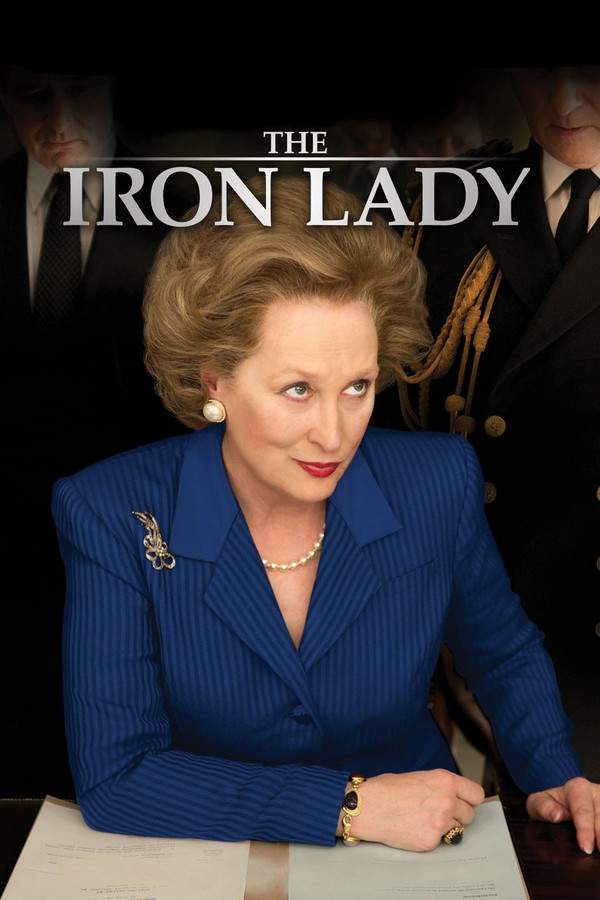
The Iron Lady (2011) movie poster

Plot Summary

The Iron Lady (2011) Plot Summary Explained

Release, runtime and language
2011 · 105 min · English
Loading streaming availability…
Directed by
Phyllida Lloyd

The film explores the later years of Margaret Thatcher's life, reflecting on her extraordinary journey from a childhood in Grantham to becoming Britain's first female Prime Minister. It examines the defining moments of her 11 years in power, highlighting her unwavering resolve as she steered the nation through significant political and social changes, leaving a lasting impact on British history.

On this page (6)
  1. 1 Where to watch
  2. 2 What happens: full plot
  3. 3 Plot questions answered
  4. 4 Movie threads
  5. 5 Movies like The Iron Lady
  6. 6 Every angle
Loading streaming availability…

Full plot summary · contains spoilers

What Happens in The Iron Lady: Full Plot Summary

The whole story of The Iron Lady (2011) explained, from the opening scene to the final frame: every key event, every twist and what it all adds up to. Read it as a quick recap before the sequel, to check a scene you missed, or to finally understand what really happened.

The narrative unfolds with Thatcher grappling with dementia in the present, where she perceives her late husband, Denis Thatcher, as a ghostly figure at her side. Through a series of poignant flashbacks, we are introduced to a young Margaret Roberts, who works diligently at her family's grocery store in Grantham. As she listens to her father's political speeches—of which she is deeply enamored—it becomes apparent that her relationship with her mother, a typical housewife, was fraught with tension.

We discover her academic ambitions as she secures a spot at Somerville College, Oxford University, showcasing her passion for politics over her initial interest in chemistry. Rising from her humble lower-middle-class background, she faces the challenges head-on in a conservative political arena dominated by men. Enigmatic businessman Denis Thatcher, enamored by her articulate nature, proposes to her; she accepts his proposal, making it clear that she refuses to be just an ornamental partner or a traditional homemaker, famously stating, > "I don't want to die cleaning a teacup."

Her journey continues as we witness her struggles to fit into the role of a "Lady Member" in the House and her tenure as Education Secretary within Edward Heath's Cabinet. The film explores her camaraderie with Airey Neave, her bold decision to contest for the leadership of the Conservative Party, and her ultimate triumph, underscoring the efforts she undertakes for image coaching and voice training.

The flashbacks delve into significant historical milestones during her time as Prime Minister after clinching victory in the 1979 General Election. We see the repercussions of her monetarist policies manifesting in rising unemployment, her controversial budget in 1981, and the civil unrest marked by the Brixton riot and the 1984-1985 UK miners' strike. One harrowing event is the bombing of the Grand Hotel in Brighton during the 1984 Conservative Party Conference, where both she and Denis narrowly escape death. Non-chronologically, we also witness her decisive actions during the Falklands War following the occupation by Argentina in 1982, her alliance with U.S. President Ronald Reagan, and the economic upswing of the late 1980s.

As years progress to 1990, the once formidable Thatcher now appears as an aging leader, defiantly clashing with her cabinet and refusing to acknowledge the discontent over the "Poll Tax," which incites riots. The resignation of her deputy, Geoffrey Howe, after being publicly humiliated, leads to Michael Heseltine challenging her leadership. Ultimately, she finds her support dwindling among cabinet members, prompting her resignation after eleven years as Prime Minister. In a heartfelt moment, she bids farewell to 10 Downing Street, her eyes brimming with tears as Denis offers his consolation.

As the story draws to a close, Thatcher is confronted with her grief while packing away her late husband's belongings. Tearfully, she tells Denis it's time for him to leave her, to which he responds, > "You're going to be fine on your own... you always have been." Their separation brings the story full circle as she finds solace in her solitude, contentedly washing a teacup in her kitchen, symbolically embracing her new chapter in life.
Last updated: November 08, 2024 at 03:29

Was this helpful?

Plot questions answered

The Iron Lady Plot Explained: Your Questions Answered

The questions people ask most about The Iron Lady (2011): what happens in the confusing scenes, why the characters do what they do, the twists, hidden details and what the ending means. Each answer contains spoilers.

Q1

Why does Margaret Thatcher see her dead husband Denis in the film?

The film depicts Thatcher in her later years suffering from dementia, where she hallucinates her late husband Denis as a ghostly presence. This is a metaphorical device showing her struggle with memory loss and grief after his death, representing her inability to let go of the past while also highlighting her emotional isolation in the present.

Foreshadowing: Early scenes show her perceiving Denis beside her, establishing the dementia framing that runs throughout the narrative.

  • dementia
  • memory loss
  • grief
  • hallucination
  • Denis Thatcher
Q2

What does the teacup symbolize at the end of the film?

The teacup is a powerful symbol connecting her past and present. Earlier in the film, young Margaret tells Denis she refuses to 'die cleaning a teacup' as a traditional housewife. In the final scene, she willingly washes a teacup herself, symbolizing her acceptance of solitude and independence, transforming what was once a rejection of domesticity into a peaceful conclusion to her life.

Foreshadowing: This directly echoes her famous quote to Denis about not wanting to die cleaning a teacup.

  • symbolism
  • teacup
  • independence
  • acceptance
  • solitude
Q3

Why was Margaret Thatcher forced to resign as Prime Minister?

Thatcher resigned in 1990 after her deputy Geoffrey Howe publicly resigned and humiliated her by making a critical speech. Michael Heseltine then challenged her for the leadership. Facing dwindling support among cabinet members who believed she had become a political liability, especially due to the unpopular Poll Tax, she chose to step down after eleven years in power.

Foreshadowing: Her refusal to abandon the Poll Tax despite widespread riots earlier signaled her political vulnerability.

  • resignation
  • Michael Heseltine
  • Geoffrey Howe
  • Poll Tax
  • cabinet
Q4

Why did Thatcher decide to go to war over the Falkland Islands?

When Argentina occupied the Falkland Islands in 1982, Thatcher faced a direct challenge to British sovereignty. She ordered a military task force to retake the islands, viewing it as a matter of national pride and demonstrating that Britain would not be bullied. The successful military campaign significantly boosted her popularity and strengthened her political standing.

Foreshadowing: Her decisive nature and willingness to confront opposition were established earlier in her political career.

  • Falklands War
  • Argentina
  • military
  • 1982
  • sovereignty
Q5

What happened at the Brighton hotel bombing?

In 1984, during the Conservative Party Conference in Brighton, the Grand Hotel was bombed by the IRA in an assassination attempt on Thatcher. Both she and Denis narrowly escaped death. The attack demonstrated the grave threats she faced as a leader and strengthened her resolve, though she continued with her speech the same night.

Foreshadowing: The film establishes earlier the dangers she faced as a female leader in a volatile political climate.

  • IRA
  • bombing
  • Brighton
  • assassination attempt
  • 1984
Q6

What was the Poll Tax and why did it cause riots?

The Poll Tax (Community Charge) was a controversial flat-rate tax introduced in 1989 where everyone paid the same amount regardless of income. It proved extremely unpopular and sparked widespread riots in 1990, particularly because it was seen as unfair to lower-income citizens. Thatcher's stubborn refusal to abandon the policy contributed significantly to her declining support.

Foreshadowing: Her history of坚持ing unpopular policies despite opposition is established in earlier scenes about her monetarist approaches.

  • Poll Tax
  • Community Charge
  • riots
  • 1990
  • unpopular policy
Q7

What made Thatcher's 1979 election victory historic?

Thatcher's 1979 General Election victory made her Britain's first female Prime Minister, a groundbreaking achievement in British politics. She led the Conservative Party to victory against the incumbent Labour government, promising to reverse economic decline, reduce state intervention, and restore British prestige. Her victory marked a fundamental shift in British politics toward monetarist policies and conservative governance.

Foreshadowing: The film shows her preparation for leadership through image coaching and voice training, emphasizing the effort required to reach this position.

  • 1979 election
  • first female Prime Minister
  • Conservative Party
  • historic victory
Q8

Why did Denis Thatcher propose to Margaret and what did she say?

Denis Thatcher, an enigmatic businessman, was captivated by Margaret's intelligence, ambition, and articulate nature. He proposed marriage, and she accepted on one explicit condition: she would not become an ornamental wife or traditional homemaker. She famously declared, 'I don't want to die cleaning a teacup,' establishing her determination to pursue a career and identity separate from domestic duties.

Foreshadowing: This moment establishes the power dynamic in their marriage that persists throughout the film.

  • Denis Thatcher
  • marriage proposal
  • independence
  • teacup quote
Q9

Why did unemployment rise significantly under Thatcher's policies?

Thatcher's monetarist policies, designed to control inflation by restricting money supply and reducing government spending, led to significant economic disruption. Her 1981 budget implemented severe cuts despite recession conditions, contributing to soaring unemployment. The film depicts the resulting social unrest, including the Brixton riot, as consequences of these tight fiscal policies.

Foreshadowing: The tension between her economic ideology and its human cost is established early in her government.

  • unemployment
  • monetarist policies
  • Brixton riot
  • 1981 budget
  • recession
Q10

What was Thatcher's relationship with President Reagan?

Thatcher formed a strong political alliance with U.S. President Ronald Reagan based on shared conservative values, anti-communist ideology, and similar economic philosophies. Their partnership during the Cold War era was significant, with both leaders supporting each other's policies and reinforcing a transatlantic conservative vision. The film depicts their camaraderie as a key element of her international influence.

Foreshadowing: Her anti-communist stance is established earlier through her political mentors and ideological foundations.

  • Ronald Reagan
  • alliance
  • Cold War
  • conservative
  • US-UK relations
Q11

What happened to Airey Neave and why was it significant?

Airey Neave was a close political ally and mentor to Thatcher who was assassinated by the IRA in 1979, shortly before she became Prime Minister. The film references his death as a pivotal loss, showing the personal dangers associated with her political rise. Neave had been a key supporter in her early political career and his murder deeply affected her.

Foreshadowing: This tragic event foreshadows the Brighton hotel bombing and demonstrates the ongoing threats she faced.

  • Airey Neave
  • assassination
  • IRA
  • mentor
  • 1979

Movie threads

More Movies Like The Iron Lady, by Mood & Story

Curated lists built around what makes The Iron Lady tick: the same mood, the same kind of story or the same emotional payoff. Each list explains why these movies belong together.

Reflective Leader Biopics like The Iron Lady

Intimate, non-linear portraits of famous leaders confronting the costs of their legacy. Movies like The Iron Lady that delve into the personal lives of powerful historical figures. If you enjoyed the melancholic reflection on Margaret Thatcher's legacy, you'll find similar character-driven stories exploring the psychological cost of leadership and the bittersweet nature of looking back on a life of immense influence.

  • historical
  • reflective
  • solemn
  • lonely
  • fraught
  • resigned
  • Tone: melancholic, reflective
  • Pacing: variable, contemplative
Why these movies?

The story pattern: These stories typically unfold in a non-linear fashion, weaving together pivotal moments from a leader's career with a present-day framing device that provides perspective, often involving old age, illness, or contemplation. The central journey is one of introspection, weighing public achievements against private sacrifices and personal loneliness.

Why they belong together: Movies are grouped here for their shared focus on the inner life of a leader, their melancholic and reflective tone, their use of dual timelines, and their exploration of themes like legacy, memory, and the heavy emotional weight of consequential decision-making.

Movies about Memory and Aging like The Iron Lady

Quiet, poignant stories centered on characters grappling with dementia and loss. If you were moved by the depiction of Margaret Thatcher's dementia in The Iron Lady, this collection features similar films about aging and memory. These dramas focus on the internal world of characters facing cognitive decline, blending past and present to create a bittersweet and emotionally heavy viewing experience.

  • melancholic
  • lonely
  • solemn
  • reflective
  • resigned
  • poignant
  • Tone: melancholic, poignant
  • Pacing: variable, introspective
Why these movies?

The story pattern: The narrative pattern involves a present-day storyline marked by confusion and solitude, frequently interrupted by vivid, emotionally charged flashbacks. The plot is driven by internal conflict rather than external action, as the character struggles to reconcile their fragmented memories with their current diminished state, leading to a poignant and often bittersweet resolution.

Why they belong together: These films share a core focus on the theme of dementia, a melancholic and solemn mood, a variable pacing that shifts between quiet introspection and intense memories, and a heavy emotional weight derived from the profound loss of self and connection.

If you liked this

Movies Like The Iron Lady

Similar movies to The Iron Lady: the same genre, themes or kind of story. Each one comes with its own plot summary, timeline and ending explained.

Browse all movie summaries

Every angle

The Iron Lady (2011) Explained: Plot, Timeline & Characters

Everything about The Iron Lady in one place: what happens in the plot summary, the timeline in chronological order, the characters and meaning and a spoiler-free summary. What's After the Movie adds the cast, box office and post-credit scenes.

Coming soon on iOS and Android

The Plot Explained Movie Summary App

Plot summaries, endings explained and timelines on your phone. Catch up on any movie in minutes, save your favorites and never miss a twist again.

Be the first to know when we launch. Your email stays private, always.

Learn more about the app