The narrative centers on Kaspar Hauser (Bruno S.), who spent the first seventeen years confined to a cramped cellar, chained and alone with only a toy horse for company. His sole human interaction is a mysterious figure in a black overcoat and top hat who supplies his meals, emphasizing the extreme isolation that defines his early life.
Find where to stream, rent, or buy The Enigma of Kaspar Hauser (1974) in the US with current JustWatch availability, up-to-date pricing, and platform listings for subscription, rental, and digital purchase options.
Warning: spoilers below!
Haven’t seen The Enigma of Kaspar Hauser yet? This summary contains major spoilers. Bookmark the page, watch the movie, and come back for the full breakdown. If you're ready, scroll on and relive the story!
Trace every key event in The Enigma of Kaspar Hauser (1974) with our detailed, chronological timeline. Perfect for unpacking nonlinear stories, spotting hidden connections, and understanding how each scene builds toward the film’s climax. Whether you're revisiting or decoding for the first time, this timeline gives you the full picture.
Last updated: May 05, 2026 at 10:08
Find frequently asked questions about the The Enigma of Kaspar Hauser (1974) timeline, including chronological order, nonlinear jumps, cause-and-effect links, and scene sequence clarifications. This timeline FAQ helps explain when key events happen, how moments connect, and why the story unfolds in that specific order.
The film never reveals the identity or motivations of the mysterious man in the black overcoat who kept Kaspar imprisoned. Kaspar himself has no memory of any life before the cellar, suggesting he was placed there as an infant or young child. The question of who imprisoned him and why remains one of the central unsolved mysteries of his story, reflecting the film's exploration of human nature and the limits of rational explanation.
The opening scenes establish Kaspar's complete isolation, hinting that whoever confined him had a specific purpose in mind.
The mysterious man who kept Kaspar in captivity suddenly emerges in 1828 to free him, teaching him only a few basic phrases and how to walk before abandoning him in Nuremberg. The film offers no clear explanation for this timing or change of heart. Some scholars speculate the release may have been orchestrated to create a living experiment or public spectacle, but the true motivation remains ambiguous.
The man's return after years of absence suggests a deliberate plan tied to Kaspar's fate.
After being left in Nuremberg, Kaspar became an object of intense public curiosity due to his strange background and childlike behavior. Various opportunists recognized the commercial potential of his story and exhibited him as a living curiosity in a traveling circus. The spectacle reduced him to a freak show attraction, exploiting his innocence for public entertainment and profit.
Kaspar's complete lack of social knowledge made him vulnerable to exploitation from the moment he entered society.
Professor Georg Friedrich Daumer was a scholar who recognized Kaspar's potential for intellectual development despite his extreme isolation. Viewing him as a unique case study in human development, Daumer removed Kaspar from the circus and took him in with the goal of transforming him into a thinking, literate person. Daumer's motivations appeared mixed between genuine compassion and scientific curiosity about the boundaries of human learning.
Daumer's scholarly interests were established early, setting the stage for his mentorship.
Music emerged as the primary way Kaspar connected with beauty and emotion after a lifetime of sensory deprivation. Having experienced nothing but darkness and silence in his cellar, music represented an entirely new language of feeling that surpassed even words and philosophy in its impact on him. His intense response to music reflects how profoundly his years of isolation had affected his capacity to experience the world.
Early scenes emphasize Kaspar's complete sensory isolation, making his later passion for music a dramatic contrast.
The same mysterious man in the black overcoat who had originally kept Kaspar imprisoned was responsible for the violent attacks. After Kaspar began gaining public attention and education, this unknown figure returned to assault him twice: first striking him unconscious with a blow to the head, and later stabbing him in the chest. These attacks suggest the mysterious benefactor intended to either silence Kaspar or control his narrative in some way.
The mysterious man had complete control over Kaspar's life from the beginning, establishing his return as a persistent threat.
While recovering from his final attack, Kaspar described vivid visions of nomadic Berbers crossing the Sahara Desert. These dreamlike visions represent a longing for freedom and a world beyond the confinement that defined his entire existence. The imagery of desert wanderers contrasts sharply with his own life trapped in darkness, suggesting his subconscious mind was processing questions of identity and belonging that he could never articulate in waking life.
Kaspar's complete isolation meant he had no actual memories or knowledge of the world, making these imagined journeys significant.
After Kaspar's death, an autopsy revealed he had an enlarged liver and cerebellum. These physical abnormalities have been interpreted in various ways by historians and medical experts. The enlarged cerebellum suggested possible brain development abnormalities, while the enlarged liver could indicate metabolic or genetic conditions. The clinical nature of this examination reflects the film's ongoing curiosity about the biological limits of human experience.
The film's earlier focus on Kaspar's unique mental development makes the autopsy findings particularly significant.
Having never been exposed to conventional education or religious instruction, Kaspar approached philosophy and religion with complete intellectual freedom. This lack of conditioning allowed him to develop bold, unorthodox perspectives on logic and spirituality that surprised his mentors. His fresh perspective represented a mind completely untainted by traditional teachings, offering original but often unsettling viewpoints.
Daumer's education introduced Kaspar to formal thinking for the first time, but Kaspar's responses were unpredictable.
Kaspar attracted attention from academics, religious leaders, and nobility because he represented an unprecedented case of human development in complete isolation. Scholars wanted to study his intellectual progress, clergy sought to understand his spiritual state, and nobles were curious about the mysterious figure who had been 'discovered.' His case offered a rare opportunity to observe the fundamental questions of human nature and socialization.
The initial public curiosity was established early, but the elite attention came later as Kaspar's story spread.
When the mysterious man finally released Kaspar, he taught him only a handful of basic phrases and how to walk before abandoning him in Nuremberg. This minimal preparation suggests the man either wanted Kaspar to be barely functional enough to survive while remaining dependent and confused, or he had no genuine interest in Kaspar's successful integration into society. The deliberate incompleteness of Kaspar's education highlights the mysterious control his captor maintained.
The mysterious man's pattern of control began in the cellar and continued through the release.
Discover curated groups of movies connected by mood, themes, and story style. Browse collections built around emotion, atmosphere, and narrative focus to easily find films that match what you feel like watching right now.
Films that explore the depths of human loneliness and its psychological impact.Discover films that explore extreme solitude and its psychological effects, similar to The Enigma of Kaspar Hauser. These movies examine characters removed from society, offering thoughtful and often tragic perspectives on human nature and development.
These narratives typically follow characters who have been severed from normal human contact, either through captivity, circumstance, or choice. The story explores their psychological adaptation to isolation, their often-traumatic reintroduction to society, and the fundamental questions this raises about what it means to be human.
These films share a melancholic tone, slow pacing, and heavy emotional weight as they examine the deepest forms of human solitude. They create contemplative, often somber experiences that question the nature of consciousness, society, and identity through the lens of extreme isolation.

Thought-provoking films that question what fundamentally makes us human.Explore thought-provoking movies that examine what makes us human, similar to The Enigma of Kaspar Hauser. These films use unique narrative premises to question nature versus nurture, socialization, and the fundamentals of human consciousness and development.
These films typically present a 'human experiment' scenario where a character exists outside normal societal conditioning, allowing filmmakers to explore fundamental questions about human nature. The narrative follows this character's introduction to civilization, observing how they perceive, learn, and adapt while raising philosophical questions about innate humanity versus learned behavior.
These films share a contemplative pace, moderate complexity, and heavy emotional weight as they explore deep philosophical questions. They create intellectually stimulating experiences that balance clinical curiosity with emotional resonance, often leaving viewers with profound questions about society, knowledge, and human essence.
Don't stop at just watching - explore The Enigma of Kaspar Hauser in full detail. From the complete plot summary and scene-by-scene timeline to character breakdowns, thematic analysis, and a deep dive into the ending - every page helps you truly understand what The Enigma of Kaspar Hauser is all about. Plus, discover what's next after the movie.
Read a complete plot summary of The Enigma of Kaspar Hauser, including all key story points, character arcs, and turning points. This in-depth recap is ideal for understanding the narrative structure or reviewing what happened in the movie.
Discover the characters, locations, and core themes that shape The Enigma of Kaspar Hauser. Get insights into symbolic elements, setting significance, and deeper narrative meaning - ideal for thematic analysis and movie breakdowns.
Discover movies like The Enigma of Kaspar Hauser that share similar genres, themes, and storytelling elements. Whether you’re drawn to the atmosphere, character arcs, or plot structure, these curated recommendations will help you explore more films you’ll love.
The Enigma of Kaspar Hauser (1974) Plot Summary & Movie Recap
The Enigma of Kaspar Hauser (1974) Scene-by-Scene Movie Timeline
The Enigma of Kaspar Hauser (1974) Spoiler-Free Summary & Key Flow
Movies Like The Enigma of Kaspar Hauser – Similar Titles You’ll Enjoy
Werckmeister Harmonies (2001) Full Movie Breakdown
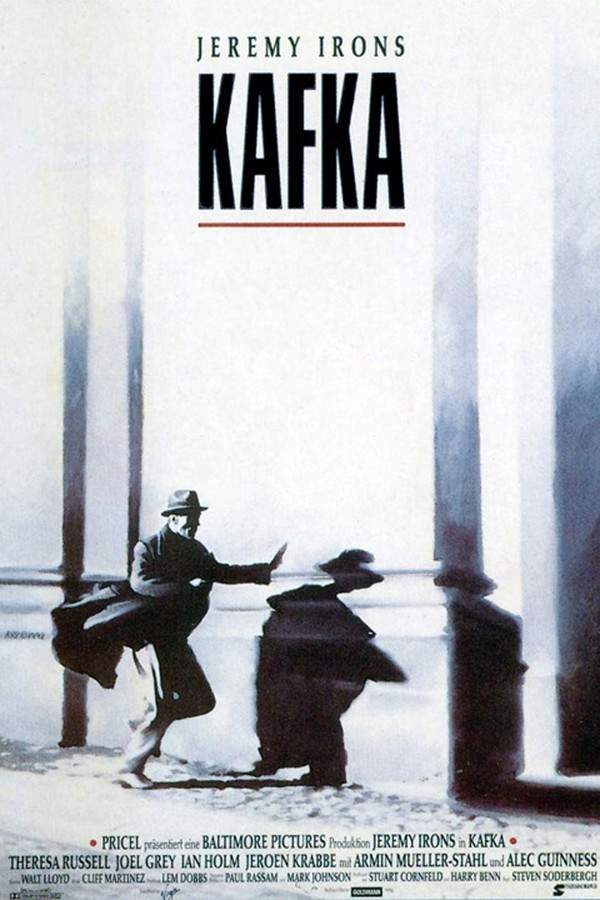
Kafka (1991) Spoiler-Packed Plot Recap
Berlin Alexanderplatz (1000) Film Overview & Timeline
Our Nazi (1984) Detailed Story Recap
Hanussen (1988) Full Summary & Key Details
Man Facing Southeast (1986) Ending Explained & Film Insights
Brainwashed (1960) Detailed Story Recap
Germany, Year Zero (1948) Full Summary & Key Details
The Hourglass Sanatorium (1973) Film Overview & Timeline
I.N.R.I. – A Film of Humanity (1923) Full Summary & Key Details
A Man Escaped (1956) Full Summary & Key Details
The Deathmaker (1995) Film Overview & Timeline
Institute Benjamenta, or This Dream People Call Human Life (1995) Ending Explained & Film Insights
Kaspar Hauser (1993) Spoiler-Packed Plot Recap
Fellini’s Casanova (1976) Spoiler-Packed Plot Recap