







Plot Explained Spoilers guaranteed!
Plot Explained

Browse by genre

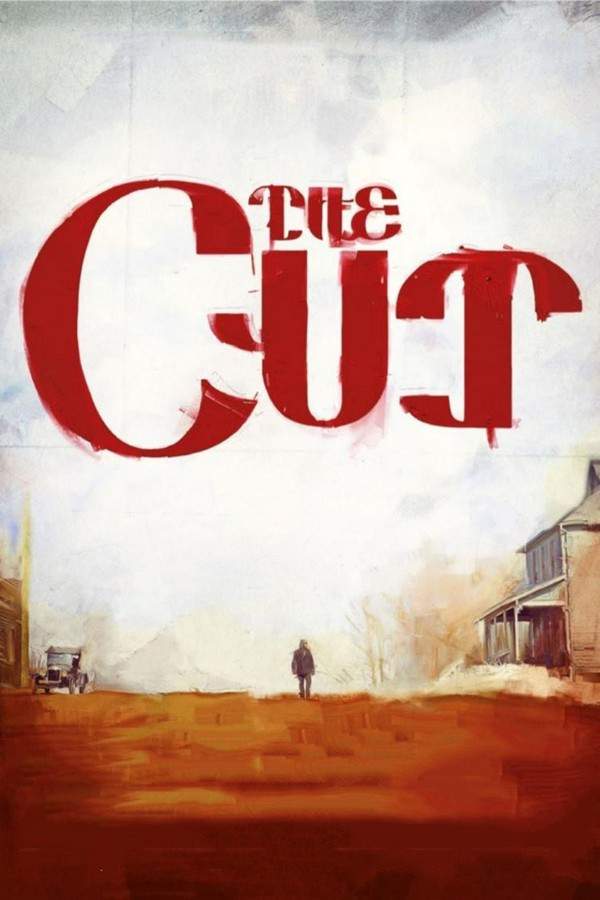
The Cut (2015) movie poster

Timeline

The Cut (2015) Timeline Explained – Every Event in Order

Release, runtime and language
2015 · 138 min · Armenian
JustWatch #22,593 3
Directed by
Fatih Akin

Following the Armenian genocide, Nazareth sets out on a difficult journey to find his twin daughters, who are rumored to be living in America. His quest takes him across vast landscapes—deserts, bustling cities, and expansive prairies—where he encounters a diverse group of people. He faces both kindness and danger as he grapples with the trauma of the recent past and strives to build a future filled with hope and redemption.

On this page (6)
  1. 1 Where to watch
  2. 2 Events in order (15)
  3. 3 Timeline questions answered
  4. 4 Movie threads
  5. 5 Movies like The Cut
  6. 6 Every angle

Where to watch

Where to Watch The Cut (2015)

Where can you watch The Cut? Stream, rent or buy it in the US, including on Hoopla, Amazon Video and Apple TV Store: current JustWatch availability with up-to-date prices.

Streaming availability powered by JustWatch

15 events in order · contains spoilers

The Cut Timeline: Events in Chronological Order

Every key event of The Cut (2015) in order, scene by scene, with when and where it takes place. Use it to untangle flashbacks, time jumps and parallel storylines, to refresh your memory before the sequel or to find the exact scene you are thinking of.

  1. Edison's Groundbreaking Invention

    In 1880, Thomas Edison faces financial struggles in New Jersey while unveiling his revolutionary electric light bulb. This innovation aims to transform American neighborhoods using Direct Current (DC) technology, which, although cleaner than gas lighting, poses significant limitations in range and wiring costs.

    When
    1880
    Where
    New Jersey
  2. Edison's Meeting at the White House

    Edison journeys to the White House to demonstrate his invention, the Phonograph, to the President of the United States. During this crucial meeting, financier JP Morgan offers Edison a partnership worth $150,000, which Edison vehemently declines as he refuses to use his inventions for lethal means.

    Where
    White House
  3. Funding from JP Morgan

    Despite Edison's refusal of a partnership, JP Morgan decides to support Edison's vision for electrifying Manhattan. This funding proves pivotal in realizing Edison's ambition of widespread electrification in the city.

    Where
    Manhattan
  4. Lighting Up the NYSE

    On September 4, 1882, Edison achieves a major milestone when the New York Stock Exchange becomes the first building illuminated by his Direct Current system. This event marks a significant victory for Edison in his campaign to dominate the electric lighting market.

    When
    September 4, 1882
    Where
    New York Stock Exchange
  5. Westinghouse's Dinner Invitation

    Intrigued by Edison's accomplishments, George Westinghouse extends a dinner invitation to Edison. However, due to Edison's arrogance, he snubs this offer, bypassing Pittsburgh and disregarding Westinghouse and his wife's eagerness to meet.

    Where
    Pittsburgh
  6. Westinghouse's AC Quest

    In the wake of Edison's slight, Westinghouse embarks on a mission to promote his Alternating Current (AC) technology, which can transmit power over vast distances more efficiently than Edison's DC system. This rivalry sets the stage for a powerful competition between their electrical systems.

  7. Westinghouse's AC Breakthrough

    In March 1886, Westinghouse scores a significant win with a successful demonstration of his AC technology in Great Barrington. Meanwhile, Nikola Tesla joins Edison's team but quickly becomes disillusioned by the lack of support for his ideas regarding AC efficiency.

    When
    March 1886
    Where
    Great Barrington
  8. Tensions Between Edison and Tesla

    As Tesla's frustrations mount over unfulfilled promises, he decides to leave Edison's company after feeling that his innovative contributions are not valued. This departure underscores the brewing conflict between Edison and Tesla's visions for electricity.

  9. Legal Battles Begin

    Edison takes legal action against Westinghouse for allegedly infringing on his lightbulb patents. This legal confrontation highlights Edison's desire to protect his intellectual property while Westinghouse innovates with a twist-and-lock fitting to avoid Edison's claims.

  10. The Publicity War

    In a bid to salvage his reputation, Edison launches a public campaign denouncing AC as dangerous. This aggressive strategy ignites a media battle as Westinghouse counters with evidence showcasing AC's safety and efficiency.

  11. Tragedy Strikes

    Edison's campaigns take a personal toll as his wife, Mary Stilwell Edison, passes away, adding emotional strain to his professional battles. Conversely, Westinghouse suffers the loss of his friend, Franklin Pope, who dies in an electrical accident.

  12. The Electric Chair Controversy

    In a controversial twist, Edison aids in commercializing the Electric Chair, associating AC with its use and igniting public outrage. The electrocution of William Kemmler, the first person to die by electric chair, leads Edison to testify in favor of AC's alleged humaneness.

  13. Tesla and Westinghouse Collaborate

    Seeking a fresh start, Tesla aligns with Westinghouse to develop a functional AC motor. However, despite their groundbreaking designs, Tesla faces significant financial challenges that ultimately result in his dismissal from his own company.

  14. The World's Columbian Exposition

    At the 1893 World's Columbian Exposition in Chicago, Edison and Westinghouse present competing bids to electrify the fair. The event becomes a culmination of their rivalry, with Westinghouse's success demonstrating the superiority of AC technology.

    When
    1893
    Where
    Chicago
  15. Edison's Legacy and Final Days

    In his later years, Edison reflects on the legacy of his inventions, pondering the potential impact of his next creation—the motion picture. Ultimately, when he passes away, the nation honors him by dimming its lights for a minute, highlighting his profound contributions to history.

Last updated: January 28, 2025 at 15:08

Was this helpful?

Timeline questions answered

The Cut Timeline Explained: Your Questions Answered

When does it happen, and why in that order? The questions people ask about the chronology of The Cut (2015): time jumps, flashbacks, cause and effect between scenes and the correct order of events, each answered with spoilers.

Q1

Why did Edison turn down JP Morgan's $150,000 investment?

Edison refused JP Morgan's partnership offer because he was opposed to using his inventions for lethal purposes. During their White House meeting, Morgan proposed the deal, but Edison declined outright, stating he would not allow his inventions to be weaponized. This principled stance would later be dramatically contradicted when Edison secretly helped develop the electric chair to discredit AC current.

  • jp morgan
  • partnership
  • edison
  • financing
  • electricity
Q2

Why did Edison refuse Westinghouse's dinner invitation?

Edison snubbed Westinghouse's dinner invitation out of arrogance. When Westinghouse extended an invitation to meet in Pittsburgh, Edison chose to bypass the city entirely without a second thought, disregarding Westinghouse and his wife waiting eagerly at the station. This slight motivated Westinghouse to prove the superiority of his AC technology against Edison's DC system.

  • westinghouse
  • dinner invitation
  • edison
  • pittsburgh
  • rivalry
Q3

What made AC more efficient than DC for power transmission?

AC technology could transmit power over thousands of miles with a single generator, representing a 75% increase in efficiency compared to DC. Edison's DC system required a staggering 100,000 feet of copper wiring for every 100 customers, making it economically unsustainable for widespread electrification. AC's ability to step voltage up and down allowed power to travel vast distances cheaply.

  • ac
  • dc
  • transmission
  • efficiency
  • copper wiring
  • generator
Q4

Why did Nikola Tesla leave Edison's company?

Tesla left Edison's company because he felt his ideas about AC efficiency were dismissed and that Edison had reneged on a financial promise. Despite joining Edison's team in 1886, Tesla grew increasingly frustrated by Edison's refusal to adopt his revolutionary ideas. When his contributions were treated as a jest, Tesla quit, believing his work was not valued.

Foreshadowing: Tesla's arrival at Edison's team was foreshadowed by Westinghouse's AC demonstration in Great Barrington earlier that year.

  • tesla
  • edison
  • resign
  • ac technology
  • financial promise
Q5

Why did Edison get involved with creating the electric chair?

Edison became involved with the electric chair as a desperate attempt to discredit AC technology and protect his DC patents. Despite his earlier refusal to use inventions for lethal purposes, Edison secretly worked with creators of the electric chair to associate AC with danger. When William Kemmler became the first person executed by electric chair in 1890, Edison testified that AC was supposedly more humane, infuriating the public when his involvement was revealed.

Foreshadowing: Edison's public campaign against AC as dangerous had already established his willingness to smear the competing technology.

  • electric chair
  • ac
  • danger
  • kemmler
  • execution
  • edison
Q6

What was the William Kemmler execution and why did it damage Edison's reputation?

William Kemmler was the first person to die by electric chair in 1890. The execution was botched and extraordinarily brutal, sparking public outrage. When it was revealed that Edison had secretly helped develop the electric chair and testified that AC was humane, the media turned against him. This exposed Edison's hypocrisy and willingness to use deadly methods to win the current war, leading to his public vilification.

  • william kemmler
  • execution
  • electric chair
  • media
  • edison reputation
Q7

Why did Westinghouse win the contract for the 1893 World's Columbian Exposition?

Westinghouse won the 1893 World's Columbian Exposition contract because his AC system was far more practical and efficient for large-scale power distribution. Both Edison and Westinghouse submitted competing bids to electrify the Chicago fair, with Insull representing Edison's interests. The radiant success of the exposition under AC power conclusively demonstrated AC's superiority, marking Westinghouse's decisive victory in the current war.

  • world's columbian exposition
  • chicago
  • westinghouse
  • ac
  • contract
  • 1893
Q8

Why did Tesla die impoverished despite his electrical innovations?

Tesla died alone and impoverished in a New York hotel room because financial constraints and corporate conflicts repeatedly derailed his success. After leaving Edison, Tesla teamed up with Westinghouse to develop a functional AC motor, but tensions with investors escalated. Tesla was ultimately dismissed from his own company and never reaped the financial rewards of his innovations, dying in poverty despite revolutionizing electricity distribution.

  • tesla
  • poverty
  • death
  • niagara falls
  • innovations
  • westinghouse
Q9

Why was lighting the New York Stock Exchange significant for Edison?

On September 4, 1882, the New York Stock Exchange became the first building illuminated by Edison's DC system, marking a major milestone in his quest to electrify Manhattan. This success validated his vision and demonstrated that DC could work on a commercial scale, though the system remained limited to dense urban areas where the costly wiring infrastructure was feasible.

  • nyse
  • edison
  • lighting
  • september 4 1882
  • dc
  • manhattan
Q10

What started the rivalry between Edison and Westinghouse?

The rivalry began when Westinghouse, intrigued by Edison's achievements, invited him to dinner in Pittsburgh. Edison's arrogance led him to snub this invitation entirely, bypassing Pittsburgh without even responding. This insult motivated Westinghouse to prove his AC technology superior to Edison's DC system, transforming a business competition into a bitter, personal feud with significant technological and ethical stakes.

  • edison
  • westinghouse
  • rivalry
  • current war
  • ac
  • dc

Movie threads

More Movies Like The Cut, by Mood & Story

Curated lists built around what makes The Cut tick: the same mood, the same kind of story or the same emotional payoff. Each list explains why these movies belong together.

Survival quests through historical trauma like in The Cut

Epic personal quests driven by loss, set against the backdrop of major historical events. Explore movies like The Cut, where an individual's epic journey is set against a backdrop of historical tragedy. If you were moved by the personal quest for survival and redemption in The Cut, these similar historical dramas will resonate.

  • historic
  • tragic
  • sobering
  • gripping
  • hopeful
  • epic
  • Tone: sobering, tense
  • Pacing: steady, epic
Why these movies?

The story pattern: The narrative pattern follows a protagonist who survives a cataclysmic historical event and embarks on a long, perilous search. The story unfolds across vast landscapes and through various human connections, balancing the weight of the past with a fragile hope for the future.

Why they belong together: These films are grouped by their shared focus on a deeply personal survival story unfolding within a larger, sobering historical context. They offer a heavy emotional experience, a steady pacing that mirrors the long journey, and a tone that is tense yet deeply human.
Bittersweet historical redemption stories like The Cut

Stories where hope is hard-won, marked by profound loss and a redemptive yet painful resolution. Find movies similar to The Cut that explore the heavy cost of hope and redemption after tragedy. If you appreciated the bittersweet ending and emotional weight of The Cut, these films deliver a similarly powerful and complex emotional journey.

  • bittersweet
  • tragic
  • sobering
  • hopeful
  • redemptive
  • gripping
  • Tone: bittersweet, sobering
  • Pacing: steady, deliberate
Why these movies?

The story pattern: The emotional journey begins with a deep, often collective, trauma. The protagonist's arc is defined by their struggle to reconcile this past with a desire to move forward. The resolution is typically bittersweet, where a small victory or reunion is overshadowed by the indelible marks of loss, reflecting a more realistic and complex form of hope.

Why they belong together: These movies share a specific emotional mix: a heavy weight derived from traumatic events, a tense and sobering tone, and a conclusion that is more bittersweet than purely happy. They are connected by their thoughtful exploration of how people rebuild and find meaning after being shattered.

If you liked this

Movies Like The Cut

Similar movies to The Cut: the same genre, themes or kind of story. Each one comes with its own plot summary, timeline and ending explained.

Browse all movie summaries

Every angle

The Cut (2015) Explained: Plot, Timeline & Characters

Everything about The Cut in one place: what happens in the plot summary, the timeline in chronological order, the characters and meaning and a spoiler-free summary. What's After the Movie adds the cast, box office and post-credit scenes.

Coming soon on iOS and Android

The Plot Explained Movie Summary App

Plot summaries, endings explained and timelines on your phone. Catch up on any movie in minutes, save your favorites and never miss a twist again.

Be the first to know when we launch. Your email stays private, always.

Learn more about the app