Plot Explained Spoilers guaranteed!
Plot Explained

Browse by genre

The Catcher Was a Spy (2018) movie poster

Plot Summary

The Catcher Was a Spy (2018) Plot Summary Explained

Release, runtime and language
2018 · 98 min · English
Echo score 55
Loading streaming availability…
Directed by
Ben Lewin
Starring
Giancarlo Giannini, Guy Pearce, Paul Giamatti, Hiroyuki Sanada, Shea Whigham, Mark Strong
Budget
$14M

During World War II, Princeton-educated baseball catcher Moe Berg leads a secret life as a spy for US intelligence. Recruited for a dangerous mission, he infiltrates Europe to locate and neutralize the Nazis’ leading nuclear scientist, hoping to prevent them from developing an atomic bomb. Balancing his athletic career with espionage, Berg must rely on his intellect and skill to survive a perilous game of deception and outwit his adversaries.

On this page (6)
  1. 1 Where to watch
  2. 2 What happens: full plot
  3. 3 Plot questions answered
  4. 4 Movie threads
  5. 5 Movies like The Catcher Was a Spy
  6. 6 Every angle
Loading streaming availability…

Full plot summary · contains spoilers

What Happens in The Catcher Was a Spy: Full Plot Summary

The whole story of The Catcher Was a Spy (2018) explained, from the opening scene to the final frame: every key event, every twist and what it all adds up to. Read it as a quick recap before the sequel, to check a scene you missed, or to finally understand what really happened.

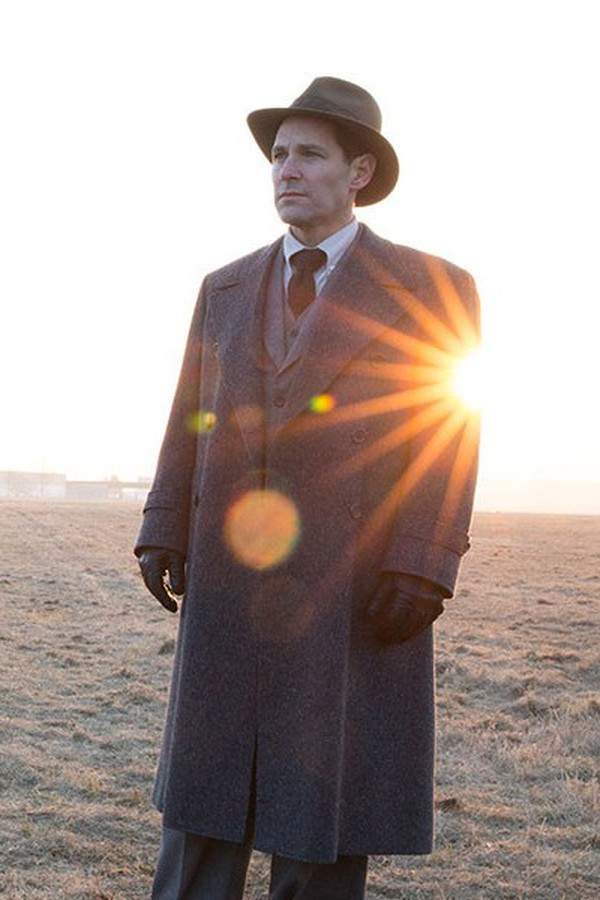
Moe Berg, portrayed by Paul Rudd, is a seasoned baseball player with 15 years of experience who makes a drastic shift to serve as a spy during World War II, aiming to outpace Nazi Germany in the critical race to develop the first atomic bomb. In the year 1938, the Germans achieve a groundbreaking milestone by successfully splitting the atom, which ignites a fierce competition. Leading the German effort is Mark Strong as Werner Heisenberg, a distinguished physicist and Nobel laureate tasked with the bomb's creation. In a strategic response, the United States dispatches Moe with the covert mission to eliminate Heisenberg.

Back in 1936, Moe is a member of the Boston Red Sox, showcasing his keen instincts on the field. His coach, Shea Whigham as Joe Cronin, strongly urges him to retire, while Moe's teammates harbor suspicions about his sexuality. Amidst the complexities of his professional life, Moe is secretly involved with Estella Huni, played by Sienna Miller, leading to a clandestine relationship that leaves Estella frustrated by Moe's reluctance to publicly acknowledge their bond.

During a tour of Japan, Moe encounters Hiroyuki Sanada as Kawabata, engaging in a sexual liaison while also documenting Japanese installations on film. The situation escalates in December 1941, when the U.S. formally declares war on Japan following the devastating Pearl Harbor attack.

Moe seeks out OSS Director Bill Donovan, depicted by Jeff Daniels, presenting his footage of Japanese sites. Despite Moe's evasiveness about his sexuality, Bill recruits him, introducing him to key figures like Guy Pearce as Robert Furman and Paul Giamatti as Samuel Goudsmit, who reveal the details of the German atomic bomb initiative and Heisenberg’s involvement. With Heisenberg's whereabouts uncertain, they learn that the only lead is Professor Edoardo Amaldi, played by Giancarlo Giannini, located in an Italian town facing imminent capture by Allied forces.

As they make their way to Italy, Samuel shares his encounters with Heisenberg, who was then striving to preserve German science amidst the oppressive Nazi regime. Samuel expresses doubts about Heisenberg's loyalty, despite his undeniable capability to create the bomb. After the trio successfully rescue Edoardo from retreating German troops, he suggests that if Heisenberg had the intent to pursue the bomb's completion, he would have already done so. In a twist, despite British intelligence downplaying the German bomb's existence, Bill orders Moe to proceed with the assassination of Heisenberg.

Moe contemplates the possibility that Heisenberg may be covertly aiding the allies but is ultimately overruled. Samuel learns of an upcoming conference in Zurich that Heisenberg will attend, invited by his acquaintance Tom Wilkinson as Paul Scherrer. Moe is discreetly smuggled into Zurich and invited to a party where Heisenberg is expected. Sensing Moe's true intentions, Heisenberg deduces that he is an American operative and confronts him on a bridge. However, after assessing Heisenberg's lack of intent to aid the Nazis, Moe makes the crucial decision to let him escape.

In the end, it becomes clear that the anticipated German bomb never existed, and Moe is offered the Presidential Medal of Freedom, a prize he chooses to decline. After the war, Heisenberg voluntarily discloses the locations of Germany’s heavy water reserves to the Allies. Despite the unresolved emotions of Moe and Estella, who marries in 1945, Moe remains a bachelor, forever affected by the choices made during tumultuous times.
Last updated: November 02, 2024 at 13:45

Was this helpful?

Plot questions answered

The Catcher Was a Spy Plot Explained: Your Questions Answered

The questions people ask most about The Catcher Was a Spy (2018): what happens in the confusing scenes, why the characters do what they do, the twists, hidden details and what the ending means. Each answer contains spoilers.

Q1

Why was Moe Berg chosen for the espionage mission?

Moe Berg was recruited primarily because of his unique skill set and background. As a Princeton-educated athlete with extensive travel experience, he possessed the intelligence, linguistic abilities, and cover as a baseball player to move undetected through Europe. His footage of Japanese military installations during a tour of Japan demonstrated his capability to gather intelligence, which led OSS Director Bill Donovan to recruit him despite his evasiveness about his personal life.

Foreshadowing: Earlier scenes show Moe documenting Japanese installations while on a baseball tour, demonstrating his intelligence-gathering abilities.

  • Moe Berg
  • OSS
  • Bill Donovan
  • recruitment
  • spy mission
Q2

Why did Moe Berg let Heisenberg escape?

Moe let Heisenberg escape after confronting him on a bridge in Zurich because he realized Heisenberg did not intend to help the Nazis develop an atomic bomb. During their conversation, Heisenberg demonstrated that he was not actively pursuing the bomb's creation, making the assassination pointless. Moe made a moral decision that killing a scientist who posed no threat would serve no purpose.

Foreshadowing: Earlier in the film, Samuel Goudsmit expresses doubts about Heisenberg's loyalty to the Nazi regime.

  • Moe Berg
  • Werner Heisenberg
  • assassination
  • escape
  • Zurich
Q3

Why did the German atomic bomb never exist?

The German atomic bomb project never came to fruition because Werner Heisenberg, despite being Germany's leading physicist, chose not to actively pursue its development. Professor Edoardo Amaldi suggested that if Heisenberg had truly wanted to complete the bomb, he would have already done so. This moral ambiguity was confirmed after the war when it was revealed Heisenberg was not committed to helping the Nazis achieve nuclear capability.

Foreshadowing: Samuel Goudsmit's doubts about Heisenberg's loyalty foreshadow the truth about his intentions.

  • German atomic bomb
  • Werner Heisenberg
  • Heisenberg
  • nuclear program
  • Nazis
Q4

What was Moe Berg's relationship with Estella Huni?

Moe Berg had a secret romantic relationship with Estella Huni during his baseball career. Estella was frustrated by Moe's refusal to publicly acknowledge their relationship, as he remained closeted about his personal life. Their relationship ended unresolved; Estella married someone else in 1945 while Moe remained a bachelor, unable to fully commit due to his hidden sexuality and dangerous lifestyle.

Foreshadowing: Early scenes show Moe's teammates suspecting he was hiding his true self, hinting at his closeted nature.

  • Moe Berg
  • Estella Huni
  • relationship
  • romance
  • bachelor
Q5

Why did Moe Berg decline the Presidential Medal of Freedom?

Moe Berg declined the Presidential Medal of Freedom because he viewed his wartime service as morally ambiguous. Having killed people during his mission and struggled with the ethical implications of his actions, he did not feel he deserved such a prestigious honor. The film's melancholic tone emphasizes how the war fundamentally changed Moe, leaving him haunted by his choices.

Foreshadowing: Moe's moral struggles throughout the mission, particularly regarding Heisenberg, foreshadow his reluctance to accept recognition.

  • Moe Berg
  • Presidential Medal of Freedom
  • declined
  • honor
  • after war
Q6

What were the heavy water reserves Heisenberg disclosed to the Allies?

After the war, Werner Heisenberg voluntarily provided the Allies with the locations of Germany's heavy water reserves. Heavy water was a critical component in nuclear research and reactor operations. This act demonstrated Heisenberg's complex character, while he had not actively helped the Nazis build a bomb, he also did not fully sabo their program, leaving his true loyalties ambiguous.

Foreshadowing: The mission briefing mentions heavy water as essential to atomic bomb development.

  • heavy water
  • Heisenberg
  • Allies
  • nuclear research
  • disclosure
Q7

Why did Moe Berg's teammates suspect his sexuality?

Moe Berg's teammates suspected he was gay because he showed little interest in women and maintained a secretive personal life. His reluctance to publicly acknowledge his relationship with Estella Huni added to their suspicions. This subplot reflects the era's attitudes toward homosexuality, as Moe lived as a closeted man in a time when being gay was socially unacceptable and potentially dangerous.

Foreshadowing: Early scenes establish Moe's emotional distance and secrecy with teammates.

  • Moe Berg
  • sexuality
  • teammates
  • Red Sox
  • closeted
Q8

What was the OSS mission involving Werner Heisenberg?

The OSS tasked Moe Berg with assassinating Werner Heisenberg, who was leading Germany's efforts to develop an atomic bomb. Intelligence suggested Germany was close to creating a weapon, and stopping Heisenberg was deemed crucial to preventing Nazi Germany from achieving nuclear capability. However, the mission became morally complicated when evidence emerged that Heisenberg might not have been actively pursuing the bomb's completion.

Foreshadowing: The film establishes early on that the race to develop atomic weapons was a critical concern for both Allied and German forces.

  • OSS
  • Werner Heisenberg
  • assassination
  • atomic bomb
  • mission
Q9

Why was Professor Edoardo Amaldi important to the mission?

Professor Edoardo Amaldi was the only lead to Werner Heisenberg's whereabouts. Located in an Italian town facing imminent capture by Allied forces, he was the key to tracking down the German physicist. Moe, Samuel Goudsmit, and Robert Furman traveled to Italy to rescue Amaldi from retreating German troops, and it was Amaldi who suggested that Heisenberg would have already built the bomb if he intended to pursue it.

Foreshadowing: The timeline establishes that the team needed Amaldi as their only lead to Heisenberg's location.

  • Edoardo Amaldi
  • Italy
  • Heisenberg
  • rescue
  • mission
Q10

Why did Bill Donovan order the assassination despite doubts about Heisenberg?

Bill Donovan ordered Moe to proceed with the assassination because the stakes of allowing a potential Nazi atomic bomb were too high to ignore. Even though Samuel Goudsmit expressed doubts about Heisenberg's loyalty, British intelligence downplayed the German bomb's existence, creating uncertainty. Donovan chose to err on the side of caution, prioritizing the prevention of a nuclear weapon over the moral ambiguity surrounding Heisenberg's true intentions.

Foreshadowing: Donovan's decision reflects the high-stakes nature of wartime intelligence where certainty was rare.

  • Bill Donovan
  • OSS
  • assassination
  • order
  • Heisenberg

Movie threads

More Movies Like The Catcher Was a Spy, by Mood & Story

Curated lists built around what makes The Catcher Was a Spy tick: the same mood, the same kind of story or the same emotional payoff. Each list explains why these movies belong together.

Tense Espionage Thrillers like The Catcher Was a Spy

Stories of solitary agents walking a razor's edge of deception and danger. If you enjoyed the clandestine tension and high-stakes mission of The Catcher Was a Spy, explore more movies like it. This collection features similar spy thrillers and World War II dramas where solitary operatives navigate a perilous world of deception, moral dilemmas, and race-against-time scenarios.

  • tense
  • suspenseful
  • clandestine
  • solitary
  • melancholic
  • high-stakes
  • Tone: tense, suspenseful, melancholic
  • Pacing: steady, mission-focused
Why these movies?

The story pattern: The narrative typically follows a singular, high-stakes mission requiring stealth, intellect, and profound personal risk. The plot is a steady progression through a web of suspicion, where the protagonist must maintain their cover while outsmarting watchful adversaries. Character arcs often involve sacrifice and a heavy emotional toll, as the line between duty and personal morality blurs.

Why they belong together: Movies in this thread share a core atmosphere of sustained tension and clandestine operations. They are united by a steady, mission-driven pace, a medium-to-high intensity fueled by life-or-death stakes, and a melancholic undertone stemming from the protagonist's solitude and the moral cost of their work.

Movies with Bittersweet Endings like The Catcher Was a Spy

Stories where the mission's success comes at a deep personal cost. For viewers who appreciated the emotionally complex conclusion of The Catcher Was a Spy, this list features similar dramas and biographical films. Discover other movies with bittersweet endings where characters achieve their goal but are left with a profound sense of personal sacrifice and unresolved emotional journeys.

  • bittersweet
  • melancholic
  • pensive
  • reflective
  • solemn
  • sacrifice
  • Tone: bittersweet, melancholic, reflective
  • Pacing: steady, character-driven
Why these movies?

The story pattern: These narratives often follow a character who accomplishes a difficult, often heroic, objective only to find their personal life diminished or unresolved. The plot leads to a conclusion that is publicly successful but privately hollow. The character's journey emphasizes the theme that some victories require giving up a part of oneself, resulting in an ending that is both satisfying and sorrowful.

Why they belong together: These films are connected by their shared emotional trajectory, culminating in a bittersweet or melancholic resolution. They typically possess a heavy emotional weight and a steady, character-driven pace that allows the impact of the sacrifice to resonate. The tone balances tense external events with a pervasive, underlying sadness.

If you liked this

Movies Like The Catcher Was a Spy

Similar movies to The Catcher Was a Spy: the same genre, themes or kind of story. Each one comes with its own plot summary, timeline and ending explained.

Browse all movie summaries

Every angle

The Catcher Was a Spy (2018) Explained: Plot, Timeline & Characters

Everything about The Catcher Was a Spy in one place: what happens in the plot summary, the timeline in chronological order, the characters and meaning and a spoiler-free summary. What's After the Movie adds the cast, box office and post-credit scenes.

Coming soon on iOS and Android

The Plot Explained Movie Summary App

Plot summaries, endings explained and timelines on your phone. Catch up on any movie in minutes, save your favorites and never miss a twist again.

Be the first to know when we launch. Your email stays private, always.

Learn more about the app