Plot Explained Spoilers guaranteed!
Plot Explained

Browse by genre

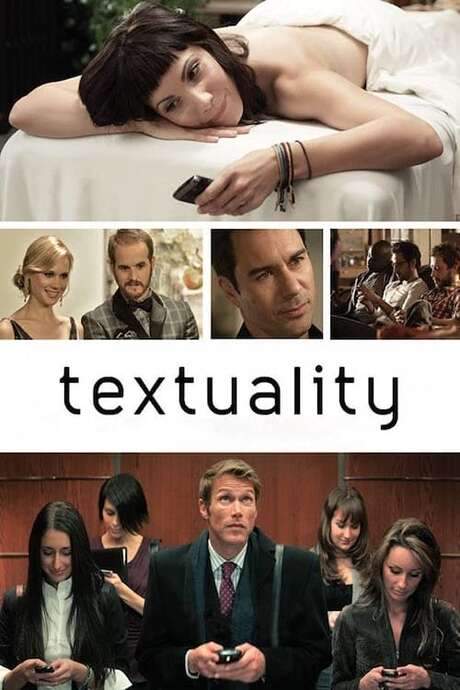
Textuality (2011) movie poster

Timeline

Textuality (2011) Timeline Explained – Every Event in Order

Release, runtime and language
2011 · 90 mins · English
Loading streaming availability…
Directed by
Warren P. Sonoda
Starring
Carly Pope, Eric McCormack, Kristen Hager, Jason Lewis, Shane Nicely, Kristen Holden-Ried

Two people attempt to get into a relationship, while exiting the multiple relationships they were each managing through their Blackberries before they met.

On this page (5)
  1. 1 Where to watch
  2. 2 Events in order (13)
  3. 3 Timeline questions answered
  4. 4 Movie threads
  5. 5 Every angle
Loading streaming availability…

13 events in order · contains spoilers

Textuality Timeline: Events in Chronological Order

Every key event of Textuality (2011) in order, scene by scene, with when and where it takes place. Use it to untangle flashbacks, time jumps and parallel storylines, to refresh your memory before the sequel or to find the exact scene you are thinking of.

  1. Opening credits: Breslin and Erin's fragile romance

    The film opens with Breslin and Erin in a fragile romance as a Ray Charles tune lingers in the background. The moment hints at a closeness that is quiet and intimate despite the surrounding distractions. The world around them is shown as hyper-connected, where phones are always buzzing and messages flood every moment.

    When
    Opening credits
  2. Past engagement and Breslin's dating spree

    Six months earlier, Breslin and Erin were meant to marry, but those plans fell apart. Since then, Breslin moves through a revolving door of relationships, from Heather the waitress to Dina the art teacher. The instability contrasts with the old promise of a life together.

    When
    Six months earlier
  3. Breslin's job pressure and boss Kara

    In the present, Breslin is a financial adviser under pressure; losing another client could cost him his job. His boss Kara looms as a potential threat, adding urgency to both his career and personal life. The tension between professional risk and romantic risk threads through his decisions.

    When
    Present
    Where
    Workplace
  4. Simone: artist and blogger

    Simone runs the blog Simone Says and refuses to sell her paintings. She dates four men at once and dislikes texting, preferring direct conversation. Her independence and online persona anchor the film's artistic world.

    When
    Present
    Where
    Art world
  5. First tension between Breslin and Simone

    Breslin and Simone's dynamic begins as wary, tense flirtation. There is mutual curiosity, and their initial exchanges hint that their connection may be more meaningful than Breslin's other entanglements.

    When
    Present
  6. Clive's money-driven interest in Simone

    Clive, a wealthy suitor, is drawn to Simone and fuels the web of desire around her. His money raises the stakes for Breslin's pursuit and the group's power dynamics.

    When
    Present
  7. Marcus arrives: NBA star enters the circle

    Marcus brings charm and bravado to the circle, contrasting with the more polished crowds. His presence adds another layer to the competing affections around Simone and Breslin.

    When
    Present
  8. Colin's ambitions and band life

    Colin appears as a less successful, band-focused figure, highlighting different paths within the circle. His ambitions mirror the choices Breslin faces between risk and stability.

    When
    Present
  9. Jacob's quirks introduce tension

    Jacob, who must call his mother to pick him up, battles a germophobic streak. This quirky counterpoint to the group’s intimacy underscores the quirks that texture their interactions.

    When
    Present
  10. Mike's influence and everyday scenes

    Breslin's ally Mike, a wealthier friend, helps shape Breslin's choices and the risk of losing his job. Scenes across a grocery store, questionable newspaper deliveries, and a senior bowling league illustrate how money and friendship weave through daily life.

    When
    Present
  11. Dina's demand for commitment

    Dina presses Breslin for a higher level of commitment, forcing him to confront his choices. Meanwhile, Breslin weighs the lure of Simone against his obligations and career.

    When
    Present
  12. The throughline remains Breslin and Simone

    Despite the parallel stories, Breslin and Simone's evolving bond remains the central throughline. Their connection is tested by other commitments, raising questions about whether it can endure distraction.

    When
    Present
  13. Ending question: can genuine connection outlast distractions?

    As the credits roll, the film leaves a lingering question about what it takes to connect deeply. The Ray Charles melody returns as a unifying motif that underscores the film's theme.

    When
    Ending credits

Last updated: October 01, 2025 at 12:51

Was this helpful?

Timeline questions answered

Textuality Timeline Explained: Your Questions Answered

When does it happen, and why in that order? The questions people ask about the chronology of Textuality (2011): time jumps, flashbacks, cause and effect between scenes and the correct order of events, each answered with spoilers.

Q1

Why did Breslin and Erin break off their engagement?

Six months before the film begins, Breslin and Erin were meant to marry, but something went wrong. The exact reason isn't specified, but the aftermath shows Breslin spiraling into a revolving door of relationships with different women, suggesting the breakup left him emotionally scattered and unwilling to commit.

Foreshadowing: The opening credits hint at their fragile romance, with a quiet Ray Charles tune suggesting a connection that was lost rather than never existing.

  • breslin
  • erin
  • breakup
  • engagement
  • failed wedding
Q2

Why does Simone date four men at once?

Simone is portrayed as fiercely independent and maintains multiple relationships while running her blog "Simone Says." She represents the film's exploration of modern dating culture where people juggle multiple connections. Unlike Breslin, who dates reactively after his broken engagement, Simone seems to embrace this lifestyle intentionally, her independence is central to her character.

Foreshadowing: Her refusal to sell her paintings suggests she values autonomy in all aspects of her life, including romance.

  • simone
  • multiple relationships
  • dating
  • four men
  • independence
Q3

Why is the movie called Textuality?

The title refers to the film's focus on texting and constant digital communication through Blackberries. Every character is constantly texting, posting, or messaging, illustrating a culture where technology mediates relationships. The title plays on the word 'sexuality' to suggest that texting and digital connection have become their own form of intimacy in modern relationships.

Foreshadowing: The opening scene establishes this theme immediately, showing a world where every phone buzzes with messages.

  • title
  • texting
  • blackberry
  • technology
  • communication
  • meaning
Q4

Why does Breslin keep dating multiple women?

After his failed engagement to Erin, Breslin has been cycling through relationships, he dates Heather the waitress and Dina the art teacher, seemingly as a way to avoid dealing with his emotional pain. His job pressure adds another layer: he's terrified of losing his position as a financial adviser, which makes him crave control and distraction in other areas of life.

Foreshadowing: His job insecurity mirrors his romantic instability, both stem from a fear of losing something meaningful.

  • breslin
  • dating
  • heather
  • dina
  • multiple relationships
  • commitment issues
Q5

Why does Dina demand commitment from Breslin?

Dina, who is also Simone's art teacher, asks Breslin for a higher level of commitment than he's willing to give. This forces Breslin to confront whether he's truly ready to settle down or simply using dating as a distraction. Her demand creates tension and highlights his internal conflict between wanting connection and fearing vulnerability.

Foreshadowing: Dina's connection to Simone through the art world foreshadows how their circles will eventually collide.

  • dina
  • commitment
  • relationship
  • art teacher
  • demand
Q6

How does Breslin's job pressure affect his choices?

Breslin works as a financial adviser facing termination if he loses one more client. His boss Kara represents professional threat. This career anxiety amplifies his overall sense of instability and makes him more resistant to emotional commitment, he's already risking everything at work, so adding romantic risk feels overwhelming. His friend Mike, who is wealthier, influences his decisions throughout the film.

Foreshadowing: The parallel between professional risk (losing his job) and romantic risk (committing to someone) runs through the entire narrative.

  • breslin
  • job
  • career
  • financial adviser
  • kara
  • firing
  • pressure
Q7

Why does Simone refuse to sell her paintings?

Simone fiercely refuses to sell her paintings, choosing artistic integrity over financial gain. This reflects her broader character, she values independence and creativity over commercial success. As a blogger running "Simone Says," she's built a personal brand around her art without monetizing it through sales, suggesting she prioritizes expression over commerce.

Foreshadowing: This refusal mirrors her approach to relationships: she maintains control and doesn't trade her autonomy for security.

  • simone
  • paintings
  • art
  • sell
  • blog
  • simone says
  • independence
Q8

How do Breslin and Simone's relationship begin?

Breslin and Simone meet through the film's interconnected dating web. Their dynamic begins as a wary, tense flirtation, he's a texter, she dislikes texting and prefers direct conversation. Despite the friction, there's an immediate magnetic attraction. Their connection is hinted to be more meaningful than Breslin's other entanglements, becoming the film's central love story.

Foreshadowing: Their contrasting communication styles (texting vs. direct conversation) foreshadow the deeper theme of authentic connection versus digital distraction.

  • breslin
  • simone
  • meeting
  • flirtation
  • attraction
  • connection
Q9

What does the ending of Textuality mean?

The ending leaves the question of whether Breslin and Simone's bond can outlast the distractions of their hyper-connected world. The Ray Charles melody returns, mirroring the opening and emphasizing the theme of genuine connection amidst constant communication. The film doesn't resolve whether they succeed, it poses the question: in a world obsessed with constant connection, what does it really take to connect on a deeper level?

Foreshadowing: The opening credits' quiet intimacy with the Ray Charles tune establishes the emotional question the ending revisits.

  • ending
  • conclusion
  • ray charles
  • connection
  • resolution
  • meaning
Q10

Why is Clive interested in Simone?

Clive is a wealthy man drawn to Simone, adding a money-versus-authenticity tension to the story. His wealth-driven fascination creates competition for Breslin's pursuit and highlights the different motivations in the dating web, some want connection, others want status or validation.

Foreshadowing: Clive's presence raises the stakes for Breslin, who doesn't have the same financial resources but offers something different.

  • clive
  • simone
  • wealthy
  • money
  • pursuit
  • attraction
Q11

Why does Simone dislike texting?

Simone dislikes texting and prefers direct, face-to-face conversation. This preference contrasts with Breslin and the rest of the hyper-connected world, where everyone is constantly texting. Her resistance to texting symbolizes a desire for authentic, present-moment connection versus the shallow, distracted communication that defines the film's setting.

Foreshadowing: Her communication preference establishes her as the character most aligned with the film's thematic question about genuine connection.

  • simone
  • texting
  • communication
  • direct conversation
  • preference
Q12

What role does Mike play in Breslin's life?

Mike is Breslin's wealthier, inherited-rich friend who acts as his closest ally throughout the film. He shapes Breslin's choices and helps him navigate the risk of losing his job. Their friendship is illustrated through everyday scenes, grocery store visits, newspaper deliveries, senior bowling league, showing how money and friendship intertwine in their circle.

Foreshadowing: Mike's involvement in mundane activities shows how wealth permeates even the smallest aspects of their social world.

  • mike
  • friend
  • breslin
  • wealth
  • influence
  • support

Movie threads

More Movies Like Textuality, by Mood & Story

Curated lists built around what makes Textuality tick: the same mood, the same kind of story or the same emotional payoff. Each list explains why these movies belong together.

Movies about modern digital dating like Textuality

Navigating love and connection through the anxieties of technology and social media. If you liked the witty exploration of love and texting in Textuality, you'll enjoy these movies about modern digital dating. Find similar romantic comedies and dramas that capture the anxiety and humor of navigating relationships through apps and social media.

  • modern romance
  • anxious
  • connected
  • playful
  • cynical
  • reflective
  • Tone: light, reflective, witty
  • Pacing: steady, conversational
Why these movies?

The story pattern: Stories in this thread typically follow characters as they juggle multiple digital connections, grapple with the pressure of constant availability, and question whether true intimacy can be found amidst a sea of options. The central conflict often involves choosing between curated online personas and the messy reality of genuine connection.

Why they belong together: These movies are grouped together because they share a core thematic focus on the intersection of technology and romance. They possess a similar tone of modern, reflective humor and a relatable anxiety about communication in the 21st century.

Witty and talk-driven romantic comedies similar to Textuality

Character-focused romances where conversation and chemistry drive the story. Looking for more smart romantic comedies like Textuality? This list features movies with a similar steady pace, light emotional weight, and focus on witty conversations and character connection, perfect for fans of dialogue-driven romance.

  • witty
  • playful
  • romantic
  • reflective
  • conversational
  • character-driven
  • Tone: light, witty, playful
  • Pacing: steady
Why these movies?

The story pattern: The narrative pattern revolves around two articulate, often career-focused individuals who meet and connect primarily through conversation. The plot is propelled by their verbal exchanges and internal reflections on commitment and compatibility, often leading to an ambiguous or realistically hopeful conclusion rather than a fairy-tale ending.

Why they belong together: Movies in this thread are united by their shared emphasis on intelligent dialogue, a steady, character-driven pace, and a light but thoughtful tone. They appeal to viewers who enjoy romance built on chemistry and conversation.

Every angle

Textuality (2011) Explained: Plot, Timeline & Characters

Everything about Textuality in one place: what happens in the plot summary, the timeline in chronological order, the characters and meaning and a spoiler-free summary. What's After the Movie adds the cast, box office and post-credit scenes.

Coming soon on iOS and Android

The Plot Explained Movie Summary App

Plot summaries, endings explained and timelines on your phone. Catch up on any movie in minutes, save your favorites and never miss a twist again.

Be the first to know when we launch. Your email stays private, always.

Learn more about the app