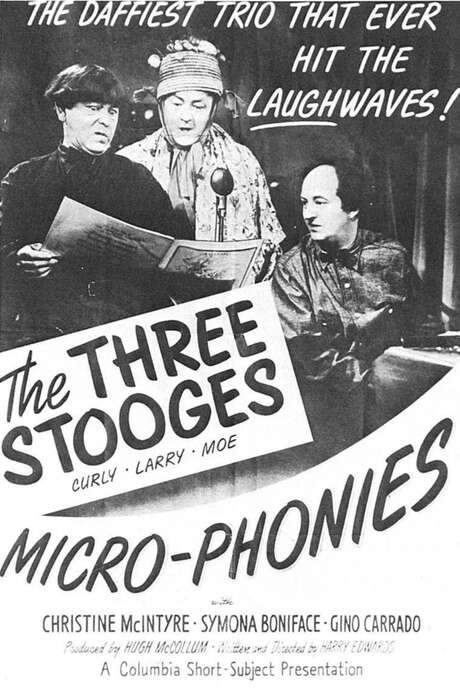
Renowned producer Larry returns to his small agricultural hometown and reconnects with two childhood friends who shape the story: his sister, Tiny Landers, who tends the family farm with quiet dedication, and their spirited companion Joe, who shares in the daily rhythms of rural life. It’s clear from the first moments that Tiny has a gift for song—the moment she raises her voice, the barnyard seems to hum along, and the simple melodies weave through the air as if the animals themselves are listening in awe. Larry recognizes the power of her talent and envisions a brighter stage beyond the fields, inviting Joe and Tiny to join him in a nightclub act in New York City, where the city lights could amplify a talent that feels, for now, rooted in home.
But Tiny bears a shadowed obstacle: a deep‑seated fear of performing in front of live audiences that keeps her from embracing the opportunity. This anxiety is not just nerves; it’s a barrier that has grown from years of pressure and expectation. Determined to help, Larry and Joe accompany Tiny to seek professional guidance from a German psychiatrist who is renowned for his hypnotherapy methods. The journey to the stage becomes a collaborative effort, as they seek a path that could transform fear into a future.
Under the psychiatrist’s careful guidance, Tiny enters a process of hypnosis designed to uncover the roots of her anxiety. Through this therapeutic exploration, she recalls a childhood memory in the family barn where she was urged by her father and uncles to perform, a pressure that overwhelmed her and left a lingering reluctance to sing. The sessions are patient and revealing, gradually shifting the lens through which she views herself and her talent. The doctor’s approach emphasizes understanding, compassion, and the power of belief in one’s own voice.
As Tiny confronts those painful memories, she begins to see that the audience’s love for her singing is a gift rather than a force to be feared. With renewed confidence and the right support, she accepts a new perspective—that her artistry can bring joy and connection to others. The process is not just therapeutic; it’s transformative, allowing her to imagine a future where performing is a source of fulfillment rather than a source of dread. The path forward feels real, achievable, and deeply personal.
In the climactic moment, Tiny steps onto the stage as a professional singer, with Joe delivering energetic dance numbers and Larry providing musical accompaniment on the violin. The audience responds with wholehearted applause, signaling a meaningful milestone in her artistic journey. It is a moment of quiet triumph and exuberant joy, a validation of her talent and the courage it took to pursue it. The experience leaves Tiny richer in confidence and emotion, having discovered not only her voice but the ability to share it with the world.