
























Plot Explained Spoilers guaranteed!
Plot Explained

Browse by genre

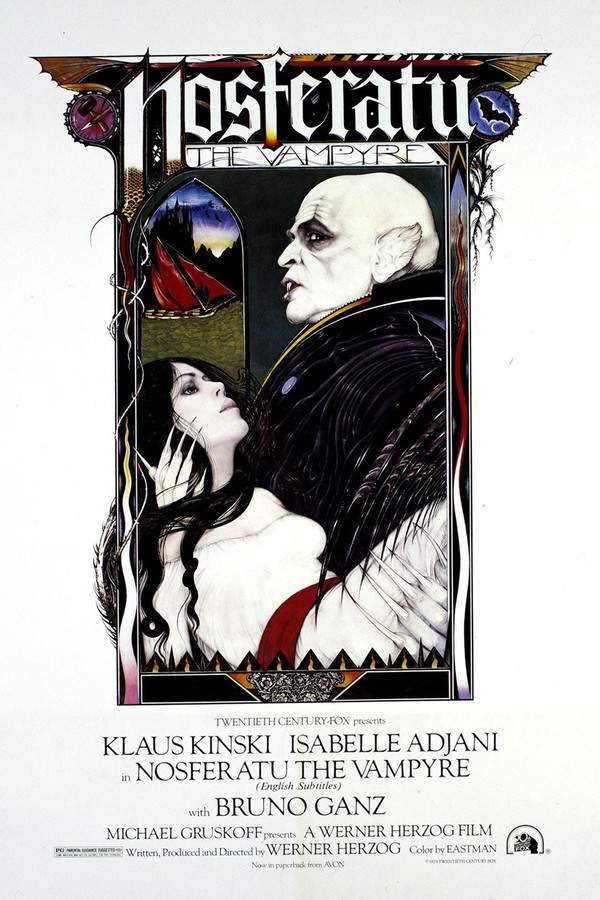
Nosferatu the Vampyre (1979) movie poster

Characters & Themes

Nosferatu the Vampyre (1979) Characters, Setting & Themes Explained

Release, runtime and language
1979 · 107 min · German
JustWatch #34,510 2
Directed by
Werner Herzog
Starring
Klaus Kinski, Bruno Ganz, Isabelle Adjani, Carsten Bodinus, Dan van Husen, Jan Groth

A real estate agent's encounter with the mysterious Count Dracula triggers a terrifying sequence of events, unleashing death and despair upon an unsuspecting town. As the vampire becomes fixated on Lucy, the agent's wife, he brings darkness and a chilling threat of immortality to their idyllic life, forcing them to confront a horrifying evil.

On this page (9)
  1. 1 Where to watch
  2. 2 Characters explained (5)
  3. 3 Where & when it takes place
  4. 4 Themes & meaning (3)
  5. 5 Character & meaning questions
  6. 6 The book behind the movie
  7. 7 Movie threads
  8. 8 Movies like Nosferatu the Vampyre
  9. 9 Every angle

Where to watch

Where to Watch Nosferatu the Vampyre (1979)

Where can you watch Nosferatu the Vampyre? Stream, rent or buy it in the US, including on Amazon Prime Video, fuboTV and Night Flight Plus: current JustWatch availability with up-to-date prices.

Streaming availability powered by JustWatch

5 main characters · contains spoilers

Nosferatu the Vampyre Characters Explained: Who Is Who

The main characters of Nosferatu the Vampyre (1979), heroes and villains: what drives them, how they change over the course of the story and what each of them reveals about the film's bigger ideas.

  • Jonathan Harker

    played by Klaus Kinski

    Jonathan Harker is the central character, an estate agent whose ambition leads him to Transylvania, ultimately confronting the Count. His bravery is tested, revealing his vulnerability as he grapples with fear and trapped circumstances. Harker evolves from a determined suitor to a victim of Dracula's sinister power.

    • 🧑‍💼 Protagonist
    • 😟 Fear
    • 💔 Love
  • Lucy

    played by Isabelle Adjani

    Lucy embodies purity and innocence, making her a target for Dracula’s dark desire. Her character’s arc reflects resilience and strength, particularly in her determination to save her town. Yet, her tragic end serves as a poignant reminder of the devastating effects of evil, as she sacrifices herself for others.

    • 👸 Innocence
    • ❤️ Love
    • 💪 Strength
  • Count Dracula

    Count Dracula is the enigmatic villain, a creature who embodies dread and allure. His ancient, sinister presence contrasts with the innocence of Lucy and Jonathan, creating an unsettling dynamic. Driven by a deep, haunting loneliness, Dracula's actions are both predatory and tragic, as he seeks connection in his desolation.

    • 🧛‍♂️ Villain
    • 🕳️ Darkness
    • 😩 Loneliness
  • Renfield

    played by Dan van Husen

    Renfield is a character representing madness and the influence of Dracula’s dark charm. His descent into insanity underscores the psychological horror present in the narrative. Originating as a devoted servant, Renfield's tragic transformation serves as a cautionary tale about the dangers of obsession and fear.

    • 🧠 Madness
    • ⚡ Obsession
    • 😢 Tragedy
  • Abraham Van Helsing

    Abraham Van Helsing acts as the knowledgeable protector, a doctor with expertise in supernatural threats. His role emphasizes the need for rationality in facing horror. Van Helsing’s determination showcases the fight against evil, as he rallies to uncover the truth behind Dracula’s menace and save Lucy.

    • 🩺 Wisdom
    • ⚔️ Heroism
    • 🌟 Protector

Last updated: October 22, 2024 at 19:46

Was this helpful?

Setting

Where and When Does Nosferatu the Vampyre Take Place?

The setting of Nosferatu the Vampyre (1979): the year and time period, the places and locations, and how they shape the characters, the mood and the tension of the story.

Time period

Late 19th century

The late 19th century was a period rife with superstitions and fears surrounding the unknown. It marked the Victorian era, characterized by a fascination with the macabre and the supernatural. This time laid the groundwork for many gothic tales, including the struggle between light and darkness embodied in the battle against Dracula.

Location

Wismar, Transylvania, Borgo Pass, Black Sea, Varna

Wismar, a town in Germany, serves as the starting point for Jonathan Harker's dark journey. Transylvania, known for its eerie landscapes and legends of vampires, houses Count Dracula's sinister castle. The Borgo Pass is a treacherous path leading to the Count’s fortress, where locals fear to tread. The Black Sea and Varna highlight Dracula’s voyage, symbolizing his ominous arrival in Europe.

  • 🏰 Castle
  • 🌊 Sea
  • 🌍 Europe

Last updated: October 22, 2024 at 19:46

Was this helpful?

3 major themes

Nosferatu the Vampyre Meaning: Themes & Message Explained

What is Nosferatu the Vampyre (1979) really about? The emotional, social and philosophical themes the film keeps returning to, its symbolism and the message beneath the surface.

  • Vampirism

    Vampirism is a central theme in 'Nosferatu the Vampyre,' representing fear of the unknown and the predatory nature of desire. Dracula embodies this dark allure, seducing characters into a web of obsession and death. The tension between the vampire's curse and the victim's innocence drives the narrative and underscored moral conflicts.

  • Sacrifice

    Sacrifice plays a crucial role as characters face harrowing choices between their desires and the greater good. Lucy's ultimate sacrifice to save her town highlights the theme of love's power over evil. Her courage in confronting Dracula emphasizes the eternal struggle between light and darkness, illustrating the consequences of one's decisions.

  • Despair

    Despair permeates the story, illustrated by Jonathan Harker's bleak journey and Lucy’s haunting visions. As characters face confusion and horror, the film encapsulates the psychological toll of encountering evil. This theme resonates through their tragic fates, reflecting the human condition's fragility when threatened by darkness.

Last updated: October 22, 2024 at 19:46

Was this helpful?

Character & theme questions

Nosferatu the Vampyre Characters & Meaning: Your Questions Answered

The questions people ask about Nosferatu the Vampyre (1979): who the characters really are, their relationships, what the symbols mean, where it takes place and what the movie is really about. Each answer contains spoilers.

Q1

Where does Nosferatu the Vampyre take place?

The film is set across multiple locations starting in Wismar, Germany, before extending into Transylvania where Count Dracula's sinister castle lies near the Borgo Pass. The story also follows Dracula's journey via the Black Sea to Varna, marking his ominous arrival in Europe. These settings range from an idyllic German town to the eerie, legend-haunted landscapes of Eastern Europe.

  • wismar
  • transylvania
  • borgo pass
  • dracula castle
  • black sea
  • varna
  • setting
  • germany
Q2

What time period is Nosferatu the Vampyre set in?

The film takes place in the late 19th century during the Victorian era, a period characterized by widespread superstitions and fascination with the macabre and supernatural. This historical context laid the groundwork for gothic tales exploring the struggle between light and darkness.

  • late 19th century
  • victorian era
  • time period
  • historical setting
Q3

What does vampirism represent in Nosferatu the Vampyre?

Vampirism in the film represents fear of the unknown and the predatory nature of desire. Dracula embodies this dark allure, seducing characters into obsession and death. The tension between the vampire's curse and the victim's innocence drives the narrative and underscores the moral conflicts between corruption and purity.

  • vampirism
  • fear of unknown
  • desire
  • dracula corruption
  • predatory
Q4

What role does sacrifice play in Nosferatu the Vampyre?

Sacrifice is a crucial theme as characters face choices between personal desires and the greater good. Lucy's ultimate sacrifice to save her town highlights love's power over evil. Her courage in confronting Dracula illustrates the eternal struggle between light and darkness and demonstrates the consequences of one's decisions.

  • sacrifice
  • love
  • lucy
  • light vs darkness
  • saving others
Q5

How does Nosferatu the Vampyre explore despair?

Despair permeates the story through Jonathan Harker's bleak journey and Lucy's haunting visions. As characters face confusion and horror, the film captures the psychological toll of encountering evil. This theme resonates through their tragic fates, reflecting human fragility when threatened by darkness.

  • despair
  • psychological horror
  • human fragility
  • hopelessness
  • psychological toll
Q6

Who is Jonathan Harker in Nosferatu the Vampyre?

Jonathan Harker is the central character, a real estate agent whose ambition leads him to Transylvania to conduct business with Count Dracula. His bravery is tested as he confronts the Count, revealing his vulnerability while trapped in the vampire's castle. He evolves from a determined suitor to a victim of Dracula's sinister power.

  • jonathan harker
  • protagonist
  • estate agent
  • transylvania
Q7

Who is Lucy and what is her significance in the film?

Lucy is Jonathan Harker's wife, embodying purity and innocence, which makes her a target for Dracula's dark desire. Her character arc reflects resilience and strength, particularly in her determination to save her town. Her tragic end serves as a poignant reminder of evil's devastating effects, as she sacrifices herself for others.

  • lucy
  • harker's wife
  • purity
  • innocence
  • sacrifice
  • dracula's target
Q8

What makes Count Dracula's character unique in this version?

Count Dracula is portrayed as an enigmatic villain embodying dread and dark allure. His ancient, sinister presence contrasts sharply with the innocence of Lucy and Jonathan. Driven by deep, haunting loneliness, Dracula's actions are both predatory and tragic, as he seeks genuine connection in his eternal desolation, making him a more sympathetic yet terrifying figure.

  • count dracula
  • villain
  • loneliness
  • ancient vampire
  • tragic figure
  • predatory
Q9

What is Renfield's role in Nosferatu the Vampyre?

Renfield represents madness and the psychological influence of Dracula's dark charm. His descent into insanity underscores the horror present in the narrative. Originating as a servant, Renfield's tragic transformation serves as a cautionary tale about the dangers of obsession and fear under Dracula's influence.

  • renfield
  • madness
  • insanity
  • servant
  • obsession
  • psychological horror
Q10

Who is Van Helsing and what is his purpose in the story?

Abraham Van Helsing acts as the knowledgeable protector, a doctor with expertise in supernatural threats. His role emphasizes the need for rationality when facing horror. Van Helsing's determination drives the fight against evil as he rallies to uncover the truth behind Dracula's menace and save Lucy.

  • abraham van helsing
  • doctor
  • protector
  • rationality
  • supernatural expert
  • antidote
Q11

What is the light versus darkness theme in Nosferatu the Vampyre?

The film presents a clear struggle between light and darkness, embodied in the battle against Dracula. Lucy's purity and goodness represent light, while Dracula embodies darkness and corruption. This eternal struggle plays out through their confrontation, with light ultimately being overwhelmed in the film's bleak conclusion.

  • light vs darkness
  • good vs evil
  • purity
  • corruption
  • duality
Q12

Why is Nosferatu the Vampyre considered melancholic?

Director Werner Herzog's slow, atmospheric pacing creates a meditative quality that emphasizes pervasive sadness rather than jump scares. The melancholic tone emerges from Dracula's own weariness, the bleak fate of protagonists, and the overwhelming sense of dread. The film's intensity comes from an unstoppable spread of death and tragedy, creating heavy emotional weight throughout.

  • werner herzog
  • melancholic tone
  • atmospheric
  • gothic horror
  • slow pacing
  • emotional weight

Movie threads

More Movies Like Nosferatu the Vampyre, by Mood & Story

Curated lists built around what makes Nosferatu the Vampyre tick: the same mood, the same kind of story or the same emotional payoff. Each list explains why these movies belong together.

Atmospheric slow burn dread like in Nosferatu the Vampyre

Movies where a pervasive sense of doom builds through atmosphere and melancholy. Explore movies like Nosferatu the Vampyre that master a slow, atmospheric build of dread. These similar horror and drama stories use deliberate pacing and melancholic tone to create a powerful sense of impending doom, perfect for viewers who appreciate a heavy, mood-focused cinematic experience.

  • slow burn
  • dread-filled
  • oppressive
  • somber
  • melancholic
  • eerie
  • Tone: melancholic, dread-filled
  • Pacing: slow, deliberate
Why these movies?

The story pattern: Narratives in this thread often follow a straightforward path towards an inevitable, bleak conclusion. The focus is on the emotional and psychological weight of the journey, as characters confront a vast, ancient, or unstoppable evil, with the atmosphere itself becoming a primary antagonist.

Why they belong together: These movies are grouped by their shared commitment to a slow, meditative pace, a dominant melancholic tone, and a high-intensity emotional experience built from atmospheric unease rather than fast-paced action. They deliver a specific kind of heavy, contemplative horror.


Tragic gothic melancholy like in Nosferatu the Vampyre

Stories of sorrowful monsters and bleak sacrifices in a decaying world. Find movies with a similar tragic gothic melancholy to Nosferatu the Vampyre. If you liked the sorrowful vampire and themes of sacrifice and plague, these recommendations feature similar stories of bleak endings, psychological decay, and a heavy, melancholic atmosphere in gothic settings.

  • tragic
  • gothic
  • melancholic
  • bleak
  • despair
  • decay
  • Tone: melancholic, bleak
  • Pacing: slow, meditative
Why these movies?

The story pattern: The narrative pattern involves a tragic confrontation with a melancholic evil, often leading to a cycle of despair. Characters face existential threats like plague or psychological decay, and their struggles typically end in sacrifice or a fate worse than death, emphasizing the inescapable nature of sorrow.

Why they belong together: These films are united by their bleak endings, heavy emotional weight, and focus on gothic themes like vampirism, plague, and sacrifice. They share a specific vibe of existential horror wrapped in a melancholic, often dreamlike aesthetic, creating a uniquely tragic experience.

If you liked this

Movies Like Nosferatu the Vampyre

Similar movies to Nosferatu the Vampyre: the same genre, themes or kind of story. Each one comes with its own plot summary, timeline and ending explained.

Browse all movie summaries

Every angle

Nosferatu the Vampyre (1979) Explained: Plot, Timeline & Characters

Everything about Nosferatu the Vampyre in one place: what happens in the plot summary, the timeline in chronological order, the characters and meaning and a spoiler-free summary. What's After the Movie adds the cast, box office and post-credit scenes.

Coming soon on iOS and Android

The Plot Explained Movie Summary App

Plot summaries, endings explained and timelines on your phone. Catch up on any movie in minutes, save your favorites and never miss a twist again.

Be the first to know when we launch. Your email stays private, always.

Learn more about the app