






Plot Explained Spoilers guaranteed!
Plot Explained

Browse by genre

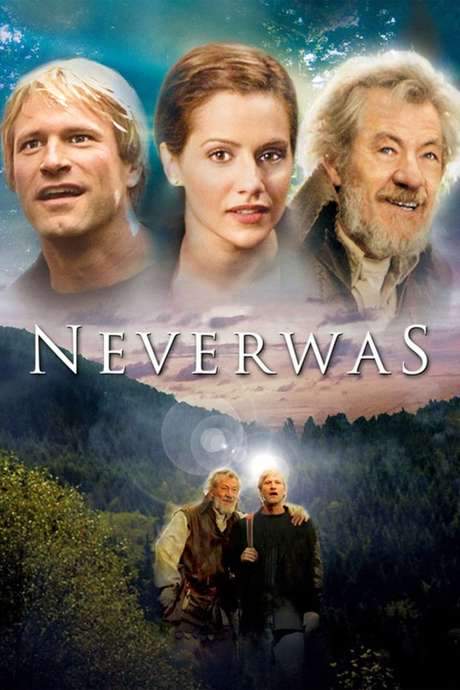
Neverwas (2005) movie poster

Timeline

Neverwas (2005) Timeline Explained – Every Event in Order

Release, runtime and language
2005 · 103 mins · English
Directed by
Joshua Michael Stern
Starring
William Hurt, Aaron Eckhart, Vera Farmiga, Ian McKellen, Michael Moriarty, Nick Nolte

Zach Riley, a psychiatrist, leaves a prestigious university position to work at the private mental institution Millwood. Unbeknownst to his new colleagues, Millwood is the very facility where his late novelist father, T. L. Pierson, spent many years, linking Riley’s past to the haunting mysteries within its walls.

On this page (7)
  1. 1 Where to watch
  2. 2 Events in order (12)
  3. 3 Timeline questions answered
  4. 4 Movie threads
  5. 5 Movies like Neverwas
  6. 6 Categories
  7. 7 Every angle

Where to watch

Where to Watch Neverwas (2005)

Where can you watch Neverwas? Stream, rent or buy it in the US, including on Hoopla, Amazon Video and Apple TV Store: current JustWatch availability with up-to-date prices.

Streaming availability powered by JustWatch

12 events in order · contains spoilers

Neverwas Timeline: Events in Chronological Order

Every key event of Neverwas (2005) in order, scene by scene, with when and where it takes place. Use it to untangle flashbacks, time jumps and parallel storylines, to refresh your memory before the sequel or to find the exact scene you are thinking of.

  1. New appointment at Millwood

    Zach Riley leaves his prestigious university post to take a position at the privately run Millwood asylum under Dr. Reed. He steps into the same institution where his father, T. L. Pierson, spent years battling depression, a fact he keeps to himself.

    Where
    Millwood
  2. Hidden family history revealed

    Riley learns that Millwood is the place where his novelist father suffered, a revelation that adds weight to his new role. The knowledge complicates his view of his father's work, especially the Neverwas tale.

    Where
    Millwood
  3. Memory of his father's death

    Riley recalls his father's suicide; he found the body, and has long carried guilt about not preventing it. It haunts his memory and motivates his cautious approach to treating patients.

    When
    past
  4. Assignment to Gabriel Finch

    Riley is assigned to work with Gabriel Finch, a schizophrenic patient who identifies with the captive king. The case becomes the emotional anchor of Riley's investigation into Finch's world.

    Where
    Millwood
  5. Finch's belief in the captive king

    Finch believes the Neverwas book is an oracle confirming his reality and that Riley is the boy hero. This belief deepens the bond between patient and physician.

    Where
    Millwood
  6. Reconnection with Maggie Paige

    Riley renews contact with his childhood friend Maggie Paige. Her presence becomes a catalyst for linking his past with Finch's present.

  7. Origins of Neverwas

    Riley learns that T. L. Pierson's Neverwas was based on Finch's stories told to him while both were patients in the hospital. The revelation shows the novel's world as a shared construct born from their shared hospital experiences.

    Where
    Hospital
  8. Interweaving fables and reality

    Riley realizes that more things tie him to the book and to Finch's recovery than he anticipated. The connections suggest deeper parallels between his life and Finch's tale.

  9. Hallucination becomes real

    Finch's 'hallucination' concerns actual places and events, collapsing the line between fiction and reality. Riley begins to see that the events he witnesses in clinic echo real locations in his own life.

  10. Becoming the boy hero

    Riley begins to see himself as the boy hero from Neverwas, a shift in his self-image that shapes how he views his role as a doctor and a son.

  11. The oracle of the book

    The book's status as an oracle gains credibility for Finch and Riley, reinforcing the idea that the fictional world reflects real truth. The boundaries between author, patient, and patient’s fantasy start to blur.

  12. Reality and memory converge

    As the narrative threads tighten, Riley confronts how his father's legacy, Finch's stories, and his own life fuse into a single, shared history. The convergence of memory and myth culminates in a new understanding of healing.

Last updated: February 20, 2026 at 18:43

Was this helpful?

Timeline questions answered

Neverwas Timeline Explained: Your Questions Answered

When does it happen, and why in that order? The questions people ask about the chronology of Neverwas (2005): time jumps, flashbacks, cause and effect between scenes and the correct order of events, each answered with spoilers.

Q1

Why does Zach keep his father's history at Millwood secret?

Zach Riley hides the fact that his father T.L. Pierson was a patient at Millwood because he carries deep guilt over his father's suicide. He found his father's body and believes he failed to prevent it. Revealing this connection would expose his personal trauma to colleagues and complicate his professional role at the very institution where his father's mental illness played out.

Foreshadowing: Early in the film, Zach's cautious approach with patients hints at his fear of failing those he tries to help.

  • Zach Riley
  • T.L. Pierson
  • Millwood
  • guilt
  • father suicide
Q2

Why did T.L. Pierson write Neverwas based on Gabriel Finch's stories?

T.L. Pierson wrote the children's book Neverwas based on stories told to him by Gabriel Finch while both were patients at Millwood. Pierson, struggling with depression, found meaning in Finch's imaginative tales about a child entering a hidden world to free a captive king. He transformed these shared hospital experiences into the fictional narrative, using his own son Zach as the inspiration for the boy hero.

Foreshadowing: The revelation comes when Riley learns that Finch's stories formed the foundation of the novel.

  • Neverwas book
  • T.L. Pierson
  • Gabriel Finch
  • hospital
  • children's book
Q3

Why does Gabriel Finch believe he's the captive king from Neverwas?

Gabriel Finch, a schizophrenic patient, has internalized the Neverwas story to the point where he treats it as an oracle confirming his reality. Since the book was based on his own stories told to Pierson, Finch sees himself as the captive king and interprets the narrative as a prophecy about his own life. His belief deepens when he meets Zach, whom he identifies as the boy hero meant to free him.

Foreshadowing: Finch's conviction that Riley is the boy hero establishes their bond from their first sessions.

  • Gabriel Finch
  • captive king
  • Neverwas
  • hallucination
  • schizophrenic
Q4

How did the Neverwas book become an oracle for Finch?

The Neverwas book became an oracle for Finch because it originated from his own imagination. Since T.L. Pierson based the novel on stories Finch told during their time as patients together, Finch sees the book not as fiction but as a recorded truth about his reality. He believes the captive king's imprisonment mirrors his own confinement in the mental institution, and the boy's quest to free him is destined to happen.

Foreshadowing: The deeper Riley digs into the connection between his father and Finch, the more Finch's belief system solidifies.

  • Neverwas
  • oracle
  • prophecy
  • Finch
  • reality vs fiction
Q5

Why does Zach start seeing himself as the boy hero from Neverwas?

Zach begins to see himself as the boy hero from Neverwas because Finch's conviction that Zach is the one meant to free him becomes increasingly compelling. As Zach investigates the connections between his father's work, Finch's stories, and his own life, he recognizes that he is literally the child his father wrote about. This realization transforms his understanding of his role both as a psychiatrist and as a son seeking to free his father's legacy from the depression that consumed him.

Foreshadowing: Riley's gradual shift mirrors the hero's journey in the Neverwas story itself.

  • Zach Riley
  • boy hero
  • Neverwas
  • self-identity
  • healing
Q6

How do Finch's hallucinations turn out to be real places and events?

Finch's hallucinations are revealed to be connected to real places and events because they stem from actual memories and experiences shared between him and T.L. Pierson at Millwood. The stories he told Pierson were based on their shared environment and experiences at the hospital. As Riley investigates, he discovers that Finch's "delusions" contain real locations and true historical connections, blurring the line between Finch's fantasy and the factual world around them.

Foreshadowing: The film progressively reveals that Finch's stories contain verifiable details about the hospital.

  • Finch hallucination
  • real places
  • Millwood
  • reality vs fantasy
  • memory
Q7

Why does Maggie Paige become important to Zach's journey?

Maggie Paige matters because she is Zach's childhood friend who connects his present to his past. Her reappearance in Zach's life serves as a catalyst, reminding him of who he was before his father's death and the guilt that followed. She helps bridge Zach's personal history with his current investigation into his father's legacy and Finch's world, providing emotional support as he confronts difficult truths.

Foreshadowing: Maggie and Zach's shared history is hinted at in early scenes of reconnection.

  • Maggie Paige
  • childhood friend
  • Zach Riley
  • past
  • emotional support
Q8

Why does Zach feel guilty about his father's suicide?

Zach feels guilty about his father's suicide because he was the one who found T.L. Pierson's body. This traumatic discovery left Zach believing he could have or should have prevented his father's death. This guilt has shaped his entire career choice, driving him to work with mental patients as a way of confronting his failure to save his own father.

Foreshadowing: Zach's careful, protective approach with patients reflects his fear of repeating past failures.

  • T.L. Pierson suicide
  • Zach guilt
  • father death
  • trauma
  • found body
Q9

What does the title Neverwas mean in the context of the film?

The title Neverwas refers to both the children's book and the concept of a world or identity that never truly existed in reality. For Gabriel Finch, Neverwas represents a realm where his true self as the captive king exists. For Zach, it symbolizes the lost relationship with his father and the childhood he feels was taken from him. The title ultimately represents the blurring between fiction and reality, and the healing that comes from reconciling imaginary worlds with actual pain.

Foreshadowing: The title's meaning evolves as the boundaries between Finch's fantasy and reality collapse.

  • Neverwas title meaning
  • fiction vs reality
  • healing
  • loss
  • identity

Movie threads

More Movies Like Neverwas, by Mood & Story

Curated lists built around what makes Neverwas tick: the same mood, the same kind of story or the same emotional payoff. Each list explains why these movies belong together.

Movies about confronting family legacy like Neverwas

Characters confronting inherited trauma and secrets from their parents' past. Discover movies like Neverwas where characters explore troubled family histories and parental legacies. These psychological dramas follow similar journeys of uncovering family secrets and understanding inherited trauma.

  • introspective
  • melancholic
  • psychological
  • family secrets
  • emotional
  • reflective
  • Tone: melancholic, introspective
  • Pacing: steady, deliberate
Why these movies?

The story pattern: Stories typically begin with a protagonist discovering unsettling connections to their family's past, often involving mental illness, artistic legacies, or childhood trauma. The narrative unfolds through gradual revelations as the character pieces together fragmented memories and hidden truths.

Why they belong together: These films share a focus on intergenerational trauma, psychological introspection, and the emotional weight of uncovering family secrets. They create a cohesive experience through their melancholic tone, steady pacing, and themes of healing through understanding.

Psychological institution dramas similar to Neverwas

Stories set in psychiatric facilities where staff confront their own demons. If you liked Neverwas and its setting in a mental health facility, explore these movies about psychiatric institutions where staff members face their own psychological challenges while helping patients.

  • psychological drama
  • mental health
  • institutional setting
  • mysterious
  • somber
  • therapeutic
  • Tone: somber, mysterious
  • Pacing: steady, unfolding
Why these movies?

The story pattern: The narrative typically follows a caregiver or professional who takes a position at a mental health facility, only to discover personal connections to the institution or its patients. The story explores the blurred lines between healer and patient, reality and delusion.

Why they belong together: These films share the unique setting of mental health institutions as both backdrop and character, exploring themes of blurred professional boundaries, personal healing through helping others, and the psychological weight of institutional environments.

If you liked this

Movies Like Neverwas

Similar movies to Neverwas: the same genre, themes or kind of story. Each one comes with its own plot summary, timeline and ending explained.

Browse all movie summaries

Categories

Movie Lists Featuring Neverwas

Neverwas appears in these hand-built movie categories. Each one groups movies by a specific mood, theme or story type, with their plot summaries and endings explained.

View all movie categories

Every angle

Neverwas (2005) Explained: Plot, Timeline & Characters

Everything about Neverwas in one place: what happens in the plot summary, the timeline in chronological order, the characters and meaning and a spoiler-free summary. What's After the Movie adds the cast, box office and post-credit scenes.

Coming soon on iOS and Android

The Plot Explained Movie Summary App

Plot summaries, endings explained and timelines on your phone. Catch up on any movie in minutes, save your favorites and never miss a twist again.

Be the first to know when we launch. Your email stays private, always.

Learn more about the app