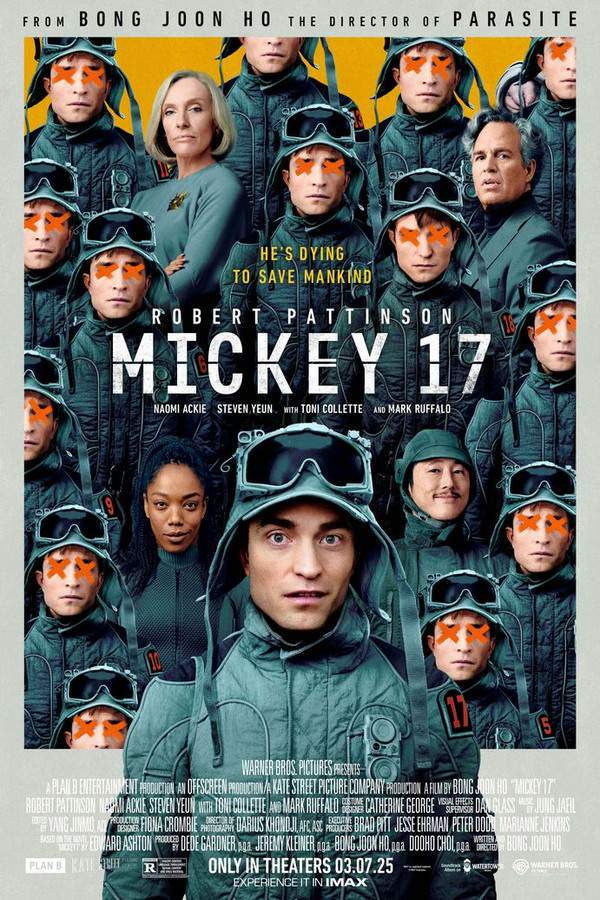
Mickey Barnes, played by Robert Pattinson, finds himself in a precarious and unusual situation, working for an organization that requires the ultimate sacrifice from its employees: to die. This unlikely hero is thrust into a role where his life is repeatedly risked, and he must confront the profound implications of his commitment. The narrative explores themes of mortality, purpose, and the lengths to which someone will go for a job, delving into the psychological and emotional toll of such a demanding and dangerous existence. Facing constant peril, Mickey grapples with the moral complexities of his situation, questioning the value of his life and the motivations behind his employer’s unusual request. He must navigate a landscape of uncertainty and danger, all while confronting the existential nature of his task.
Warning: spoilers below!
Haven’t seen Mickey 17 yet? This summary contains major spoilers. Bookmark the page, watch the movie, and come back for the full breakdown. If you're ready, scroll on and relive the story!
Read the complete plot breakdown of Mickey 17 (2025), including all key story events, major twists, and the ending explained in detail. Discover what really happened—and what it all means.
The film begins in a distant future on the icy planet Niflheim, where we find Mickey Barnes (Robert Pattinson) in a precarious situation. Having fallen from a great height, he survives against the odds. His partner, Timo (Steven Yeun), spots him but chooses not to intervene, believing that Mickey, as the 17th clone, is doomed. As Mickey’s voice echoes his feelings, he expresses his disdain for dying.
To understand how Mickey ended up in this dire place, we journey back over four years to Earth, where he and Timo are entangled with a ruthless loan shark named Darius Blank (Ian Hanmore). To evade fatal repercussions for their debts, they enlist in a mission to colonize Niflheim due to the deteriorating conditions on Earth. This journey leads them to the dominion of Kenneth Marshall (Mark Ruffalo), a celebrity-like figure with a devoted following. In this new life, Timo becomes a pilot while Mickey takes on the role of an Expendable, undertaking perilous tasks including collecting samples of a dangerous virus in search of a vaccine. He grapples with haunting memories of his past, particularly guilt surrounding his mother’s fatal car accident, which he suspects he inadvertently caused.
Amidst the challenges of the colony, Mickey forms a bond with Nasha Barridge (Naomi Ackie), a security agent. Their connection deepens despite the strict regulations imposed by Marshall, who explicitly forbids any sexual relationships among colonists—a rule Mickey and Nasha frequently disregard.
As Mickey’s journey continues, he embarks on an expedition into Niflheim alongside Timo and fellow agents Kai Katz and Jennifer Chilton. Their mission, ordered by Marshall, is to capture a mysterious creature known as a “Creeper.” However, when chaos ensues during their attempt—leading to Jennifer’s unfortunate demise—Mickey finds himself down in a crevasse. Unexpectedly, a mother Creeper saves him, using her tail to guide him out, leaving him bewildered.
Upon returning to his quarters, Mickey is alarmed to learn that another version of himself, Mickey 18, has already been created, as they believed Mickey 17 was dead. This revelation sparks panic within Mickey 17, as doubles are strictly prohibited following a notorious incident involving a serial killer who exploited the cloning technology. This precarious situation only escalates as Mickey 18 learns of his existence and becomes hostile.
During a dinner with the Marshalls, Mickey begins to experience severe side effects from a growth hormone included in the meal—thanks to Arkady (Cameron Britton), the lead scientist. Following these events, Mickey tries to navigate the complexities of his relationship with Nasha while grappling with the reality of having an adverse clone.
The tension heightens when Marshall prepares a deadly nerve gas intended for the Creepers, completely neglecting Mickey’s and Nasha’s insights into the creatures’ true nature. As the Creepers rise to the surface, seeking to reclaim their lost young, Mickey is faced with a moral dilemma regarding the fate of both the Creepers and humanity.
In a climactic confrontation involving Nasha, the Marshalls, and the Creepers, alliances form and betrayals unfold. Mickey ultimately sacrifices himself to save the Creepers, leading to a chaotic finale. The aftermath sees Nasha ascending to power and Mickey coming to terms with his past while grappling with nightmares of the villainous Ylfa’s (portrayed by Toni Collette) influence.
Months later, a significant ceremony marks the shut down of the Expendable program. Mickey, now embracing his true identity, has the honor of destroying the clone printer, symbolizing a poignant ending to a tumultuous journey filled with moral quandaries, transformations, and a quest for redemption amidst cloning’s chaotic consequences.
Last Updated: May 12, 2025 at 07:03
Still wondering what the ending of Mickey 17 (2025) really means? Here’s a spoiler-heavy breakdown of the final scene, major twists, and the deeper themes that shape the film’s conclusion.
At the end of Mickey 17, Mickey (Robert Pattinson) faces a crucial choice to destroy a dangerous human printing machine, which symbolizes the potential for misuse and harm caused by technology. His decision is heavily influenced by a nightmare he experiences, where he imagines Marshall’s wife trying to resurrect a villain using the machine. Director Bong Joon Ho explains that this nightmare reflects Mickey’s deep-seated fears about the dangers of unrestrained technological advancement and its potential to repeat catastrophic consequences. The nightmare acts as both a personal release from Mickey’s own trauma—linked to his childhood fear of pressing red buttons that once caused tragedy—and as a broader comment on the risks of AI and similar technologies rushing forward without proper safeguards.
The film’s themes of technological misuse are woven throughout, highlighting how entities like Marshall, who oversees the safety of the printing technology, can be tempted to exploit it for profit or power. Despite promises to limit the use of Mickey-like duplicates, the technology’s potential for abuse remains, illustrated by the creation of multiple Mickeys and their subsequent mistreatment. Mickey’s suffering and his decisions are motivated by a desire to prevent further harm, especially after he has endured so much pain as a pawn in larger, uncontrollable forces.
Ultimately, Mickey’s choice to destroy the machine signifies a victory over the potential horrors of unchecked technology. But the dream sequence also underscores an ongoing anxiety—one that Bong infuses into the story—to remind viewers that such disasters could recur if technological advancement is not carefully managed. Mickey’s act is both a personal triumph and a cautionary note, emphasizing that the threat posed by technological misuse is always lurking, ready to resurface if humanity isn’t vigilant. The ending leaves us with a sense of cautious hope, acknowledging the importance of responsibility in innovation and the perpetual challenge of controlling powerful new technologies.
Last Updated: June 25, 2025 at 09:03
Discover curated groups of movies connected by mood, themes, and story style. Browse collections built around emotion, atmosphere, and narrative focus to easily find films that match what you feel like watching right now.
Characters confront their own humanity within authoritarian and morally corrupt futures.If you enjoyed the heavy, thought-provoking atmosphere of Mickey 17, explore more movies like it. This thread features similar sci-fi stories where characters face moral dilemmas about identity and freedom within unforgiving, authoritarian systems or corporations.
The narrative typically follows a protagonist who is a cog in a vast, uncaring machine—a corporation, a colony, or a government. Their journey involves a dawning awareness of their own expendability, leading to a crisis of identity and a rebellion against the system, often at great personal cost. The central conflict is internal as much as external.
They are grouped by their shared dark tone, heavy emotional weight, and focus on themes like cloning, AI consciousness, or corporate exploitation. They create a consistent vibe of intellectual and emotional unease, blending high-concept sci-fi with deep character drama.
Hard-won redemptions that come at a profound and lasting personal cost.For viewers who appreciated the bittersweet ending of Mickey 17, this thread collects similar movies where the protagonist's heroic actions or redemption come with a heavy price. These films blend hopeful conclusions with a sense of profound loss, creating a powerful and memorable emotional experience.
The plot builds towards a climax where the character must make a monumental choice, often involving self-sacrifice for a greater good. The resolution acknowledges the success of their mission or the positive change they've effected, but it is tempered by the personal cost—loss of self, relationships, or life—creating an ending that is neither purely happy nor tragic.
These films share a specific emotional arc and conclusion. They are united by a bittersweet ending feel, heavy emotional weight, and a narrative pattern where moral complexity leads to a resolution that mixes hope with sorrow, providing a deeply satisfying yet melancholic viewer experience.
Don't stop at just watching — explore Mickey 17 in full detail. From the complete plot summary and scene-by-scene timeline to character breakdowns, thematic analysis, and a deep dive into the ending — every page helps you truly understand what Mickey 17 is all about. Plus, discover what's next after the movie.
Track the full timeline of Mickey 17 with every major event arranged chronologically. Perfect for decoding non-linear storytelling, flashbacks, or parallel narratives with a clear scene-by-scene breakdown.
Discover the characters, locations, and core themes that shape Mickey 17. Get insights into symbolic elements, setting significance, and deeper narrative meaning — ideal for thematic analysis and movie breakdowns.
What really happened at the end of Mickey 17? This detailed ending explained page breaks down final scenes, hidden clues, and alternate interpretations with expert analysis and viewer theories.
Get a quick, spoiler-free overview of Mickey 17 that covers the main plot points and key details without revealing any major twists or spoilers. Perfect for those who want to know what to expect before diving in.
Visit What's After the Movie to explore more about Mickey 17: box office results, cast and crew info, production details, post-credit scenes, and external links — all in one place for movie fans and researchers.
Discover movies like Mickey 17 that share similar genres, themes, and storytelling elements. Whether you’re drawn to the atmosphere, character arcs, or plot structure, these curated recommendations will help you explore more films you’ll love.
Mickey 17 (2025) Scene-by-Scene Movie Timeline
Mickey 17 (2025) Movie Characters, Themes & Settings
Mickey 17 (2025) Ending Explained & Theories
Mickey 17 (2025) Spoiler-Free Summary & Key Flow
Movies Like Mickey 17 – Similar Titles You’ll Enjoy
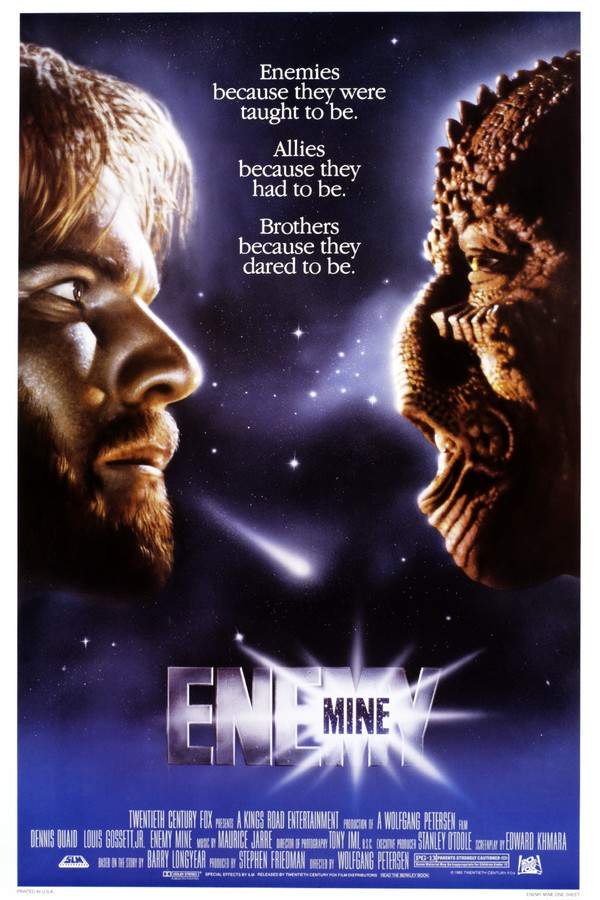
Enemy Mine (1985) Detailed Story Recap
Mickey (1918) Detailed Story Recap
Super Mouse and the Roborats (1989) Film Overview & Timeline
Death Of The Rat (2024) Ending Explained & Film Insights
Mickey (1918) Film Overview & Timeline
Plutopia (1951) Full Movie Breakdown
Mickey Magnate (1949) Complete Plot Breakdown
Mickey’s Good Deed (1932) Story Summary & Characters
Mickey’s Nightmare (1932) Complete Plot Breakdown
Mickey’s Pal Pluto (1933) Film Overview & Timeline
Mickey’s Man Friday (1935) Complete Plot Breakdown
Mickey Plays Papa (1934) Movie Recap & Themes
Mickey One (1965) Film Overview & Timeline
Where Has Poor Mickey Gone? (1964) Detailed Story Recap
Mickey’s Garden (1935) Complete Plot Breakdown