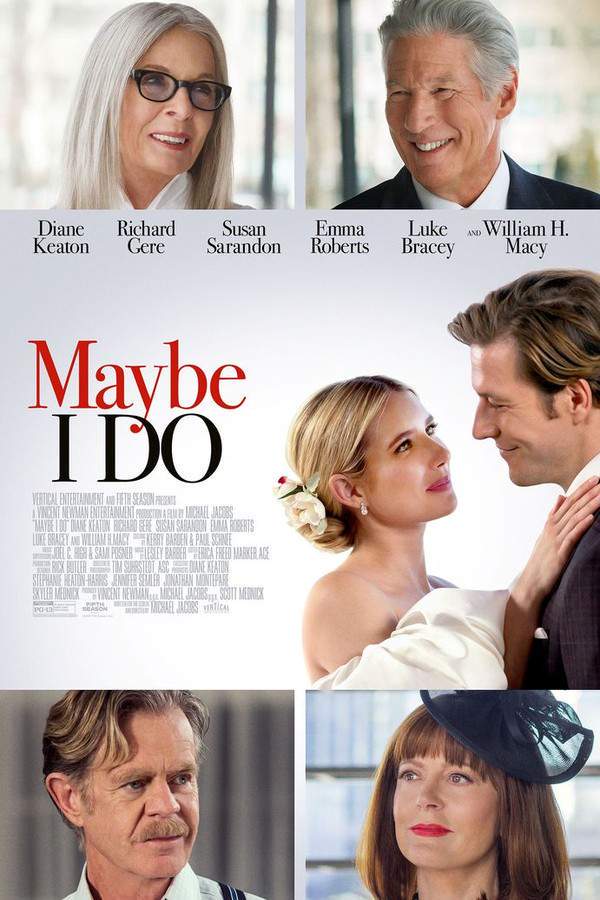
The ending of "Maybe I Do" reveals a tangled web of family secrets that ultimately leads to honesty and a chance for new beginnings. During the dinner gathering at Michelle’s house, the truth about their relationships comes to light in a series of emotional revelations. Howard and Monica, who are Michelle and Allen’s parents respectively, discover the full extent of their past affair—something they had hidden for years. This revelation shatters any illusions of perfect relationships and forces each character to confront their own feelings and the reality they had ignored. Howard and Monica’s confrontations highlight their resentments and unresolved issues, but by the end, they seem to find a way to forgive each other and rebuild some semblance of their connection, now colored by honesty.
Meanwhile, the two young lovers, Michelle and Allen, learn that their parents' complicated history does not have to dictate their future. Michelle, having grown up witnessing her parents’ loving relationship, begins to see that marriage can be different from her parents’ troubled union. Allen, who watched his parents grow bitter and distant, realizes that he wants a different kind of relationship—one built on understanding and genuine love. They choose to marry, symbolizing a fresh start and a conscious decision to create their own story, separate from the failures of their parents.
The film’s final scenes emphasize hope and renewal. Grace and Howard rekindle their romance, leaving behind the baggage of aging and disappointment to embrace each other anew, suggesting that open communication and willingness to work through problems can lead to stronger bonds. As for Sam and Monica, their future remains ambiguous; they leave the wedding without clear resolutions, with some viewers leaning toward the idea that they might part ways, recognizing their emotional distance and the lack of resolution to their issues.
In essence, "Maybe I Do" ends on a note that suggests that relationships are personal journeys. While some couples find reconciliation and grow stronger, others may choose to part ways if that’s what makes them happy. The overarching message is that honesty, self-awareness, and the courage to face uncomfortable truths can lead to growth—whether within a marriage or in the decision to move on. The story closes on the idea that everyone has the power to define their own happiness, regardless of past mistakes or family history."Maybe I Do" ends with a mixture of hope and realism, reminding us that love and connection require effort, but ultimately, it’s up to each individual to choose their own path towards happiness.
The ending of "Maybe I Do" reveals a web of family secrets that come to light during a pivotal dinner gathering at Michelle’s house. It’s uncovered that Howard and Monica, Michelle and Allen’s respective parents, had a longstanding affair, a fact they had kept hidden for years. This revelation shatters the illusion of perfect relationships for everyone involved but ultimately leads them toward honesty and reconciliation. Howard and Monica confront their past resentments, and through their emotional exchanges, they begin to forgive each other and find a way to reconnect, emphasizing that open communication can mend even deep wounds.
For the young couple, Michelle and Allen, discovering the truth about their parents' complicated history helps them see that they don’t have to follow the same destructive patterns. Michelle, who had always seen her parents as loving and respectful, begins to believe that marriage can take many forms, shaped by genuine care rather than perfection. Allen, having witnessed his parents’ bitterness, realizes he wants a different future—one built on understanding and true love. They choose to marry, symbolizing hope and a fresh start, shaping their own story apart from their parents' troubled relationship.
The film concludes on an optimistic yet realistic note. Grace and Howard rekindle their love, showing that with effort and honesty, relationships can heal and thrive. Their renewed connection suggests that aging and past disappointments do not have to define a relationship if both partners are willing to work through their issues. Meanwhile, Sam and Monica’s future remains uncertain; they leave the wedding without a clear resolution, implying that they might choose to part ways, acknowledging the emotional distance that had grown between them.
Ultimately, "Maybe I Do" underscores that love and relationships are personal journeys. Some couples may find reconciliation and grow stronger, while others may decide that separation is best for their happiness. The film emphasizes that truth and self-awareness are crucial in shaping one’s happiness and that everyone has the power to define their own path forward. It leaves viewers with a message that love demands effort but also the courage to face uncomfortable truths. The final scene suggests that, whether together or apart, each person must choose what brings them genuine fulfillment, affirming that happiness is ultimately a personal choice.