Plot Explained Spoilers guaranteed!
Plot Explained

Browse by genre

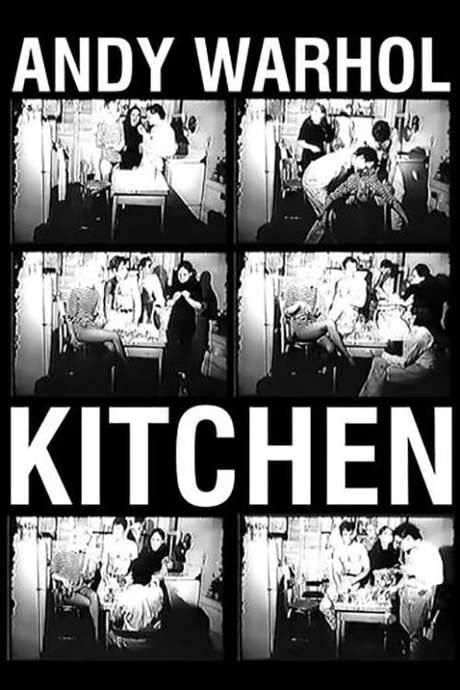
Kitchen (1966) movie poster

Characters & Themes

Kitchen (1966) Characters, Setting & Themes Explained

Release, runtime and language
1966 · 66 mins · English
Loading streaming availability…
Directed by
Andy Warhol
Starring
David McCabe, Edie Sedgwick, Gerard Malanga, Rene Ricard, Ronald Tavel, Elecktrah

Andy Warhol asked Ronald Tavel to write a vehicle for Edie Sedgwick in a white kitchen, creating an iconic short. A cast of actors and objects—sink, trash basket—are thrust into absurd comic theater. In the cramped, filled kitchen, boredom, confusion and dread mingle with conflict, turning the space into a laboratory of self‑creation.

On this page (7)
  1. 1 Where to watch
  2. 2 Characters explained (8)
  3. 3 Where & when it takes place
  4. 4 Themes & meaning (3)
  5. 5 Character & meaning questions
  6. 6 Movie threads
  7. 7 Every angle
Loading streaming availability…

8 main characters · contains spoilers

Kitchen Characters Explained: Who Is Who

The main characters of Kitchen (1966), heroes and villains: what drives them, how they change over the course of the story and what each of them reveals about the film's bigger ideas.

  • Jo (Edie Sedgwick)

    Jo treats the kitchen as a stage for cosmetic ritual, flirtation, and chaotic humor—shifting from playful command to performance art. Her actions manipulate audience perception while underscoring the emptiness of a scripted scene. She embodies a persona that thrives on attention within a minimal domestic setting.

    • 🔥 Charismatic
    • 🧪 Experimental
    • ✨ Provocative
  • Mickey (Roger Trudeau)

    Mickey is portrayed with a wooden, stumbling presence, contributing to the film’s sense of aimless spontaneity. He participates in the awkward dialogue and reactions, emphasizing the tension between intended performance and actual on-screen action.

    • 🤏 Awkward
    • 🧭 Domestic
    • 🎭 Improvisation
  • Photographer (David McCabe)

    The photographer enters to document the scene and then exits, reinforcing the meta aspect of production. His presence frames the scene as an unfinished image, highlighting the voyeuristic aspect of watching a performance unfold.

    • 📷 Observer
    • 🎨 Visual
    • 🧭 Art-world insider
  • Busboy (Rene Ricard)

    The busboy’s quiet labor at the sink provides counterpoint to Jo’s antics, grounding the scene in everyday work even as dialogue remains inert. His role hints at the backstage labor that keeps a production moving, even when the camera is distracted.

    • 🧹 Quiet
    • 🧭 Supporting
    • 🧪 Experimental
  • Offscreen Direction (Ronald Tavel)

    Ronald Tavel’s direction is heard offscreen, pushing performers through cues while the camera appears indifferent. He represents the controlling voice behind the chaos, shaping the action with voiceover and stage directions.

    • 🎚️ Direction
    • 🗣️ Meta
    • 🧭 Scripted
  • Nikki (Elecktrah)

    Nikki adds to the ensemble’s flux, contributing to the film’s cacophony and collective energy. Her presence reinforces the idea of a blended, improvisational cast rather than a fixed, cohesive troupe.

    • 🎨 Ensemble
    • 🔎 Experimental
    • 🗒️ On-set
  • Gerald (Donald Lyons)

    Gerald appears as part of the on-set dynamics, joining the rhythmic entrances and exits that define the piece’s discontinuous flow. His involvement underscores the film’s assemblage nature.

    • 🧑‍💼 On-set
    • 🪶 Fragmented
    • 🧪 Experimental
  • Nicky (Roger Trudeau)

    Nicky contributes to the on-set energy through uncertain, spontaneous actions. The actor’s presence reinforces the film’s exploration of performance as a social construct rather than a fixed character.

    • 🎭 On-set
    • 🎨 Improvisation
    • 🧪 Experimental

Last updated: October 04, 2025 at 17:16

Was this helpful?

Setting

Where and When Does Kitchen Take Place?

The setting of Kitchen (1966): the year and time period, the places and locations, and how they shape the characters, the mood and the tension of the story.

Time period

Location

Small white apartment kitchen

In Kitchen, the action unfolds inside an empty, stark white apartment kitchen. The space functions as both set and stage for improvisation, with props like a malted mixer and a calendar guiding the absurd, ritual-like scenes. The minimalist kitchen emphasizes the film’s detachment from conventional narrative, turning a domestic space into a heady art piece.

  • 🔳 Minimalist
  • 🧬 Experimental
  • 🗝️ Meta-performance

Last updated: October 04, 2025 at 17:16

Was this helpful?

3 major themes

Kitchen Meaning: Themes & Message Explained

What is Kitchen (1966) really about? The emotional, social and philosophical themes the film keeps returning to, its symbolism and the message beneath the surface.

  • Performance

    The work operates as a live-action performance rather than a traditional narrative, with lines being read only sporadically and then neglected as the camera lingers on action. The kitchen itself becomes the primary stage, where gesture, sound, and objects carry meaning beyond dialogue. The piece experiments with cinema as theater and questions the primacy of scripted storytelling.

  • Celebrity

    Edie Sedgwick’s Jo anchors the piece, projecting star power into a mundane domestic setting. The film uses celebrity presence to blur glamour with banality, reducing fame to routine makeup, props, and performative exchanges. The meta-credits and on-set ambiance critique pop-culture’s fetish for spectacle.

  • Reality vs Film

    Dialogue dissolves as actors drift into unguarded behavior, suggesting the act of filming has become indistinguishable from daily life. A grinding mixer drowns out speech, turning sensation into the primary experience. The film probes what counts as performance when the filmmaking apparatus overshadows the script.

Last updated: October 04, 2025 at 17:16

Was this helpful?

Character & theme questions

Kitchen Characters & Meaning: Your Questions Answered

The questions people ask about Kitchen (1966): who the characters really are, their relationships, what the symbols mean, where it takes place and what the movie is really about. Each answer contains spoilers.

Q1

Where does Kitchen take place?

The entire film takes place in a small, stark white apartment kitchen. This minimalist domestic space serves as both the setting and the primary visual element, functioning as a stage for improvisation rather than a realistic environment. Props like a malted mixer and calendar guide the absurd, ritual-like scenes.

  • setting
  • location
  • kitchen
  • white kitchen
  • apartment
Q2

Who is Jo in Kitchen?

Jo is played by Edie Sedgwick and serves as the central figure around which the film revolves. She treats the kitchen as a stage for cosmetic ritual, flirtation, and chaotic humor, shifting from playful command to performance art. Her actions manipulate audience perception while underscoring the emptiness of scripted scenes, embodying a persona that thrives on attention within this minimal domestic setting.

  • jo
  • edie sedgwick
  • character
  • performance
  • celebrity
Q3

What themes does Kitchen explore?

Kitchen explores three interconnected themes: Performance, Celebrity, and Reality vs Film. The film operates as a live-action performance where dialogue is sporadic and neglected, with gesture and objects carrying meaning beyond words. It uses Edie Sedgwick's celebrity presence to blur glamour with banality, and probes what counts as performance when the filmmaking apparatus overshadows the script.

  • themes
  • performance
  • celebrity
  • reality
  • film
  • art
Q4

How does Kitchen approach performance?

Kitchen treats performance as the primary artistic element rather than narrative storytelling. Lines are read only sporadically and then neglected as the camera lingers on action. The kitchen itself becomes the main stage where gesture, sound, and objects carry meaning beyond dialogue. The piece experiments with cinema as theater and questions the primacy of scripted storytelling.

  • performance
  • theater
  • improvisation
  • experimental
  • cinema
Q5

How does Kitchen use celebrity?

The film uses Edie Sedgwick's presence to blur glamour with banality, reducing fame to routine makeup, props, and performative exchanges. The meta-credits and on-set ambiance critique pop-culture's fetish for spectacle. Sedgwick's star power is projected into a mundane domestic setting, making the ordinary feel performative and the performative feel ordinary.

  • celebrity
  • edie sedgwick
  • fame
  • pop culture
  • spectacle
Q6

What is the Reality vs Film theme in Kitchen?

The film explores how dialogue dissolves as actors drift into unguarded behavior, suggesting the act of filming has become indistinguishable from daily life. A grinding mixer drowns out speech, turning sensation into the primary experience. The piece probes what counts as performance when the filmmaking apparatus overshadows the script, creating a blur between reality and cinematic construction.

  • reality
  • film
  • performance
  • documentary
  • meta
Q7

What does the kitchen setting represent?

The kitchen functions as both set and stage, transforming a domestic space into a heady art piece. Its minimalist white design emphasizes the film's detachment from conventional narrative, turning a familiar domestic environment into what the description calls a laboratory of self-creation. The space becomes a laboratory where boredom, confusion, and dread mingle with conflict.

  • kitchen
  • setting
  • domestic
  • space
  • minimalist
  • art
Q8

Who are the key characters in Kitchen?

The main cast includes Jo (Edie Sedgwick) as the central performer, Mickey (Roger Trudeau) with his wooden, stumbling presence, the Photographer (David McCabe) who enters to document and exits, and the Busboy (Rene Ricard) who works quietly at the sink. Ronald Tavel provides offscreen direction, while Nikki, Gerald, and Nicky round out the ensemble that contributes to the film's cacophony and improvisational energy.

  • characters
  • cast
  • edie sedgwick
  • ensemble
  • actors
Q9

Who provides the offscreen direction in Kitchen?

Ronald Tavel, who wrote the screenplay at Andy Warhol's request, provides the offscreen direction. His controlling voice is heard pushing performers through cues while the camera appears indifferent. He represents the controlling force behind the apparent chaos, shaping the action with voiceover and stage directions while the film deliberately maintains a detached, documentary-like quality.

  • ronald tavel
  • director
  • writer
  • offscreen
  • voice

Movie threads

More Movies Like Kitchen, by Mood & Story

Curated lists built around what makes Kitchen tick: the same mood, the same kind of story or the same emotional payoff. Each list explains why these movies belong together.

Meta-Theatrical Movies Exploring Performance Like Kitchen

Films that draw attention to their own artifice and the nature of performance. Discover other avant-garde films like Kitchen that deconstruct cinema and focus on performance art, meta-fiction, and collaboration. Find movies where the process of creation is the main subject.

  • meta-fiction
  • clinical
  • voyeuristic
  • self-referential
  • abstract
  • conceptual
  • Tone: neutral, clinical
  • Pacing: slow, deliberate
Why these movies?

The story pattern: Narratives in this thread often eschew traditional plot in favor of a conceptual framework. The 'story' is about the making of the film, the relationship between actors and director, or the role of the spectator. Conflict arises from the tension between artifice and reality.

Why they belong together: These films are grouped by their shared focus on meta-commentary, their experimental approach to narrative structure, and their intellectual engagement with themes of spectatorship and artistic creation.

Hypnotic Movies About Mundane Rituals Like Kitchen

Films that transform everyday routines into hypnotic, unsettling atmospheres. Find movies similar to Kitchen that explore the hypnotic and unsettling quality of everyday routines. These films use slow pacing and a static feel to turn banality into a compelling cinematic experience.

  • hypnotic
  • boredom
  • static
  • unsettled
  • dreamlike
  • banality
  • Tone: neutral, unsettled
  • Pacing: slow, static
Why these movies?

The story pattern: The narrative pattern involves a deliberate lack of traditional events, focusing instead on the ritualistic repetition of actions like cleaning, eating, or working. The journey is internal and atmospheric, with any drama stemming from the psychological weight of the mundane.

Why they belong together: They share a specific mood blend of boredom, dreamlikeness, and unease, achieved through slow pacing, a focus on detail, and a transformation of everyday settings into spaces of hypnotic observation.

Every angle

Kitchen (1966) Explained: Plot, Timeline & Characters

Everything about Kitchen in one place: what happens in the plot summary, the timeline in chronological order, the characters and meaning and a spoiler-free summary. What's After the Movie adds the cast, box office and post-credit scenes.

Coming soon on iOS and Android

The Plot Explained Movie Summary App

Plot summaries, endings explained and timelines on your phone. Catch up on any movie in minutes, save your favorites and never miss a twist again.

Be the first to know when we launch. Your email stays private, always.

Learn more about the app