Plot Explained Spoilers guaranteed!
Plot Explained

Browse by genre

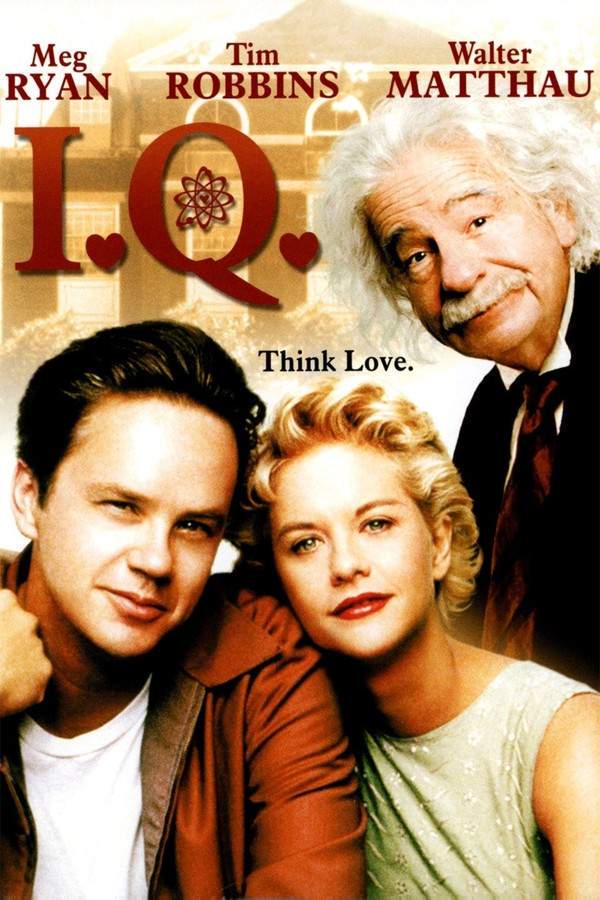
I.Q. (1994) movie poster

Plot Summary

I.Q. (1994) Plot Summary Explained

Release, runtime and language
1994 · 100 min · English
Loading streaming availability…
Directed by
Fred Schepisi
Starring
Tim Robbins, Walter Matthau, Meg Ryan
Budget
$25M

Catherine Boyd, a brilliant academic, finds herself choosing between a conventional fiancé and the unconventional Ed Walters. To win her heart, Ed enlists the help of Albert Einstein, pretending to be a genius. As Catherine navigates this unusual courtship, she must decide if love can blossom between intellect and charm in this lighthearted romantic comedy.

On this page (6)
  1. 1 Where to watch
  2. 2 What happens: full plot
  3. 3 Plot questions answered
  4. 4 Movie threads
  5. 5 Movies like I.Q.
  6. 6 Every angle
Loading streaming availability…

Full plot summary · contains spoilers

What Happens in I.Q.: Full Plot Summary

The whole story of I.Q. (1994) explained, from the opening scene to the final frame: every key event, every twist and what it all adds up to. Read it as a quick recap before the sequel, to check a scene you missed, or to finally understand what really happened.

During the film's opening sequence, we encounter a man, likely Einstein (played by Walter Matthau), skillfully playing the violin. As he performs, another man walks by a poster that advertises Boyd's comet. We then shift our focus to Catherine Boyd (portrayed by Meg Ryan) who is with her fiancé, James Moreland (Stephen Fry). Catherine is deeply engrossed in calculations related to the comet, but when she tries to share a story, James dismissively comments that she's "babbling." The narrative alternates between this scene and a heated debate among a group of older gentlemen about the existence of time.

As Catherine and James cruise around in a convertible, they encounter engine trouble. Meanwhile, Einstein engages in lively discussions with his elderly friends, leading to his iconic assertion, > "I do not believe God plays dice with the universe." The couple arrives at a garage where Ed Walters (played by Tim Robbins) is embroiled in an argument with his boss, Bob (Tony Shalhoub), about diagnosing the car's issues based solely on sounds.

When Bob sends Ed to check on the couple's vehicle, he mistakenly assumes they hail from Princeton College. Upon meeting Catherine, Ed immediately feels a connection. James, with a sense of entitlement, obnoxiously inquires about someone who can service a British engine. Ed charmingly asks, "May I look under the bonnet?" This seems to impress James, who permits Ed to inspect the vehicle. After examining it, Ed jokingly states, "You have no spark," a remark that cleverly alludes to the chemistry—or lack thereof—between Catherine and James. As she presses for more information, Ed whimsically adds, "My guess is that you have a short stroke and premature ignition." Despite her feigned innocence, it’s evident that Catherine understands the double entendre.

To appease James, Ed claims the repairs will take several days, prompting Catherine to call a cab and inadvertently leave behind a cherished pocket watch. At this moment, viewers catch a glimpse of a hand discreetly moving the watch under some magazines, leaving questions lingering about intent—was it an accident or a deliberate act? This theme of happenstance versus intentional actions recurs throughout the film.

After finding the watch, Ed learns that the address on the watch leads to the home of Albert Einstein, who happens to be Catherine's uncle. Assisting Einstein and his friends in retrieving a badminton racket, Ed forms a bond with them, making his admiration for Catherine apparent. Noting that his niece appears dissatisfied with her fiancé, Einstein contemplates ways to assist Ed in winning her affection. Understanding that Catherine prefers very intelligent partners, Ed jokingly remarks, "That's easy, lend me your brain for a couple of days." This sparks a clever idea in Einstein's mind.

Together with his companions, Einstein devises a scheme to convince Catherine that Ed has made groundbreaking advancements in cold fusion, allowing him to power a rocket destined for the stars, thereby capturing her interest. They assist Ed in masquerading as a genius by helping him present a paper on cold fusion at a symposium, as well as facilitating his success on an IQ test conducted by Catherine's fiancé. As a mathematician, Catherine becomes intrigued yet confounded by the complexities of "Ed's" cold fusion theory. Although Ed yearns to confess his deception to Catherine, he struggles to find the right moment.

Throughout the course of the film, Einstein and his friends meddle in Catherine's relationship with James and actively encourage Ed. James is portrayed as a sadistic individual who subtly demeans Catherine. Despite the obstacles, the story ultimately progresses toward a classic happy ending, incorporating elements such as an appearance by President Eisenhower, a dazzling convertible, a motorcycle, waltz music and a comet, all of which contribute to this charming romantic tale.
Last updated: October 28, 2024 at 17:55

Was this helpful?

Plot questions answered

I.Q. Plot Explained: Your Questions Answered

The questions people ask most about I.Q. (1994): what happens in the confusing scenes, why the characters do what they do, the twists, hidden details and what the ending means. Each answer contains spoilers.

Q1

Why does Einstein help Ed win Catherine's affection?

Einstein is Catherine's uncle and notices that she seems unhappy in her engagement to James. When Ed reveals his admiration for Catherine and jokes about needing Einstein's brain, Einstein sees an opportunity to help his niece find genuine happiness. Together with his friends, he orchestrates the cold fusion scheme to give Ed a chance to prove his worth to Catherine based on intellect, which is what she values most.

Foreshadowing: Earlier, Einstein observes James dismissing Catherine's excitement about her comet calculations, showing his dissatisfaction with how she is treated.

  • einstein
  • ed
  • catherine
  • uncle
  • help
  • love
Q2

How does Ed pretend to be a genius?

Einstein and his friends devise a elaborate scheme where they convince everyone that Ed has made groundbreaking advancements in cold fusion. They help him write and present a paper on cold fusion at a scientific symposium, and they also arrange for him to pass an IQ test administered by Catherine's fiancé James. The entire thing is fabricated, the group pretend Ed's work can power a rocket destined for the stars.

  • cold fusion
  • scheme
  • pretend
  • genius
  • iq test
  • symposium
Q3

What does Ed mean when he says Catherine and James have 'no spark'?

When Ed examines their car, he jokingly states 'You have no spark' as a mechanical diagnosis, but this is actually a clever double entendre referring to the lack of chemistry between Catherine and James as a couple. He further adds that the car has 'a short stroke and premature ignition,' which Catherine pretends not to understand but clearly catches the sexual innuendo. These remarks highlight Ed's charm and foreshadow the romantic tension between him and Catherine.

  • ed
  • catherine
  • james
  • spark
  • chemistry
  • double entendre
Q4

Why does Catherine leave her pocket watch at the garage?

After Ed tells them the repairs will take several days, Catherine calls a cab and leaves in a hurry, inadvertently leaving behind her cherished pocket watch. The watch belonged to her grandfather and bears Einstein's address, making it an important family heirloom. This seemingly accidental oversight sets in motion the entire plot, as Ed follows the address to Einstein's home and eventually becomes involved in the scheme.

  • pocket watch
  • catherine
  • garage
  • left behind
  • address
Q5

Why does Catherine's engagement to James not work out?

James is revealed to be condescending and subtly belittling toward Catherine throughout the film. He dismisses her excitement about her comet calculations, calls her 'babbling' when she tries to share her work, and treats her with entitlement and disrespect. While Catherine is intellectually accomplished, James does not value her intelligence or passion. In contrast, Ed genuinely engages with her ideas and shows genuine interest in who she is, making James an obvious villain in their relationship.

Foreshadowing: From the opening scene, James dismissively tells Catherine she is 'babbling' about her work.

  • james
  • catherine
  • engagement
  • dump
  • condescending
  • demeaning
Q6

Does Ed ever tell Catherine the truth about the deception?

Throughout the film, Ed yearns to confess his deception to Catherine but struggles to find the right moment to do so. The narrative does not explicitly show him confessing before the resolution, though the happy ending suggests that their relationship is built on genuine connection rather than the original lie. The film focuses more on the whimsical courtship than on the moral implications of the deception.

  • ed
  • catherine
  • confess
  • truth
  • deception
Q7

How does the movie end?

The film ends with a classic romantic happy ending. Catherine and Ed end up together, having overcome the obstacles posed by James and the elaborate deception. The finale includes charming elements like an appearance by President Eisenhower, a dazzling convertible, a motorcycle, waltz music, and the appearance of Boyd's comet, symbolizing the triumph of genuine love over contrived circumstances.

  • ending
  • finale
  • happy
  • comet
  • president eisenhower
Q8

How does Ed meet Einstein?

Ed meets Einstein by following the address found on Catherine's pocket watch, which she accidentally left at the garage. The watch belongs to Einstein, who is Catherine's uncle. When Ed arrives to return the watch, he helps Einstein and his friends retrieve a badminton racket, forming a bond with the famous physicist. This initial meeting leads to Einstein's decision to help Ed win Catherine's affection.

  • ed
  • einstein
  • meet
  • garage
  • pocket watch
  • uncle

Movie threads

More Movies Like I.Q., by Mood & Story

Curated lists built around what makes I.Q. tick: the same mood, the same kind of story or the same emotional payoff. Each list explains why these movies belong together.

Movies with playful romantic deceptions like I.Q.

Charming comedies where a well-intentioned lie creates an unexpectedly perfect romance. If you enjoyed the charming lie at the heart of I.Q., you'll love these other movies where an elaborate deception leads to an unexpected and heartfelt romance. This collection features feel-good comedies centered on well-intentioned fibs, mistaken identities, and humorous situations that ultimately bring the right people together.

  • whimsical
  • charming
  • playful
  • lighthearted
  • romantic
  • optimistic
  • Tone: whimsical, charming, playful
  • Pacing: steady, event-driven
Why these movies?

The story pattern: The narrative follows a protagonist who constructs a false identity or situation to appeal to their love interest. The plot revolves around maintaining this playful deception through a series of comedic set pieces, often with the help of quirky accomplices. The central conflict is the looming revelation of the truth, which ultimately leads to a heartfelt confession and a happy ending where love triumphs over the initial lie.

Why they belong together: These films are grouped by their shared focus on a lighthearted, humorous approach to romance, where the central 'problem' is a charming fabrication rather than a serious drama. They consistently feature low-stakes tension, high humor scores, and a deeply satisfying, optimistic resolution that affirms the power of genuine connection.

Movies about intellectuals in romance like I.Q.

Romantic stories that bridge the gap between the academic world and everyday life. Fans of I.Q. will enjoy this selection of movies that explore romance between intellectuals and unconventional partners. These stories often feature charming fish-out-of-water scenarios, witty dialogue, and the theme that emotional intelligence can be just as important as book smarts when it comes to finding true love.

  • witty
  • charming
  • romantic
  • intellectual
  • optimistic
  • heartwarming
  • Tone: charming, witty, optimistic
  • Pacing: steady, character-driven
Why these movies?

The story pattern: The narrative pattern centers on a relationship that transcends intellectual or social boundaries. One character often represents a structured, academic, or high-society world, while the other brings spontaneity, street smarts, or a different kind of wisdom. The journey involves both characters learning from each other, challenging each other's preconceptions, and discovering that compatibility is about more than just shared backgrounds or IQ points.

Why they belong together: These movies are connected by their central theme of intellectual versus emotional intelligence and the romance that blossoms when these worlds collide. They share a witty, charming tone, a focus on character growth through relationship dynamics, and a steady pacing that allows the romantic and intellectual chemistry to develop believably.

If you liked this

Movies Like I.Q.

Similar movies to I.Q.: the same genre, themes or kind of story. Each one comes with its own plot summary, timeline and ending explained.

Browse all movie summaries

Every angle

I.Q. (1994) Explained: Plot, Timeline & Characters

Everything about I.Q. in one place: what happens in the plot summary, the timeline in chronological order, the characters and meaning and a spoiler-free summary. What's After the Movie adds the cast, box office and post-credit scenes.

Coming soon on iOS and Android

The Plot Explained Movie Summary App

Plot summaries, endings explained and timelines on your phone. Catch up on any movie in minutes, save your favorites and never miss a twist again.

Be the first to know when we launch. Your email stays private, always.

Learn more about the app