


Plot Explained Spoilers guaranteed!
Plot Explained

Browse by genre

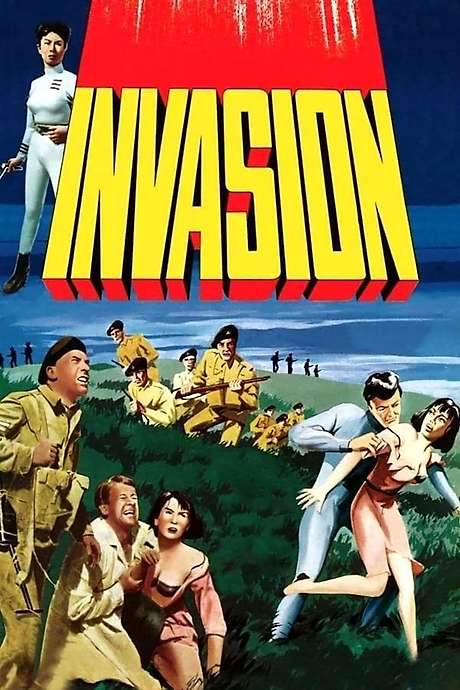
Invasion, U.S.A. (1952) movie poster

Timeline

Invasion, U.S.A. (1952) Timeline Explained – Every Event in Order

Release, runtime and language
1952 · 73 mins · English
Directed by
Alfred E. Green
Starring
Dan O'Herlihy, Gerald Mohr, Tom Kennedy, Noel Neill, Jack Carr, Phyllis Coates

See New York topple! See San Francisco in flames! See Boulder Dam destroyed! A group of American witness the deadly invasion of the United States by the Soviet Union.

On this page (6)
  1. 1 Where to watch
  2. 2 Events in order (13)
  3. 3 Timeline questions answered
  4. 4 Movie threads
  5. 5 Movies like Invasion, U.S.A.
  6. 6 Every angle

Where to watch

Where to Watch Invasion, U.S.A. (1952)

Where can you watch Invasion, U.S.A.? Stream, rent or buy it in the US, including on Fawesome, Hoopla and Plex: current JustWatch availability with up-to-date prices.

Streaming availability powered by JustWatch

13 events in order · contains spoilers

Invasion, U.S.A. Timeline: Events in Chronological Order

Every key event of Invasion, U.S.A. (1952) in order, scene by scene, with when and where it takes place. Use it to untangle flashbacks, time jumps and parallel storylines, to refresh your memory before the sequel or to find the exact scene you are thinking of.

  1. Ohman arrives at the bar and ruminates on America’s outlook

    In a New York City bar, the brooding forecaster Mr. Ohman sits alone, nursing brandy while others chat. He engages with a cross-section of affluent Americans, challenging them with stark forecasts about safety, sacrifice, and the hollow comforts of wealth. The conversations set a tense, uneasy mood as the night unfolds.

    When
    Evening
    Where
    New York City bar
  2. Americans dismiss grim news as they savor wealth

    The dialogue reveals a chorus of denial: international news is bad but not what they want to hear. They cling to material comforts, resist calls for industrial support of government, and reject sacrifice. Ohman warns that many Americans seek security yet refuse to pay the price.

    When
    Evening
    Where
    New York City bar
  3. Enemy airstrikes begin over Alaska

    Suddenly, the news shifts to a full-scale assault. The Enemy launches air attacks over Seal Point and Nome, with paratroopers landing on Alaskan airfields. The attackers begin converting civilian airfields into staging areas while bombing military targets.

    When
    Early night
    Where
    Alaska (Seal Point, Nome)
  4. Enemy plan and US counterstrikes unfold

    The enemy's strategy becomes clear: civilian airstrips are seized as staging areas and military bases are targeted with bombs. The US responds with Convair B-36 sorties, attempting counterattacks. But the invasion pushes deeper into the West, advancing toward Washington state and Oregon.

    When
    During the initial invasion
  5. Puget Sound shipyards suffer atomic blows

    Atomic attacks devastate shipyards in Puget Sound, causing massive casualties and crippling naval infrastructure. The assault underscores the scale of the threat and the slipping grip on American territory. Panic begins to spread beyond the bar as the nation reels.

    When
    During the sea-front attacks
    Where
    Puget Sound, Washington
  6. Bar patrons respond; romance develops

    With the crisis unfolding, Potter and Sanford become romantically linked as they endure the chaos. He continues to broadcast, while she volunteers at a blood drive, turning personal risk into a public response. The other patrons prepare to support the country in any way they can.

    When
    Evening
    Where
    New York City bar
  7. Industrialist is caught in San Francisco battle

    The industrialist returns to his home only to be drawn into the battle for San Francisco. He is shot in his office as the city comes under attack, illustrating how civilians of all classes are pulled into the front lines. The nation's elites are not spared by the war.

    When
    During the San Francisco battle
    Where
    San Francisco
  8. Rancher witnesses Boulder Dam threat and tidal flood

    The rancher heads toward safety as a nuclear missile aims at the Boulder Dam, threatening a tidal wave that could devastate downstream communities. The resulting flood overwhelms the rancher, his family, and others as they attempt to flee downstream. The disaster multiplies casualties across the landscape.

    When
    During the dam crisis
    Where
    Near Boulder Dam
  9. President’s ineffectual broadcasts and morale tactics

    The US president delivers inflated claims of counterattacks in token broadcasts, trying to rally a frightened populace. Those messages ring hollow as the real threat continues to advance. Morale begins to fray even as the bar's patrons seek ways to act.

    When
    During the ongoing attacks
    Where
    The White House
  10. Enemy infiltrates with disguise: troops in American uniforms

    The invaders apply stealth tactics, using troops dressed in American uniforms to commit attacks. A paratrooper assault on the US Capitol kills a congressman, showing how the enemy sows chaos at the government’s heart. The line between friend and foe becomes eerily blurred.

    When
    During the Capitol assault
    Where
    US Capitol
  11. New York is bombed; Potter is killed

    New York suffers an atomic strike, plunging the city into catastrophe. Potter is killed at Sanford's apartment by enemy soldiers, a brutal personal blow that underscores the war's reach. Sanford's attempt to resist ends with the horror of an apparent violation.

    When
    During the New York bombing
    Where
    New York City
  12. Sanford dies by suicide after threat of rape

    Threatened with rape, Sanford leaps to her death from the building, a desperate act born of fear and despair. Her death marks a mournful end to a key relationship and demonstrates the war's indiscriminate cruelty. The country continues to reel from the losses.

    When
    Immediately after the attack
    Where
    Sanford's apartment, New York
  13. Hypnotic illusion revealed; resolve to prepare

    Back in the bar, the five characters realize their shared experiences were an illusion induced by Ohman. He reassures them, and they resolve to take action to boost the nation's military preparedness. Potter and Sanford's romance is acknowledged as continuing in the new resolve.

    When
    After the events
    Where
    New York City bar

Last updated: October 09, 2025 at 11:04

Was this helpful?

Timeline questions answered

Invasion, U.S.A. Timeline Explained: Your Questions Answered

When does it happen, and why in that order? The questions people ask about the chronology of Invasion, U.S.A. (1952): time jumps, flashbacks, cause and effect between scenes and the correct order of events, each answered with spoilers.

Q1

Was the Soviet invasion in the movie real or a vision?

The entire invasion was not real. It was a hypnotic vision induced by Mr. Ohman, a mysterious forecaster who specializes in unsettling predictions. He placed the five bar patrons in a collective trance to show them a hypothetical Soviet invasion of the United States, hoping to shock them into supporting stronger national defense. The film reveals at the end that all the catastrophic events, the atomic bombings, the deaths of characters, the destruction of cities, occurred only in their minds.

Foreshadowing: Ohman's early warnings about the need for sacrifice and his quiet insistence that Americans avoid confronting uncomfortable truths hint at his willingness to use drastic measures.

  • soviet invasion
  • hypnotic vision
  • mr ohman
  • illusion
  • mind control
Q2

Why does Carla Sanford jump from the building?

Carla Sanford jumps to her death to avoid being raped by enemy soldiers who have entered her apartment during the New York attack. After an atomic bomb devastates New York City, enemy soldiers storm her building. When they threaten her with sexual assault, she chooses to leap from the window rather than submit, marking one of the film's most tragic and disturbing moments.

Foreshadowing: The earlier scenes showing enemy troops disguised in American uniforms establish the invaders' willingness to commit atrocities against civilians.

  • carla sanford
  • suicide
  • rape
  • death
  • new york bombing
Q3

How does Vince Potter die in the movie?

Vince Potter is killed at Carla Sanford's apartment during the atomic bombing of New York City. After the atomic bomb strikes Manhattan, enemy soldiers infiltrate the city and attack Sanford's apartment, where Potter is present. He is killed in the violent confrontation, his death representing the personal toll of the invasion on the central characters.

Foreshadowing: The film establishes early on that Potter is a radio broadcaster who continues trying to inform the public even as chaos spreads, making him a target.

  • vince potter
  • death
  • killed
  • atomic bomb
  • new york
Q4

What is the political message of Invasion, U.S.A.?

The film serves as stark Cold War political propaganda urging American preparedness against Soviet aggression. Through the fictional invasion scenario, it argues that many Americans are in denial about the communist threat, preferring comfort and wealth over the sacrifices needed for national security. The message is that only by confronting the terrifying possibility of invasion can Americans be motivated to strengthen their military defenses and maintain vigilance.

Foreshadowing: The bar patrons' initial discussions about taxes, industry, and their reluctance to support government spending foreshadow the film's argument about American complacency.

  • political message
  • cold war
  • communism
  • preparedness
  • defense
Q5

What cities and locations are attacked in the invasion scenario?

The hypothetical invasion begins with attacks on Alaska (Seal Point and Nome), then spreads to the American mainland. The enemy targets Puget Sound shipyards in Washington with atomic weapons, attempts to destroy Boulder Dam, attacks San Francisco, strikes the U.S. Capitol with paratroopers who kill a congressman, and finally drops an atomic bomb on New York City. The invasion progressively moves from the edges of the country inward, demonstrating the vulnerability of American territory.

Foreshadowing: Ohman's early warning about the need for coastal and northern defenses hints at the geographic scope of the attacks.

  • atomic bomb
  • boulder dam
  • puget sound
  • capitol
  • alaska
  • attacks
Q6

Who is Mr. Ohman and what is his role in the story?

Mr. Ohman is a mysterious forecaster and the catalyst for the entire narrative. He enters the New York City bar and engages the patrons in philosophical discussions about American complacency and the need for sacrifice. He possesses some form of hypnotic ability that allows him to induce a shared vision among the five main characters, a hypothetical Soviet invasion of the United States. His purpose is not malicious but pedagogical: he wants to shock his wealthy, comfortable companions into recognizing the importance of national defense.

Foreshadowing: Ohman is described as having 'a habit of offering unsettling truths' from the very first scene, establishing his role as a harbinger of uncomfortable realities.

  • mr ohman
  • hypnotist
  • forecaster
  • character
  • vision
Q7

What happens at Boulder Dam in the movie?

During the invasion scenario, a nuclear missile targets Boulder Dam with the intention of creating a massive tidal wave that would devastate downstream communities. A rancher who witnesses the attack attempts to flee with his family but is overwhelmed by the resulting flood. This sequence demonstrates the film's willingness to depict mass civilian casualties and the catastrophic consequences of nuclear warfare on critical infrastructure.

Foreshadowing: The earlier discussion about American infrastructure vulnerability sets up the strategic importance of targeting the dam.

  • boulder dam
  • nuclear
  • missile
  • flood
  • dam
Q8

Why do enemy troops wear American uniforms during the invasion?

The invaders use stealth tactics by disguising some troops in American uniforms, allowing them to infiltrate and cause confusion behind enemy lines. This tactic is demonstrated most dramatically during the attack on the U.S. Capitol, where disguised paratroopers launch an assault that kills a congressman. The use of American uniforms represents the film's portrayal of communist deception and the blurred line between friend and foe, emphasizing the psychological terror of not knowing who to trust.

Foreshadowing: Ohman's early warnings about external threats are contrasted with the internal threat of infiltration, which manifests through this disguise tactic.

  • disguised troops
  • american uniforms
  • capitol
  • infiltration
  • stealth
Q9

What happens at the end of the movie?

The film ends with the revelation that all the events were a shared hypnotic vision. The five bar patrons awaken from Ohman's trance with relief, but they are changed by what they experienced. They resolve to take action: supporting a stronger military posture, participating in mobilization drives, and committing to national preparedness. The romance between Potter and Sanford, which was forged through the shared trauma of the vision, continues as they leave the bar with renewed purpose to transform their fear into purposeful civic action.

Foreshadowing: The bar setting itself, described as a microcosm of America, prepares viewers for this collective awakening and commitment.

  • ending
  • resolution
  • prepare
  • military
  • awakening
Q10

What role does the President play in the movie?

The U.S. President appears in broadcast addresses that attempt to reassure the nation during the invasion. However, his messages are portrayed as hollow and ineffective, inflated claims of counterattacks that ring false as the enemy continues to advance. The President represents the failure of political leadership to adequately address the threat, reinforcing the film's message that Americans must take individual responsibility for national defense rather than relying on government reassurances.

Foreshadowing: The bar patrons' earlier skepticism about political authority foreshadows the President's ineffectual response to the crisis.

  • president
  • broadcast
  • leader
  • government
  • address

Movie threads

More Movies Like Invasion, U.S.A., by Mood & Story

Curated lists built around what makes Invasion, U.S.A. tick: the same mood, the same kind of story or the same emotional payoff. Each list explains why these movies belong together.

Cold War paranoia thrillers like Invasion, U.S.A.

Stories where geopolitical tension fuels nightmares of national collapse. If you liked the intense fear of Soviet invasion in Invasion, U.S.A., you'll find similar tension in these movies. This thread gathers political thrillers and sci-fi stories from the Cold War era that explore themes of national security, propaganda, and the psychological dread of nuclear conflict.

  • tense
  • fearful
  • urgent
  • grim
  • sobering
  • anxious
  • Tone: tense, grim, sobering
  • Pacing: fast, urgent
Why these movies?

The story pattern: Stories in this thread typically explore the 'what if' scenario of a Cold War turning hot, often depicting a sudden attack or a slow-burning conspiracy that threatens a nation's existence. The narrative frequently follows civilians or officials grappling with the shocking reality of war on their doorstep, culminating in a call for vigilance or a sobering reflection on the cost of freedom.

Why they belong together: Movies are grouped here because they share a core thematic focus on the existential threat posed by superpower rivalry. They create a specific kind of anxious, fear-driven atmosphere rooted in historical political tensions, blending action with ideological commentary for a uniquely intense experience.

Propaganda thrillers with simulated nightmares like Invasion, U.S.A.

Chilling cautionary tales where a fabricated crisis reveals a harsh truth. For viewers who appreciated the hypnotic invasion scenario in Invasion, U.S.A., this thread collects movies that use simulated disasters or staged events as a narrative device. These films are tense, high-intensity experiences that often serve as cautionary tales or propaganda, blending shocking visuals with a sobering moral.

  • urgent
  • anxious
  • fearful
  • sobering
  • psychological manipulation
  • cautionary
  • Tone: tense, urgent, grim
  • Pacing: fast, relentless
Why these movies?

The story pattern: The narrative pattern involves a group or individual experiencing a hyper-realistic, terrifying scenario that is later revealed to be an illusion or manipulation. This journey from denial to sheer terror to a grim, determined acceptance is central. The plot is a vehicle for a ideological lesson, making the emotional arc both personal and political.

Why they belong together: These films are grouped by their unique plot device: using a simulated reality to create maximum emotional impact and convey a specific message. They share a high-intensity, fear-driven vibe that quickly escalates, leaving characters and viewers with a sobering new perspective.

If you liked this

Movies Like Invasion, U.S.A.

Similar movies to Invasion, U.S.A.: the same genre, themes or kind of story. Each one comes with its own plot summary, timeline and ending explained.

Browse all movie summaries

Every angle

Invasion, U.S.A. (1952) Explained: Plot, Timeline & Characters

Everything about Invasion, U.S.A. in one place: what happens in the plot summary, the timeline in chronological order, the characters and meaning and a spoiler-free summary. What's After the Movie adds the cast, box office and post-credit scenes.

Coming soon on iOS and Android

The Plot Explained Movie Summary App

Plot summaries, endings explained and timelines on your phone. Catch up on any movie in minutes, save your favorites and never miss a twist again.

Be the first to know when we launch. Your email stays private, always.

Learn more about the app