

Plot Explained Spoilers guaranteed!
Plot Explained

Browse by genre

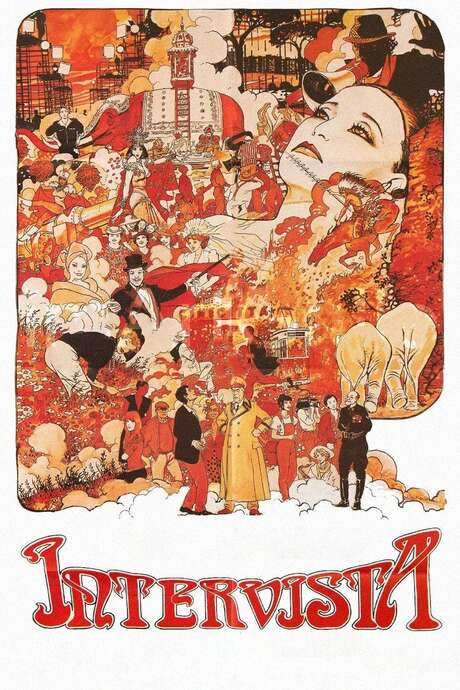
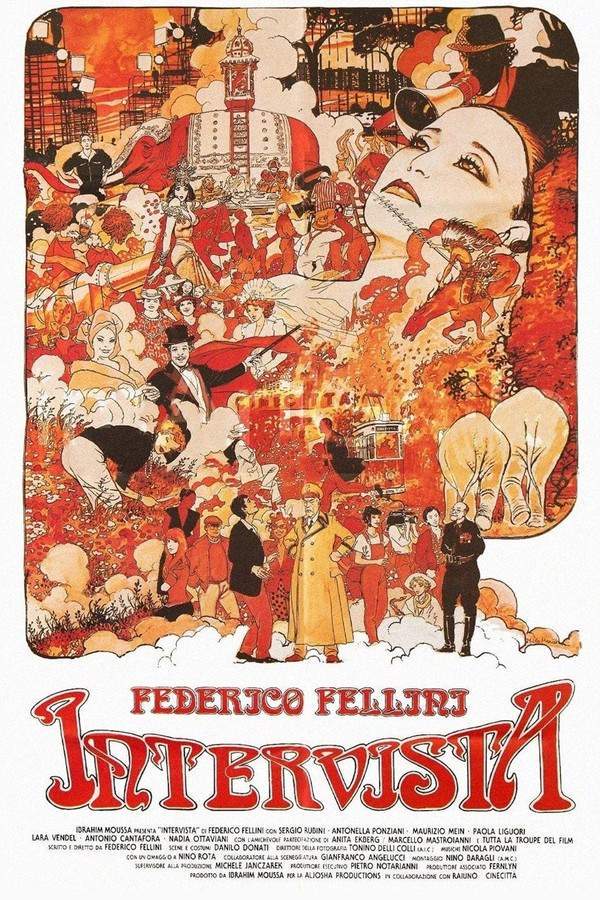
Intervista (1992) movie poster

Characters & Themes

Intervista (1992) Characters, Setting & Themes Explained

Release, runtime and language
1992 · 107 min · Italian
Directed by
Federico Fellini
Starring
Marcello Mastroianni, Anita Ekberg, Antonella Ponziani, Antonio Cantafora, Lara Wendel, Maria Teresa Battaglia

A celebrated filmmaker allows a Japanese documentary crew to follow him as he reflects on his career and prepares for a new project. The resulting film is a playful exploration of memory and creativity, interweaving moments of nostalgia with fantastical sequences. The documentary offers a unique glimpse into the artist's process and the inspirations behind his iconic works, blurring the lines between his past and present.

On this page (8)
  1. 1 Where to watch
  2. 2 Characters explained (6)
  3. 3 Where & when it takes place
  4. 4 Themes & meaning (3)
  5. 5 Character & meaning questions
  6. 6 Movie threads
  7. 7 Movies like Intervista
  8. 8 Every angle

Where to watch

Where to Watch Intervista (1992)

Where can you watch Intervista? Stream, rent or buy it in the US: current JustWatch availability with up-to-date prices.

Streaming availability powered by JustWatch

6 main characters · contains spoilers

Intervista Characters Explained: Who Is Who

The main characters of Intervista (1992), heroes and villains: what drives them, how they change over the course of the story and what each of them reveals about the film's bigger ideas.

  • Federico Fellini

    Fellini serves as both the protagonist and director, offering a meta-narrative that reflects on his life and the filmmaking journey. He struggles with the passage of time and his legacy, showcasing vulnerability through his memories while maintaining his artistic vision.

    • 🎥 Director
    • 🕰️ Reflection
    • 🎭 Artist
  • Maurizio Mein

    As Fellini’s assistant, Maurizio supports the filmmaking process with meticulous attention to detail. His character represents the backbone of production, navigating the challenges and logistics while embodying the dedication required in the film industry.

    • 👔 Assistant
    • 🎬 Production
    • 🚀 Dedication
  • Nadia Ottaviani

    Nadia is portrayed as a charming custodian of Cinecittà, known for her clever evasiveness during interviews. Her character adds a light-hearted touch to the narrative, grounding the chaotic world of filmmaking with everyday humor.

    • 🏢 Custodian
    • 🏵️ Charm
    • 😄 Humor
  • Marcello Mastroianni

    Mastroianni's character appears in a comedic television commercial as Mandrake the Magician. His role serves as a nod to his iconic status in Italian cinema and brings a layer of nostalgia to the story.

    • 🎭 Icon
    • 📺 Commercial
    • 🤹‍♂️ Comedy
  • Sergio Rubini

    Rubini plays a younger version of Fellini, providing insight into the maestro's past while enriching the narrative. His character's journey reflects the struggles and evolution of the famed director over the years.

    • 👶 Youth
    • 🎩 Evolution
    • 🎭 Journey
  • Anita Ekberg

    Ekberg’s character is referenced during a visit to her home, emphasizing her connection to Fellini's earlier works. Her presence evokes memories of the golden age of Italian cinema and the charm of classic films.

    • 🌟 Star
    • 🏠 Nostalgia
    • 🎥 Classic

Last updated: October 23, 2024 at 08:45

Was this helpful?

Setting

Where and When Does Intervista Take Place?

The setting of Intervista (1992): the year and time period, the places and locations, and how they shape the characters, the mood and the tension of the story.

Time period

1938, Present Day

The narrative intertwines memories from 1938, a time during Italy’s Fascist regime, with present-day reflections. This juxtaposition allows for an exploration of how the film industry has evolved while also bringing to light the nostalgic memories and challenges of past hardships.

Location

Cinecittà, Casa del Passeggero, Rome, Ethiopia

Cinecittà is a renowned film studio in Rome, often referred to as the 'Hollywood on the Tiber.' It has played a pivotal role in the history of Italian cinema, hosting numerous international film productions. The Casa del Passeggero, once a budget hotel, has now transformed into a drugstore, reflecting the changing landscape of the city.

  • 🏙️ Film Studio
  • 🏨 Hotel
  • 🇮🇹 Italy

Last updated: October 23, 2024 at 08:45

Was this helpful?

3 major themes

Intervista Meaning: Themes & Message Explained

What is Intervista (1992) really about? The emotional, social and philosophical themes the film keeps returning to, its symbolism and the message beneath the surface.

  • Filmmaking Process

    The film delves into the intricate and chaotic world of filmmaking, showcasing the behind-the-scenes efforts involved in creating a cinematic piece. Through Fellini's perspective, the audience witnesses auditions, casting processes, and the pervasive challenges faced during production, blurring the lines between reality and fiction.

  • Reality vs. Fiction

    As the story unfolds, the distinction between reality and the filmmaking process blurs. Fellini’s interactions with his younger self and the chaotic elements of production immerse viewers in a surreal experience, prompting reflections on the nature of storytelling and artistic expression.

  • Chaos

    The film portrays a tumultuous environment, with disruptions such as bomb threats and stormy weather that threaten the production. This theme of chaos symbolizes the unpredictability of film making, illustrating how external factors can interfere with the artistic vision.

Last updated: October 23, 2024 at 08:45

Was this helpful?

Character & theme questions

Intervista Characters & Meaning: Your Questions Answered

The questions people ask about Intervista (1992): who the characters really are, their relationships, what the symbols mean, where it takes place and what the movie is really about. Each answer contains spoilers.

Q1

Where is the primary setting of the story?

The film is primarily set within Cinecittà, the renowned film studio in Rome known as the 'Hollywood on the Tiber.' This location serves as the backdrop for the documentary crew following the filmmaker, grounding the narrative in the heart of Italian cinema history. Intervista uses this iconic setting to explore the changing landscape of the city and the studio itself.

Foreshadowing: Early shots of the studio gates hint at the historical weight carried throughout the film.

  • cinecittà
  • rome
  • film studio
  • setting
  • italy
Q2

What time periods does the narrative cover?

The story intertwines memories from 1938 during Italy's Fascist regime with present-day reflections on the filmmaker's career. This juxtaposition allows the film to explore how the industry has evolved while highlighting nostalgic memories of past hardships. Intervista bridges these eras to show the passage of time and its impact on artistic legacy.

Foreshadowing: Initial mentions of past hardships set the stage for later temporal shifts.

  • 1938
  • present day
  • time period
  • era
  • memory
Q3

Who is the central figure reflecting on his career?

Federico Fellini serves as both the protagonist and director, offering a meta-narrative that reflects on his life and filmmaking journey. He struggles with the passage of time and his legacy, showcasing vulnerability through his memories while maintaining his artistic vision. In Intervista, Fellini's presence anchors the exploration of creativity and nostalgia.

  • federico fellini
  • protagonist
  • director
  • career
  • legacy
Q4

How does the film blur reality and fiction?

The distinction between reality and the filmmaking process blurs as Fellini interacts with his younger self and chaotic production elements. Viewers are immersed in a surreal experience that prompts reflections on the nature of storytelling and artistic expression. This thematic core in Intervista challenges the audience to question what is real within the narrative.

Foreshadowing: Early documentary-style footage hints at the later fusion of fact and fantasy.

  • reality
  • fiction
  • surreal
  • storytelling
  • meta-narrative
Q5

Who portrays the younger version of Fellini?

Sergio Rubini plays the younger version of Fellini, providing insight into the maestro's past while enriching the narrative. His character's journey reflects the struggles and evolution of the famed director over the years. This casting choice in Intervista adds depth to the reflection on the director's early life.

  • sergio rubini
  • young fellini
  • actor
  • casting
  • past
Q6

What role does Marcello Mastroianni play?

Marcello Mastroianni appears in a comedic television commercial as Mandrake the Magician, serving as a nod to his iconic status in Italian cinema. His role brings a layer of nostalgia to the story and emphasizes the connection to classic films. This cameo in Intervista evokes memories of the golden age of cinema.

  • marcello mastroianni
  • cameo
  • magician
  • nostalgia
  • italian cinema
Q7

What is the overall tone of the movie?

The film's tone is primarily whimsical due to its playful, meta-fictional exploration of creativity and fantastical sequences. Yet it is underpinned by a strong melancholic current of nostalgia and reflection on aging. Intervista balances this sadness with light through a thoughtful, imaginative mix of emotions.

  • tone
  • whimsical
  • melancholic
  • nostalgia
  • emotion
Q8

How is chaos depicted in the production?

The film portrays a tumultuous environment with disruptions such as bomb threats and stormy weather that threaten the production. This theme of chaos symbolizes the unpredictability of filmmaking, illustrating how external factors can interfere with artistic vision. In Intervista, these disruptions highlight the fragile nature of creative work.

Foreshadowing: Early mentions of logistical hurdles hint at later chaotic events.

  • chaos
  • production
  • unpredictability
  • weather
  • disruption
Q9

What is Maurizio Mein's role in the crew?

As Fellini's assistant, Maurizio supports the filmmaking process with meticulous attention to detail. His character represents the backbone of production, navigating the challenges and logistics while embodying the dedication required in the film industry. Intervista showcases his role as essential to maintaining the workflow amidst chaos.

  • maurizio mein
  • assistant
  • production
  • logistics
  • dedication
Q10

How does memory influence the storyline?

The narrative uses memory to intertwine past hardships with present creativity, allowing for an exploration of how the film industry has evolved. Nostalgic memories serve as a lens through which the filmmaker views his current work and legacy. This focus on memory in Intervista drives the emotional core of the story.

Foreshadowing: Initial reflections on the past set the stage for deeper memory exploration.

  • memory
  • nostalgia
  • past
  • creativity
  • evolution
Q11

Why is Cinecittà significant to the film?

Cinecittà has played a pivotal role in the history of Italian cinema, hosting numerous international film productions. Its transformation from a studio hub to a changing landscape mirrors the themes of evolution and nostalgia present in the story. Intervista leverages this location to ground its historical and artistic context.

  • cinecittà
  • italian cinema
  • history
  • location
  • significance
Q12

How is the narrative structure organized?

The pacing is variable, alternating between the steady flow of a documentary interview and sudden, fast-paced jumps into dream logic and chaotic film sets. This structural choice results in a complex narrative that blends past and present, reality and fiction. Intervista uses this structure to mimic the filmmaker's thought process.

  • structure
  • pacing
  • documentary
  • dream logic
  • narrative
Q13

Why is Anita Ekberg referenced in the story?

Ekberg's character is referenced during a visit to her home, emphasizing her connection to Fellini's earlier works. Her presence evokes memories of the golden age of Italian cinema and the charm of classic films. This reference in Intervista underscores the link between past icons and current reflections.

  • anita ekberg
  • reference
  • golden age
  • classic films
  • icon
Q14

What purpose does the documentary crew serve?

A Japanese documentary crew follows the filmmaker as he reflects on his career and prepares for a new project. This setup allows for a unique glimpse into the artist's process and the inspirations behind his iconic works. In Intervista, the crew acts as a conduit for blending the filmmaker's past and present.

  • documentary crew
  • japanese
  • process
  • artist
  • inspiration
Q15

What is the emotional resonance of the conclusion?

The ending is bittersweet, marked by Fellini's somber reflection immediately countered by a hopeful, 'tongue-in-cheek' gesture of illuminating the world with an 'arc lamp.' This encapsulates the film's blend of sadness and light, leaving viewers with a thoughtful sense of closure. Intervista concludes by balancing melancholy with creative hope.

Foreshadowing: Earlier themes of chaos and memory hint at this bittersweet resolution.

  • ending
  • bittersweet
  • hope
  • melancholy
  • closure

Movie threads

More Movies Like Intervista, by Mood & Story

Curated lists built around what makes Intervista tick: the same mood, the same kind of story or the same emotional payoff. Each list explains why these movies belong together.

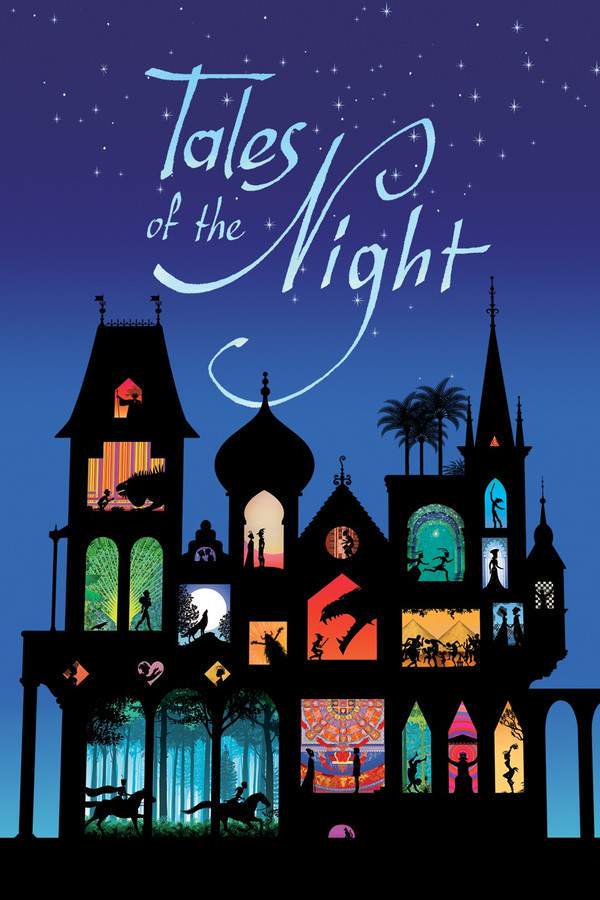
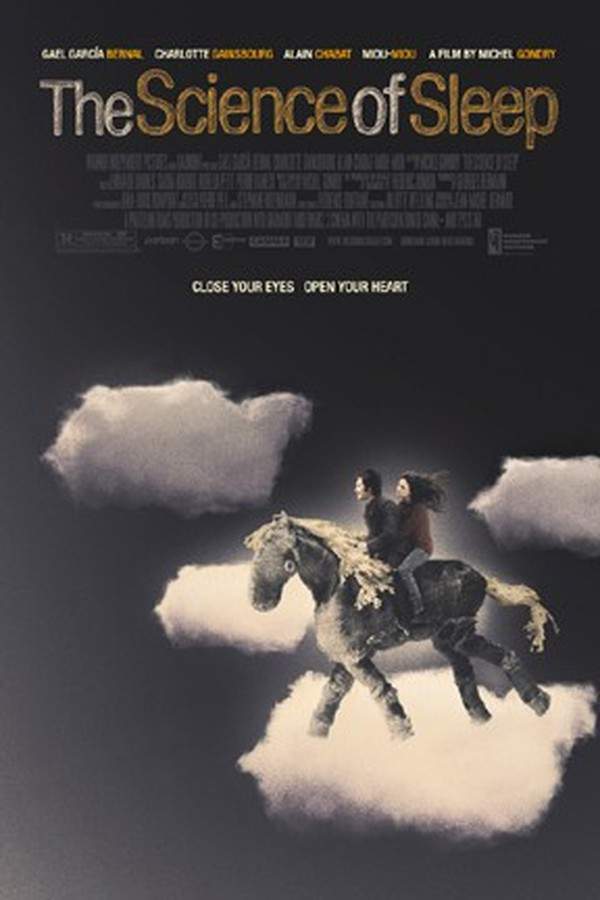
Movies about artistic creation like Intervista

Films that explore the messy, magical process of creation through memory and fantasy. Discover movies like Intervista that delve into the whimsical and reflective world of artists. These films often blend documentary-style realism with surreal fantasy, exploring themes of memory, inspiration, and the bittersweet process of creation, perfect for fans of meta-narratives.

  • dreamlike
  • reflective
  • playful
  • melancholic
  • nostalgic
  • magical
  • Tone: whimsical, melancholic, reflective
  • Pacing: variable, dreamlike
Why these movies?

The story pattern: Stories in this thread typically follow a creator reflecting on their life and work. The narrative structure is often non-linear, folding memories, fantasies, and the present moment into a complex tapestry that illustrates how art is born from a mix of chaos, nostalgia, and disciplined craft.

Why they belong together: These movies are grouped by their shared focus on the artist's internal world. They possess a whimsical yet melancholic tone, use variable pacing to mirror the creative process, and celebrate the act of creation while acknowledging its inherent struggles and fleeting nature.
Meta-narrative movies about filmmaking like Intervista

Stories that playfully deconstruct the art of cinema, breaking the fourth wall with charm. Explore films like Intervista that celebrate and deconstruct the magic of cinema. These meta-narratives are perfect for viewers who enjoy stories about filmmaking, playful blurring of reality, and bittersweet reflections on art and memory.

  • meta-fictional
  • playful
  • nostalgic
  • celebratory
  • self-referential
  • chaotic
  • Tone: whimsical, bittersweet, playful
  • Pacing: variable, chaotic
Why these movies?

The story pattern: The narrative pattern involves a film within a film, where the process of creation becomes the story. It playfully breaks the fourth wall, mixing documentary aesthetics with fictional flights of fancy, leading to a complex structure that is both a celebration and a critique of the cinematic form.

Why they belong together: These films share a specific blend of whimsy and melancholy tied directly to the subject of cinema. They have a variable, often playful pace, a medium emotional weight focused on artistic legacy, and a unique, self-aware tone that sets them apart.

If you liked this

Movies Like Intervista

Similar movies to Intervista: the same genre, themes or kind of story. Each one comes with its own plot summary, timeline and ending explained.

Browse all movie summaries

Every angle

Intervista (1992) Explained: Plot, Timeline & Characters

Everything about Intervista in one place: what happens in the plot summary, the timeline in chronological order, the characters and meaning and a spoiler-free summary. What's After the Movie adds the cast, box office and post-credit scenes.

Coming soon on iOS and Android

The Plot Explained Movie Summary App

Plot summaries, endings explained and timelines on your phone. Catch up on any movie in minutes, save your favorites and never miss a twist again.

Be the first to know when we launch. Your email stays private, always.

Learn more about the app